 Čeština
 Deutsch


Small Medieval Brass Buckles (1200-1400) – Set of 5 - Outlet
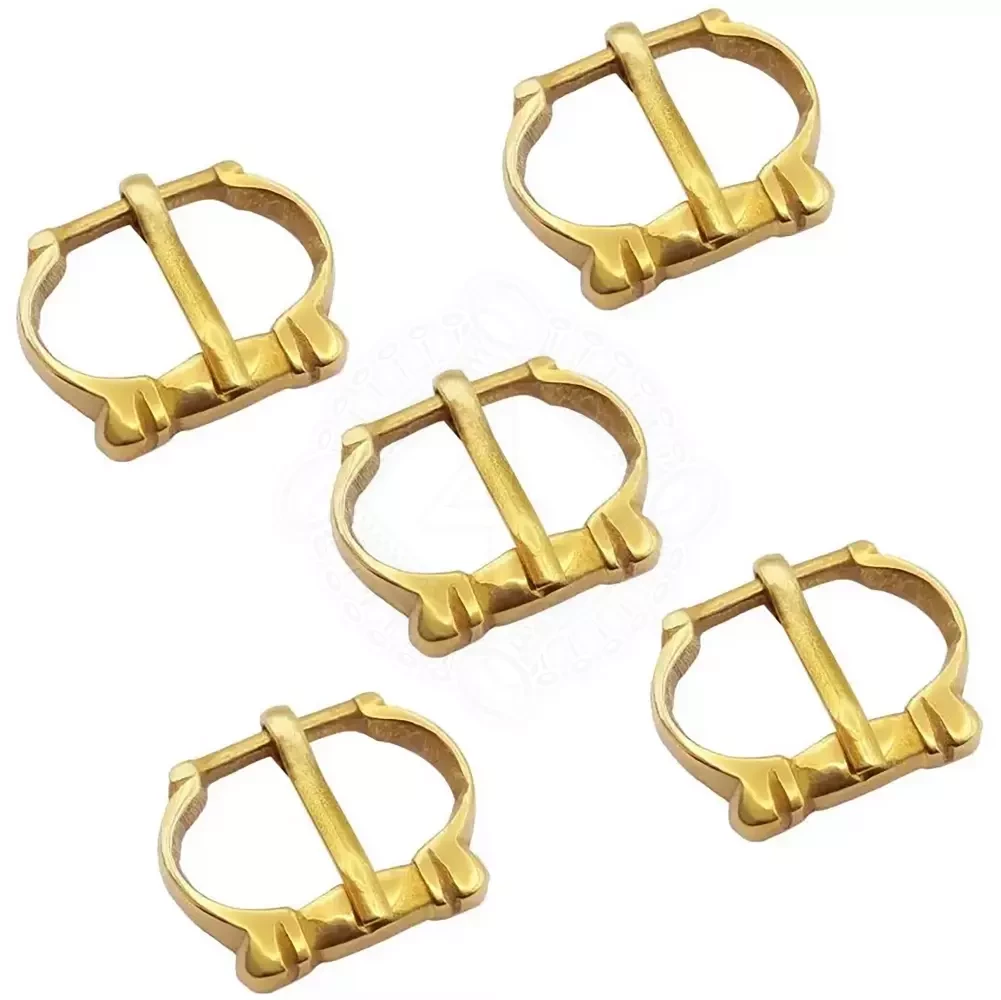
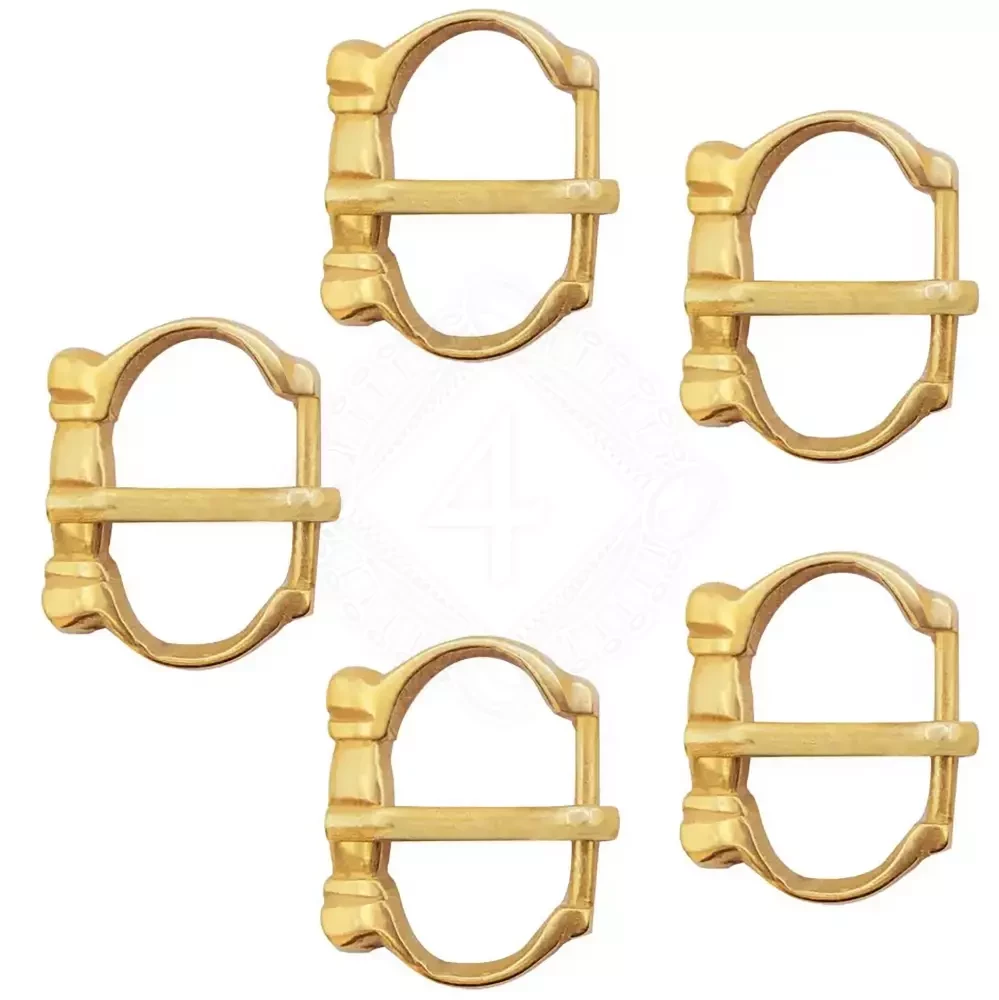
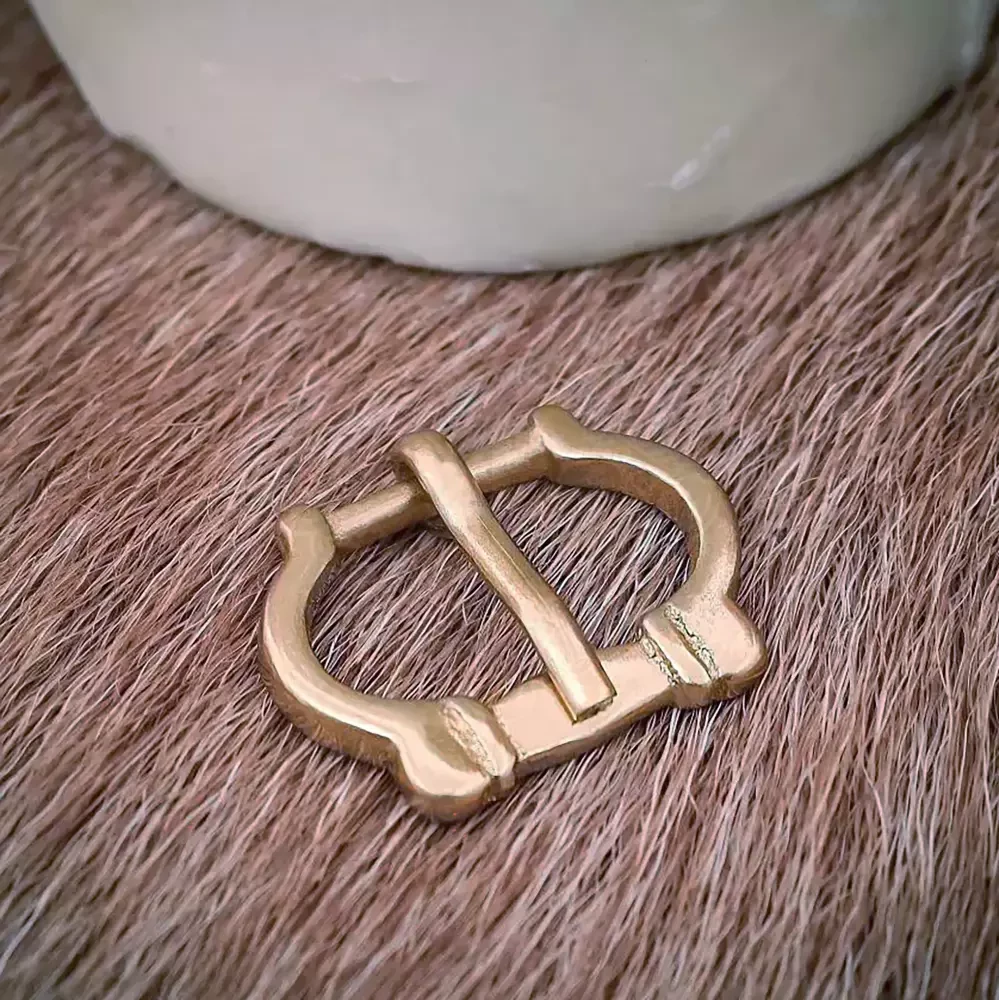
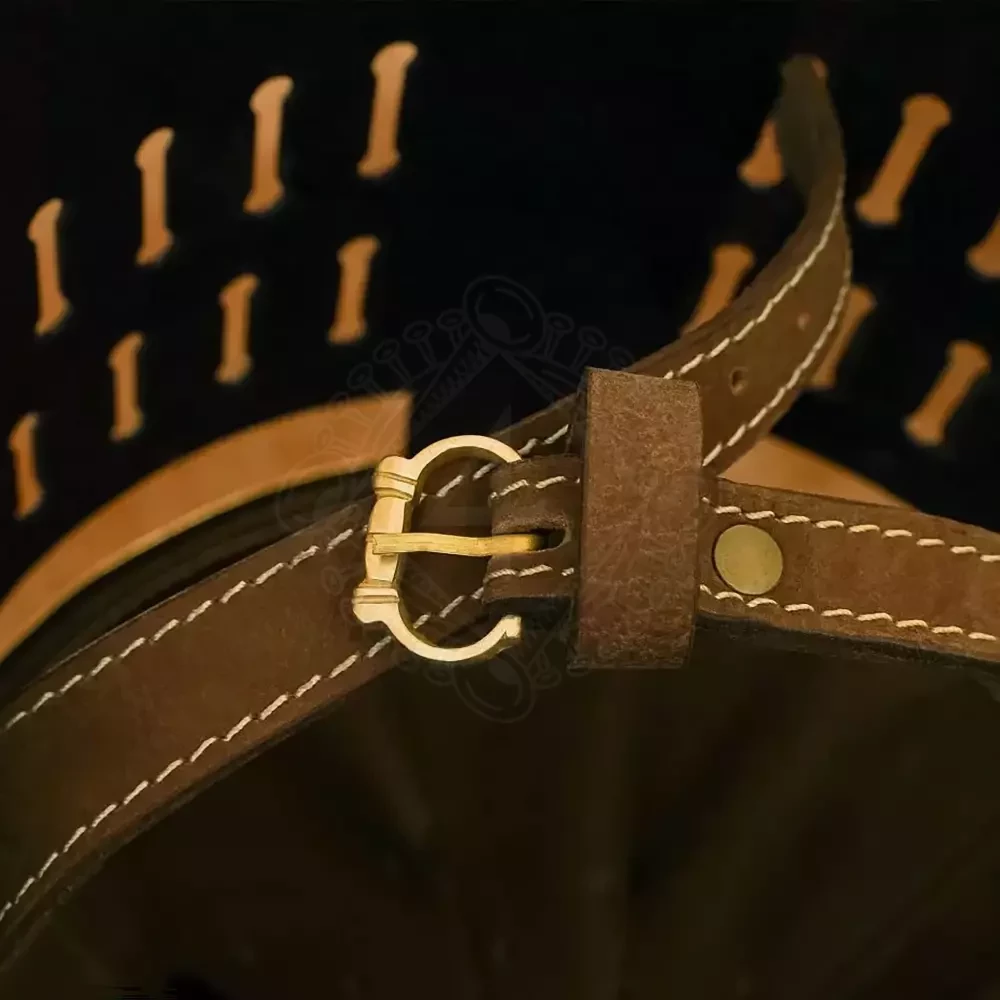
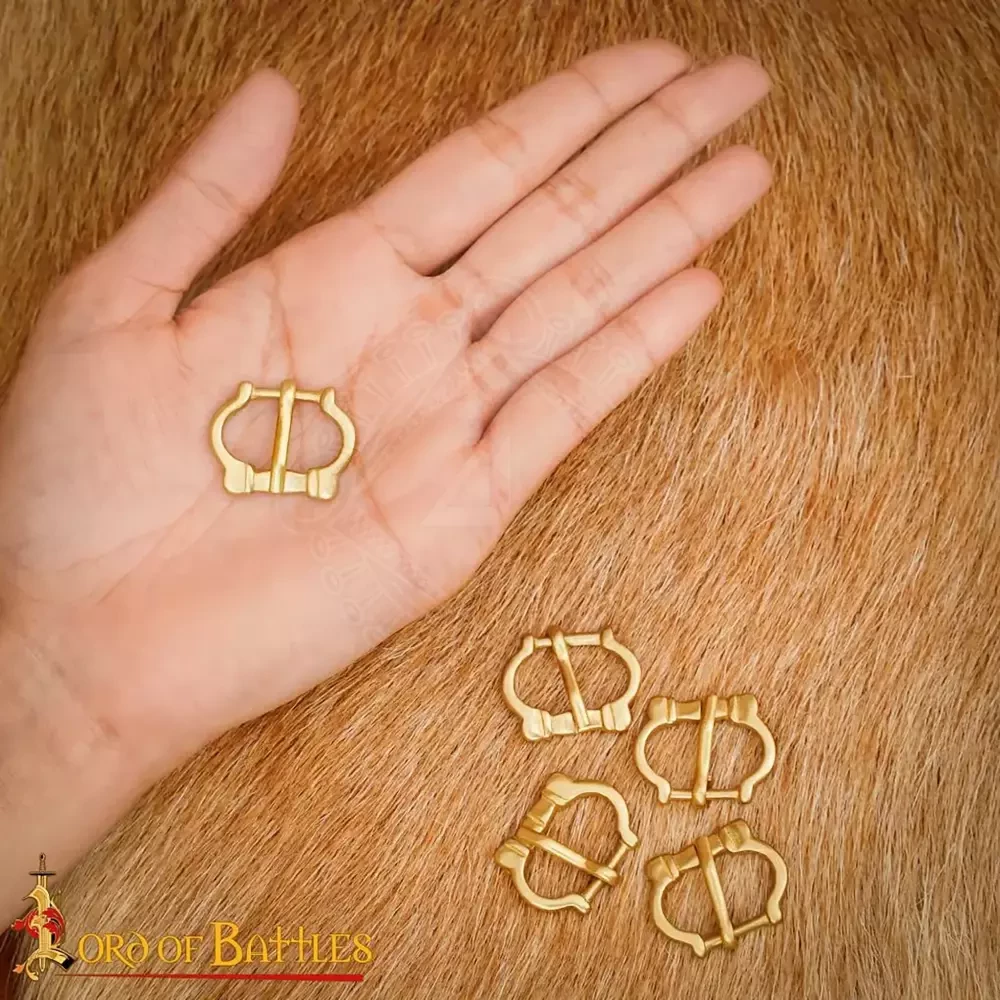

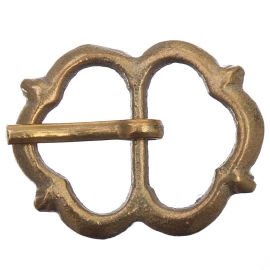
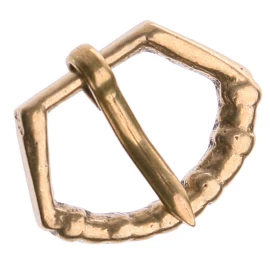
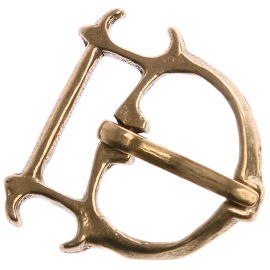
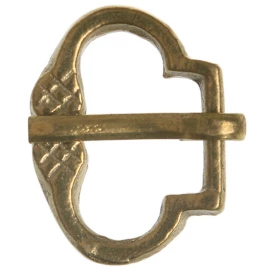
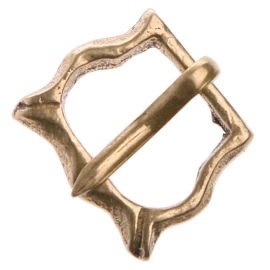
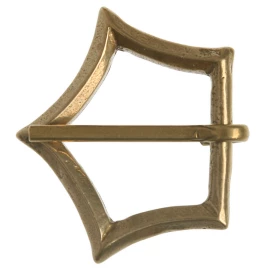
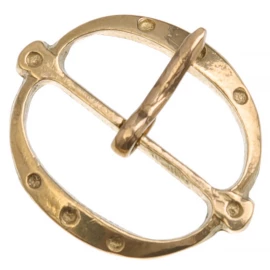
Complete your medieval attire or accessory with this set of five authentic replicas of small brass buckles! These sturdy buckles, based on a 14th-century archaeological find, are ideal for the period between 1200 and 1400. They are perfectly suited for narrower straps on small bags (pouches), purses, shoes, or fine clothing details. A quality product from the Lord Of Battles® brand. Further product information ...

Small Medieval Brass Buckles (1200-1400) – Set of 5
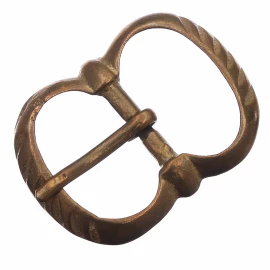
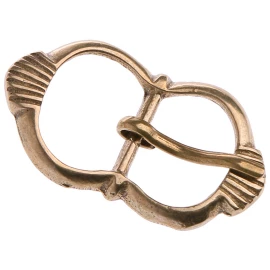
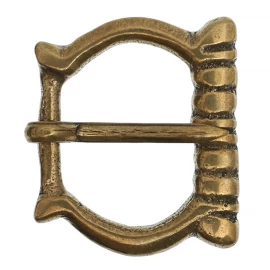
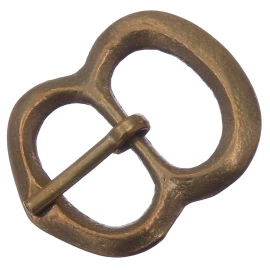
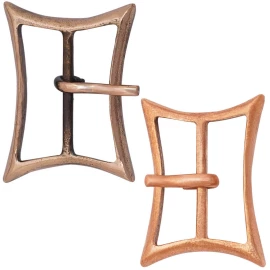
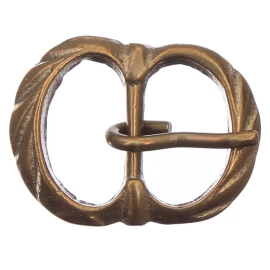
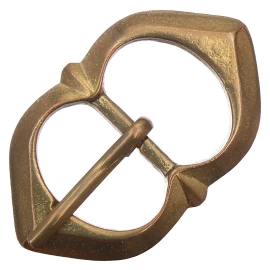
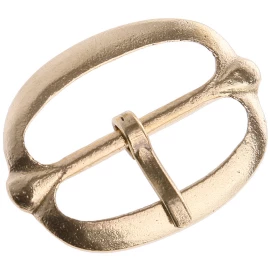
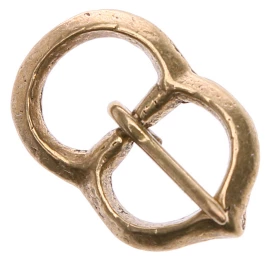
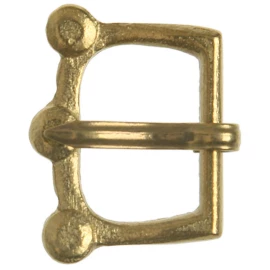
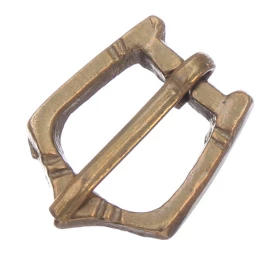
This set contains five small yet robust buckles, crafted from high-quality brass. Each buckle features a characteristic medieval D-shaped design on one side of the central bar and prong. The other side of the frame (the loop), intended for threading and securing the strap, is straighter with slightly raised "shoulders" at the base of the central bar. The brass surface is smooth with a natural sheen. Thanks to their compact dimensions and solid material, these buckles are very versatile for period accessories.
Specifications:
- External dimensions: approx. 23.8 x 18.9 mm
- Internal width of the loop for strap: approx. 20.7 mm
- Optimal for straps approx. 12 mm wide (buckle is suitable for straps up to approx. 18 mm wide)
- Length of the prong (pin): approx. 20.3 mm
- Weight of one buckle: approx. 4 g
- Material: Brass
- Quantity per set: 5 pieces
- Period: approx. 1200 – 1400 AD (13th - 14th century, extending into the early 15th century)
How Can You Use This Buckle?
These small brass buckles are perfectly made for detailed work on your historical projects from the High and Late Middle Ages. You can use them for:
- Closures on smaller leather or textile pouches, belt bags, and small satchels.
- Straps for purses, coin bags, small personal item pouches, or alms bags.
- Fine straps on quilted garments (gambesons, aketons) for size adjustment, attaching plate components, or other functional details.
- Fastenings on medieval shoes, turnshoes, and other historical footwear.
- Straps for ladies' garters for a historically accurate costume.
- Other small belts and straps on garments (e.g., on sleeves, chausses/hose) or accessories where a small, strong, and functional buckle is needed.
Although the internal width of the buckle loop is approx. 20.7 mm and allows for a strap up to approx. 18 mm wide, the buckle is proportionally and functionally ideal for narrower leather straps. For the best appearance and optimal function, especially on finer accessories, we recommend straps around 12 mm wide.
A Glimpse into History: Who Wore Similar Buckles and How?
Small buckles of this type were an absolutely common and indispensable part of daily life from the 13th to the end of the 14th century (extending into the early 15th century). They are found on the most diverse clothing components and accessories across all social classes – from simple peasants and artisans to townspeople and the lower nobility. Brass, as an alloy of copper and zinc, was a popular and relatively affordable material during this period for manufacturing small metal everyday objects. These buckles were used to fasten the aforementioned bags, purses, shoes, various parts of clothing such as sleeves, chausses, collars, and also to attach straps on lighter armour, equestrian gear, or pilgrim's necessities. Their simple yet well-thought-out and functional design ensured reliable fastening and easy handling.
Interesting Historical Facts
Did you know that the 13th and 14th centuries, the Gothic period, saw significant developments in clothing and overall craftsmanship? People began to wear more close-fitting, intricately cut, and often layered clothing. This trend naturally demanded a larger quantity of various clasps, buttons, and indeed buckles to secure individual parts of the attire. Small brass buckles, like this replica based on a specific 14th-century archaeological find, were mass-produced and attest to the growing need for practical yet aesthetic fastening methods. They were therefore not just purely functional elements, but also small, albeit often inconspicuous, ornaments that completed the overall appearance and character of a person's clothing at that time.
Guide to Attaching the Buckle and Punching Strap Holes
Attaching the Buckle to a Strap
- Take the end of the leather strap (ideally approx. 12 mm wide, but no more than 18 mm to avoid deforming it in the buckle) to which you want to attach the buckle.
- Thread this end of the strap through the part of the buckle (the loop) located at the fixed central bar, where the movable prong (pin) is not attached. The prong should point outwards from the future fastening at this stage.
- Fold the threaded end of the strap back onto its reverse side. The length of the fold should be appropriate to the size of the buckle and the width of the strap; for this small buckle, a fold of 1.5 to 3 cm (approx. 0.6 to 1.2 inches) is usually sufficient.
- Securely sew this folded end to the main part of the strap (e.g., with strong linen or hemp thread) or rivet it with one or two small rivets. For smaller and finer straps, sewing is often the more aesthetic and period-appropriate choice.
How to Correctly Punch Holes in Your Strap
- Put on the garment or accessory (e.g., shoe, pouch with strap) with the buckle already attached to determine the required fastening length for comfortable wear as accurately as possible.
- Pass the free end of the strap through the buckle and tighten it as comfortably and functionally as you need.
- Carefully mark the spot on the strap (e.g., with a leather pencil or an awl) where the buckle's prong naturally rests on the leather. This will be your main, most frequently used hole.
- To allow for minor adjustments in circumference, it's good to add more holes. For small straps of this type, one or two holes on either side of the main hole are usually sufficient, spaced approximately 1 to 1.5 cm (approx. 0.4 to 0.6 inches) apart.
- To punch the holes, use a tool suitable for small diameters – for example, a small round hollow punch and a mallet, or special hole punch pliers with an appropriately sized tube. Ensure the hole is large enough for the prong to pass through easily, but not too large, so the strap is not unnecessarily stressed at the hole and does not tear.
Note: As these are replicas based on historical finds, individual pieces in the set may vary slightly in minor details regarding their dimensions or appearance from the product photos. This is a natural characteristic of handcrafted or hand-finished replicas.
A quality branded product from Lord Of Battles®.
We are here for you!






.2152382459.1713382643.JPG.webp)