 Čeština
 Deutsch


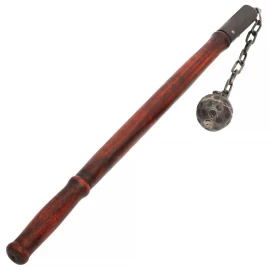
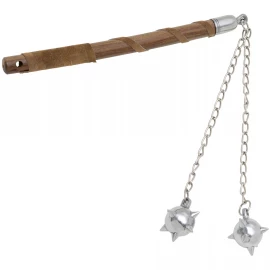
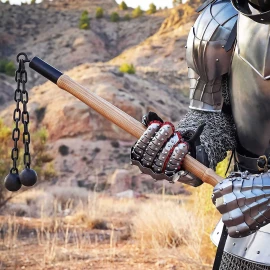
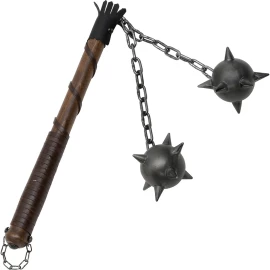
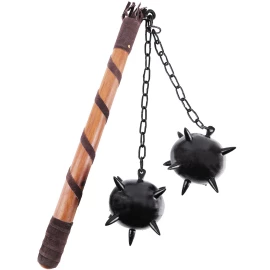
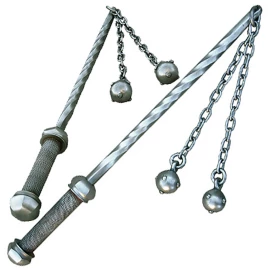
Two-Chain Flail with Smooth Balls Rohac
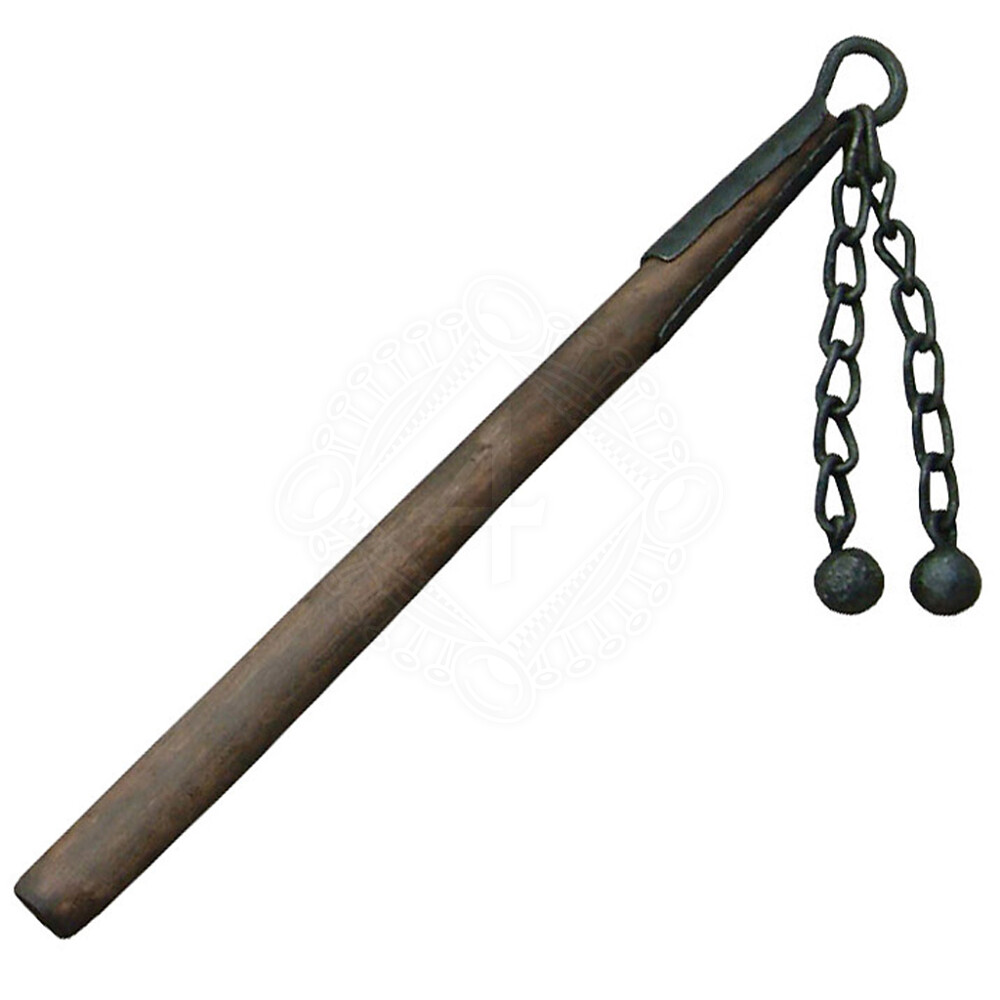

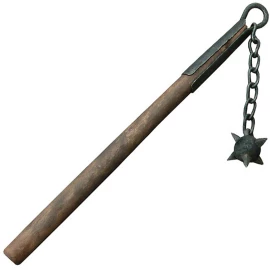
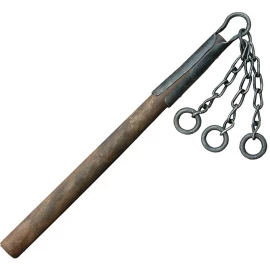
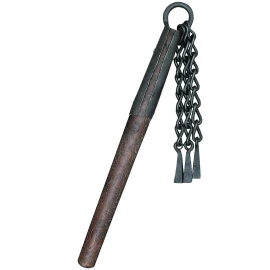
Searching for authenticity, rugged presence, and devastating impact for your historical attire or infantry kit, warrior? This medieval two-chain flail with smooth balls is a masterfully crafted replica of a feared impact weapon from the High and Late Middle Ages. The weapon features a solid wooden haft reinforced with a mild steel socket, from which two steel chains extend, each ending in a solid smooth steel ball. It is crafted in honor of the famous Hussite captain Jan Rohac of Duba (c. 1370–1437), a loyal comrade of Jan Zizka and the last defender of Sion Castle. We recommend this flail as a magnificent display piece, or as a decorative accessory for historical costumes, theatrical performances, parades, LARP, and reenactments. Further product information ...

Would you like to be notified as soon as the item is in stock?
You will receive a short e-mail as soon as we have it back in stock.
14th-15th Century Medieval Two-Chain Flail with Smooth Balls Rohac
History and Significance of Flails in the 14th and 15th Centuries
The historical design of this weapon is based on surviving originals and period artwork dating from 1350 to 1450 (14th and 15th centuries). During this era, war flails evolved from agricultural tools into devastating impact weapons utilized by infantry and cavalry across Central and Western Europe.
Historically, the medieval flail functioned as an armor-crushing weapon. The chain-suspended smooth steel balls offered a distinct tactical advantage: they could wrap over an opponent's shield or parrying blade, delivering kinetic force directly to the target. In close combat, warriors used flails to fracture bones beneath gambesons, dent plate armor, and daze heavily armored knights. Naming this weapon pays homage to Jan Rohac of Duba, whose steadfast resolve during the Hussite Wars went down in history.
Instructions for Use and Handling
To carry and display this weapon correctly with your historical attire or camp gear, observe these steps:
- Grip & Handling: Hold the wooden haft firmly with one or both hands on the lower third of the grip. The steel chains require a fluid, controlled swinging motion.
- Costume Mounting: We recommend carrying the flail tucked through a sturdy leather waist belt or in a leather frog on your hip, allowing the chains to hang freely.
- Product Intent: For safety reasons, this item is a decorative replica not intended for practical combat (such as HEMA sparring, stage fighting, or re-enactment combat). Due to the kinetic motion of the chains and heavy steel balls, it is strictly not intended for contact fighting against human opponents.
Technical Specifications
| Parameter | Value |
|---|---|
| Product Type | Medieval Flail / Impact Weapon |
| Historical Era | High to Late Middle Ages (14th–15th Century) |
| Style / Typology | Two-Chain Flail with Smooth Steel Balls |
| Haft Material | Hardwood with mild steel socket |
| Chain & Ball Material | Mild steel (darkened/lacquered) |
| Overall Length | approx. 60 cm (approx. 23.62 in) |
| Number of Chains | 2 strands |
| Weight | approx. 1.00 kg (approx. 2.20 lbs) |
| Execution | Decorative Replica |
Care and Safety Instructions
Steel elements and the wooden haft require regular maintenance to prevent rust and wood degradation:
- Corrosion Protection: After every use or exposure to humidity, wipe the metal chains, balls, and socket dry with a soft cotton cloth and apply a light coat of gun oil.
- Wood Care: Treat the wooden haft periodically with linseed oil or beeswax to prevent drying and cracking.
- Storage: Store the weapon in a dry environment. Avoid leaving it exposed to rain or damp conditions.
- Handling Safety: Freely swinging chains with heavy steel balls can cause uncontrolled impacts and severe injury if handled carelessly. Avoid striking hard metal or stone surfaces.
- Prohibition of Contact Combat: Do not use this item for full-contact sparring, buhurt, or martial drills against an opponent.
- Child Safety: Keep out of reach of children and unsupervised minors.
Recommended Accessories
We recommend pairing this medieval flail with a matching 14th-15th century leather belt, a padded gambeson, mail gauntlets, and a medieval linen tunic. These accessories are historically and visually compatible with 14th and 15th-century attire, allowing you to create a complete, magnificent medieval outfit.
We are here for you!