
 Čeština
 Deutsch


Late Medieval Leather Poulaines
6x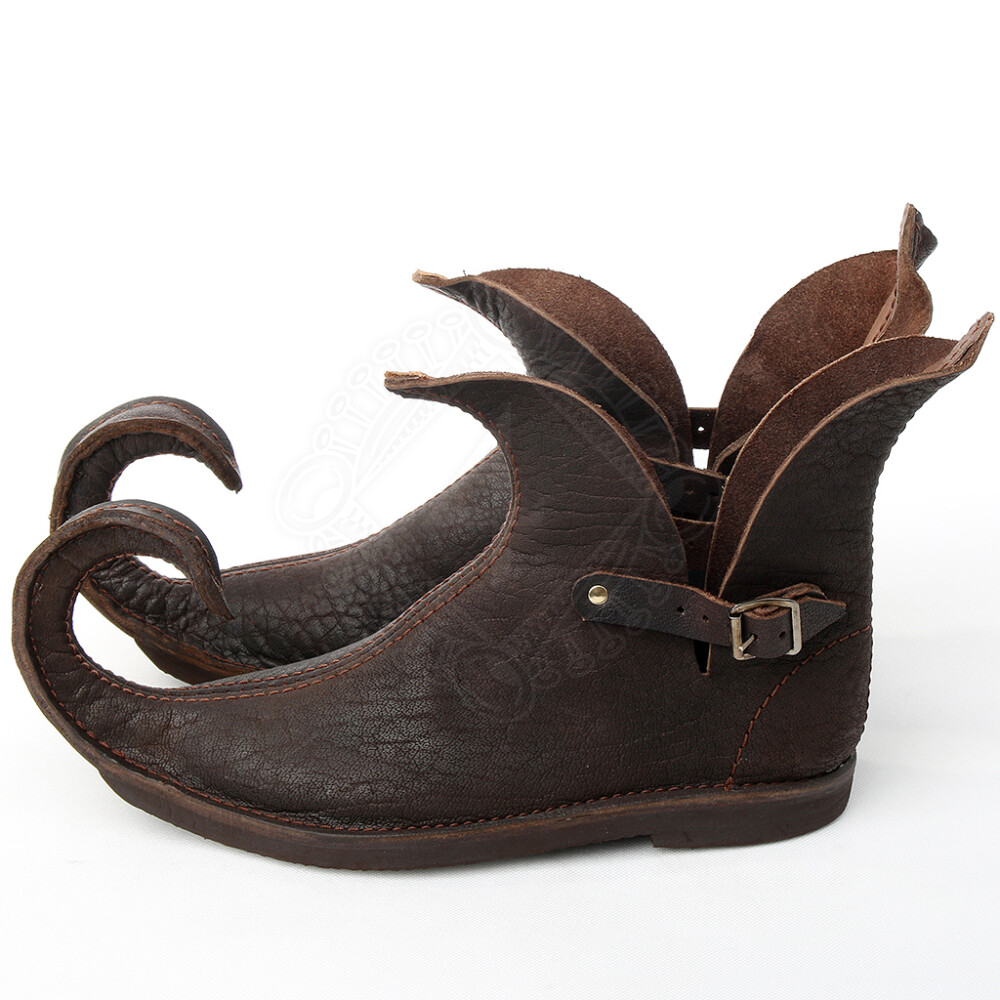
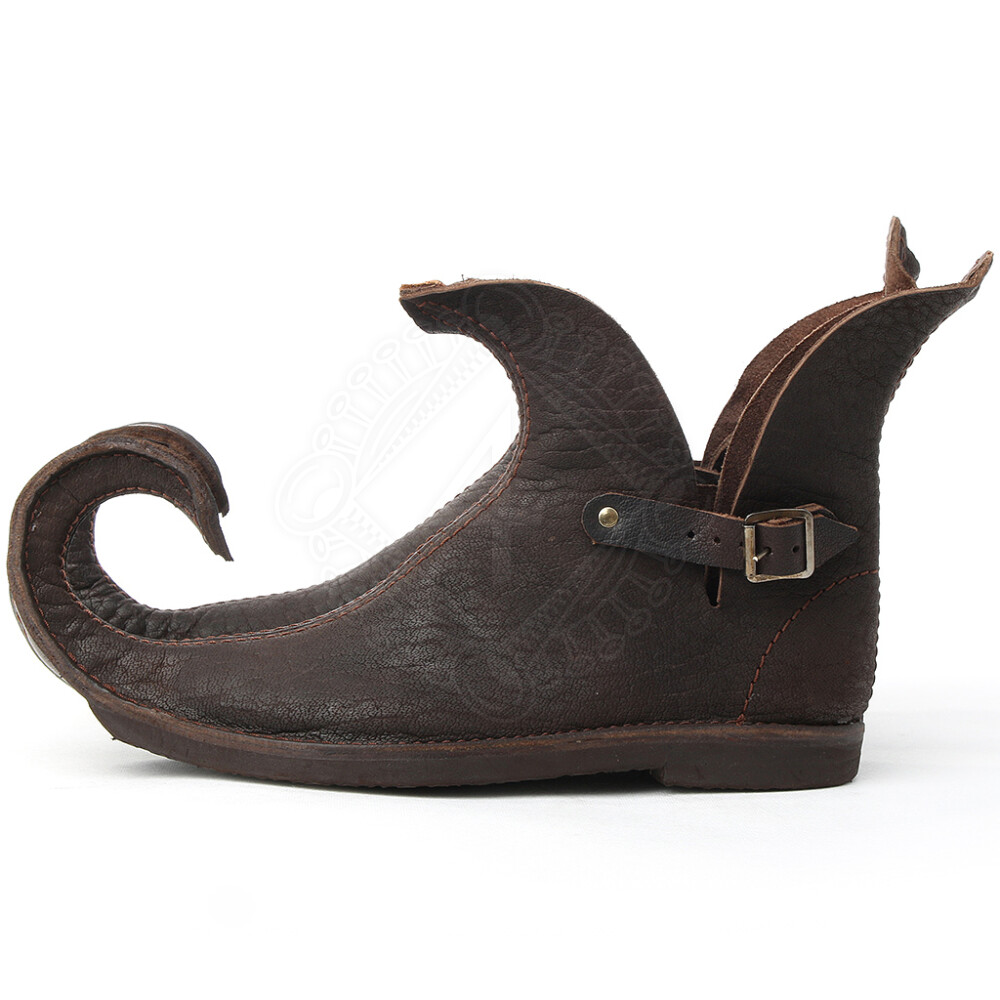
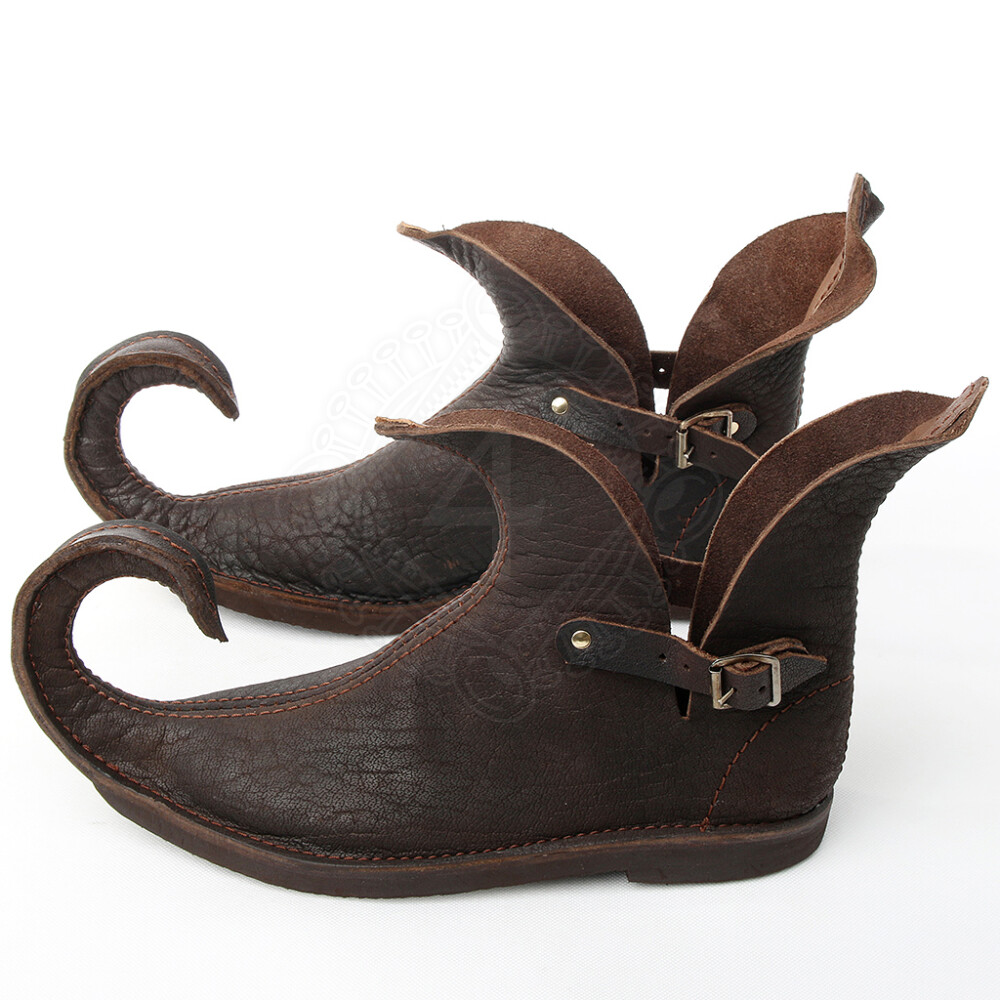
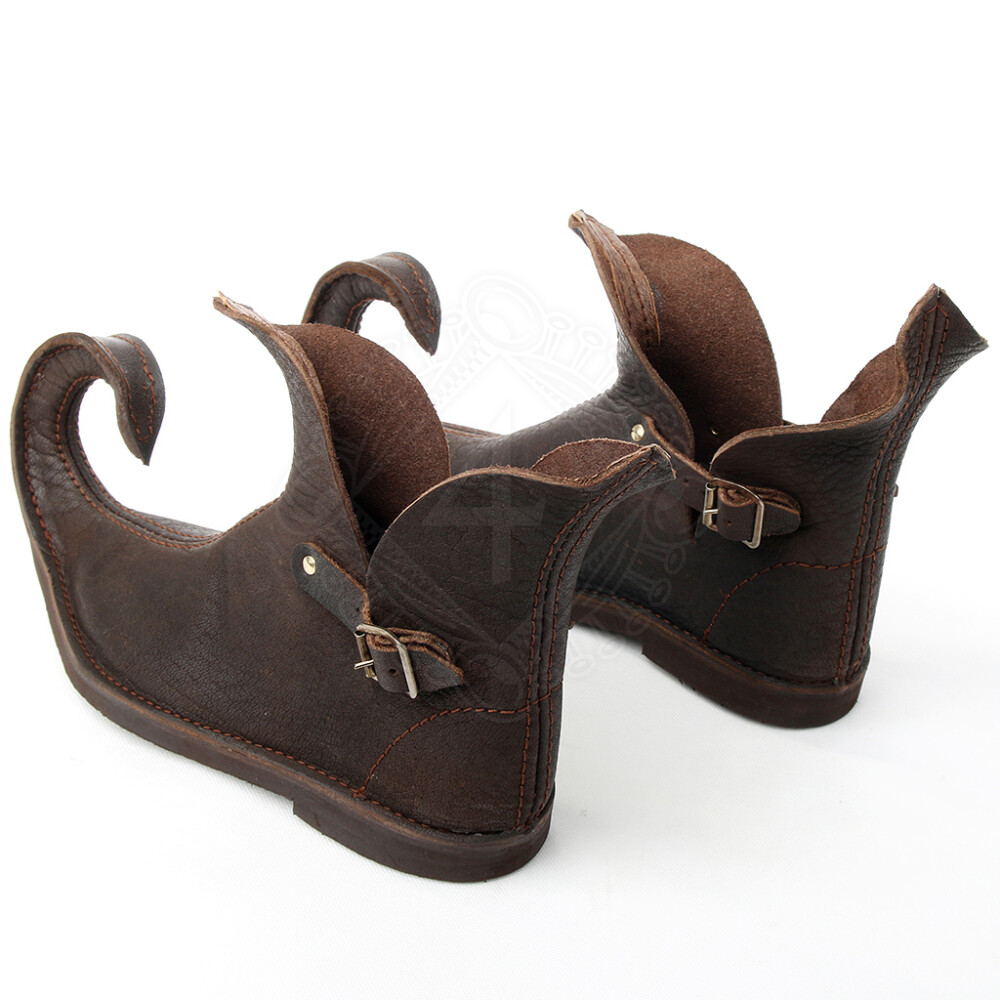
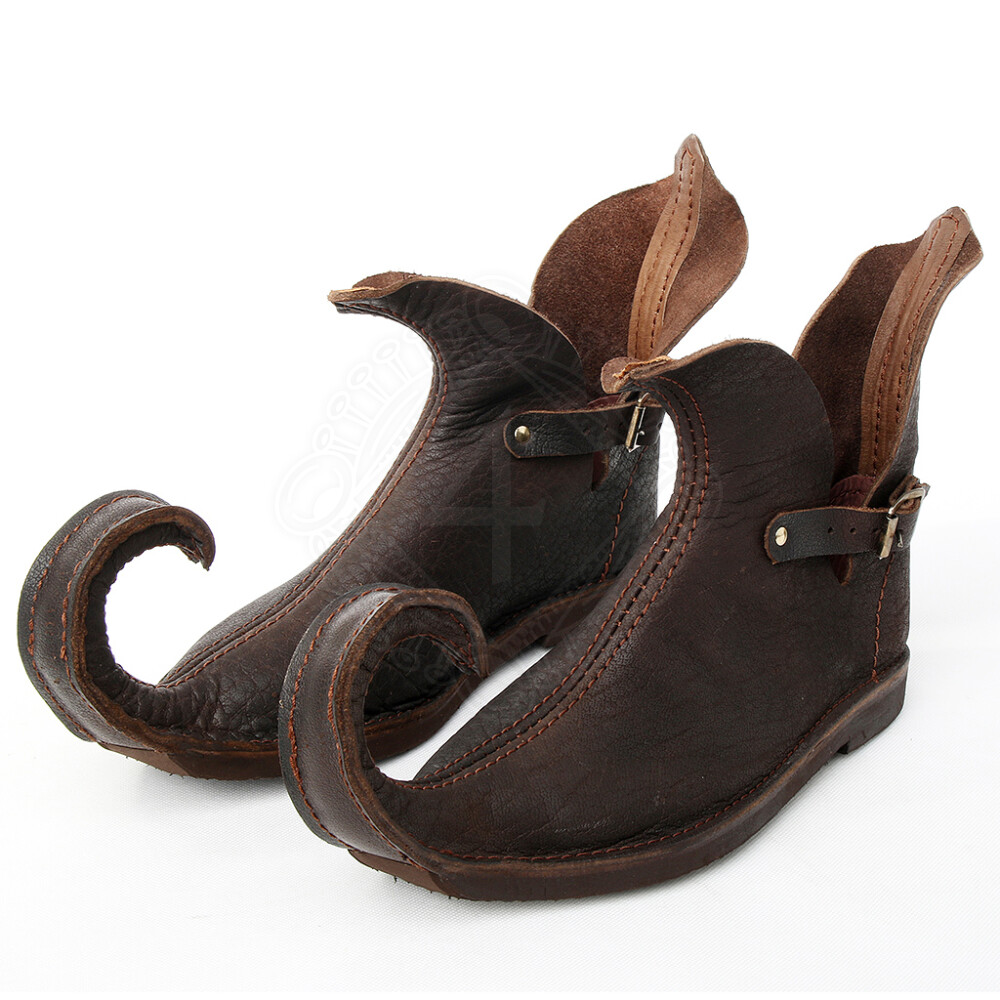

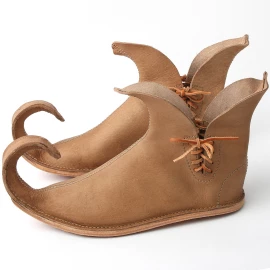
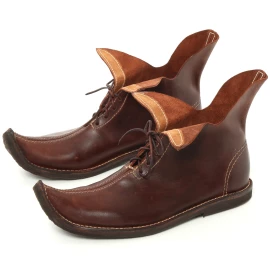
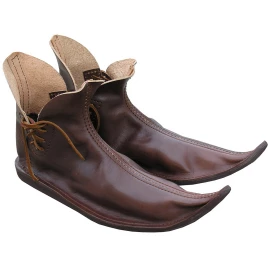
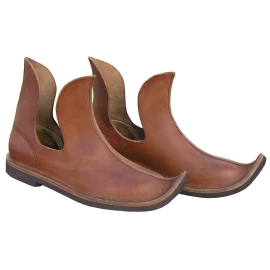
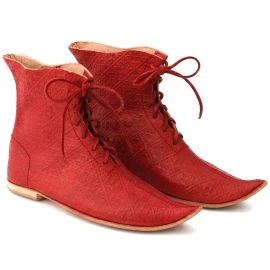
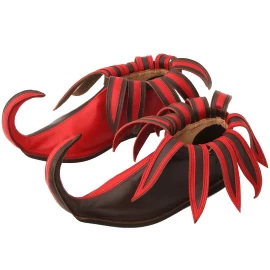
Are you preparing for a courtly feast, a grand banquet, or simply wish to assert your high social status at a historical festival? These medieval leather shoes featuring a tulip-cut ankle, widely known as poulaines or crakows, are an unmistakable hallmark of high medieval fashion. They are hand-stitched from sturdy cowhide and equipped with a practical leather strap and buckle fastening. Their prominently curled pointed toe will instantly make you the centre of attention. Complete your portrayal of a wealthy burgher, noble lord, or extravagant court jester with this unique piece and step into the 14th century in true style! Further product information ...

Late Medieval Leather Poulaines with Curled Pointed Toes
The Fashion Craze That Outraged the Church
Pointed shoes were a massive fashion phenomenon during the 13th and particularly the 14th centuries, reportedly spreading to Western Europe from Krakow, Poland (hence the English name crakows). A simple rule dictated society at the time: the longer and more eccentric the shoe's point, the higher the status its wearer was demonstrating. A long toe clearly indicated that the individual did not have to engage in strenuous manual labour. This trend went to such extremes that excessively long toes sometimes had to be stuffed with moss or tied to the knee with a chain just to allow the wearer to walk. Church officials frequently and harshly criticised these shoes as the vain "Devil's claw," but this did nothing to diminish their popularity among the aristocracy. The model offered here has the point already elegantly fixed in a curled position for an easier stride.
Parameters and Materials
| Upper Material | High-quality cowhide |
| Sole Material | Thick, smooth leather |
| Fastening Type | Leather strap with a brass buckle |
| Ankle Cut | Open, so-called tulip cut |
| Historical Period | High and Late Middle Ages (13th - 15th Century) |
| Suitable for | Re-enactment, LARP, theatre, nobility, wealthy townsfolk |
How to Properly Care for Your Medieval Shoes
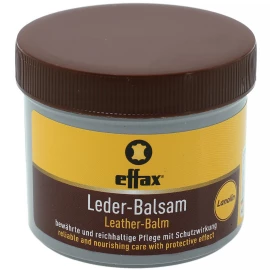
Leather is an organic material and would dry out and crack over time without your regular attention. Straight from production, the footwear is treated with a high-quality leather balm containing beeswax. Regularly rub oil, wax balm, or natural fat into the leather to prevent it from stiffening. Applying the balm nourishes the leather, softens it, helps waterproof it against moisture, and gives it a slightly darker, richer hue. After a historical event, gently clean the shoes with a damp cloth and let them dry slowly at standard room temperature. Never dry the footwear near an open fire, on a hot radiator, or in direct sunlight – the leather would be irreparably ruined. Any scuffs can be covered and colour-matched with standard shoe polish.
Practical Advice for Safe Wear
Keep in mind that a historical smooth leather sole behaves completely differently from modern treaded rubber. It can be highly slippery on wet grass, cobblestones, or in mud. Furthermore, pay special attention to the elongated toe itself. Due to the curled point, these shoes are absolutely unsuitable for historical fencing, combat engagements, or running – there is a high risk of tripping and serious injury. They are designed for representative walking and wearing at banquets.
If you wear orthotic insoles and choose our "custom-made" sizing option, it is essential that you physically post these insoles to our address. They will be carefully seated directly into your new boots so they fit your feet perfectly.
We highly recommend wearing historical hose or thick woollen socks from our range with these poulaines to ensure thermal comfort and prevent unpleasant blisters.
We are here for you!






.3773623034.1696456237.png.webp)

.3773623034.1696456268.png.webp)
.3773623034.1696456247.png.webp)