
 Čeština
 Deutsch


Traditional Leather Cossack Boots
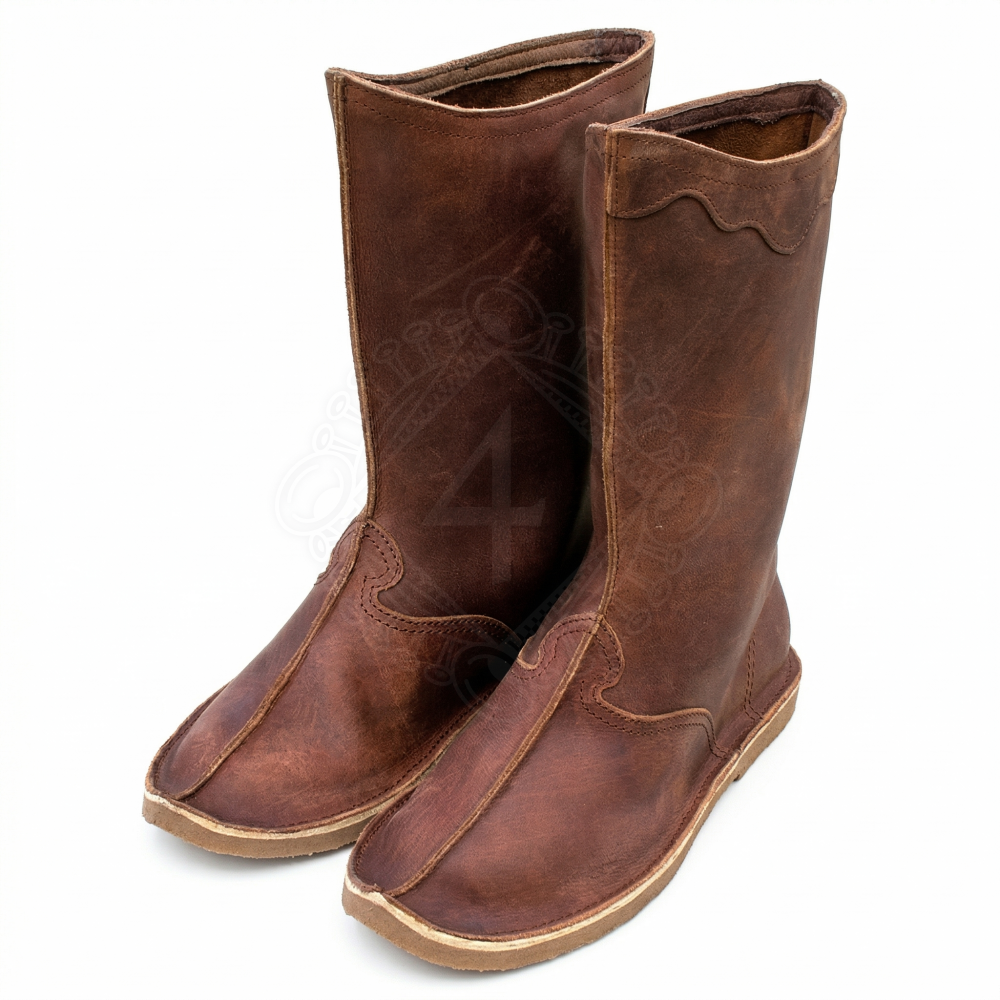
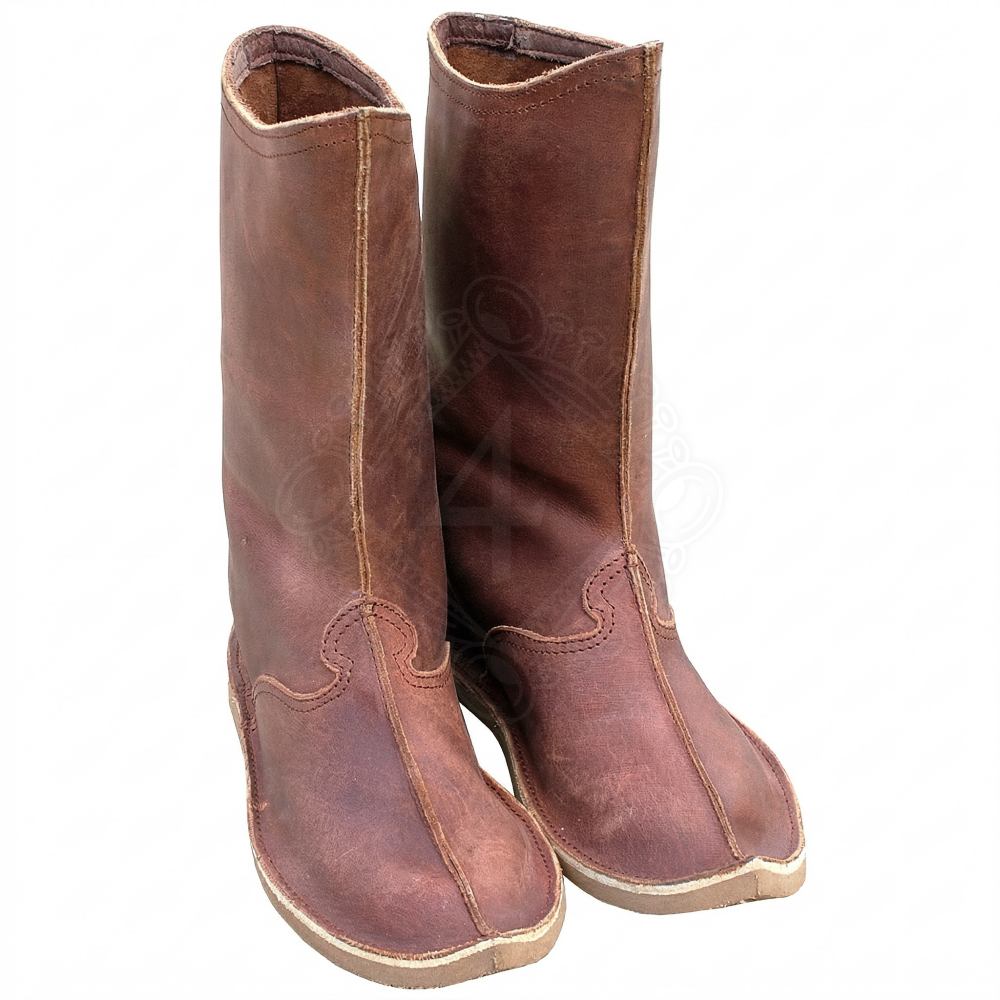
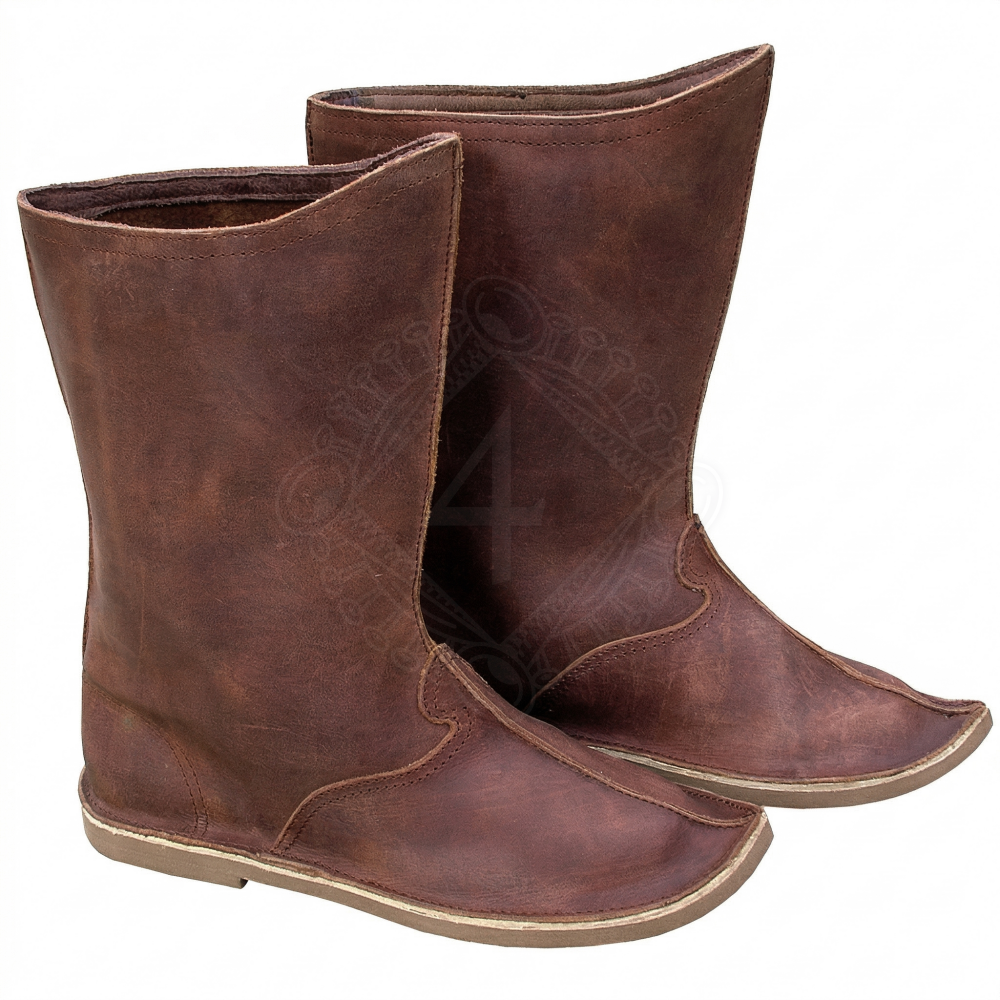
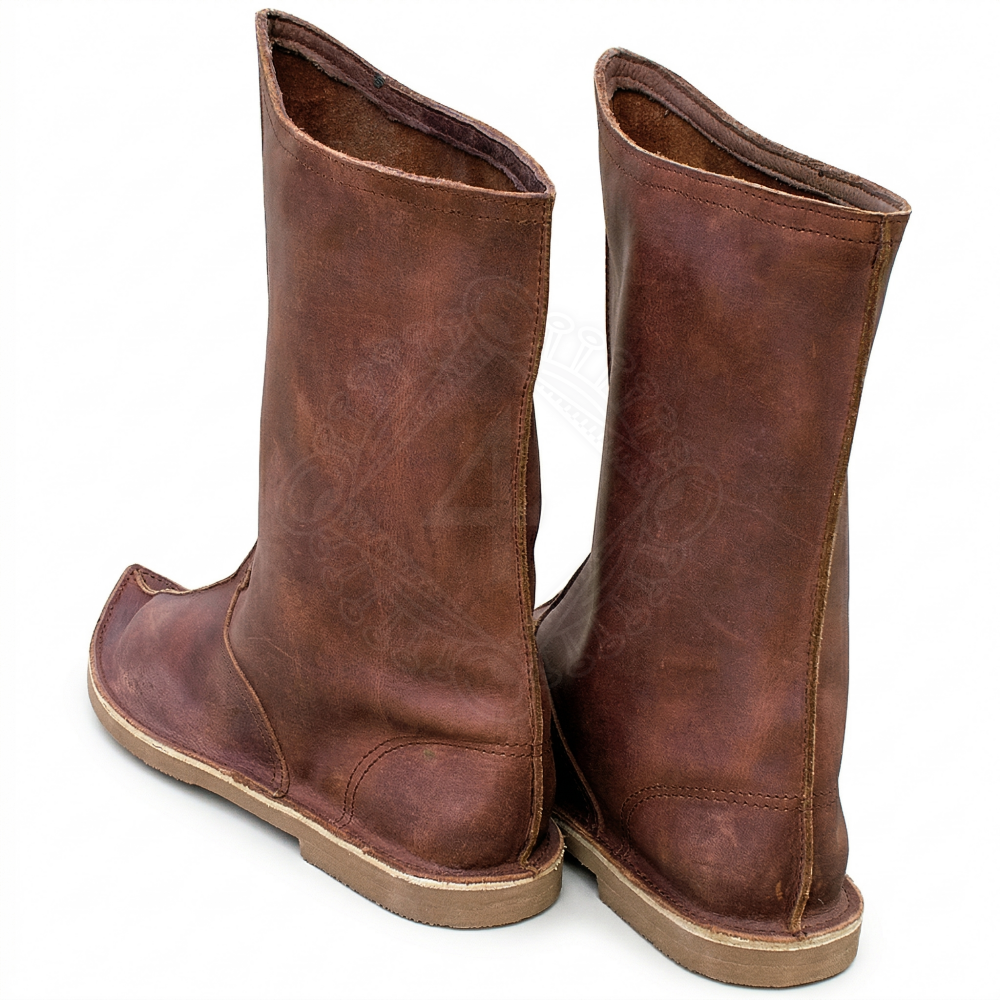
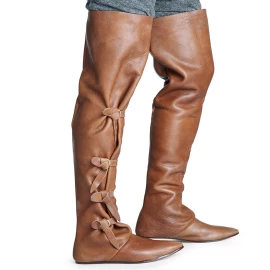
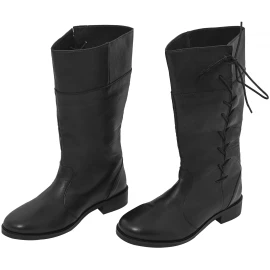
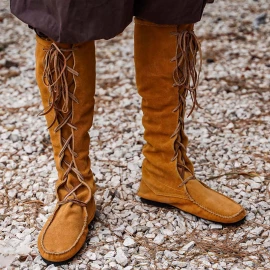
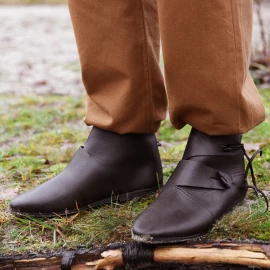
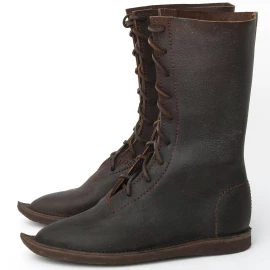
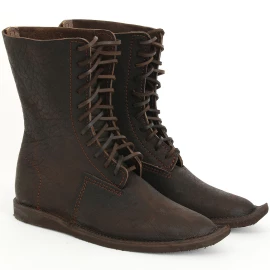
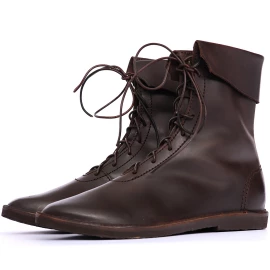
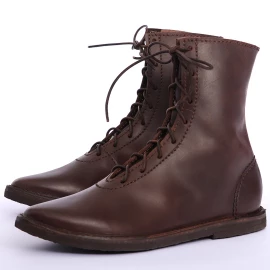
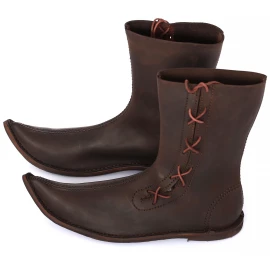
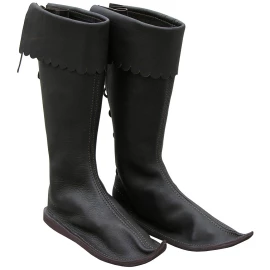
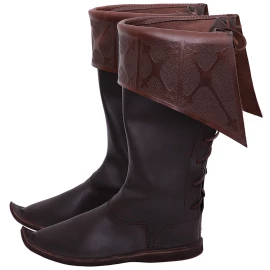
Are you searching for reliable and historically accurate footwear for your costume of a steppe nomad, a fearless Cossack, or an Eastern European warrior? These tall leather boots featuring a typical front seam will certainly not disappoint. They are carefully stitched from sturdy cowhide, and their specific, looser cut allows for comfortable slip-on wear, even over thicker period trousers. Whether you are planning a full-weekend LARP, a rugged historical encampment, or an equestrian display, these boots will provide you with solid leg protection and an unmistakable appearance. Boot up like a true lord of the steppe and confidently set forth towards new adventures! Further product information ...

Traditional Leather Cossack Boots with Distinctive Centre Seam
Footwear Proven by the Endless Steppe
Cossacks and other nomadic peoples of Eastern Europe spent a vast portion of their lives in the saddle, and their equipment had to reflect this. These tall boots, widely used from the 12th to the 17th century, are tailor-made for riding. The prominent outer seam running down the centre of the instep is a traditional hallmark of Eastern shoemaking. It is not merely a decoration – this detail allowed the leather to be shaped more effectively over the instep, granting the rider greater comfort in the stirrups. The slightly upturned toe then acted as a safeguard against the foot unintentionally slipping out. A high-quality leather boot was often the most valuable piece of kit for a common warrior.
Technical Parameters and Materials
| Upper Material | High-quality cowhide leather |
| Boot Cut | Closed slip-on boots with an outer front seam |
| Standard Height | approx. 35 cm / 13.8 in (measured from the floor) |
| Historical Period | 12th - 17th Century (Eastern Europe) |
| Suitable for | Re-enactment, LARP, horseback riding, historical festivals |
Recommendations for Colour and Size Selection
In addition to the basic colours (black, dark brown, light natural), we also offer other shades. These unconventional colours are created using a special covering layer. Please bear in mind that this lacquered layer may flake or crack over time in areas of bending. For occasional wear, this is perfectly fine, but if you plan to subject the boots to extreme and frequent stress, we highly recommend opting for naturally dyed leathers.
If you choose the custom-made option, you can also specify the shaft height. For anatomical reasons, we do not recommend choosing a height exceeding 5 cm (2 in) below the kneecap, as the boot would uncomfortably restrict your movement. Should you wear orthotic insoles, it is essential to physically post them to us so that we can seat them precisely into your new boots.
Shoe Care and Safety
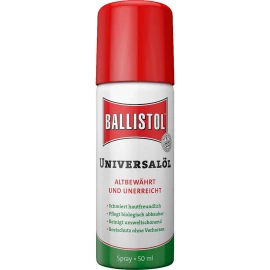
Straight from production, the footwear is treated with a beeswax balm. To ensure the leather retains its suppleness and does not crack, regularly treat it with wax balm or leather oil. The leather will darken slightly after application and acquire a handsome patina. Always allow wet boots to dry slowly at room temperature. Never dry them near an open fire or on a radiator.
A historical smooth sole has significantly worse traction on wet grass, in mud, or on cobblestones than modern footwear. Exercise great caution when running or fencing to avoid slipping. The looser cut also means less support for the ankle.
For a flawless period look, we recommend wearing traditional wide linen trousers (sharovary) from our range to accompany these boots.
We are here for you!





.3773623034.1696456237.png.webp)

.3773623034.1696456268.png.webp)
.3773623034.1696456247.png.webp)