Čeština
 Deutsch


Medieval shoes with folded cuffs, 1200–1400
4x


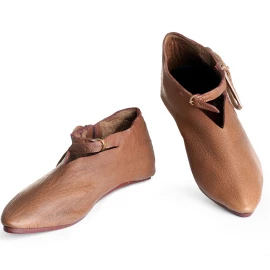
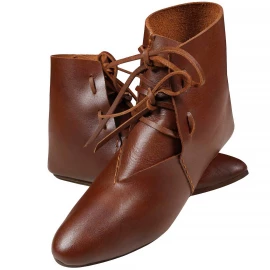
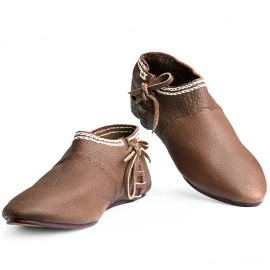
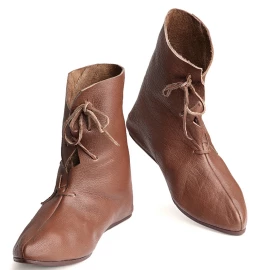
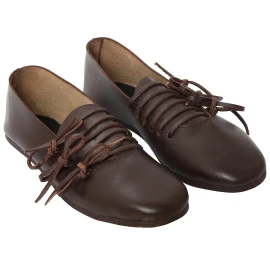
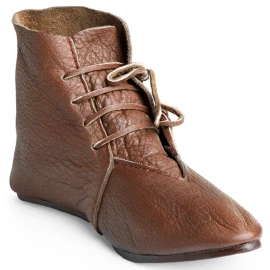
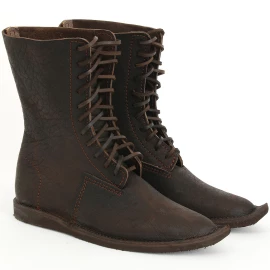
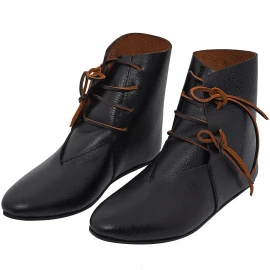
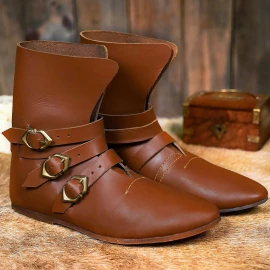
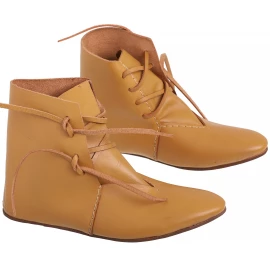
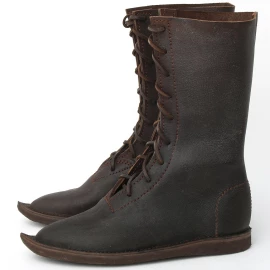
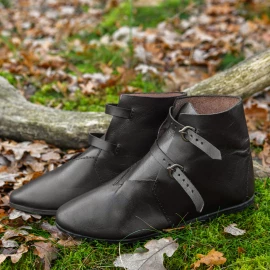
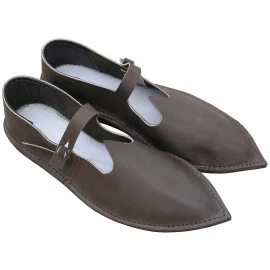
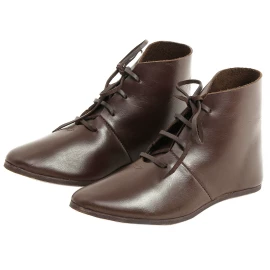
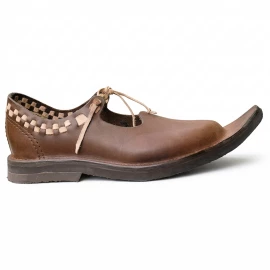
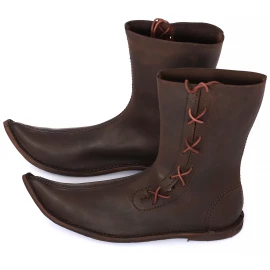
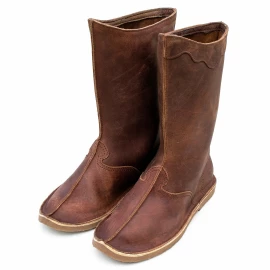
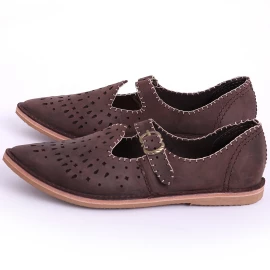
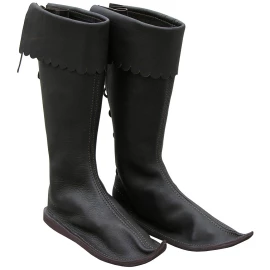
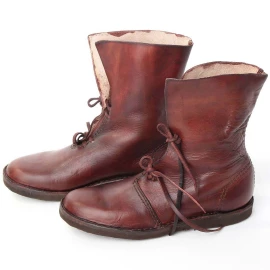
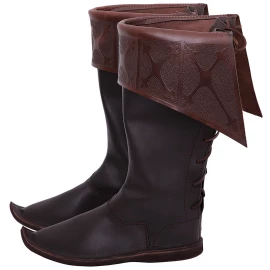
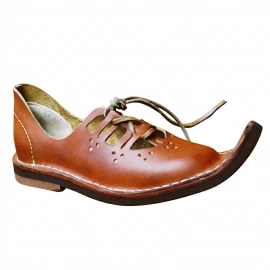
Complete your medieval outfit with brown leather shoes with folded cuffs for historical events, reenactment or theatre performances. Thick, soft leather, simple ties and visible stitching create an understated appearance inspired by the period 1200–1400. Wear the cuffs folded down or raised to change the silhouette. The shoes can also be worn outdoors, but they retain the limitations of historical replica footwear: do not expect the moisture resistance or grip of modern walking shoes. Before first use, we recommend suitable leather treatment and a short fitting trial with the socks or stockings you intend to wear. Further product information ...

 Delivery options
The following variants are currently available:
Medieval leather shoes with folded cuffs, 1200–1400
Cut and construction
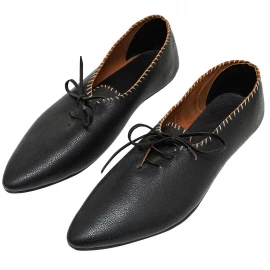
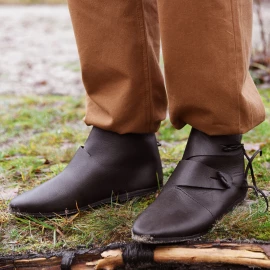
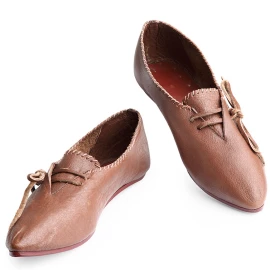
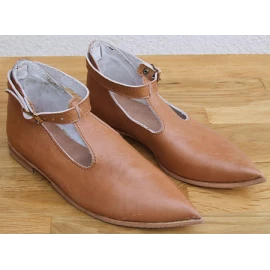
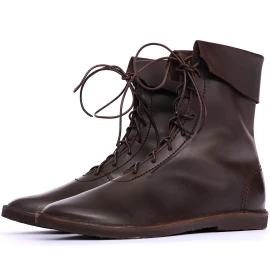
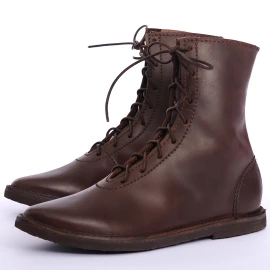
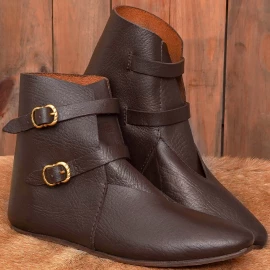
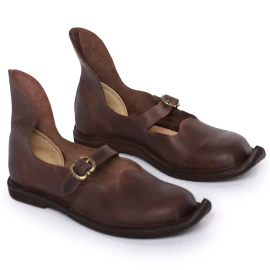
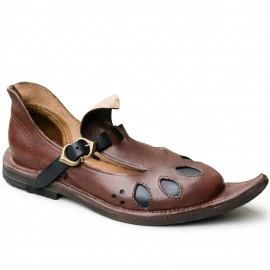
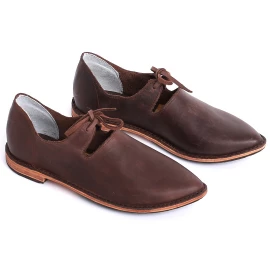
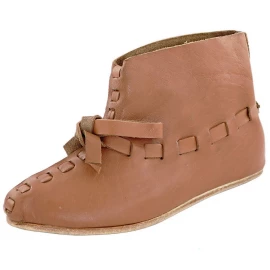
The shoes feature a slightly pointed toe and a leather thong fastening. Their brown uppers show the natural leather grain. Folding the cuffs down reveals the lighter, rougher reverse of the leather, with prominent stitching around the edges.
The shoes are hand sewn and have nailed soles. The photographs show leather soles with metal heads around the perimeter. The specific leather type and shoe measurements are not supplied.
Historical context
The supplied information places this model in 1200–1400, principally the 13th and 14th centuries. Its straightforward leather construction suits clothing inspired by medieval Europe. No particular regional or archaeological prototype is identified.
Leather footwear formed part of everyday medieval dress. An interesting detail is that many contemporary shoes were turned right side out after sewing. This model, however, has an explicitly stated nailed sole, so it is not described as a turnshoe.
Technical specifications
| Feature | Specification |
|---|---|
| Upper material | Thick, soft leather |
| Colour | Brown |
| Manufacture | Hand sewn |
| Sole | Leather, nailed |
| Fastening | Leather thong ties |
| Cuffs | Can be worn folded down or raised |
| Period according to supplied information | 1200–1400 |
| Manufacturer | Marshal Historical |
Preparation and safe wear
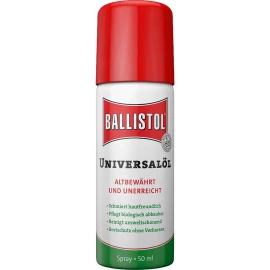
Before first use, apply a suitable water-repellent treatment for leather footwear, testing it on an inconspicuous area first. Treatment does not make the shoes completely waterproof. Tie the thong so that the shoe stays secure without pressing uncomfortably.
The shoes may slip on wet or smooth surfaces. Metal heads can scratch delicate floors. For frequent wear on modern surfaces, discuss suitable additional soling with a cobbler.
Care and suggested accessories
Allow damp shoes to dry completely in a well-ventilated place, away from radiators and fires. Brush off dried dirt and apply a suitable leather care product. Do not machine wash or leave them soaking.
For a 13th–14th-century impression, we recommend period hose, a tunic and a narrow leather belt. Clothing and other accessories are not included.
 Ověřený zákazník
- Kvalitní (kotníčkové - po drobné úpravě šněrování) boty za velmi přijatelnou cenu.
- Jsou hodně nízké v nártu (fakt pro Popelku), takže je nutná jednoduchá, ale pracná ševcovská úprava. Naražení na kopyto nestačilo.
Ověřený zákazník
We are here for you!