 Čeština
 Deutsch


Poitiers Medieval Steel Besagews, Pair
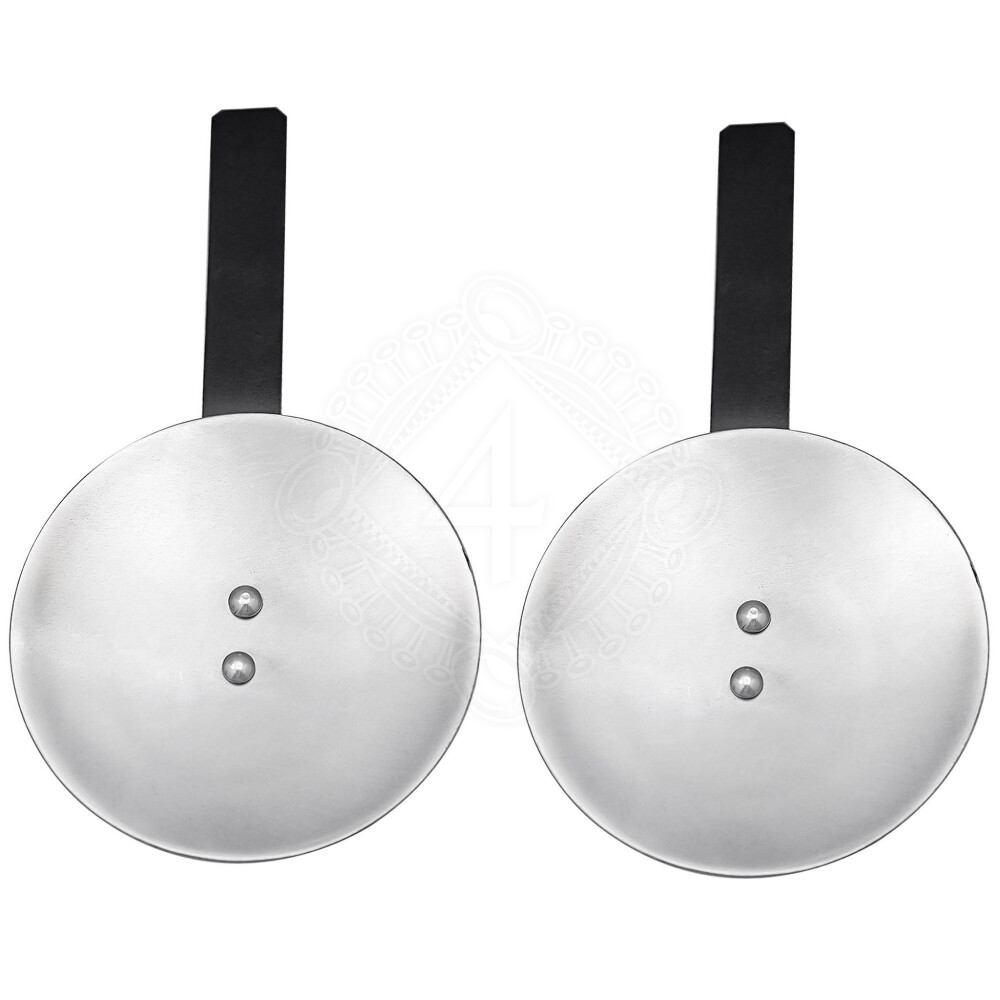
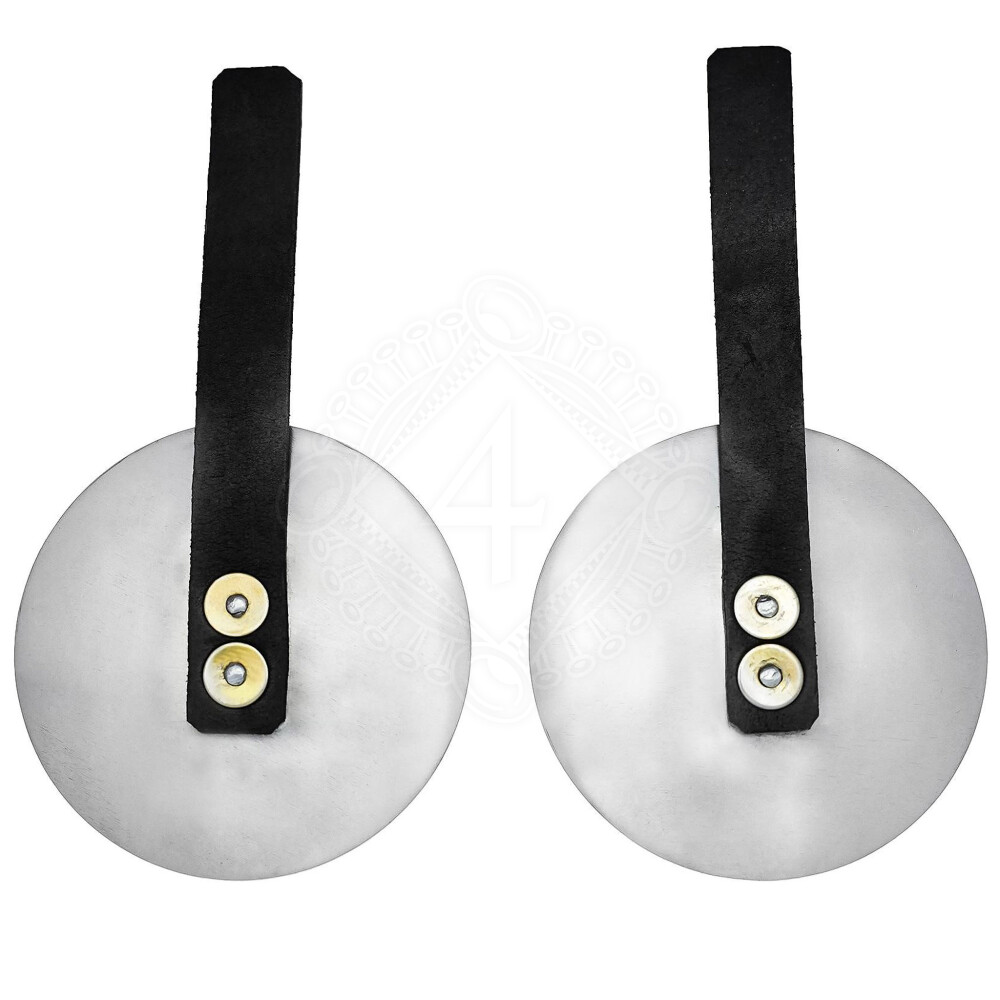

Want to complete your knightly armour with an authentic-looking detail that also serves a practical historical purpose? These Poitiers medieval besagews, also known as armpit guards or armour rondels, are inspired by the protective components of late medieval plate armour. Their historical purpose was to help protect the vulnerable armpit area, where separate armour plates met while still allowing the arms to move freely. Featuring a simple circular design, a bright steel finish and black leather attachment straps, these armour discs make an excellent addition to your knightly equipment. Supplied as a pair, they allow you to equip both shoulders. Further product information ...

Would you like to be notified as soon as the item is in stock?
You will receive a short e-mail as soon as we have it back in stock.
Poitiers Medieval Steel Besagews with Leather Straps, Pair
Round Armour Plates for Armpit Protection
These armour components, traditionally called besagews, represent a straightforward yet ingenious feature of medieval plate armour. Their main purpose was to cover the armpits, where rigid plates could not provide complete protection without restricting movement.
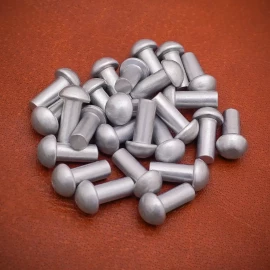
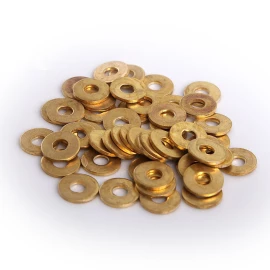
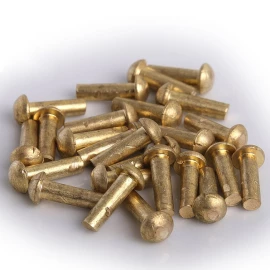
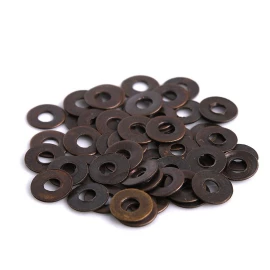
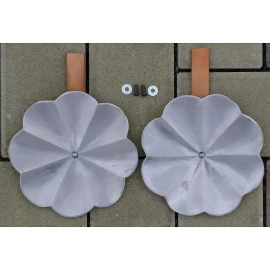
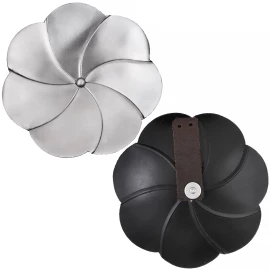
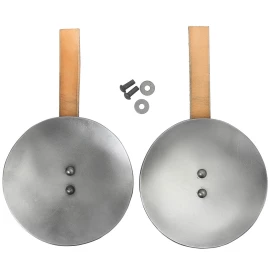
Each guard consists of a smooth, circular steel plate approximately 10 cm (3.94 inches) in diameter. The surface has a silvery metallic finish and a slightly convex shape. Two centrally positioned rivets secure a black cowhide leather strap to the back. Rounded rivet heads are visible on the front, while circular metal washers reinforce the fixing points on the strap side.
The understated, undecorated design complements various styles of historical plate armour. These guards are suitable for completing a knight's costume, historical displays, reenactment and LARP equipment.
How Were Besagews Attached?
Historically, besagews were attached to shoulder armour or other suitable parts of a knight's equipment, positioning them over the opening in front of the armpit. This was a particularly vulnerable area because a gap could appear between the breastplate and shoulder defences when the arms moved.
Use the supplied leather straps to attach these guards to suitable fixing points on your armour. Depending on your equipment, the free ends can be threaded through appropriate attachment points or otherwise secured. Correctly positioned besagews should cover the exposed armpit area without significantly restricting shoulder movement.
Before wearing them, check the rivets, examine the leather straps and confirm the position of both guards. We recommend testing their placement while wearing your gambeson and shoulder armour.
Besagews in the 14th and 15th Centuries
As plate armour developed during the 14th century, European armourers sought better ways to protect joints and other moving parts of the body. While rigid steel plates could protect the chest and limbs, the armpit remained particularly difficult to cover because the arms still needed a considerable range of movement.
One solution was to suspend separate circular or specially shaped plates over gaps in the armour. Besagews were particularly associated with European knightly armour of the 14th and 15th centuries. Their forms varied, ranging from simple circular guards to elaborately decorated examples.
These relatively small pieces of armour illustrate an important principle of medieval armour design: effective protection always required a careful balance between coverage and mobility.
Why the Name Poitiers?
Poitiers is a historic city in western France, near which a major battle of the Hundred Years' War took place in 1356. An English army commanded by Edward, known as the Black Prince, defeated the French forces and captured King John II of France.
The Battle of Poitiers was one of the significant engagements of the 14th century, an era when plate protection was becoming increasingly prominent in knightly armour. The name therefore commemorates the period in which this type of armour component developed. These guards are not claimed to reproduce a specific archaeological find from the battlefield.
Technical Specifications
| Feature | Specification |
|---|---|
| Product type | Besagews / armpit guards for plate armour |
| Historical period | 14th–15th century |
| Plate material | Mild steel |
| Strap material | Cowhide leather |
| Diameter per plate | Approx. 10 cm (3.94 inches) |
| Steel thickness | Approx. 1.6 mm (16 gauge) |
| Shape | Round, slightly convex |
| Finish | Silvery metallic finish |
| Attachment | Riveted leather straps |
| Strap colour | Black |
| Package contents | 2 besagews with leather straps (1 pair) |
| Manufacturer | Lord Of Battles |
Care and Safety Instructions
The steel plates and leather straps require straightforward but regular maintenance:
- After use, wipe the metal surfaces with a soft, dry cloth to remove moisture, perspiration and dirt.
- To help prevent corrosion, apply a light coat of suitable armour maintenance oil or another appropriate steel protection product.
- Inspect the leather straps regularly and treat them with a suitable leather conditioner when necessary.
- Store the armour in a dry, well-ventilated environment. Prolonged exposure to moisture may cause steel corrosion and deterioration of the leather.
- Before each use, check that the rivets are secure and the straps remain properly attached.
- Steel edges can cause injury or damage clothing if handled carelessly.
- Important safety notice: These besagews are not specified as certified protective equipment for HMB, buhurt or other full-contact combat disciplines. Their suitability for a particular form of historical fencing or reenactment combat must be assessed by a responsible event organiser or protective equipment specialist.
Recommended Accessories
To assemble a complete knightly outfit, we recommend combining these guards with plate pauldrons, a breastplate and a padded gambeson in a 14th- or 15th-century style. Suitable padding helps reduce pressure points and improves comfort when wearing armour for extended periods.
Spare leather straps, leather laces for fastening armour components and steel maintenance products are also useful additions. If you are assembling a complete knight's harness inspired by the Hundred Years' War, matching arm defences and elbow cops will help complete the appearance.
We are here for you!