
 Čeština
 Deutsch


14th-15th Century Pointed Laced Low Shoes
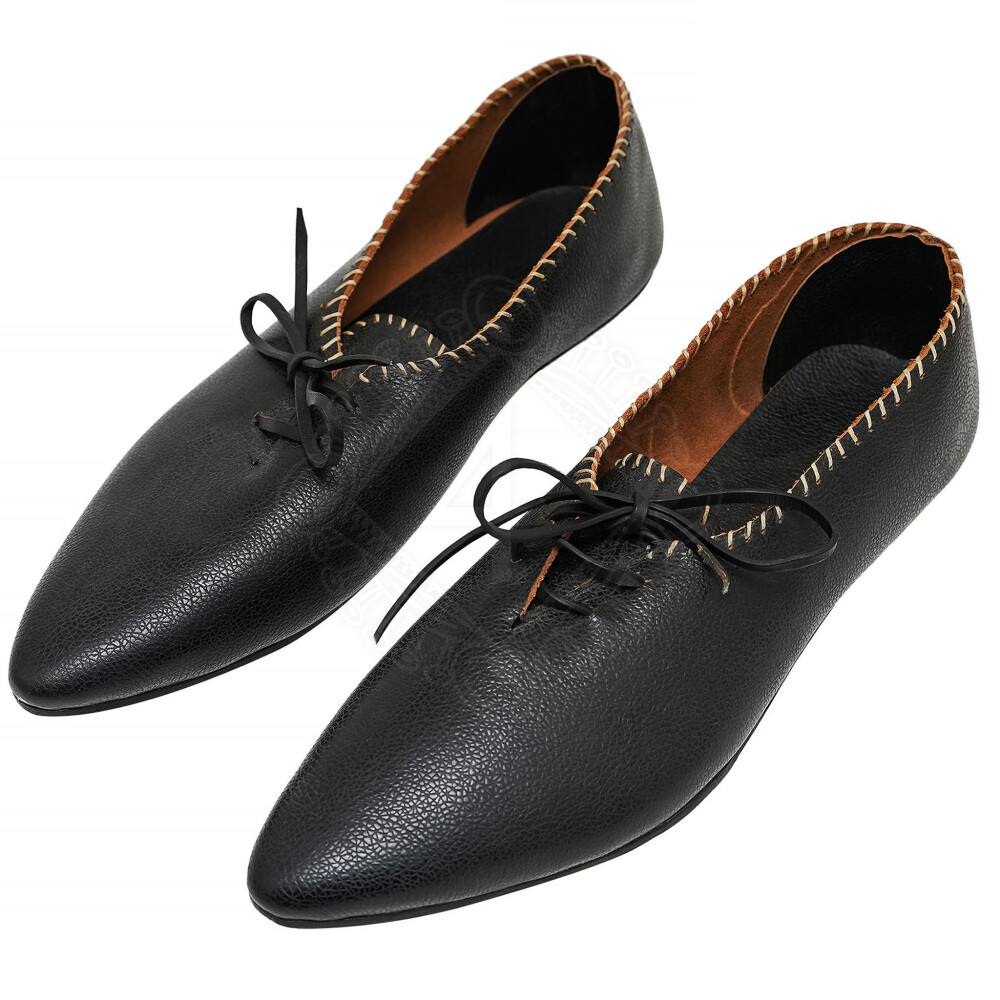
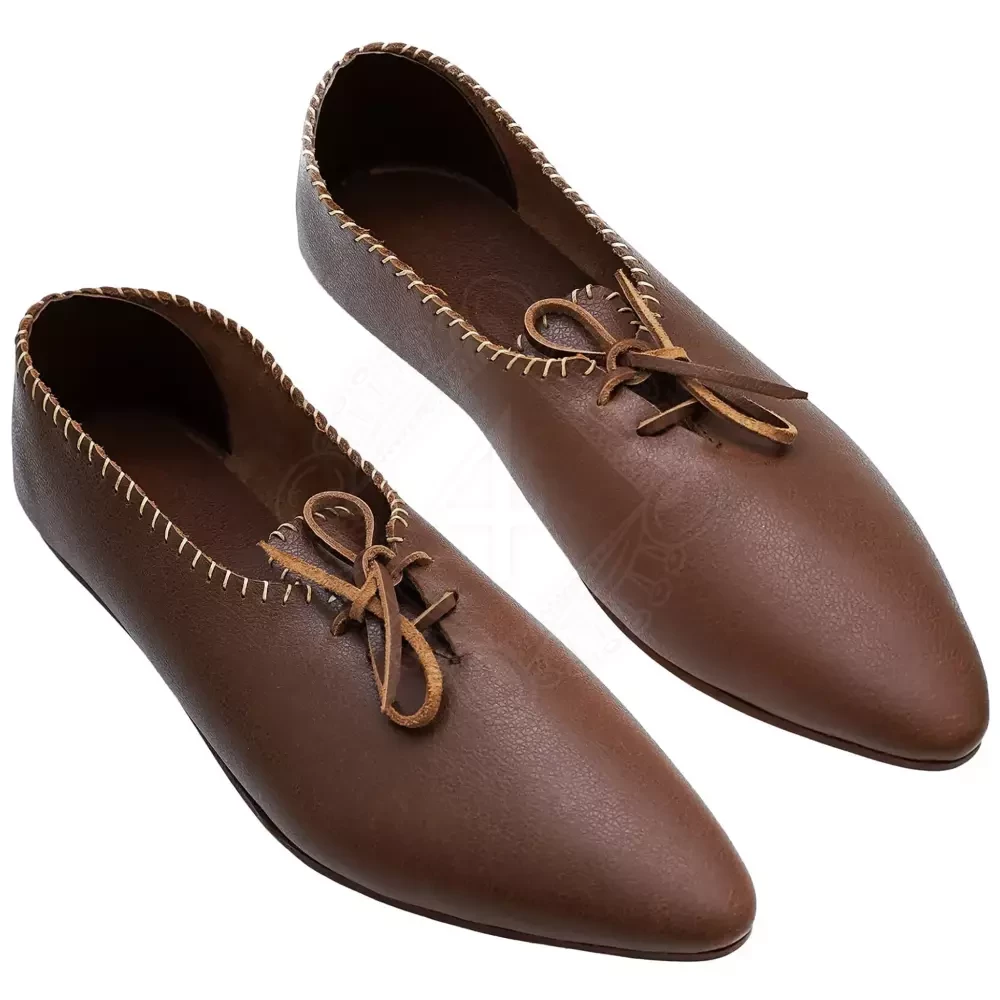
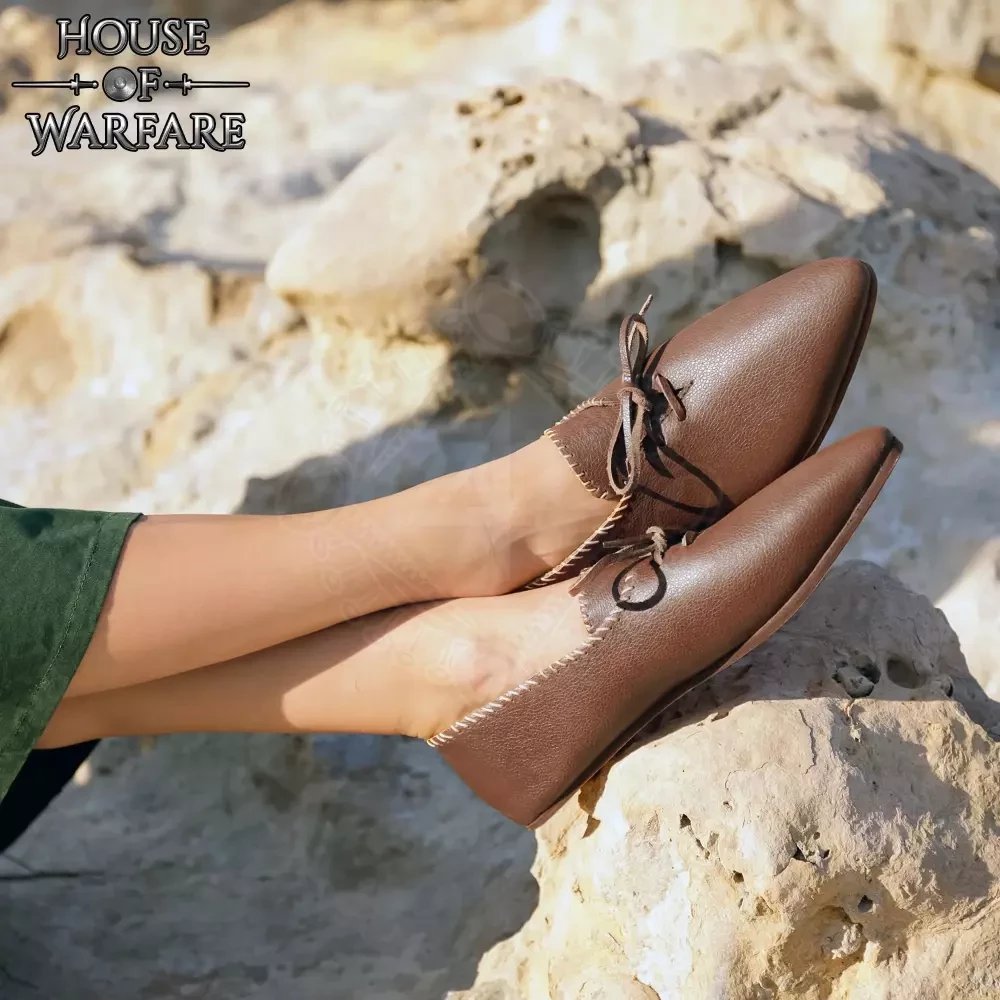
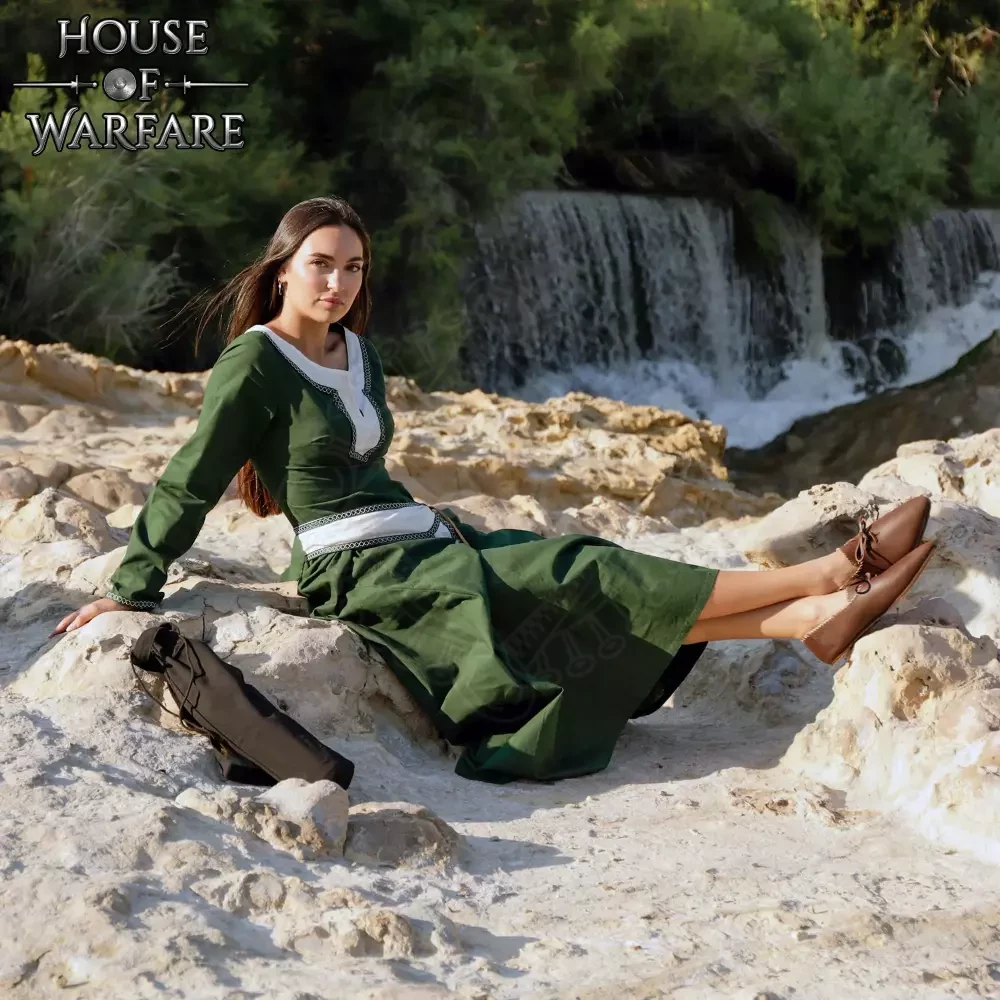
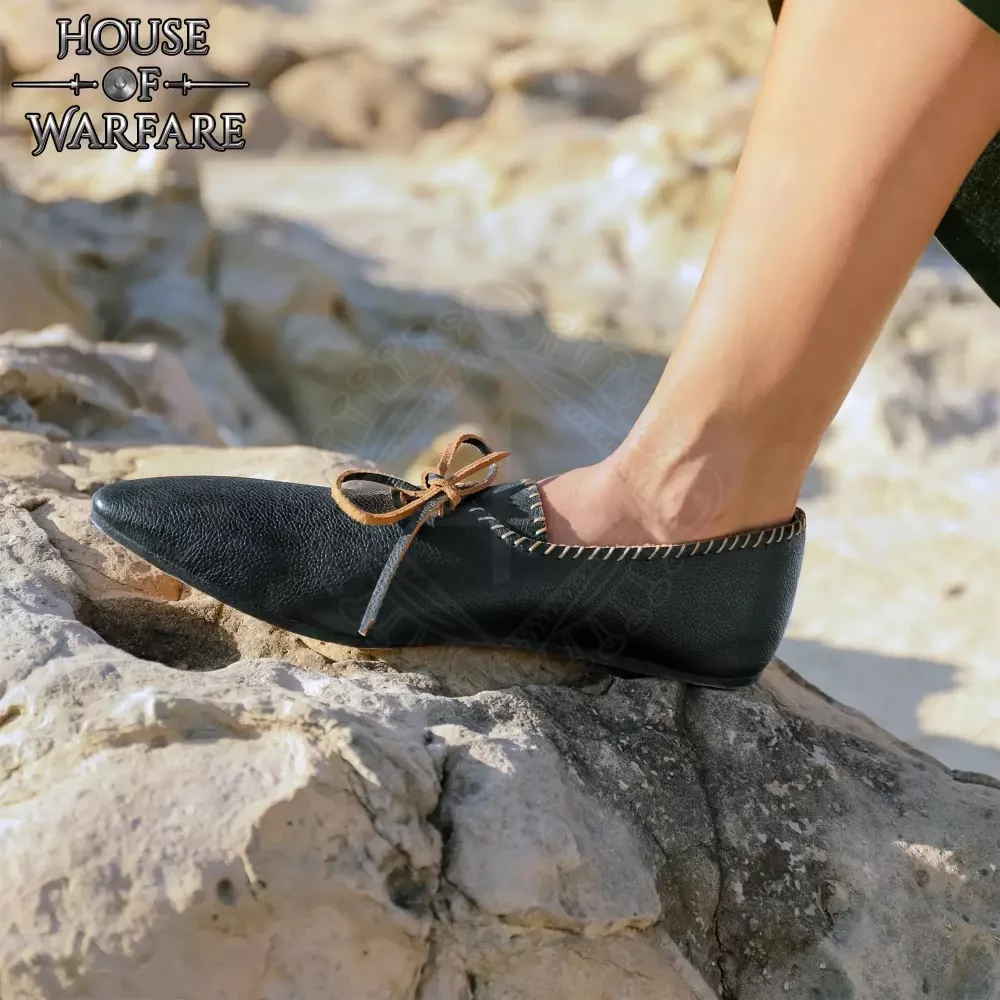
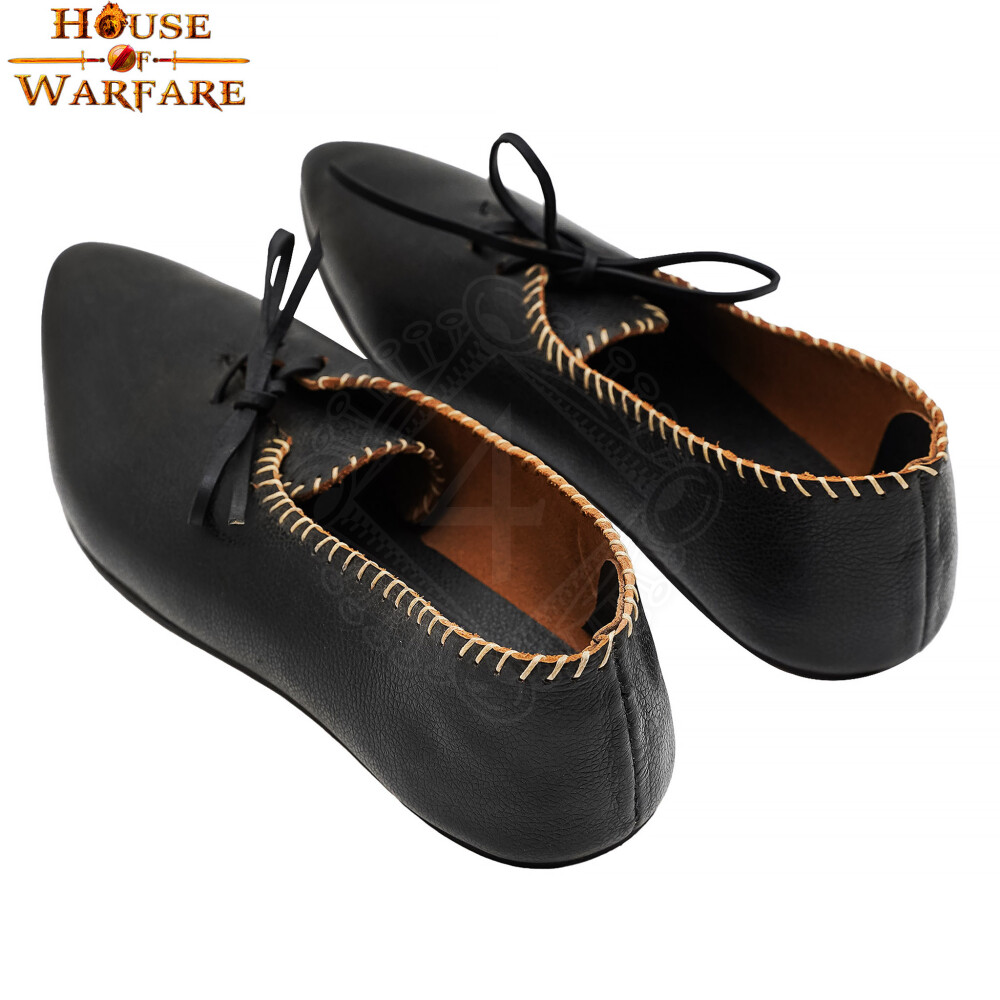

Step into the Late Middle Ages with these elegant, low-cut laced shoes, faithfully replicating the style of footwear worn in the 14th and 15th centuries. This is a quality product from House of Warfare, offering you not only an authentic look for your historical costume but also surprising comfort. Whether you're heading to a medieval festival, a LARP event, or a historical reenactment in the UK, across the European Union, or elsewhere, these shoes will be the perfect complement to your attire, transporting you back several centuries. Further product information ...

 Delivery options
The following variants are currently available:
14th-15th Century Pointed Laced Low Shoes by House of Warfare
Appearance and Construction
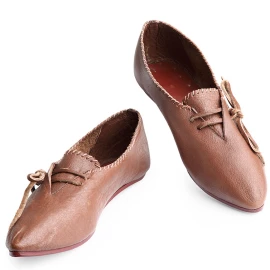
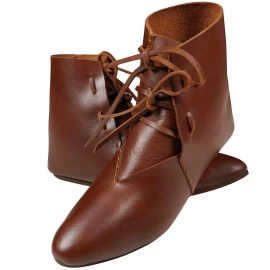
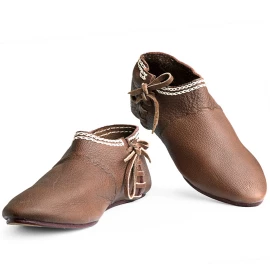
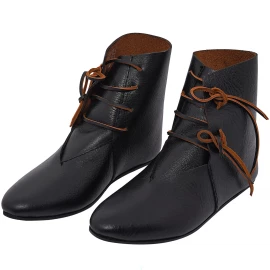
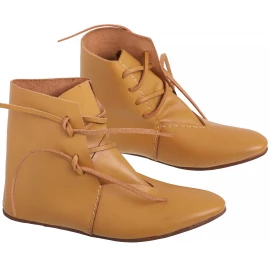
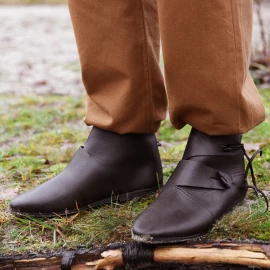
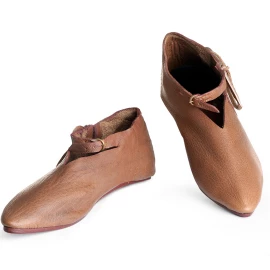
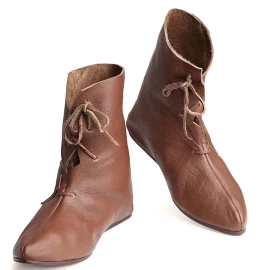
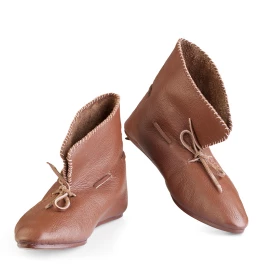
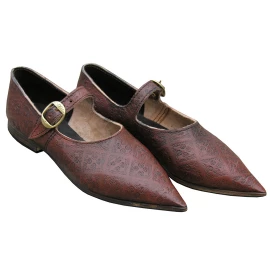
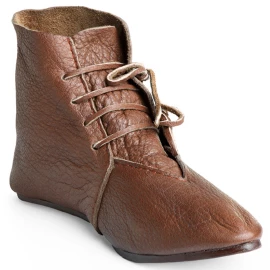
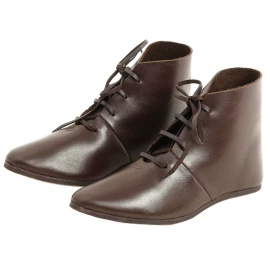
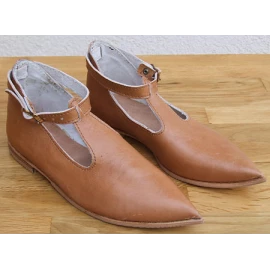
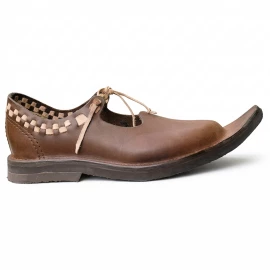
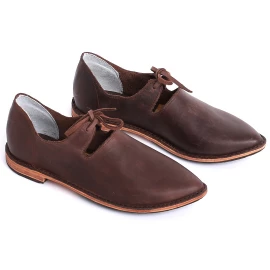
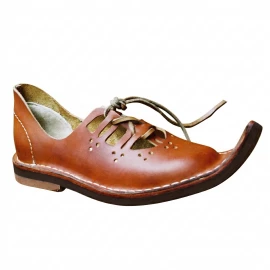
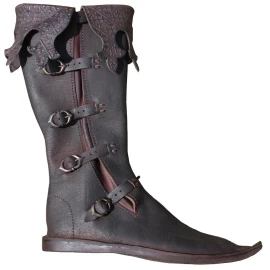
These low shoes, finishing just below the ankle, are characterized by their pointed toe, a fashionable hallmark of the Late Medieval period. They are crafted from quality genuine leather. The accompanying photograph shows a pair of brown shoes. The upper is smooth with minimal seams, underscoring the elegance and simplicity of the cut. The most distinctive feature is the lacing on the instep, which passes through several pairs of eyelets and is tied with a simple bow using a leather thong. The opening of the shoe is adorned with light-coloured, contrasting stitching, adding to its visual appeal. The sole is thin and flat, consistent with historical examples. These shoes are available in black and brown, in EU sizes 36 to 45.
How You Can Use This Product
These laced low shoes are an ideal choice for a wide range of historical and fantasy characters and occasions:
- Reenactment and Historical Portrayals: Perfect for depicting characters from the Late Middle Ages (14th-15th century), whether burghers, nobility, artisans, or other inhabitants of contemporary towns and villages at events throughout England and continental Europe.
- LARP and Cosplay: An excellent addition to the costume of a noble, merchant, scholar, mage, or any character where elegant and period-appropriate footwear is desired.
- Medieval Markets and Festivals: You will feel like a part of history wearing these at fairs, town celebrations, or castle festivals held across the UK and other European countries.
- Theatre and Film: An authentic replica for historical or fantasy plays and films.
- Historical Dance Performances: Their construction may also make them suitable for historical dances.
With these shoes, you will add a touch of authenticity and elegance to your costume.
Historical Context
Footwear in the 14th and 15th centuries underwent significant development, evolving towards greater variety and sophistication compared to earlier medieval periods. One of the most striking fashion elements was the pointed toe, known as "poulaines" or "crakowes." The length of the toe could vary and often reflected the social status of the wearer – the longer the point, the higher the rank. Extremely long points sometimes even had to be tied with a chain to the knee to prevent tripping. Low, laced shoes of a similar type to these were common footwear for both men and women across various social classes, although the length of the toe and the quality of the material differed. Leather was the primary material, and shoes were handmade. Lacing on the instep was one of the common methods of fastening.
An Interesting Fact from History: Fashion Extremes and Sumptuary Laws
The extreme length of shoe points (poulaines) became such a fashion craze that various prohibitions and regulations, known as sumptuary laws, were issued against them. For example, in England, King Edward IV restricted the length of shoe points by law in 1463 to a maximum of two inches (approx. 5 cm) for non-nobles. Nobility was permitted to wear longer points. The Church also criticized these shoes as a sign of vanity and pride. This fashion trend eventually subsided by the end of the 15th century, giving way to shoes with wider and rounder toes.
Looking After Your Shoes
To ensure your medieval leather shoes from House of Warfare retain their original beauty and serve you for as long as possible:
- Cleaning: Regularly remove dust and dirt with a soft brush or a dry cloth. For more stubborn dirt, use a lightly damp cloth.
- Drying: If the shoes get wet, allow them to air dry naturally at room temperature. Never dry them near heat sources such as radiators or in direct sunlight, as the leather could harden and crack. You can stuff them with newspaper to help maintain their shape and absorb moisture.
- Conditioning and Nourishing: Leather needs to be regularly nourished and protected. Use quality waxes, creams, or balms designed for leather footwear. Conditioning helps to protect the leather from moisture and dirt.
- Sole: As these shoes feature a thin leather sole, be mindful of where you walk in them. For extended durability and better comfort on modern surfaces, you might consider having a thin rubber sole added by a cobbler (though this is not historically accurate).
- Storage: When not in use, store them in a dry, well-ventilated place, ideally with shoe trees to maintain their shape.
With love and care, these shoes will bring you joy for many seasons and historical adventures to come.
We are here for you!





.3773623034.1696456237.png.webp)

.3773623034.1696456268.png.webp)
.3773623034.1696456247.png.webp)