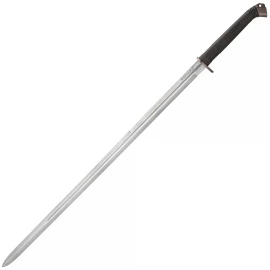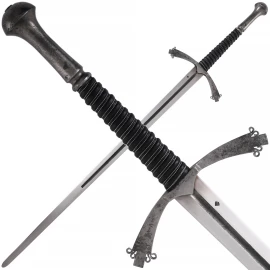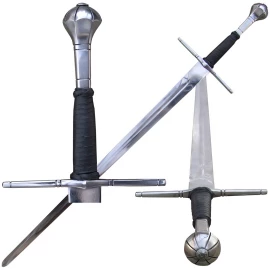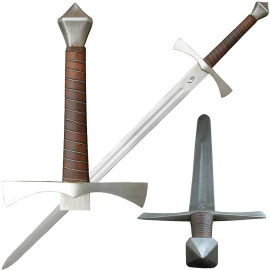

14th Century Longsword "Black Prince" Type, Royal Armouries IX.1106 – Replica
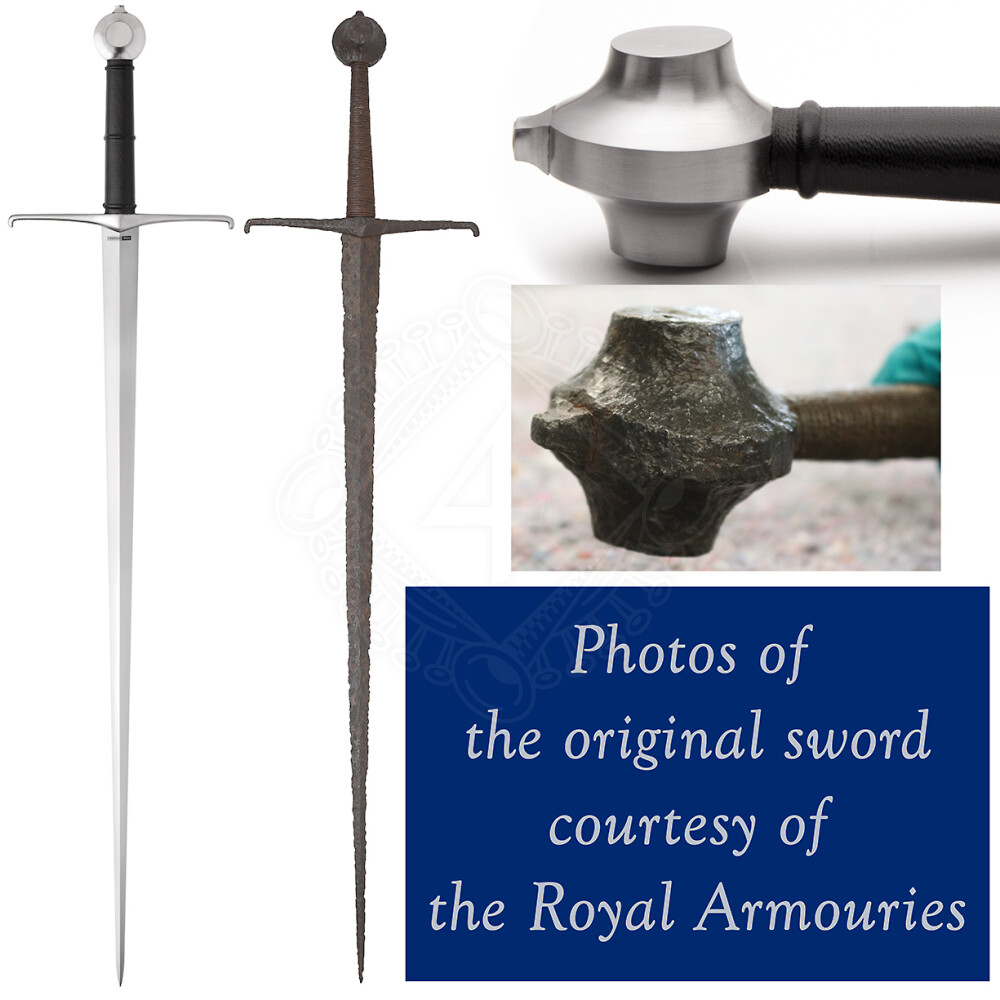
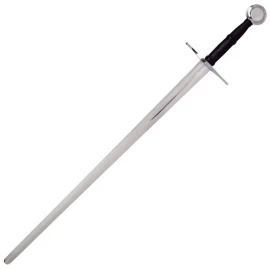
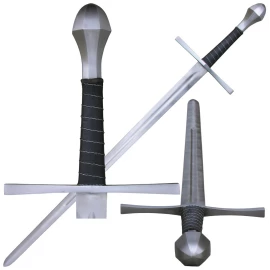
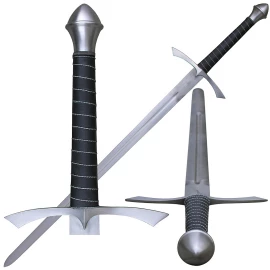
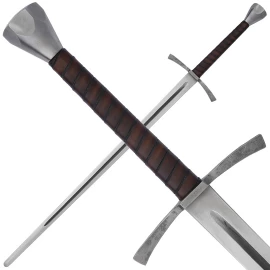
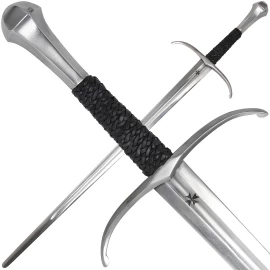
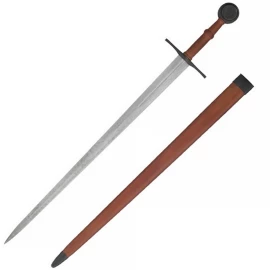
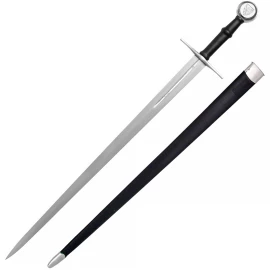
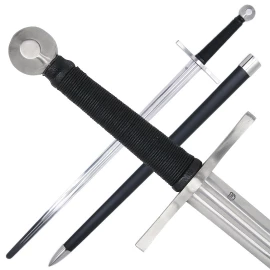
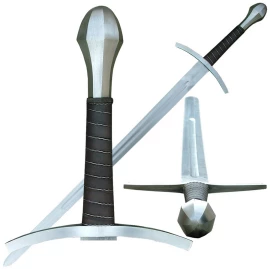
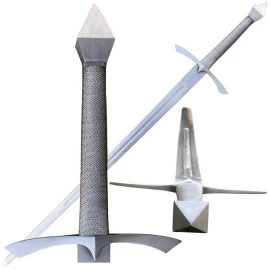
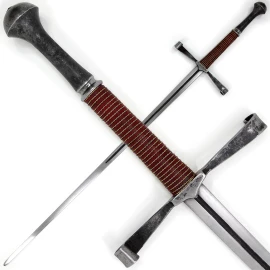
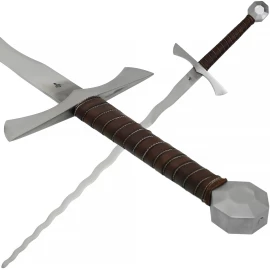
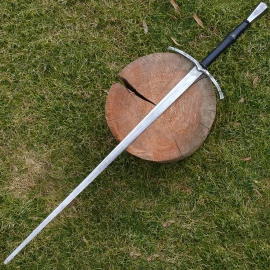
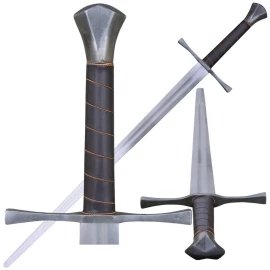
If this sword looks familiar, it should. This remarkable longsword is a faithful replica of the Royal Armouries IX.1106, a knightly sword from the mid-to-late 14th century. It's the same type as the famous sword most scholars agree belonged to Edward of Woodstock, the Black Prince. With its imposing presence and historical significance, this hand-and-a-half sword, featuring robust proportions and a distinctive large wheel pommel, is now available for you, crafted with meticulous attention to historical detail and quality. Further product information ...
Would you like to be notified as soon as the item is in stock?
You will receive a short e-mail as soon as we have it back in stock.
14th Century Longsword "Black Prince" Type, Royal Armouries IX.1106 – Replica
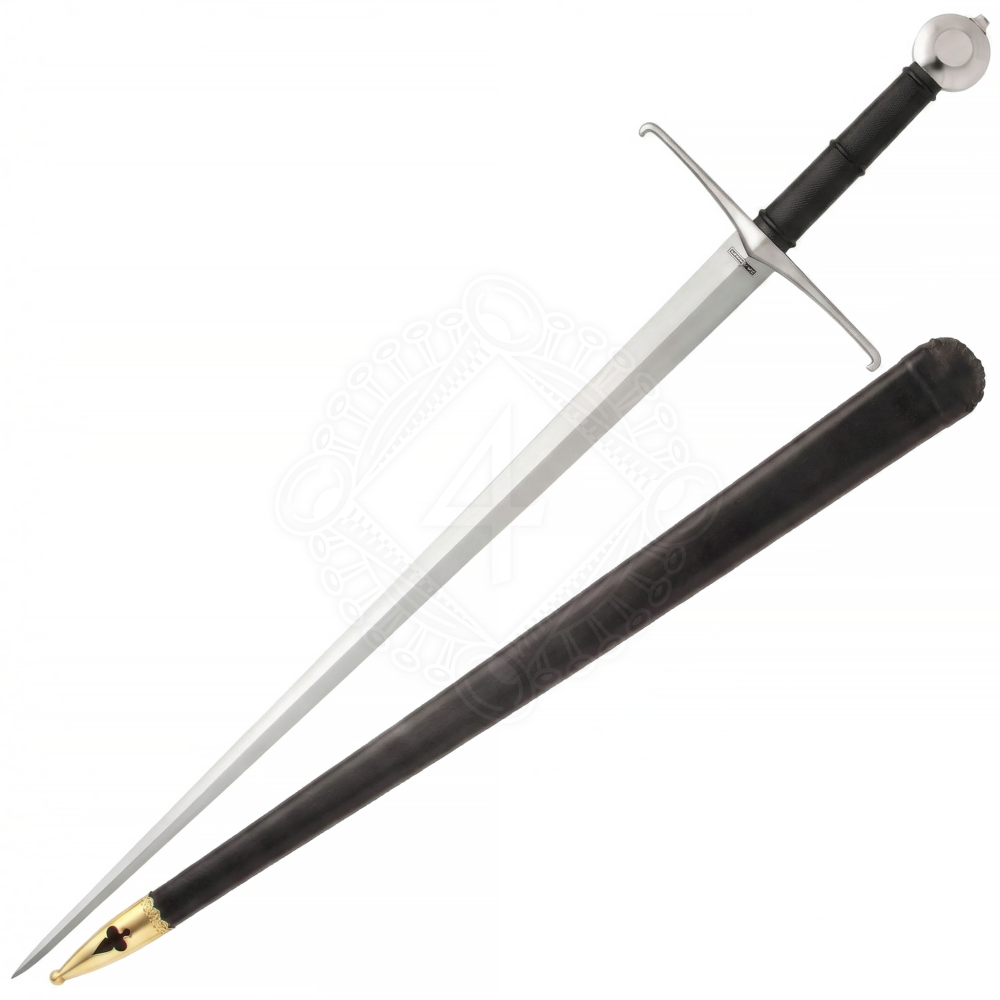
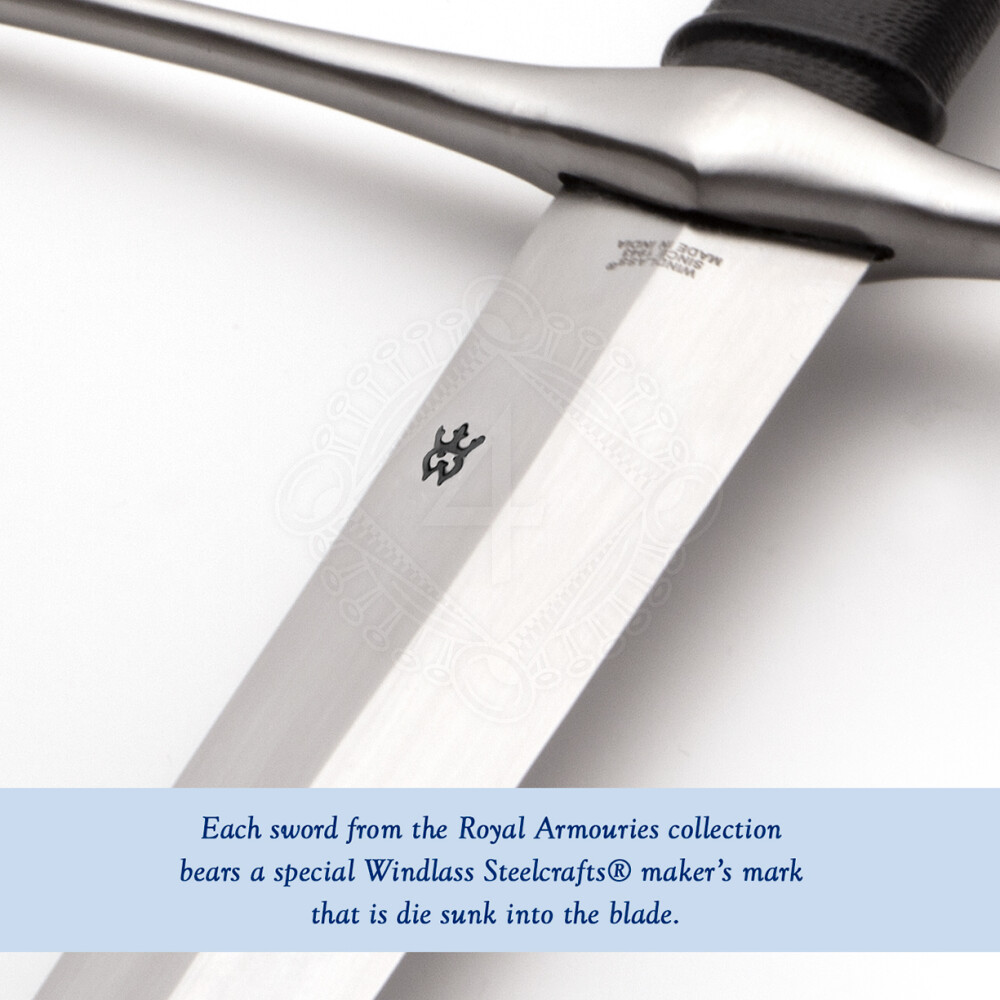
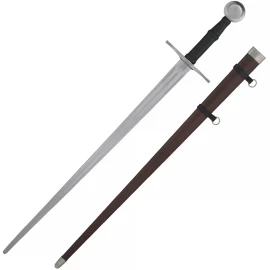
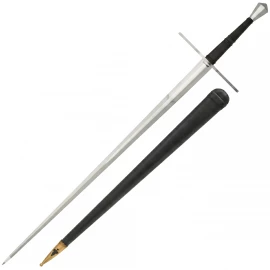
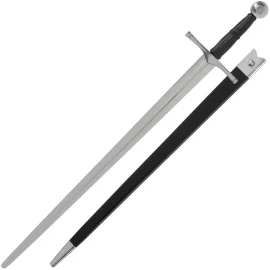
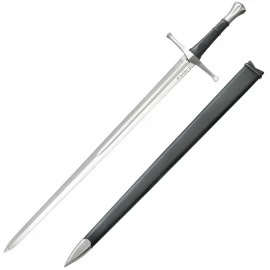
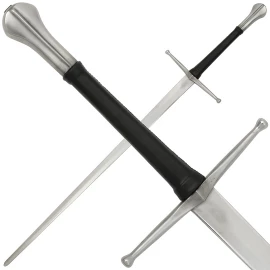
The overall robustness of this sword is immediately striking. Weighing 1.775g (3 lbs 14 oz) and with an overall length of 111cm (43 3/4"), this is a weapon fit for a knight. The straight, double-edged blade, measuring 88cm (34 2/3"), is hand-forged from superior modern 1080 high carbon steel and fully tempered, giving it properties even exceeding the original. The blade features a simple flatted diamond cross-section and is distally tapered, from 11mm (7/16") thick at the guard to 5.5mm (7/32") at the tip, ensuring proper weight distribution and stiffness. The striking edge is approximately 1mm thick, making the blade semi-sharp. A small maker's mark in the shape of a shield can be seen on the ricasso (the unsharpened part of the blade near the guard).
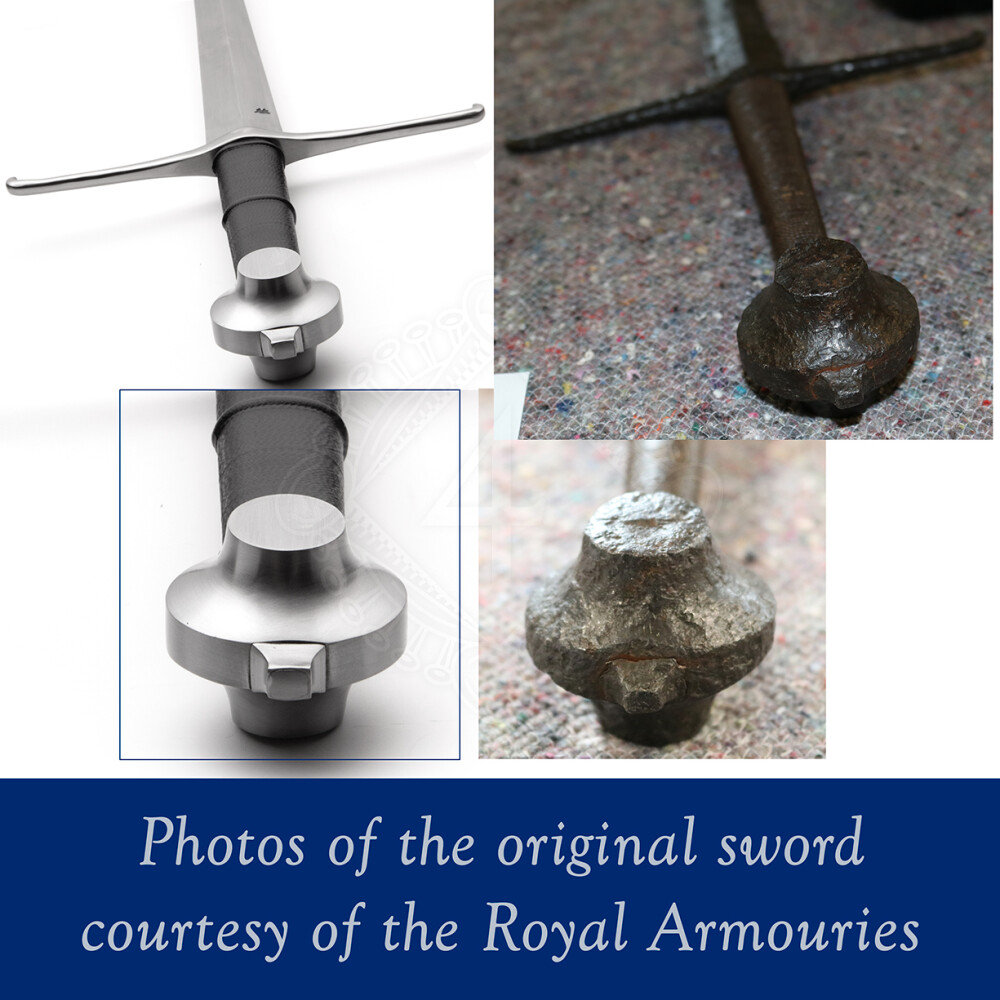
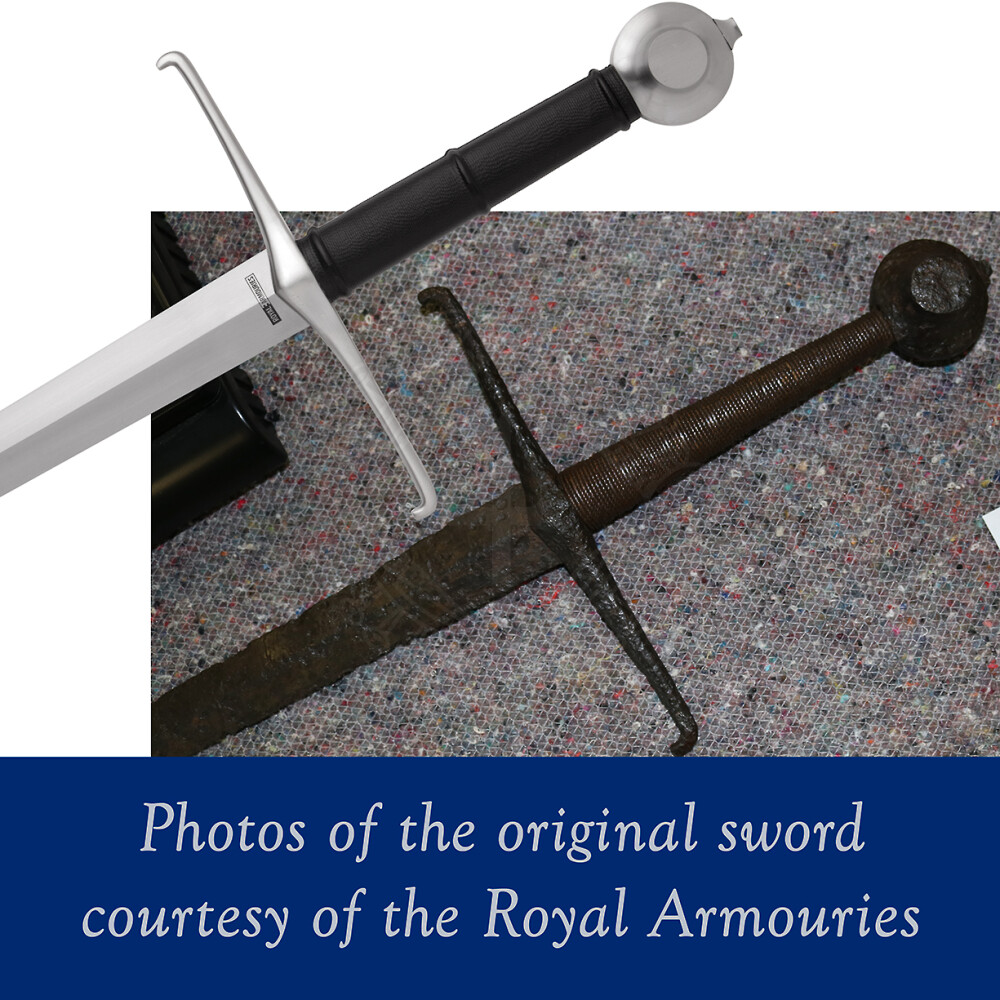
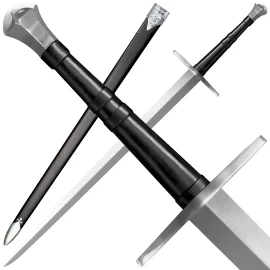
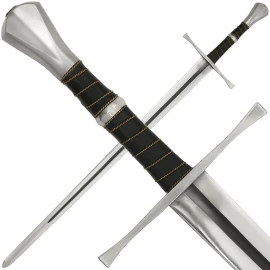
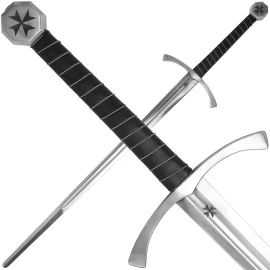
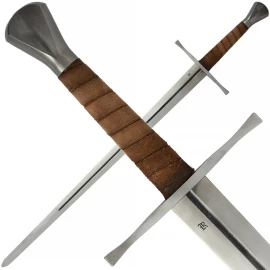
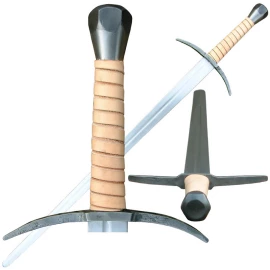
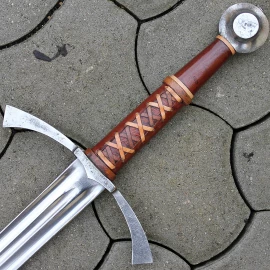
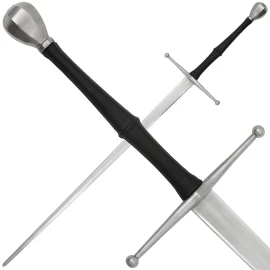
The hilt is designed as a "hand-and-a-half," meaning you can comfortably wield it with one or two hands. It is wrapped in black leather, with two subtle risers dividing the grip for a firmer, more secure hold. The imposingly large steel wheel pommel not only perfectly balances the long blade but also features unique shaping: its front and back planes are distinctively canted inward at the top. The straight, elegant steel crossguard, 26cm (10 1/4") wide, has gently flared and downturned ends, providing excellent hand protection.
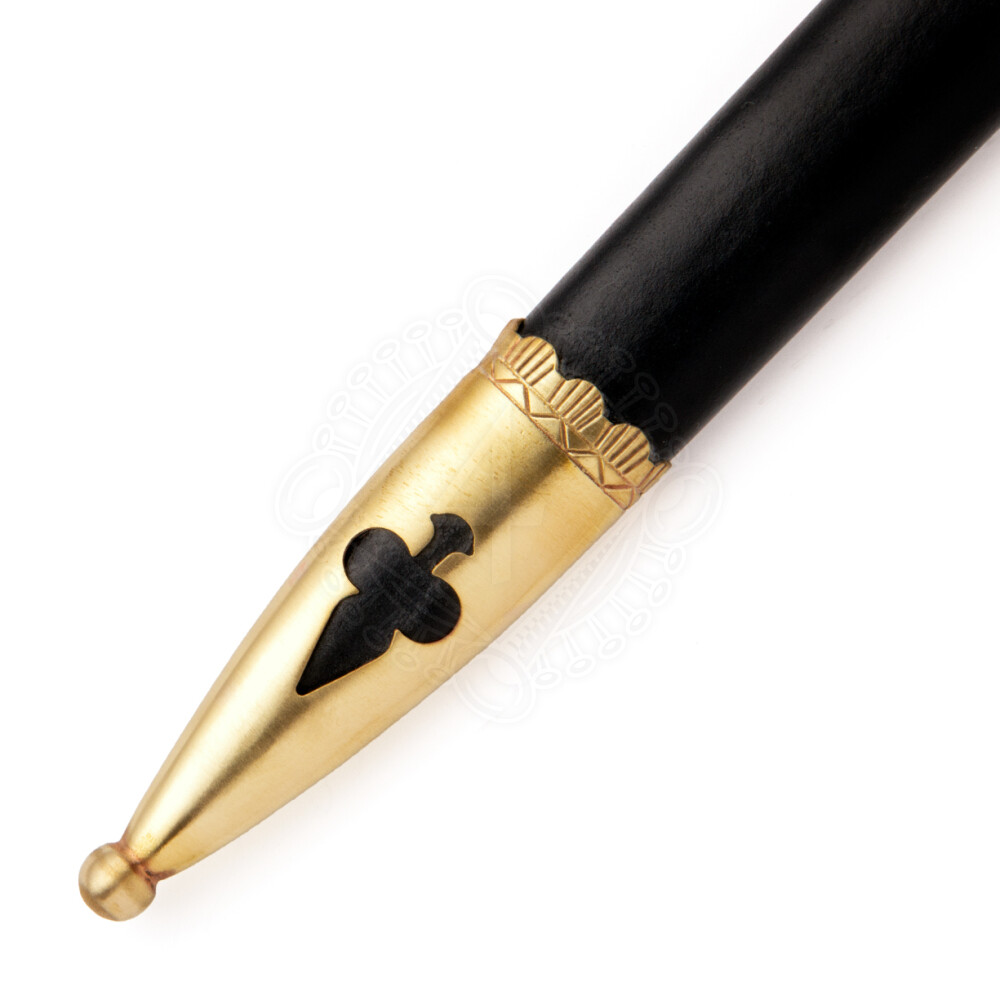
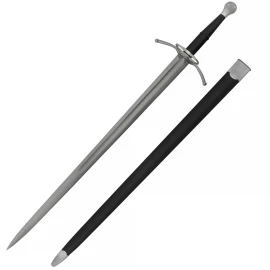
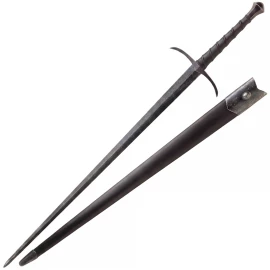
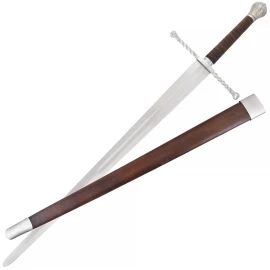
The sword includes a period-accurate scabbard. Its body is wooden, covered with quality black leather. The tip of the scabbard is reinforced with a brass chape featuring a traditional cut-out design (often a trefoil or quatrefoil shape) and a small ball finial. At the throat of the scabbard, the leather extends upwards, neatly covering part of the crossguard at the ricasso.
How You Can Use This Sword
This top-quality replica by Windlass Steelcrafts® is ideal for several purposes:
- Collecting: As an officially licensed Royal Armouries product, complete with a certificate of authenticity, this sword is a superb addition to any collection of bladed weapons or medieval artifacts.
- Decoration: Its impressive appearance will make it a commanding centerpiece in your home, study, or private armoury.
- Historical Reenactment: Due to its robust construction and semi-sharp edge (approx. 1mm), it may be suitable for certain forms of historical reenactment and living history displays where a fully sharpened blade is not required (always verify the rules of your specific group or event). It can be considered suitable for light, controlled sparring with appropriate protective gear.
- Study Purposes: The detailed craftsmanship allows for the study of the design, balance, and feel of medieval longswords.
History of the IX.1106 Sword Type
The original sword (Royal Armouries IX.1106) this replica is based on was found in Lake Constance, where Austria, Germany, and Switzerland meet. It dates to the mid-to-late 14th century. Swords of this type were widely used across Europe in the second half of the 14th century. They were principally wielded by armoured men-at-arms and knights, usually one-handed on horseback or two-handed on foot. Such swords would have been familiar to fencing masters like Fiore dei Liberi and used in battles such as Sempach in 1386.
Due to the notable stiffness and mass of its blade, this sword type seems quite specialized for combat against armoured opponents, often employing "half-swording" techniques (gripping the blade with one hand for more precise and powerful thrusts). The edge geometry of the original is quite obtuse, but the blade has a lot of presence in the strike. Equally, the weighty pommel could be used with good effect to strike in close combat.
A Fascinating Historical Note
The most famous association of this sword type is with Edward of Woodstock, the English crown prince known as the Black Prince (1330–1376). While direct ownership of the specific IX.1106 artifact by the Black Prince is not definitively confirmed, it is very much the type of weapon a knight of his status and era would have used. The discovery of the original in Lake Constance also adds to its mystique, as bodies of water often served as sites for ritual depositions of valuable items, or weapons were lost during battles or accidents.
Technical Specifications
- Overall Length: 111cm (43 3/4")
- Blade Length: 88cm (34 2/3"), double-edged
- Guard Width: 26cm (10 1/4")
- Blade Width at Ricasso: 44mm (1 3/4")
- Blade Distal Taper: 11mm (7/16") thick at guard, 5.5mm (7/32") at tip
- Edge: Semi-sharp, striking edge approx. 1mm thick
- Weight: 1.775g (3 lbs 14 oz)
- Blade Material: 1080 High Carbon Steel
- Manufacturer: Windlass Steelcrafts®
- Included: Wood scabbard covered in leather with brass chape, signed certificate of authenticity on heavy stock.
How to Care for Your Sword to Maintain Its Beauty
To keep your sword in perfect condition for many years, follow these simple guidelines:
- Cleanliness: After every handling (especially with bare hands), wipe the blade with a clean, dry cloth. Human perspiration is corrosive and can cause rust.
- Conservation: Regularly (at least once a month, or after each use) apply a thin coat of conservation oil or wax (e.g., mineral oil, silicone oil, Renaissance Wax) to the blade. This will protect it from moisture and corrosion.
- Storage: Store the sword in a dry environment. If storing it in its scabbard, ensure the scabbard is completely dry. Long-term storage in a leather scabbard can sometimes trap moisture and lead to corrosion, so check regularly.
- Wood and Leather: You can treat the leather parts of the hilt and scabbard with a leather conditioner to prevent them from drying out and cracking. Wooden parts do not require special care but should be protected from extreme humidity or dryness.
Principles of Safe Use
Even though this is a replica with a semi-sharp edge, it is still a potentially dangerous object. Please observe the following:
- Handling: Always handle the sword with respect and caution. Never point it at yourself or others, or at animals.
- Space: Ensure you have plenty of free space around you during any manipulation (even when simply drawing it from the scabbard).
- Storage: When not in use, store the sword in a safe place, out of reach of children and unauthorized individuals.
- Purpose: Remember that this is primarily a collector's and decorative item. It is not designed for cutting hard objects or for combat without proper training and protective gear.
- Inspection: Before each handling, check that all parts of the sword are secure and in good condition.
Acquire this piece of history and hold in your hands a weapon that evokes the age of knights, battles, and legends. This 14th Century Longsword is more than just steel – it is a legacy of the bravery and artistry of bygone eras.
We are here for you!