 Čeština
 Deutsch


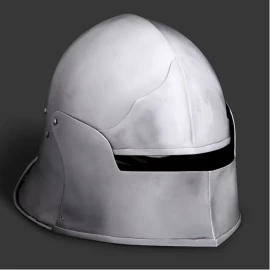
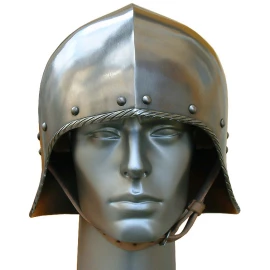
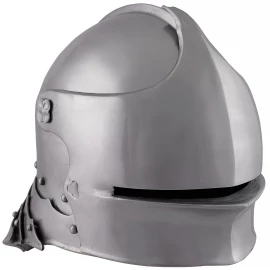
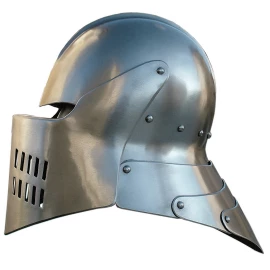
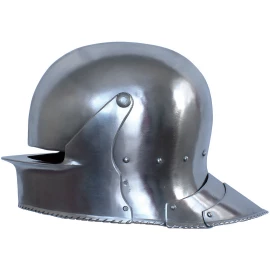
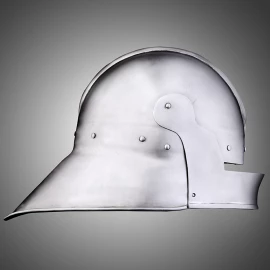
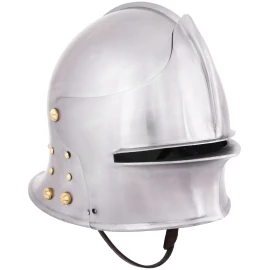
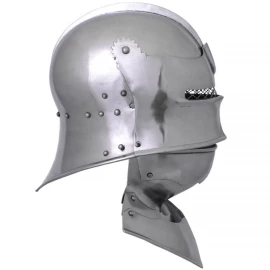
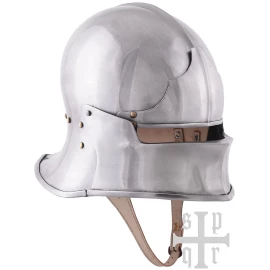
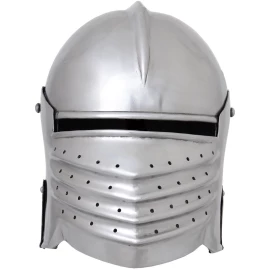
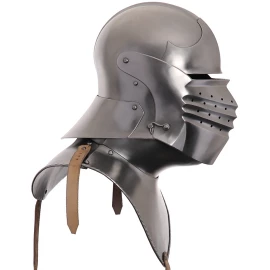
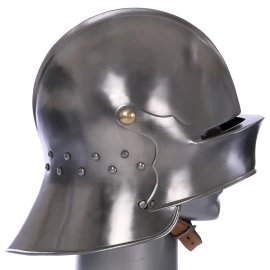
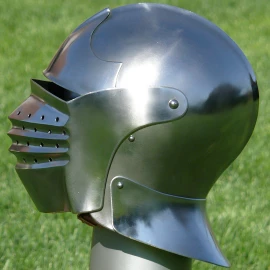
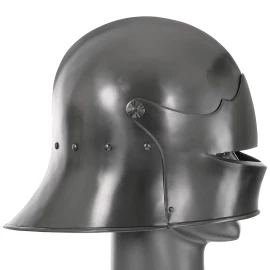
German Sallet Helmet with Visor – 15th Century Gothic Armor
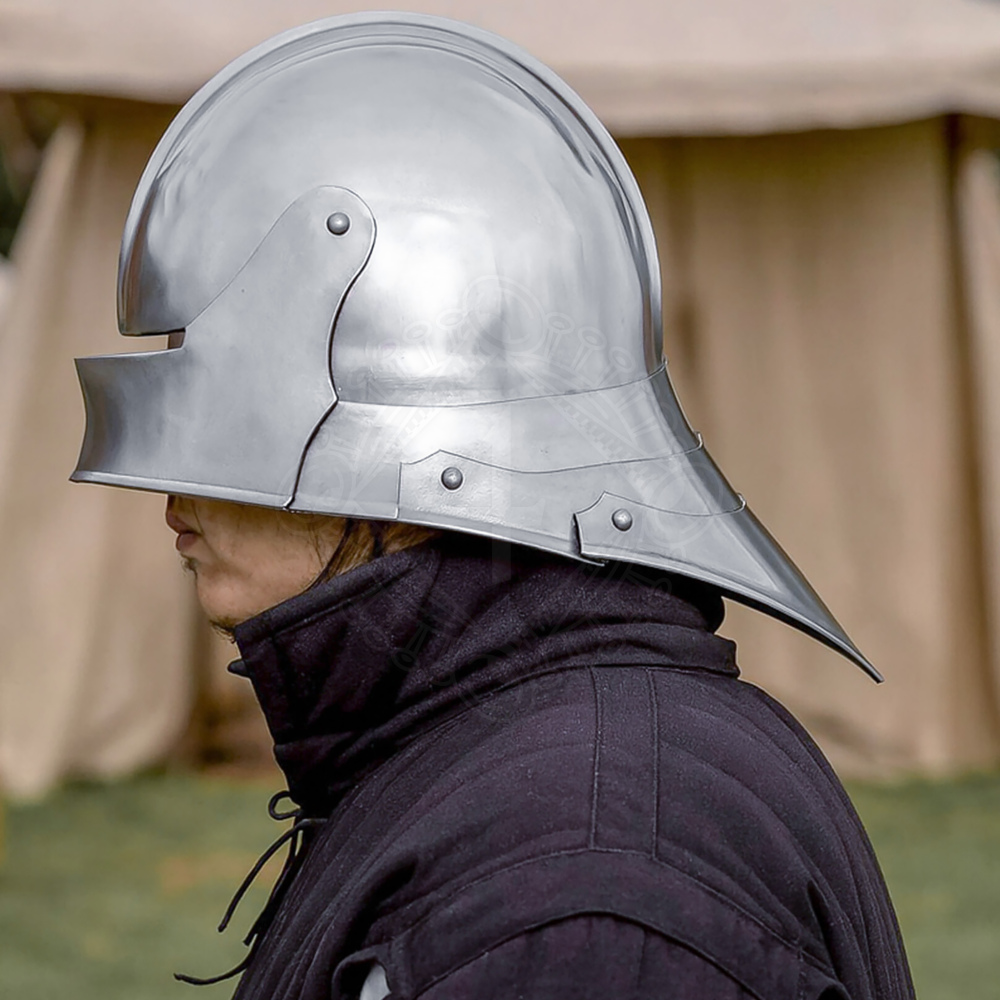
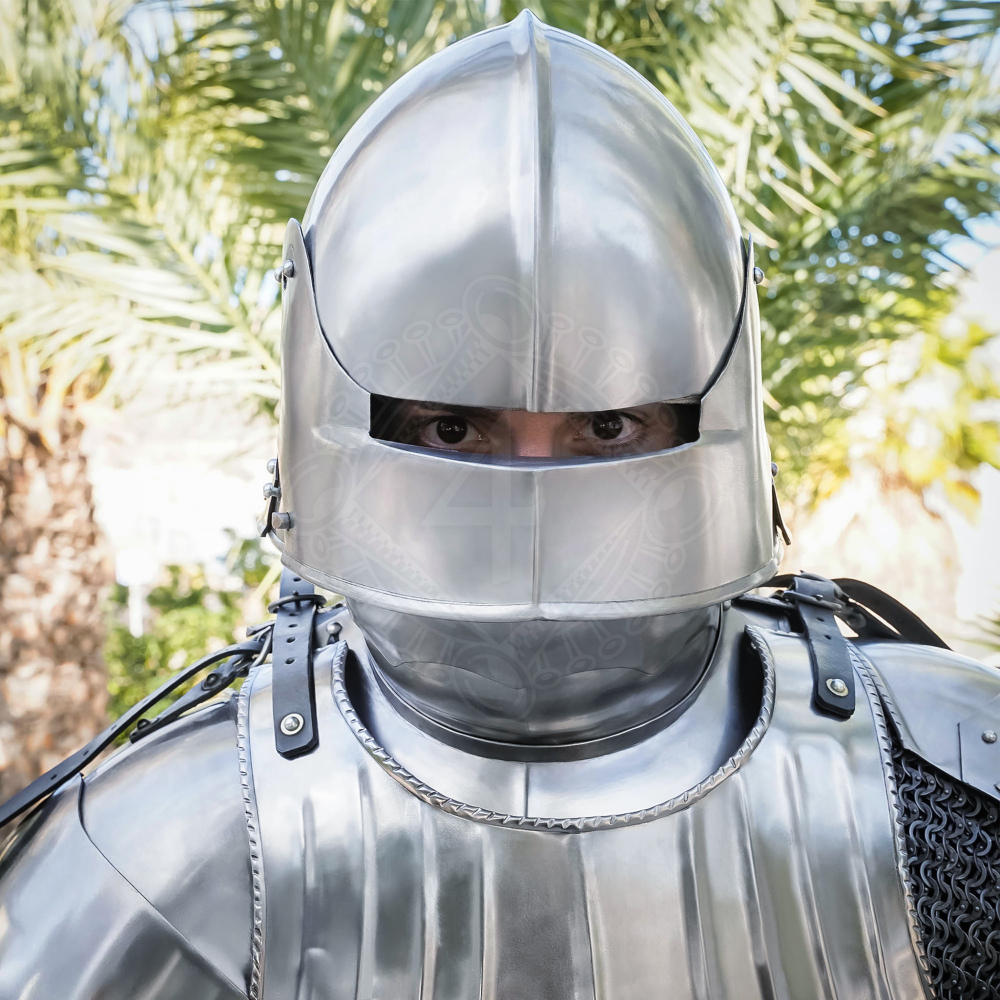
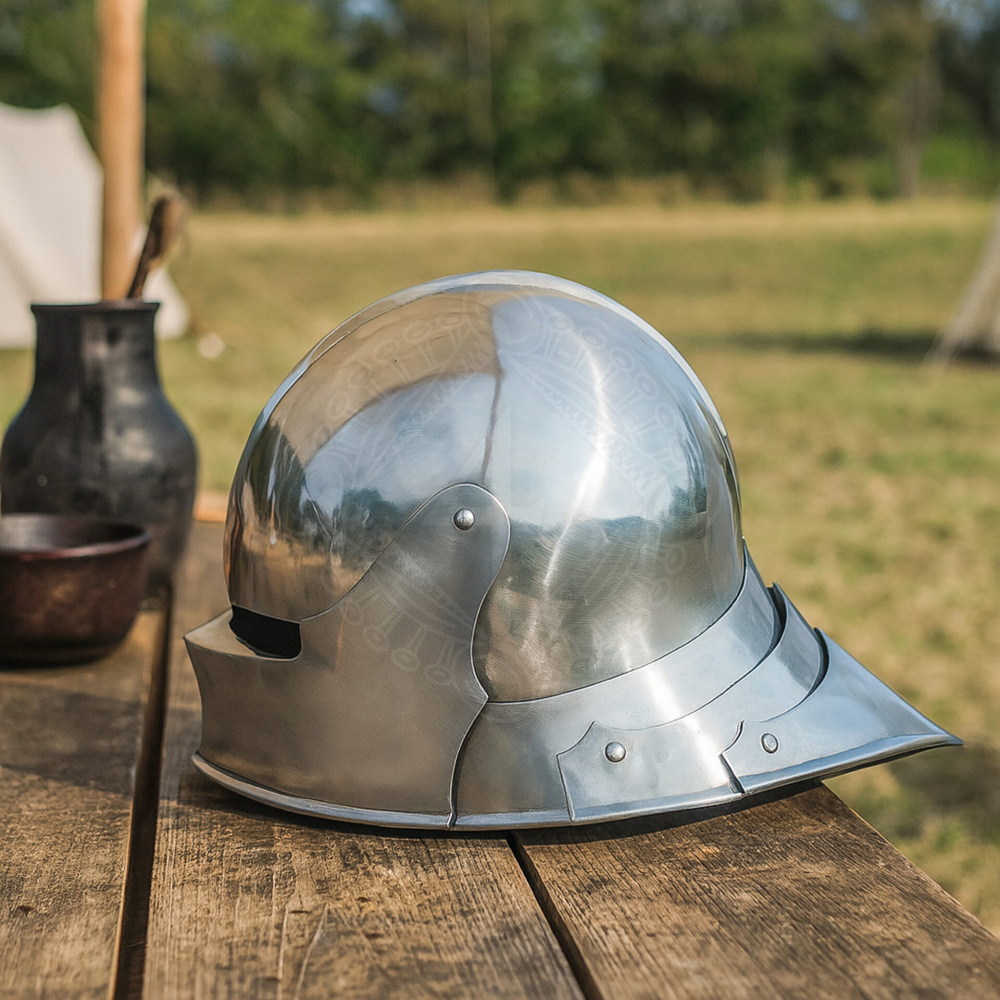


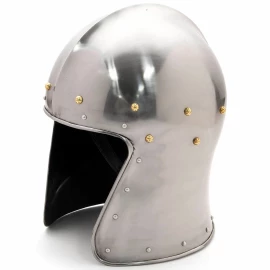
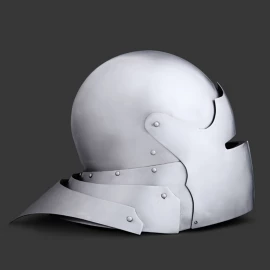
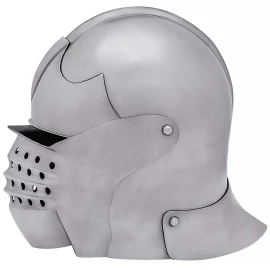
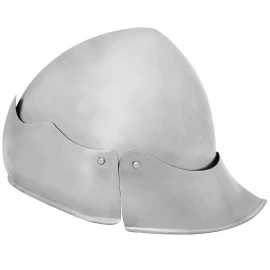
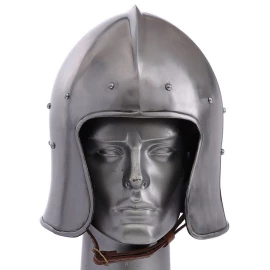
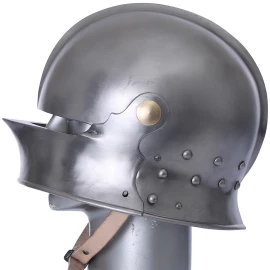
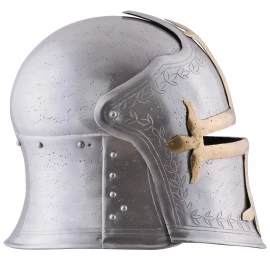
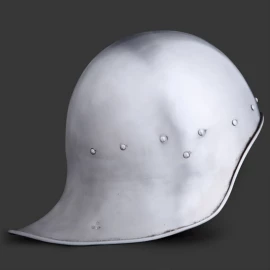
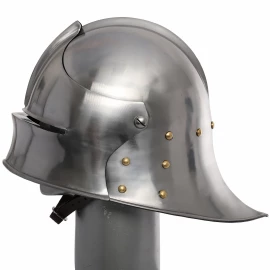
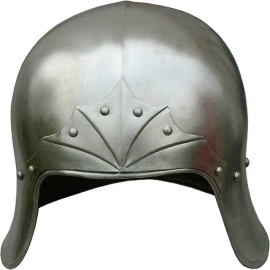
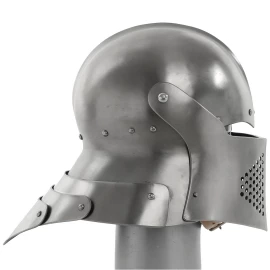
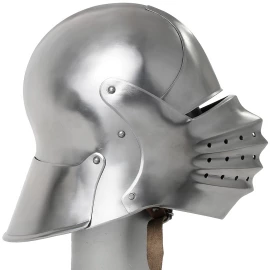
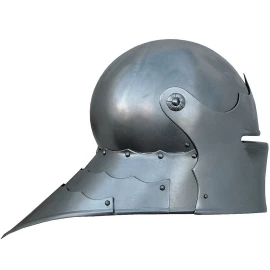
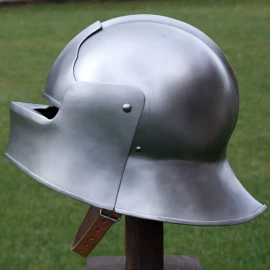
Transport yourself to the late Middle Ages, when elegant Gothic plate armor dominated the battlefields. The German Sallet is one of the most recognizable helmets of the 15th century and was universally the most popular head protection of its time across Europe. It was worn by both infantry and heavy cavalry. This faithful reproduction offers you an authentic look, comfortable wear, and solid protection for historical fencing, reenactment, and LARP. Further product information ...

The following variants are currently available:
German Sallet Helmet with Visor – 15th Century Gothic Armor
Construction and Finish
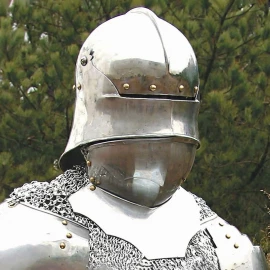
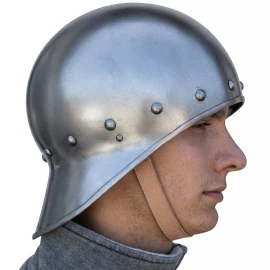
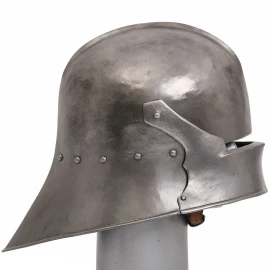
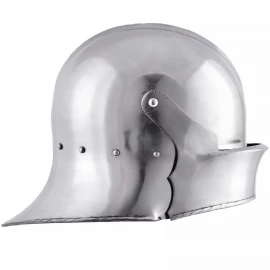
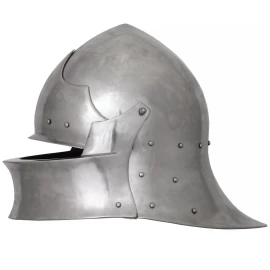
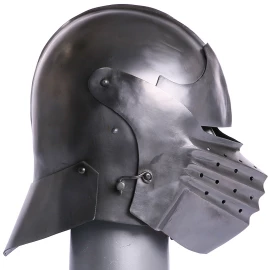
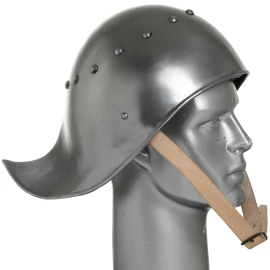
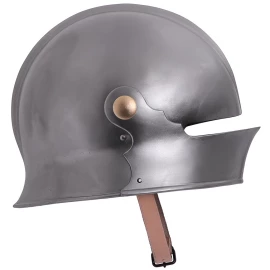
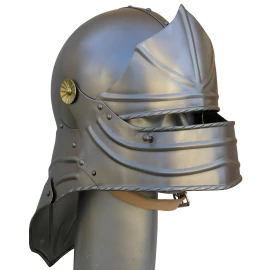
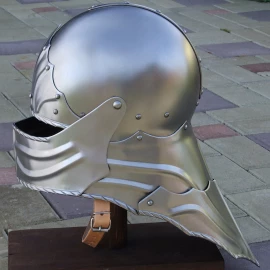
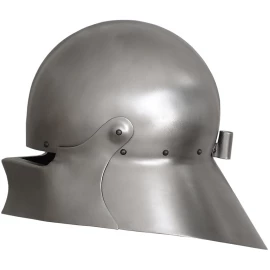
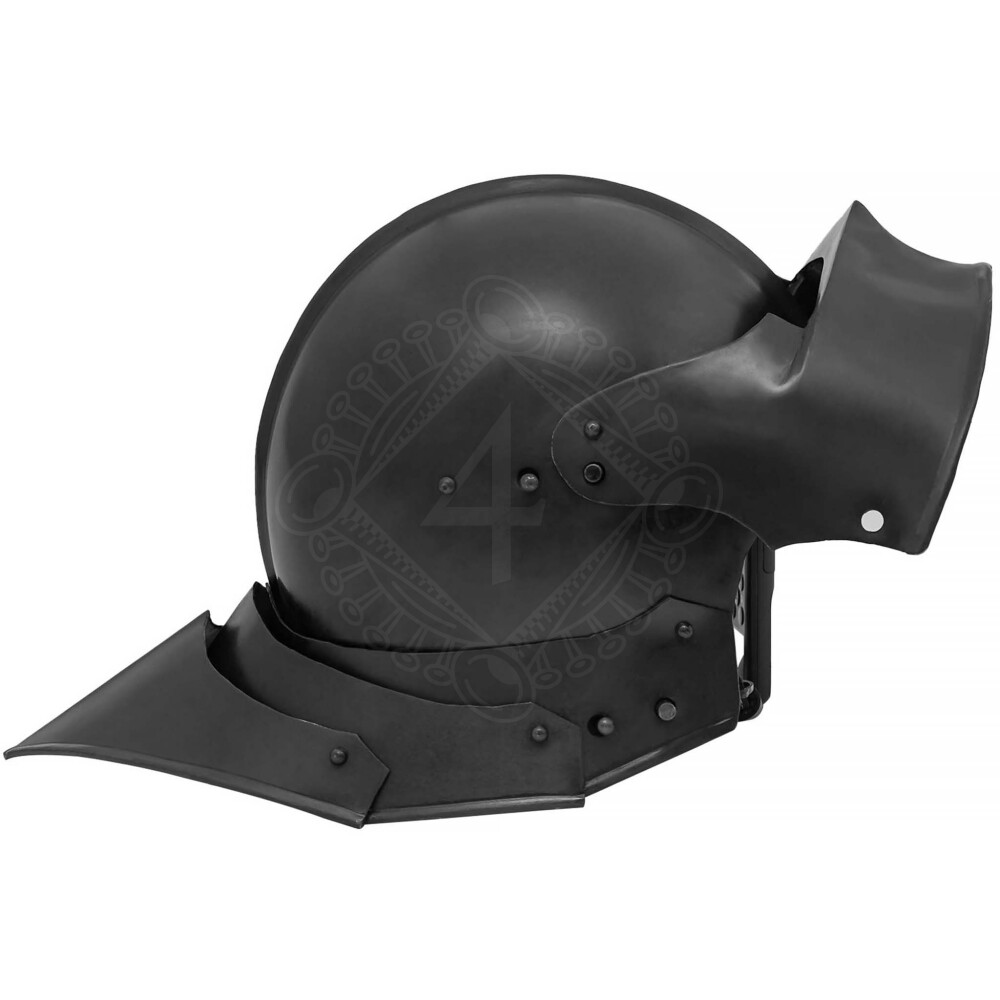
The helmet is crafted from **mild steel** (16-gauge / approx. 1.6 mm), providing sufficient durability for standard stage combat and reenactment. A typical feature of the sallet is the extended tail at the back, which protects the neck from attacks from behind while offering better mobility than older helmet types. This model is available in two distinct finishes, so you can choose the one that best suits your character: * **Polished:** Classic silver shine, ideal for a knight or nobleman's armor. * **Blackened:** A dark, matte finish that gives the armor a more menacing look or evokes a rougher, mercenary style ("black sallet"). The **pivoting visor** can be locked in the raised position using a locking pin, which you will appreciate when resting or issuing commands. In the lowered position, the narrow eye-slit (approx. 1 cm / 3/8 in) protects your eyes while maintaining a good view of the battlefield. For maximum safety, the visor is secured with a pin to prevent it from opening accidentally during movement.
Interior Comfort
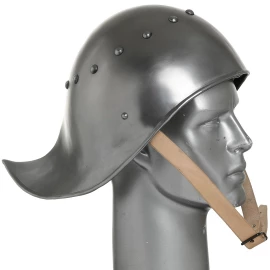
Unlike bare metal helmets, this Sallet comes with a **stitched padded liner**. This not only cushions impacts but also ensures the helmet sits stably and comfortably on your head. An adjustable leather chin strap with a brass buckle keeps the helmet firmly in place.
Historical Context and Usage Tips
In the 15th century, sallets gradually replaced the older bascinets. Their advantage was better ventilation (the mouth and nose are open from below). For complete protection, knights almost always wore a **bevor** with the sallet. If you want to look like a true man-at-arms, we recommend pairing this helmet with a matching bevor. Interestingly, some surviving originals were decorated with painted heraldry or grotesque motifs reminiscent of the works of Hieronymus Bosch.
Care and Safety
Due to the material (carbon steel), the helmet must be protected from moisture. Wipe it dry after every use and apply oil (e.g., WD-40 or gun oil) to prevent rust. Treat leather parts with leather balm. Warning: Although the helmet is functional, it is a replica made of 16-gauge steel. It is not designed for full-contact battles like Buhurt/Battle of the Nations, where thicker materials and special certifications are required. For standard historical fencing, we recommend wearing a padded arming cap underneath for increased shock absorption.
Specifications
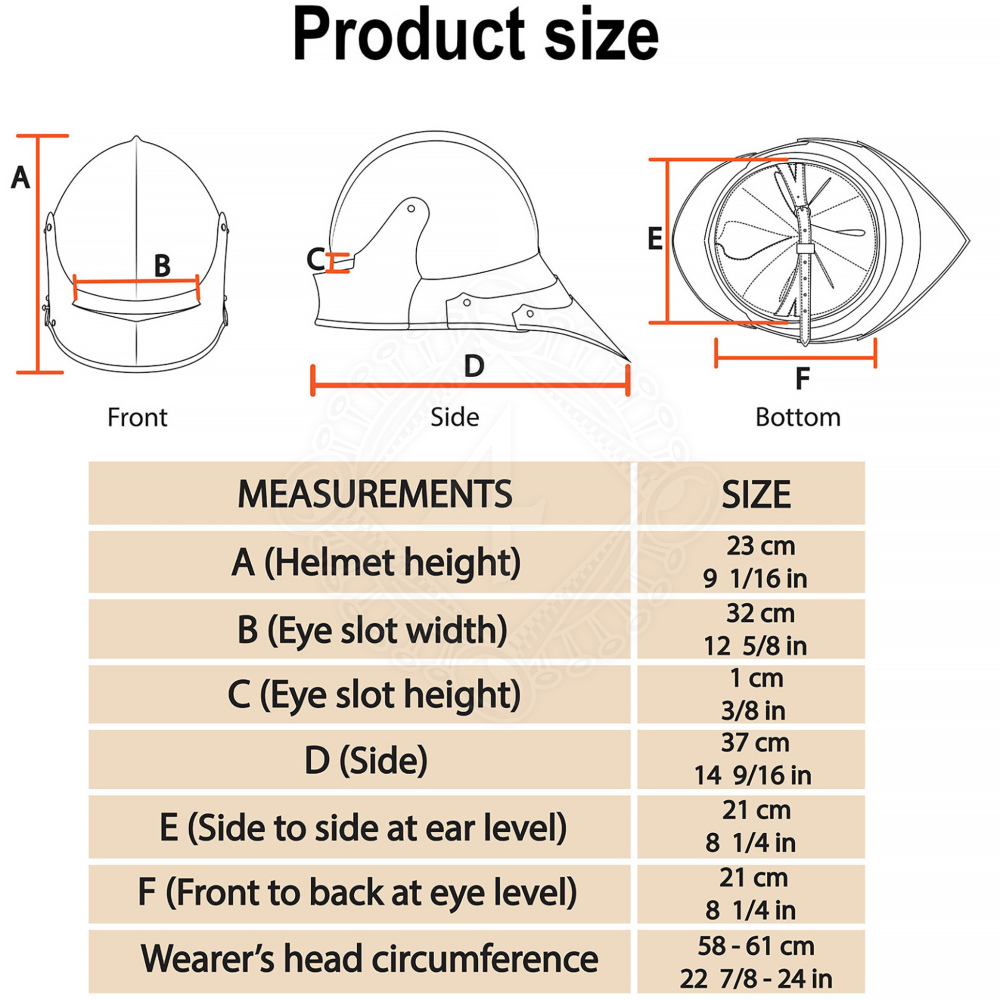
| Wearer's Head Circumference: | 58 - 61 cm (22 7/8 - 24 in) |
| Helmet Height (A): | 23 cm (9 1/16 in) |
| Eye Slot Width - Arc (B): | 32 cm (12 5/8 in) |
| Eye Slot Height (C): | 1 cm (3/8 in) |
| Total Depth (D): | 37 cm (14 9/16 in) |
| Inner Width - Ear to Ear (E): | 21 cm (8 1/4 in) |
| Inner Length - Front to Back (F): | 21 cm (8 1/4 in) |
| Weight: | approx. 3.1 kg (6.8 lbs) |
| Material: | Mild Steel 1.6 mm (16 gauge) |
| Finish: | Optional: Polished / Blackened |
We are here for you!