 Čeština
 Deutsch


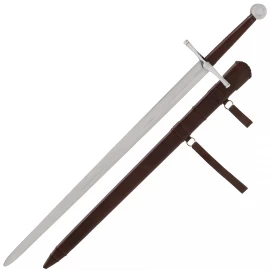
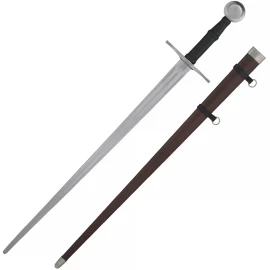
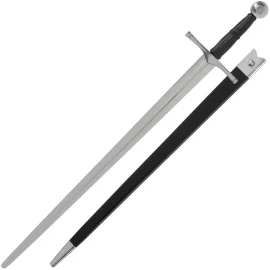
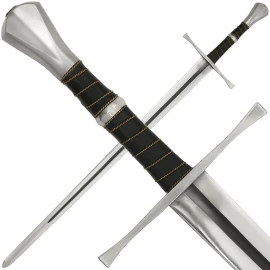
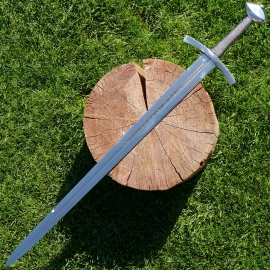
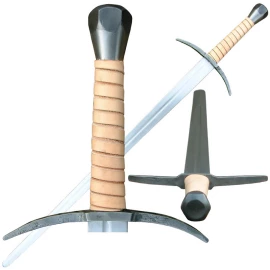
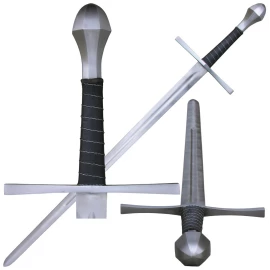
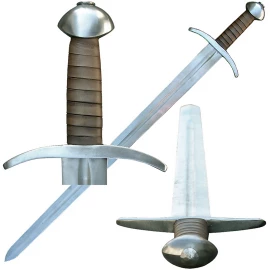
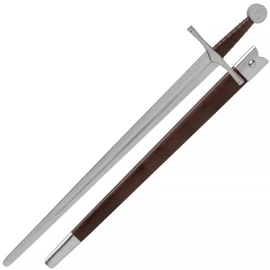
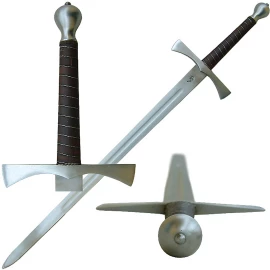
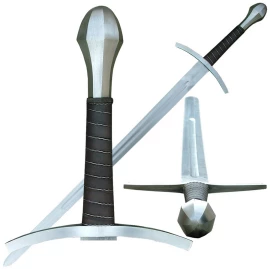
Hand-and-a-Half Sword with Brazil-Nut Pommel
1x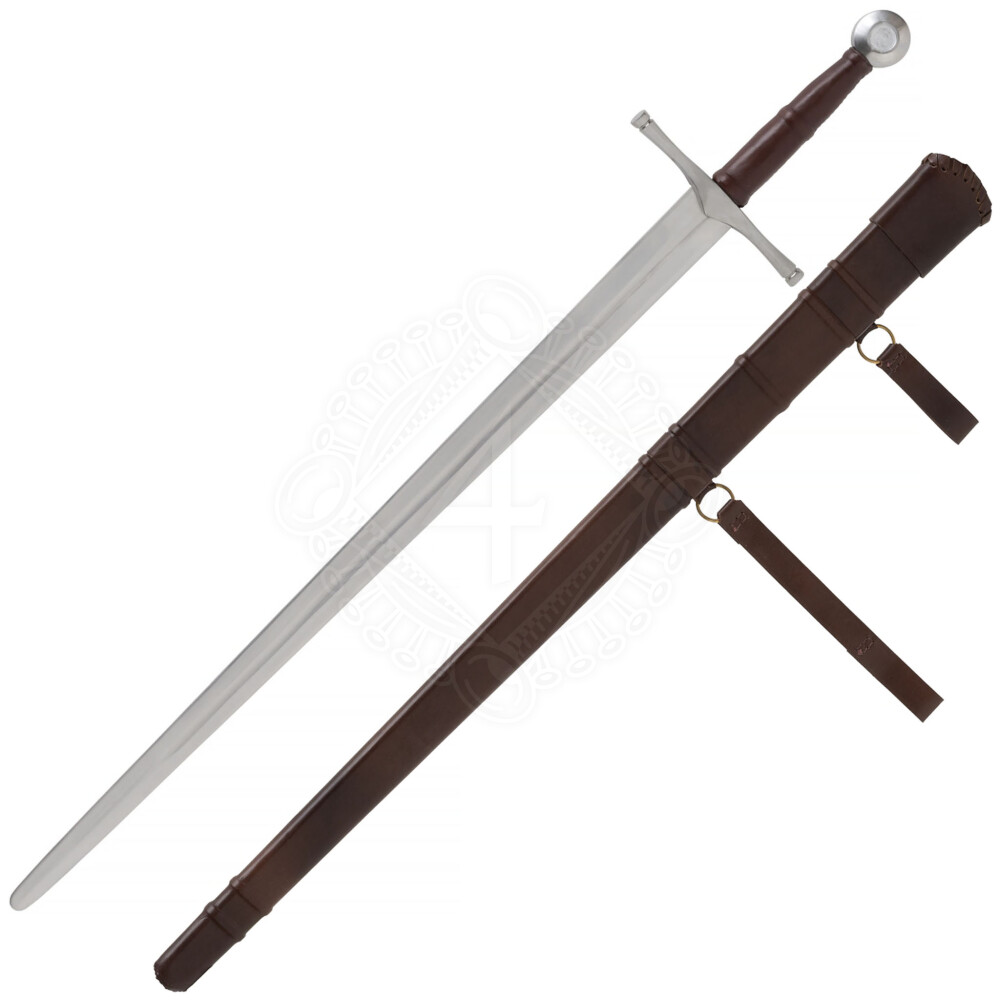
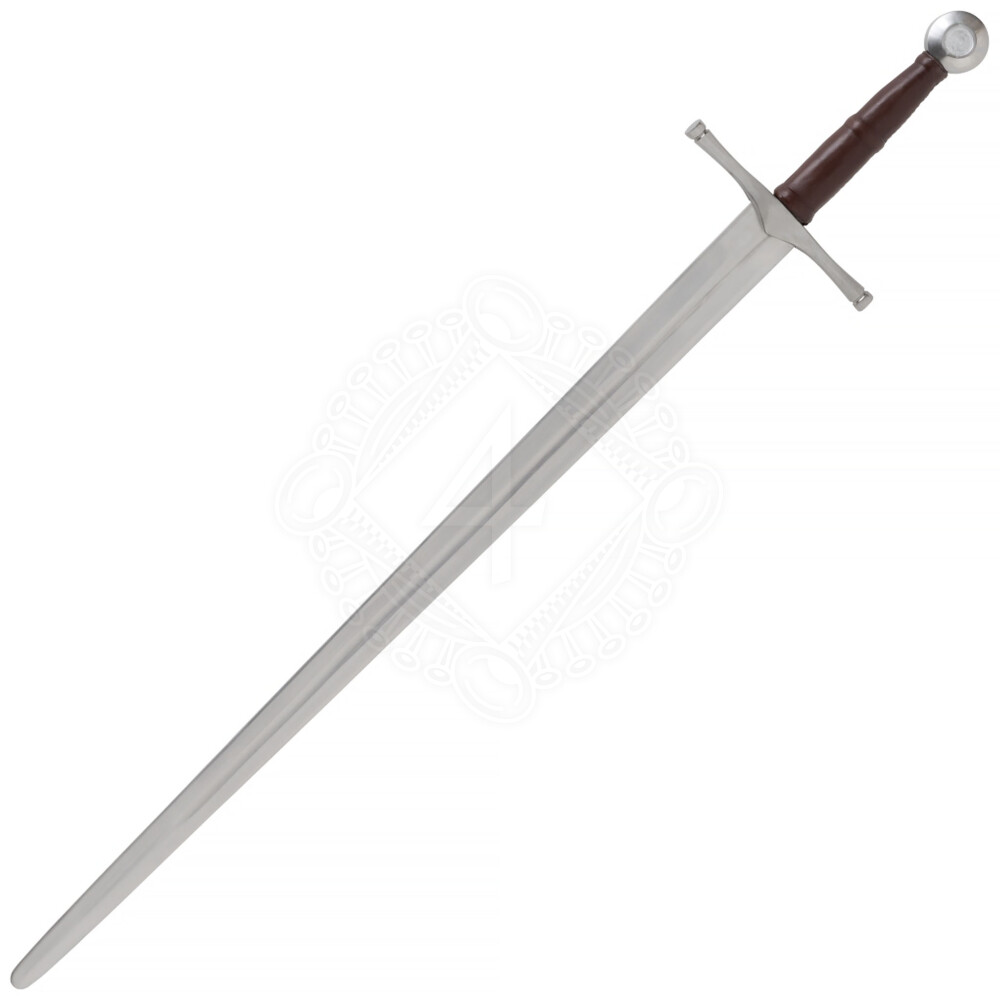
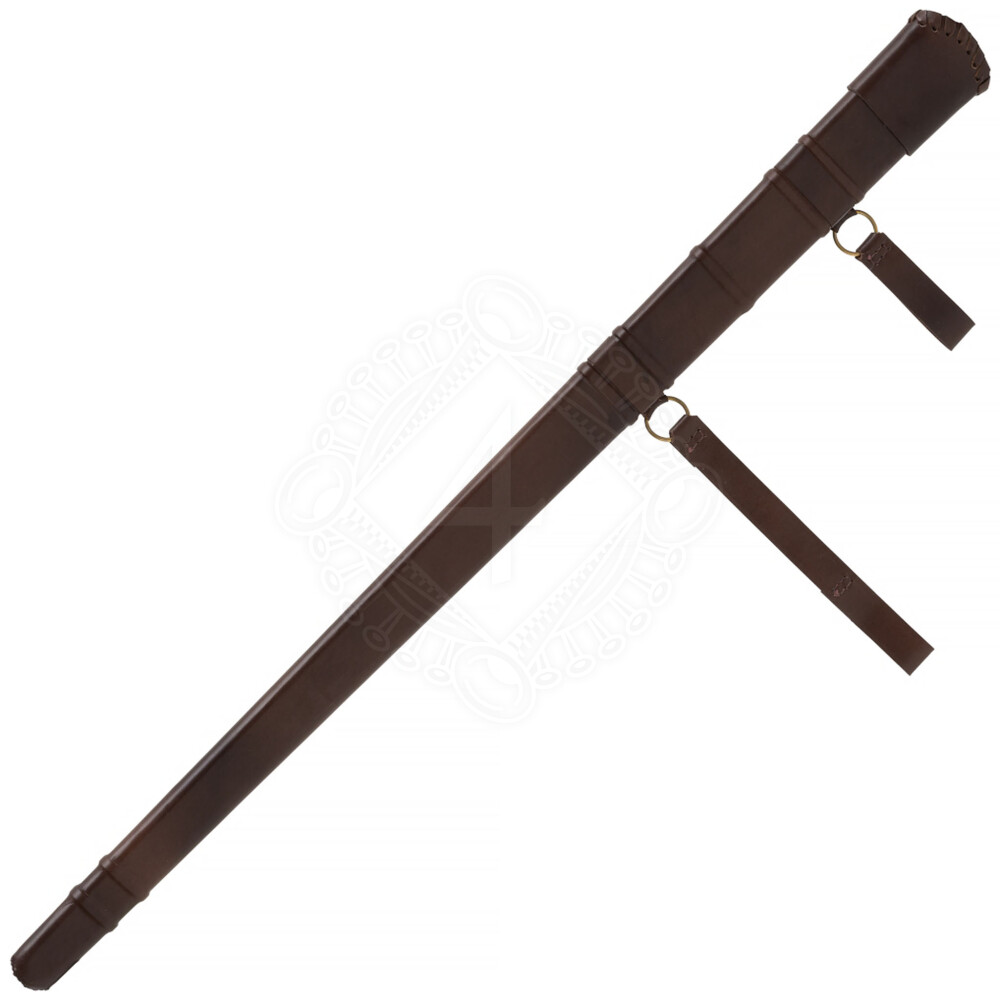
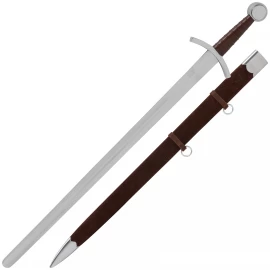
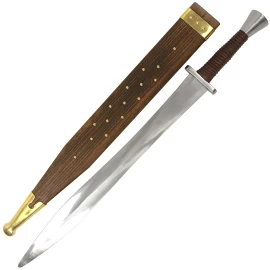
We present to you a robust hand-and-a-half training sword that will become your reliable partner in historical fencing practice. This weapon combines excellent manoeuvrability with a historically accurate look inspired by the weaponry of the High Middle Ages. The high-quality carbon steel blade is carefully hand-forged and balanced to allow for the smooth practice of devastating two-handed techniques as well as flexible single-handed combat. Your safety during training is ensured by the rounded tip and a thick percussion edge. Additionally, the sword comes with a sturdy leather-wrapped wooden scabbard equipped with a practical suspension system for easy carrying. Get ready for your fencing duels with gear that will not let you down on the battlefield. Further product information ...
Would you like to be notified as soon as the item is in stock?
You will receive a short e-mail as soon as we have it back in stock.
Historical Context and Typology
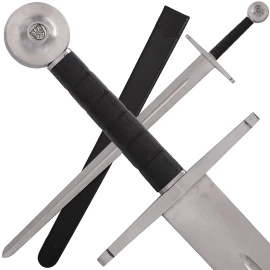
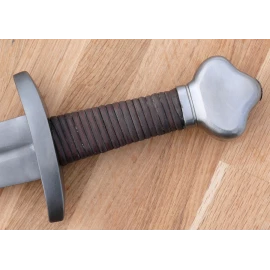
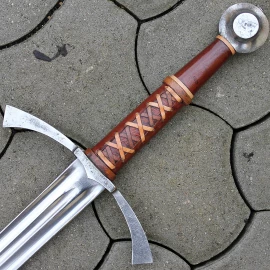
Swords known as hand-and-a-half (often called bastard swords) represented a popular compromise between a single-handed arming sword and a heavy two-handed sword. They allowed the fencer to adapt their fighting style to the current situation on the battlefield. This specific model is fitted with a characteristic brazil-nut pommel (Type A or B according to Oakeshott's typology), which was particularly popular during the 11th to 13th centuries. A pommel of this shape perfectly counterbalanced the longer blade and prevented the weapon from slipping out of the hand during powerful cuts, while its massive construction could be used for strikes to the opponent's helmet in close-quarters combat.
Classification of Battle-Ready-Weapons
Safe Usage and Practical Training
This weapon is designed for practical use, specifically for light stage combat, technique practice, and drilling. The blade features an approximately 2.5 mm / 0.1 in thick rounded edge and a safe rounded tip, which significantly reduces the risk of injury. The pommel is secured to the blade's tang using a countersunk nut. Due to this threaded connection, we must warn you that it is absolutely essential to regularly check the tightness of the pommel before and during every training session. This will prevent the dangerous loosening of the hilt. Whenever engaging in contact fencing, always prioritise safety and use certified protective gear, especially a fencing mask, a padded gambeson, and heavy-duty gloves. The sword is not intended for striking hard objects or for heavy full-contact combat (buhurt).
Directions for the Use of Bladed Weapons from Outfit4Events
Sword Care and Maintenance
To ensure your weapon serves you and brings you joy for many years, it requires regular care. The blade is made of carbon steel, which is susceptible to surface rust. After every use, it is imperative to wipe the blade free of sweat and moisture and subsequently coat it with a thin layer of high-quality gun oil. Treat the steel parts of the hilt and scabbard fittings in the same manner. We recommend occasionally treating the leather-wrapped wooden grip and scabbard with a beeswax-based leather balsam so that the natural material does not dry out and crack.
Technical Specifications
| Parameter | Value |
|---|---|
| Overall Length | 107 cm / 42.1 in |
| Blade Length | 85 cm / 33.5 in |
| Edge Thickness | approx. 2.5 mm / 0.1 in (rounded) |
| Crossguard Length | 20 cm / 7.9 in |
| Weight of the Sword (without scabbard) | 1540 g / 3.39 lbs |
| Blade Material | Carbon steel (hand-forged) |
| Grip Material | Wooden core wrapped in leather, steel fittings |
| Scabbard Material | Wooden core wrapped in leather, leather suspension, steel locket and chape |
Please note: All dimensions and weights are approximate and may vary slightly from piece to piece due to the hand-forged nature of the product.
We highly recommend purchasing a quality historical belt alongside this sword, to which you can easily attach the scabbard using the integrated leather suspension straps.
We are here for you!