 Čeština
 Deutsch


Medieval One-Handed Practice Sword
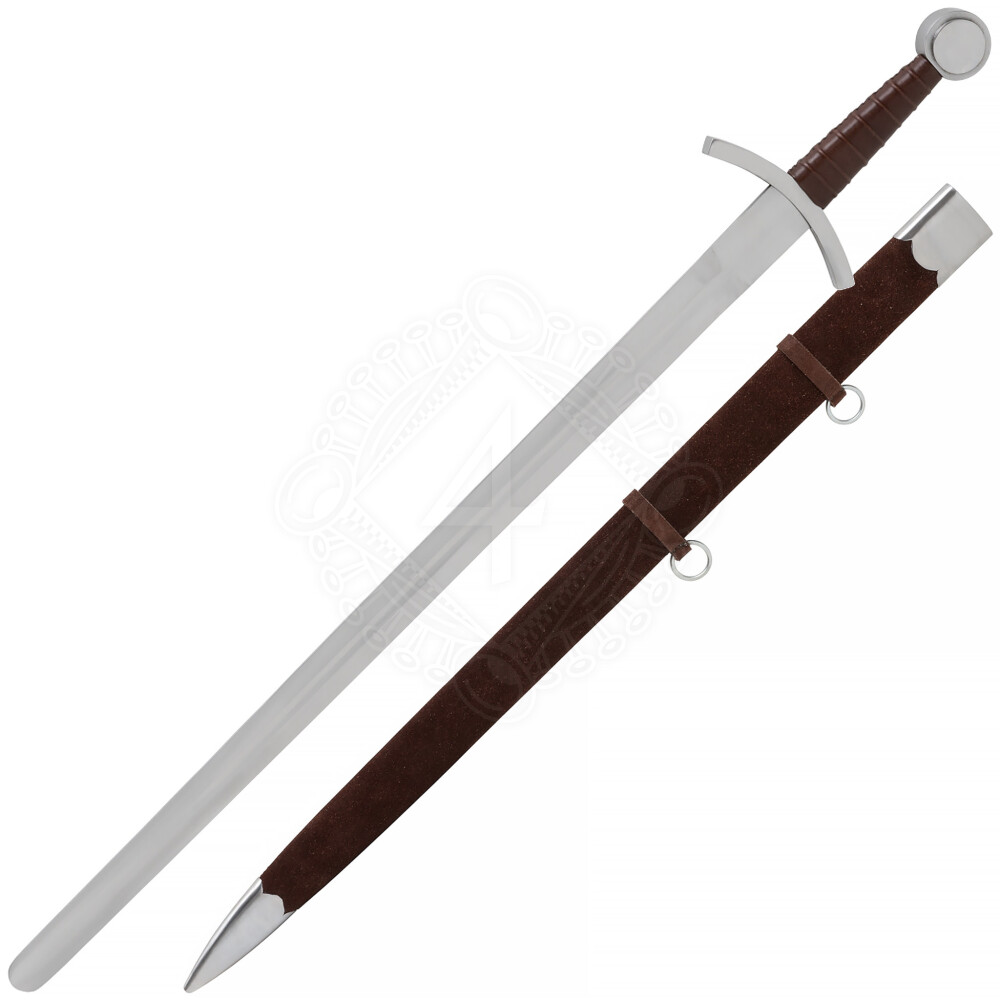
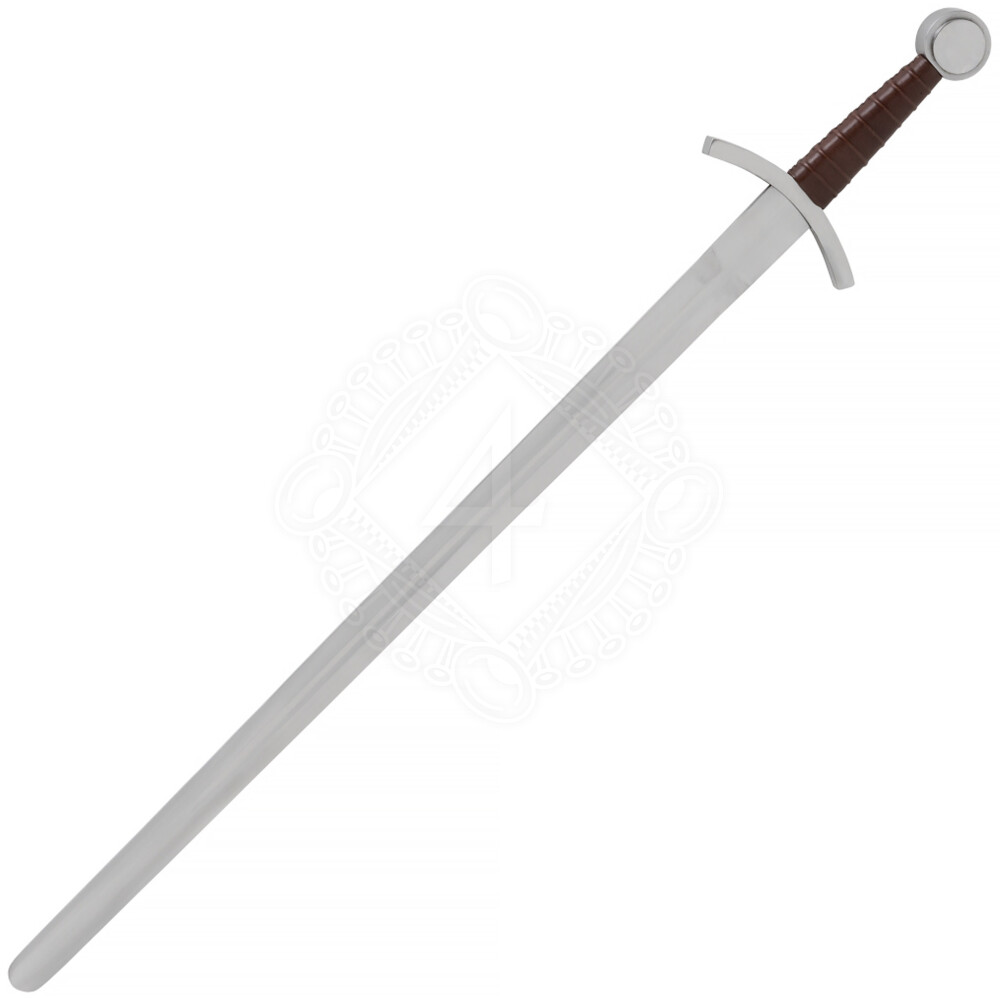
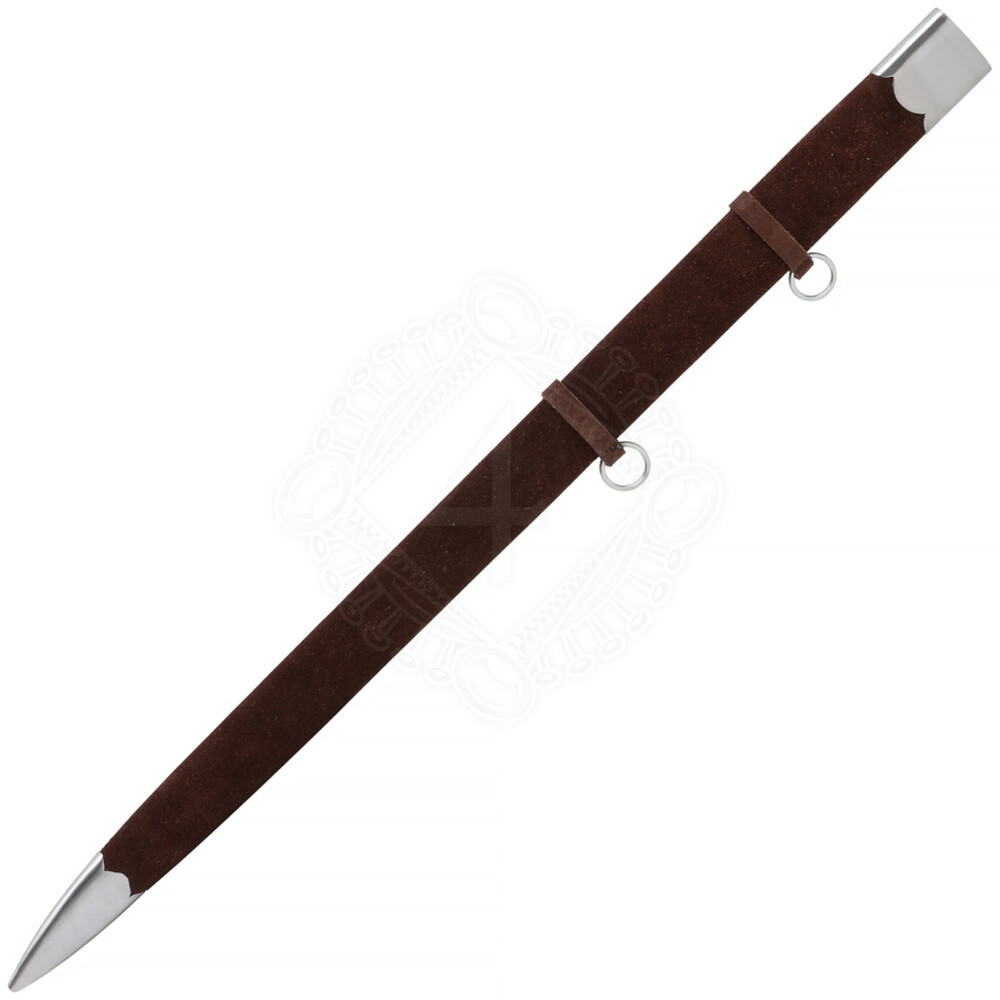
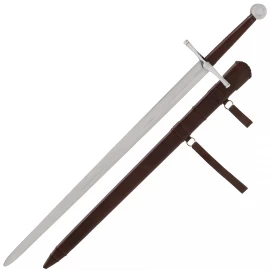
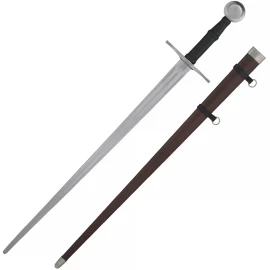
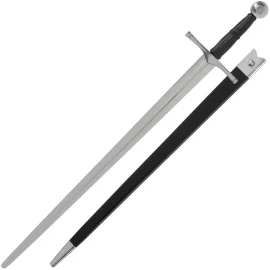
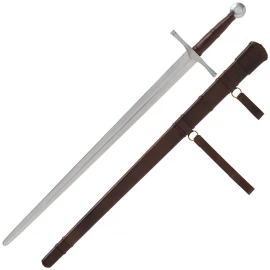
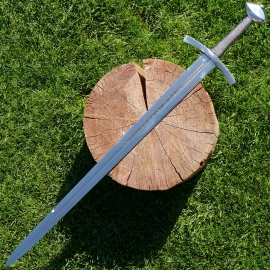
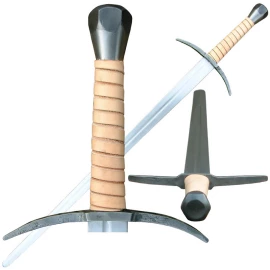
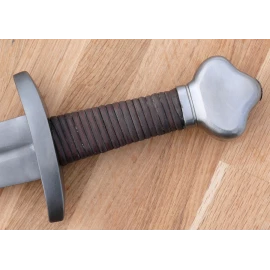
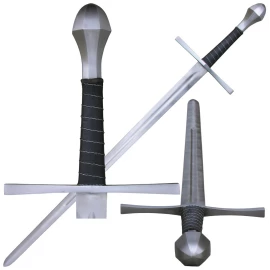
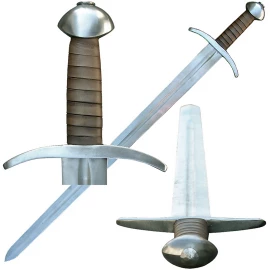
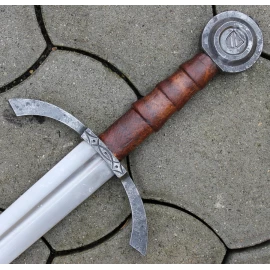
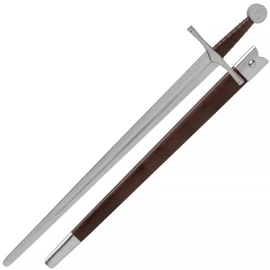
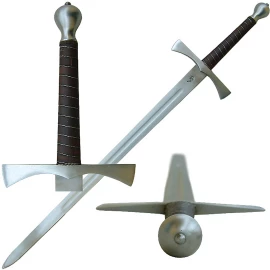
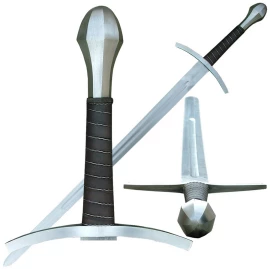
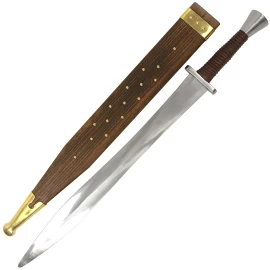
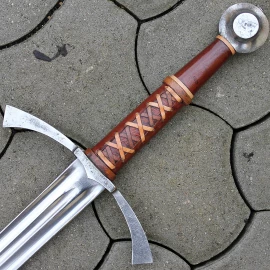
Are you looking for a reliable weapon for your beginnings in historical fencing or for proper technique drills? We present to you this elegant one-handed practice sword, which faithfully replicates the shapes of high medieval weaponry. Its blade, hand-forged from carbon steel, features rounded edges and a safe, rounded tip, making it ideal for drills and light stage combat. You will certainly appreciate the brown leather-wrapped grip with practical risers that fits perfectly into your hand without slipping. Additionally, the sword comes with a sturdy wooden scabbard covered in brown suede, equipped with elegant steel fittings and suspension rings for your belt. Get ready for your next training session with gear that won't let you down on the battlefield. Further product information ...
Would you like to be notified as soon as the item is in stock?
You will receive a short e-mail as soon as we have it back in stock.
Medieval One-Handed Practice Sword with Disc Pommel and Suede Scabbard
Historical Context and Typology
This sword is a typical representative of one-handed weapons used during the High Middle Ages, roughly from the 12th to the 14th century. According to Oakeshott's typology, it is a weapon designed primarily for cutting, but thanks to the tapering blade, it was also reliably capable of thrusting. The disc pommel served not only as an excellent counterweight to the blade but was also used by experienced warriors for devastating strikes in close combat. A special feature here is the crossguard curved towards the blade. This shape was not just a mere aesthetic element but had a clear tactical purpose—it helped the fencer to better catch, block, and deflect the opponent's sliding blade.
Classification of Battle-Ready-Weapons
Safe Use and Sword Care
This weapon is classified for light fencing and technique practice. The blade has an approx. 2.5 mm / 0.1 in thick rounded edge and a rounded safety tip to maximize safety during training. The pommel is secured to the tang with a countersunk nut. Because of this threaded construction, it is absolutely essential to regularly check the tightness of the pommel before and during every use to prevent the entire hilt from loosening and causing potential injury. The sword is by no means intended for heavy contact combat (full-contact buhurt) or for striking hard objects, which could destroy it. Always use appropriate certified protective gear when fencing.
Directions for the Use of Bladed Weapons from Outfit4Events
Because the blade is constructed from high-carbon steel, it requires your regular care. After every practice, thoroughly wipe off sweat and moisture and apply a thin layer of high-quality gun oil. Treat the steel parts of the hilt and scabbard in the same manner. We recommend occasionally treating the leather grip and suede scabbard with a suitable leather care product so the material does not dry out.
Technical Specifications
| Parameter | Value |
|---|---|
| Overall Length | 94 cm / 37.0 in |
| Blade Length | 75 cm / 29.5 in |
| Edge Thickness | approx. 2.5 mm / 0.1 in (rounded) |
| Crossguard Length | 15 cm / 5.9 in |
| Weight of the Sword | 1260 g / 2.78 lbs |
| Blade Material | Carbon steel (hand-forged) |
| Grip Material | Steel, wood, brown leather |
| Scabbard Material | Wood, brown suede, steel fittings |
We highly recommend purchasing a sturdy leather belt and a sword frog alongside this sword, allowing you to easily attach the scabbard to your waist using the suspension rings.
We are here for you!