
 Čeština
 Deutsch


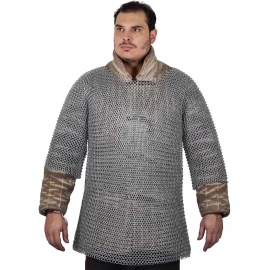
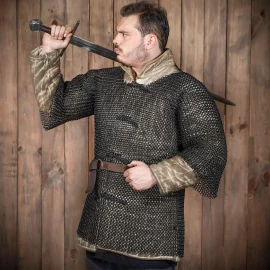
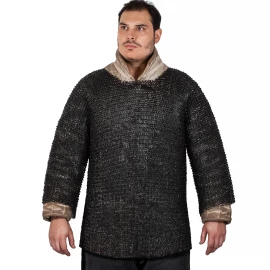
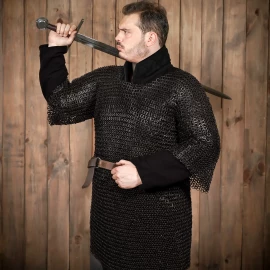
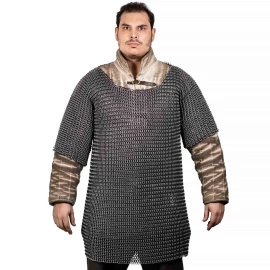
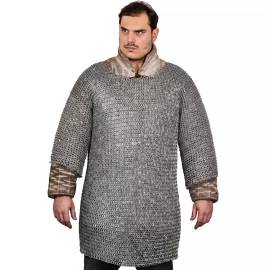
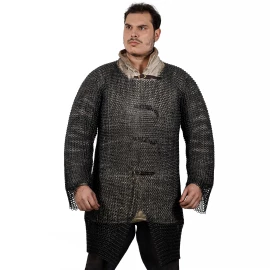
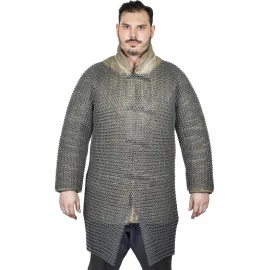
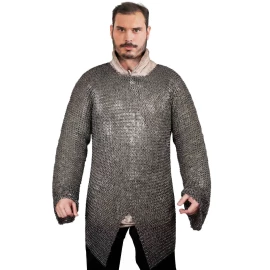
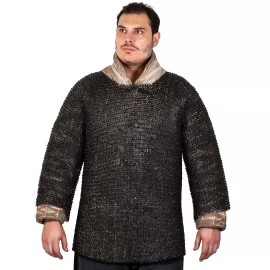
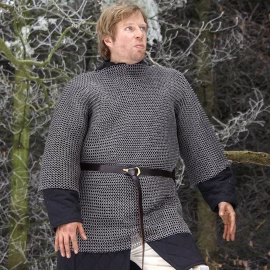
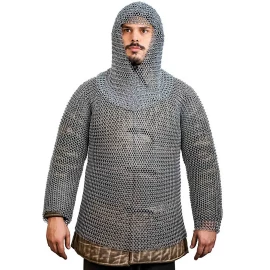
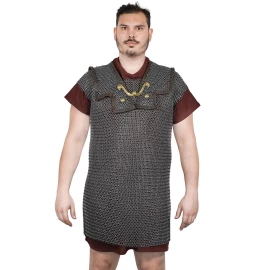
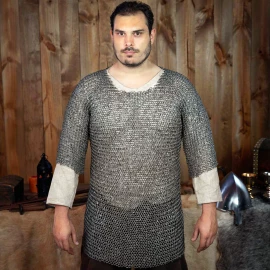
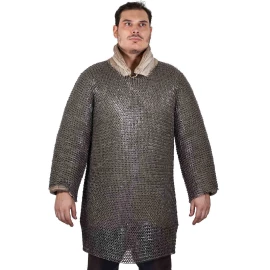
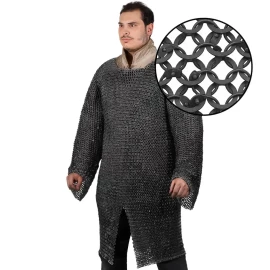
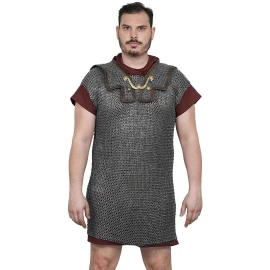
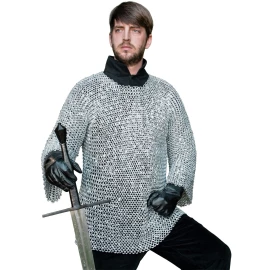
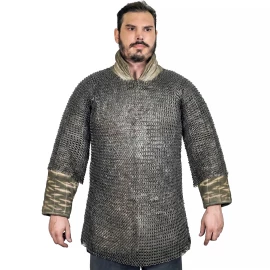
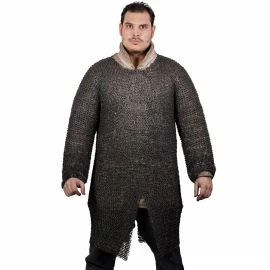
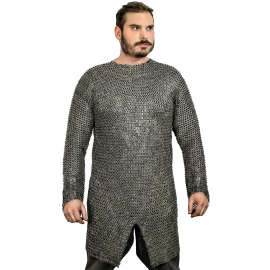
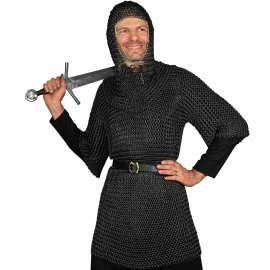
Haubergeon Chainmail Shirt, 9mm Butted High-Tensile Steel
.3996548675.1717616719.jpg)

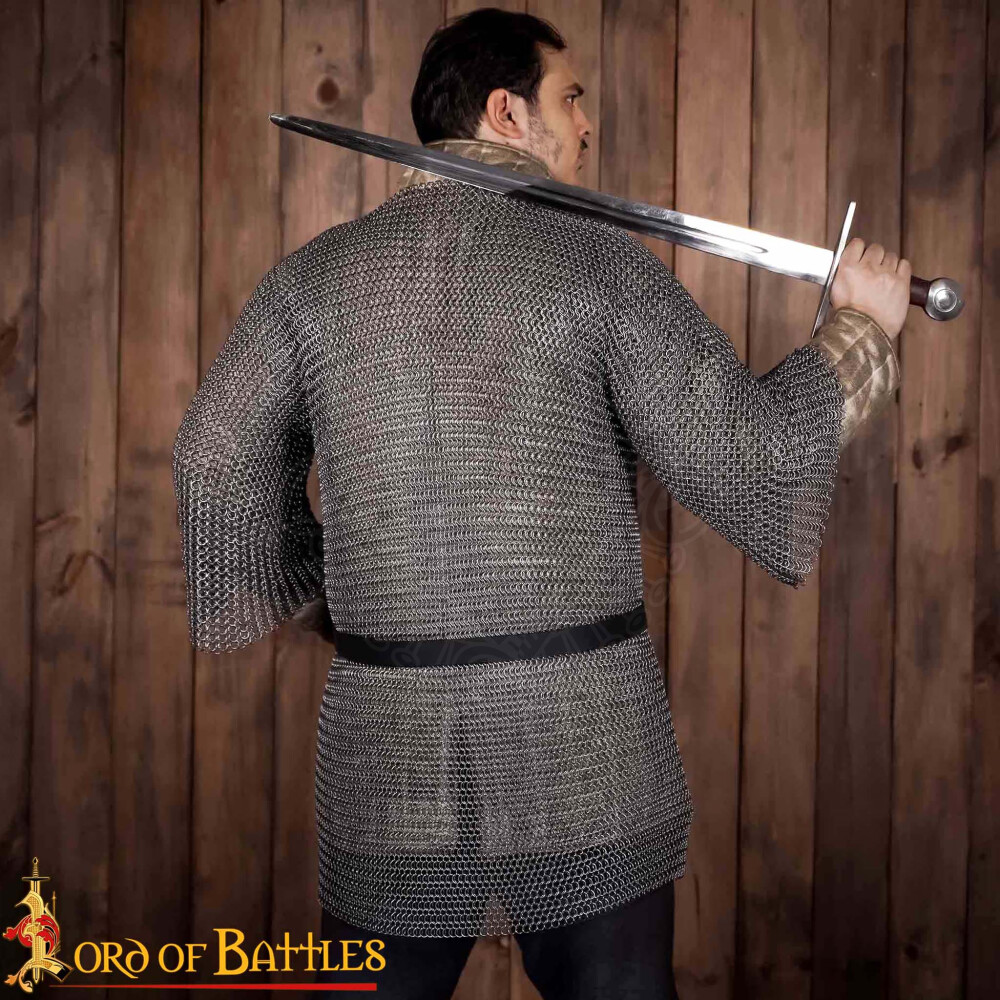
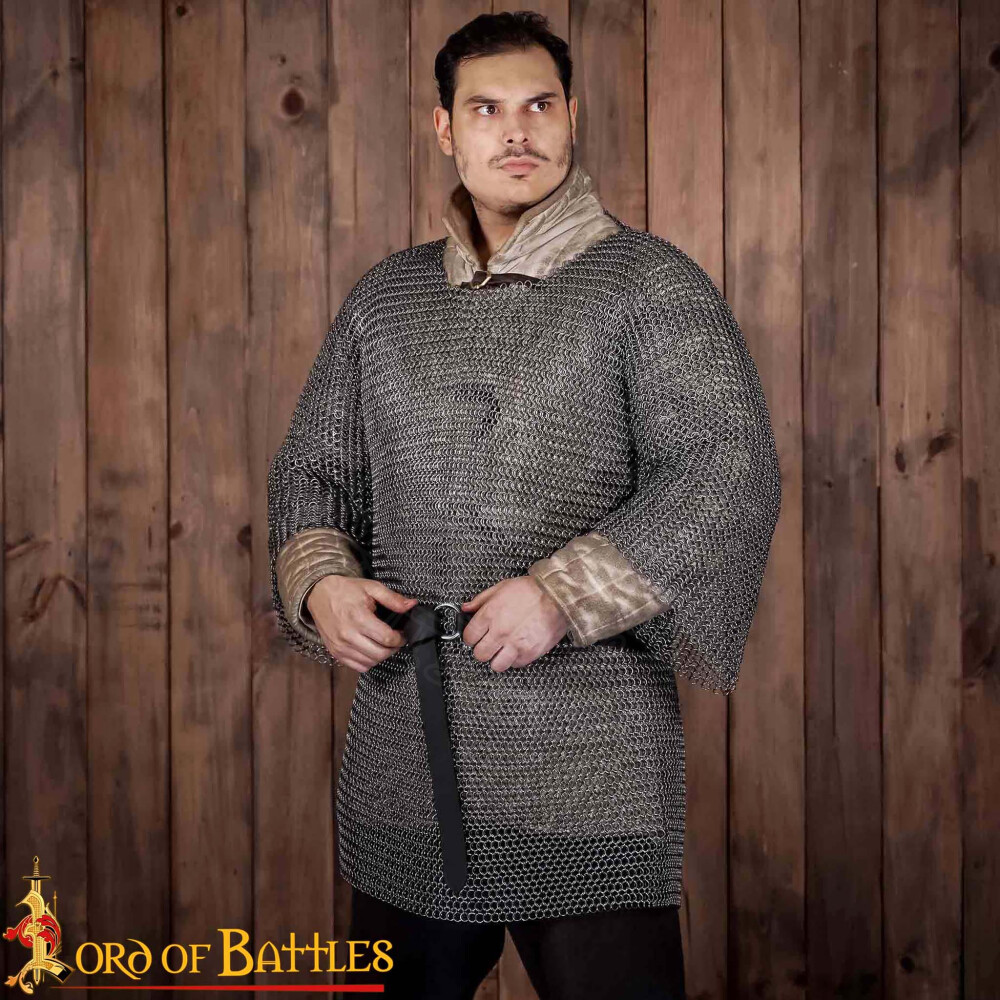

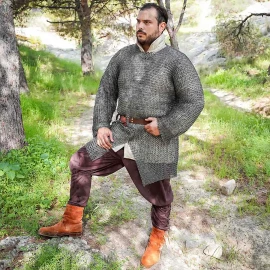
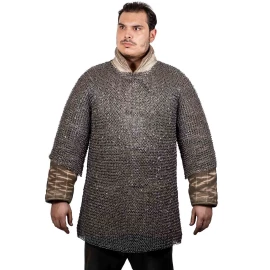
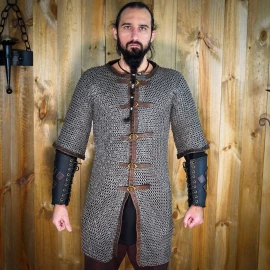
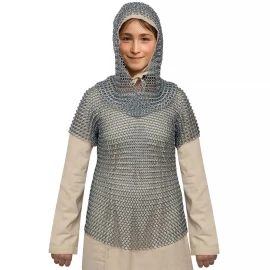
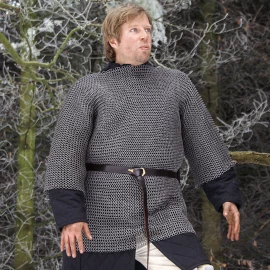
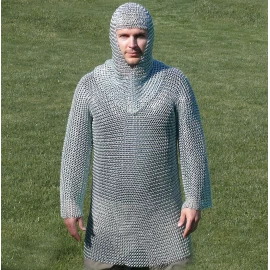
Want durability approaching that of riveted mail, but at the price of butted? This haubergeon made from high-tensile spring steel is the smart choice for the discerning LARPer and reenactor. Thanks to the properties of the material used, the butted rings hold together much more securely than in shirts made of common mild steel. You get more reliable protection and a longer service life for your battles, all while maintaining an advantageous price. Further product information ...

Haubergeon Chainmail Shirt, 9mm Butted High-Tensile Steel
Detailed Product Description
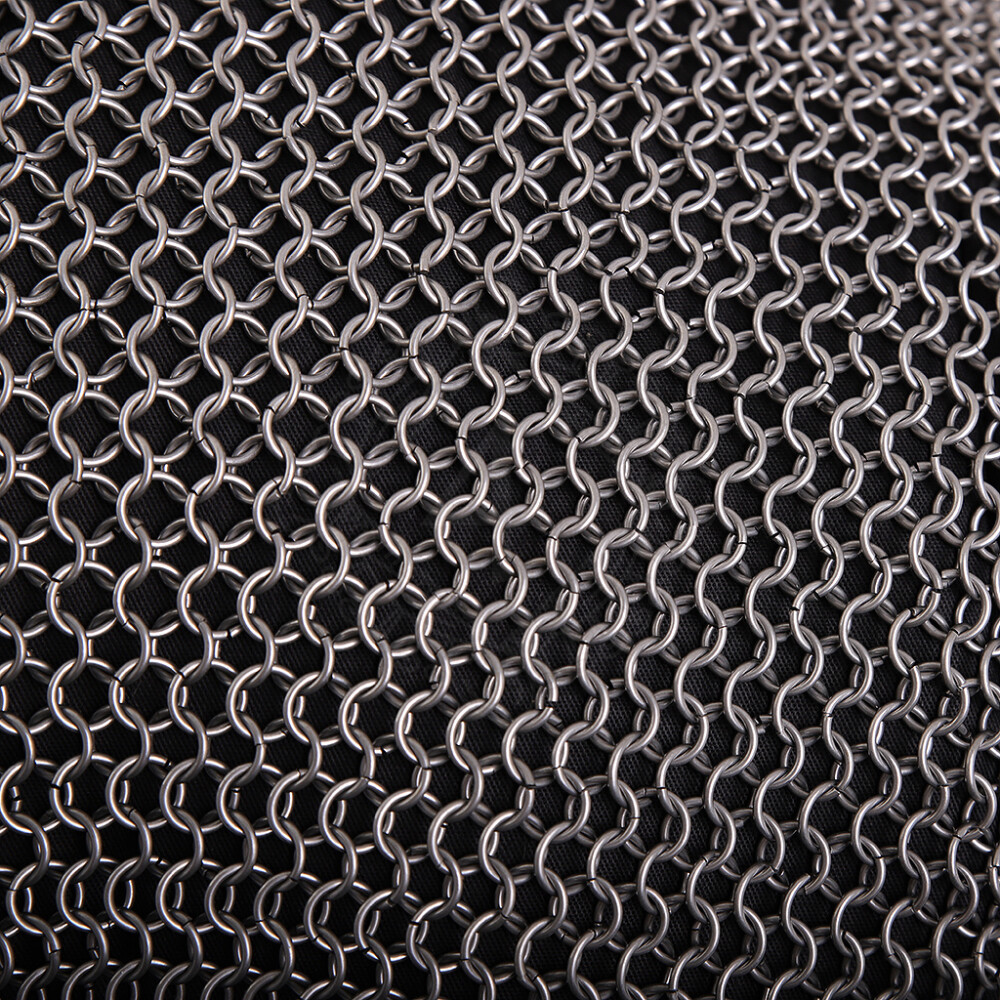
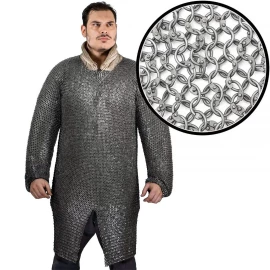
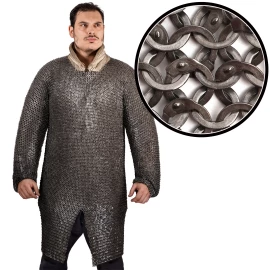
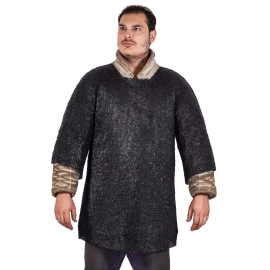
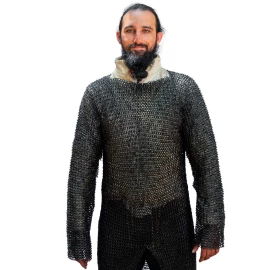
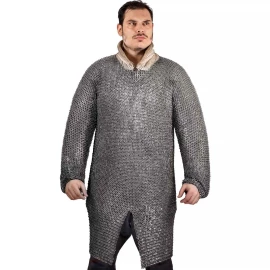
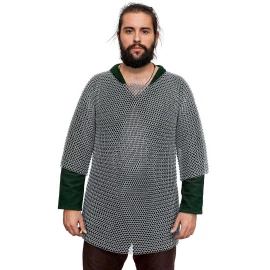
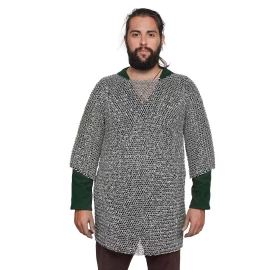
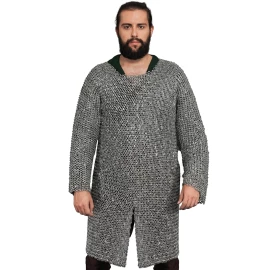
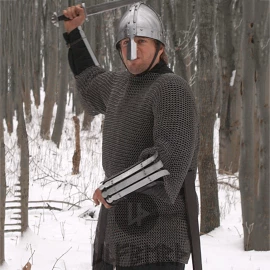
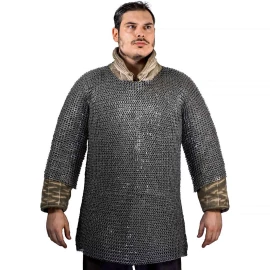
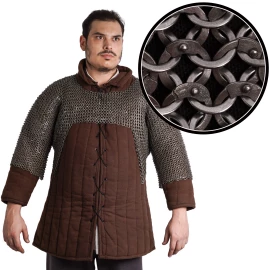
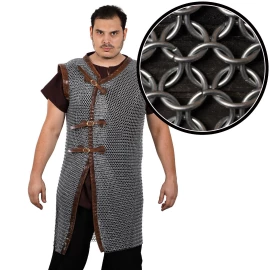
This piece of armour is cut as a classic haubergeon—a chainmail shirt reaching to about mid-thigh with elbow-length sleeves. This cut, popular in the High Middle Ages, provides excellent protection for the torso and arms without restricting movement. The shirt is hand-woven in the traditional 4-in-1 pattern from round rings with a 9 mm inner diameter. The crucial difference is the material: it is made of 16-gauge (approx. 1.6 mm) spring steel. This gives the rings much higher strength and resilience, so even in a butted construction, they hold their shape excellently and resist being forced open.
Who is this Haubergeon for?
Thanks to the enhanced properties of spring steel, this armour is ideal for:
- Demanding LARP and battles: Where a standard butted mild steel shirt is no longer sufficient and you need something that can withstand more intense action.
- Historical Reenactment: Great for training and battles where fully riveted armour is not required, but you want a higher degree of reliability.
- Theatre and Film: Where a durable prop that can withstand repeated use is needed.
A Smart Compromise: Price vs. Durability
This armour represents an ideal middle ground. While riveted construction remains essential for full-contact combat (HMB, buhurt), this spring steel haubergeon offers significantly better protection and a longer lifespan than a standard butted mild steel hauberk. It's the perfect upgrade for anyone who takes their hobby seriously but doesn't need to invest in the most expensive riveted option.
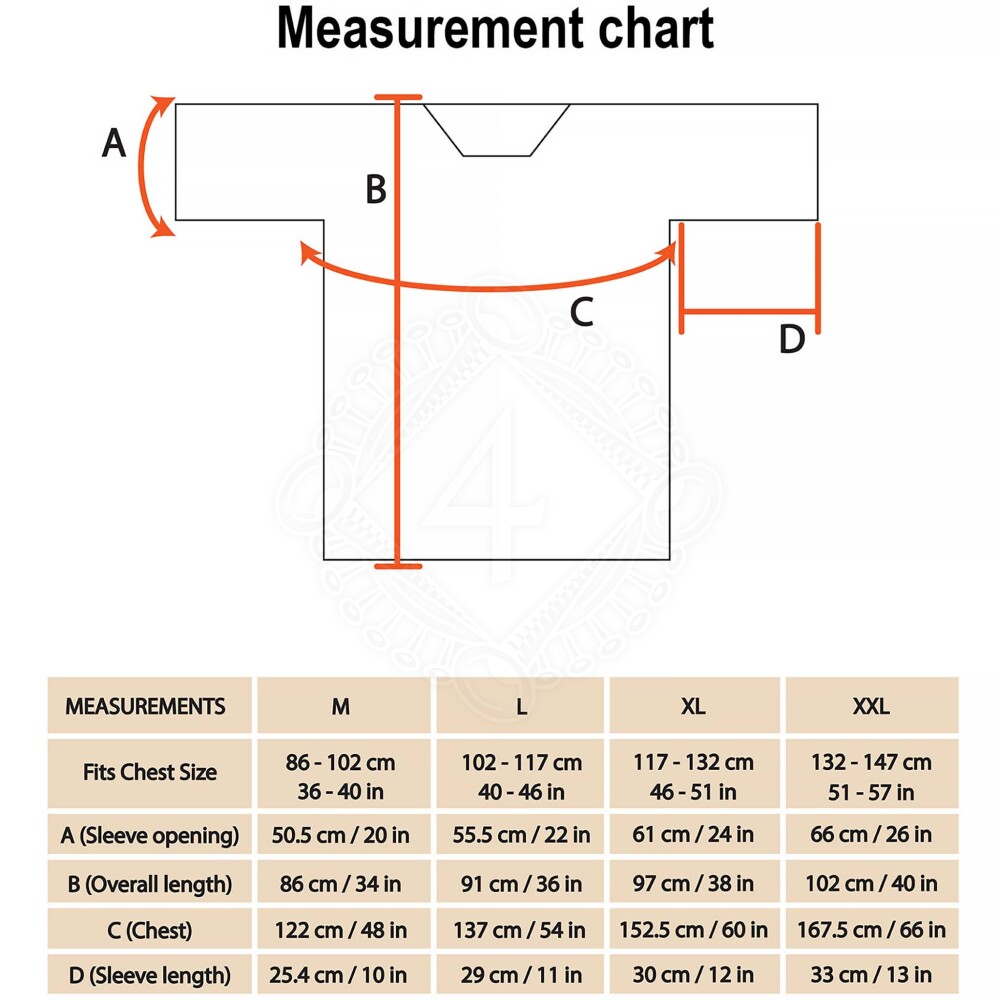
Size Chart
Always measure yourself over the gambeson or padding you will wear under the armour. If you are between sizes, we recommend choosing the larger one.
| Size | Fits Chest Size | A: Sleeve Opening | B: Overall Length | C: Armour Chest | D: Sleeve Length |
|---|---|---|---|---|---|
| M | 36 - 40 in | 20 in | 34 in | 48 in | 10 in |
| L | 40 - 46 in | 22 in | 36 in | 54 in | 11 in |
| XL | 46 - 51 in | 24 in | 38 in | 60 in | 12 in |
| XXL | 51 - 57 in | 26 in | 40 in | 66 in | 13 in |
A Window into History: The Evolution of Materials
The development of armour was always a race between protection and weaponry, driven by advances in metallurgy. From early iron, smiths gradually progressed to different types of steel that offered better properties. The use of modern spring steel in replicas is an example of how today's materials can enhance historical designs for the needs of modern hobbies. They increase the functionality and longevity of the equipment, especially in constructions that were historically more prone to damage, such as butted mail.
How to Care for Your Armour
While spring steel is stronger, it is still a carbon steel susceptible to corrosion. Proper care will ensure its long life:
- Keep it Dry: After every event, especially if the armour got wet from sweat or rain, let it dry thoroughly.
- Oil is Essential: Regularly treat it with a thin coat of preservative oil (WD-40, Ballistol). Wipe off any excess with a cloth.
- Store it Properly: In a dry place, ideally hanging to distribute the weight.
We are here for you!












.3773623034.1696456237.png.webp)

.3773623034.1696456268.png.webp)
.3773623034.1696456247.png.webp)