Čeština
 Deutsch


Garment Button, 14th–15th Century


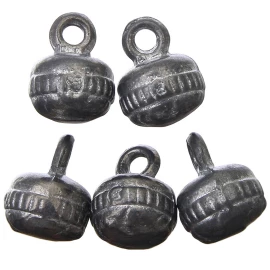
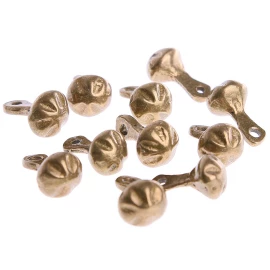
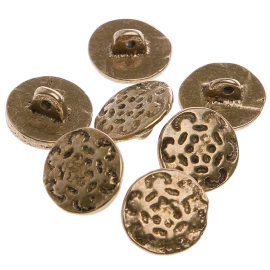
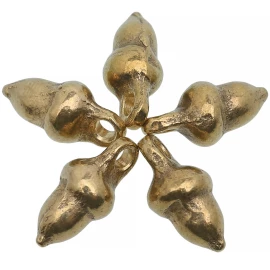
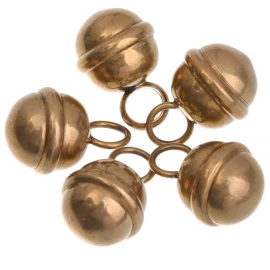
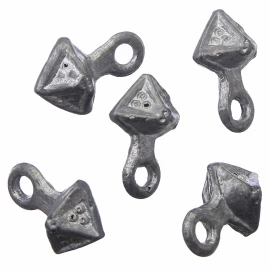
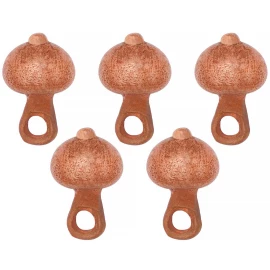
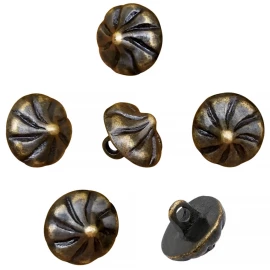
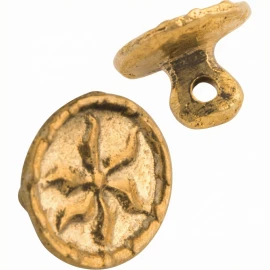
Searching for authenticity and top quality for your historical costume, friend? This hand-cast Gothic pewter button is the exact detail you need to bring your 14th or 15th-century attire to perfection. Crafted from durable hardened pewter with an antiqued finish, it catches the eye with its classic spherical-to-droplet shaped head, subtle period texture, and integrated shank. We recommend using these buttons for dense rows along sleeve forearms, men's doublets, or women's gowns. They add an unmistakable touch of historical accuracy and high mechanical durability to your reenactment projects. Further product information ...

Gothic Cast Pewter Garment Button, 14th–15th Century
History and Significance of Pewter Buttons in the Gothic Era
The historical design of this button is based on archaeological finds dating from the High to Late Middle Ages (14th to 15th century). During the 14th century, European fashion underwent a major transformation—the loose, flowing robes of the Early Middle Ages were replaced by tailored, form-fitting garments that closely followed human anatomy. To keep garments like cottes, doublets, and surcoats fitted tight, they required long, dense rows of dozens of small buttons placed closely together, particularly along the front closures and sleeves.
Pewter served as an ideal historical material for producing these small fastenings. Casting in stone or clay molds allowed for efficient production, while the hardened pewter alloy offered excellent durability at an affordable price for burghers, craftsmen, and nobility alike. These small, ball-shaped buttons fulfilled a vital practical purpose while standing as prominent aesthetic fashion statements of the era.
Mounting and Sewing Instructions
Attaching this pewter button to your garment is simple and easy to do in your workshop:
- Thread Selection: Use strong, waxed linen thread or silk thread matching the color of your garment.
- Sewing: Pass the thread through the integrated shank eyelet (internal diameter approx. 2.5 mm) and stitch it securely to the fabric edge. We recommend placing a small leather or fabric backing washer on the underside of the garment to prevent the button from pulling through the fabric under tension.
- Fastening: The button passes through closely spaced bound buttonholes or fabric button loops on the opposite garment edge.
Technical Specifications
| Parameter | Value |
|---|---|
| Product Type | Garment Button / Gothic Fitting |
| Historical Era | High to Late Middle Ages (14th–15th Century) |
| Style | Gothic |
| Material | Hardened Pewter (Cast) |
| Overall Length | approx. 19.82 mm (approx. 0.78 in) |
| Button Head Diameter | approx. 12.8 mm (approx. 0.50 in) |
| Internal Eyelet Diameter | approx. 2.5 mm (approx. 0.10 in) |
| Weight (1 pc) | approx. 3.5 g (approx. 0.12 oz) |
| Package Quantity | 1 button (Priced per individual piece) |
Care and Safety Instructions
Hardened pewter is a durable, low-maintenance material. To ensure long service life, observe these care guidelines:
- Laundering: We recommend hand washing garments fitted with pewter buttons, or using a delicate cycle inside a protective laundry bag to prevent mechanical wear on the buttons or washing machine drum.
- Metal Care: Clean soiled buttons using a soft, dry or slightly damp cotton cloth. Avoid harsh chemical cleaners or abrasive polishes.
- Handling: Do not subject the shank eyelet to severe bending forces to avoid mechanical stress or fatigue cracking.
- Safety Warning: Keep out of reach of small children due to choking hazards.
Recommended Accessories
We recommend pairing these Gothic buttons with woolen or linen fabric for crafting a fitted cotte or doublet, waxed linen thread for sewing buttonholes, and a 14th or 15th-century Gothic leather belt with a brass buckle. These components are historically and visually compatible, creating a complete, magnificent medieval outfit.
We are here for you!