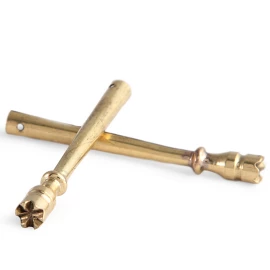

Aglets with Cross Terminals for Laces (1 pcs) - Outlet
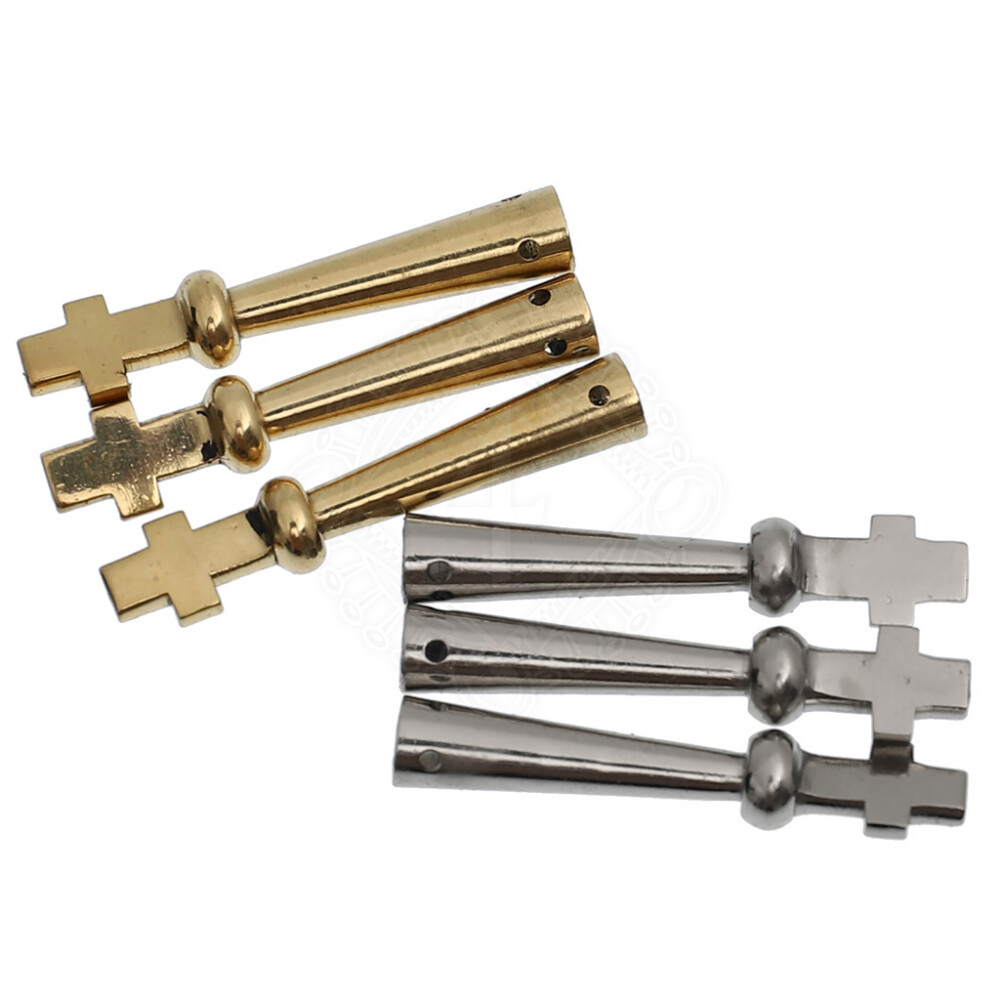
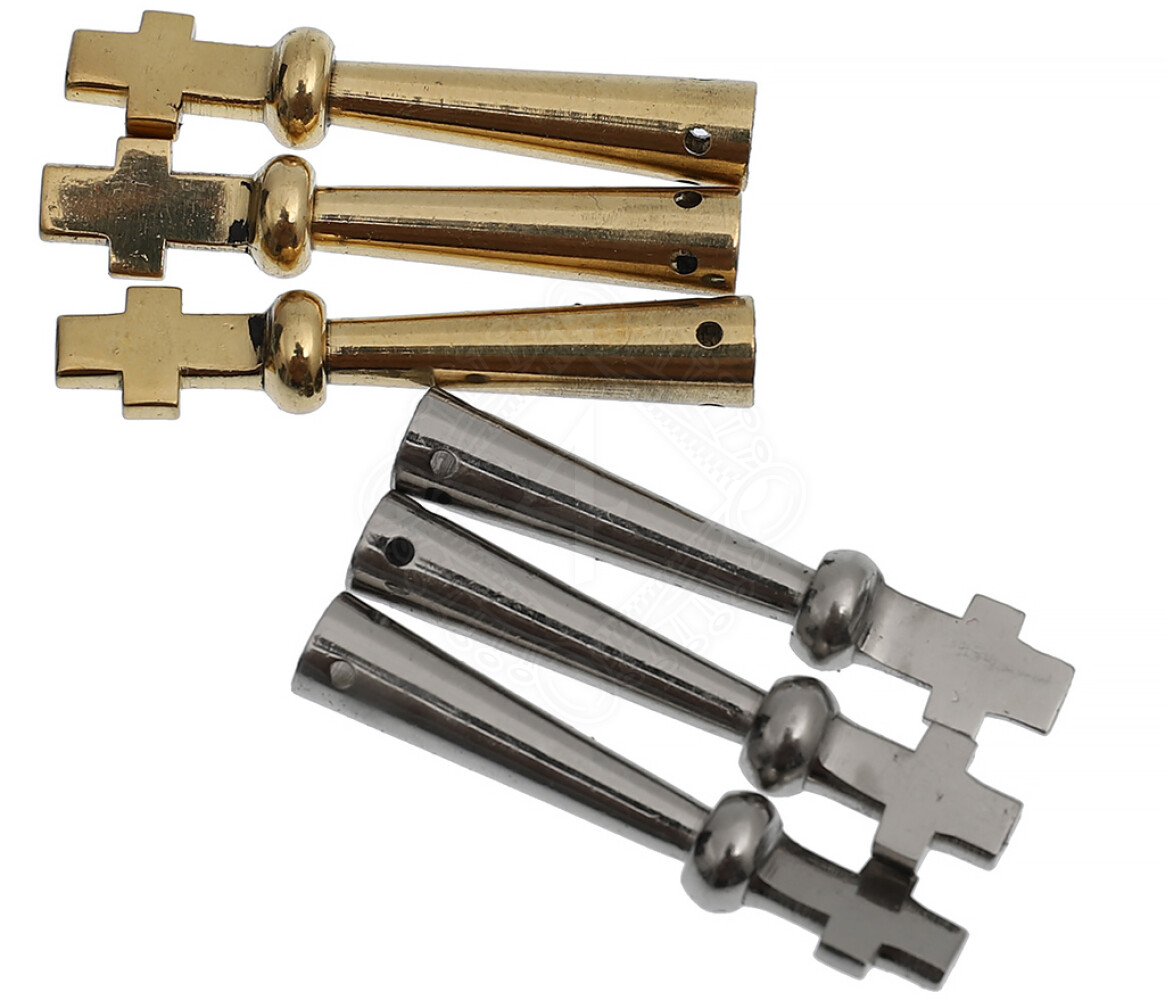
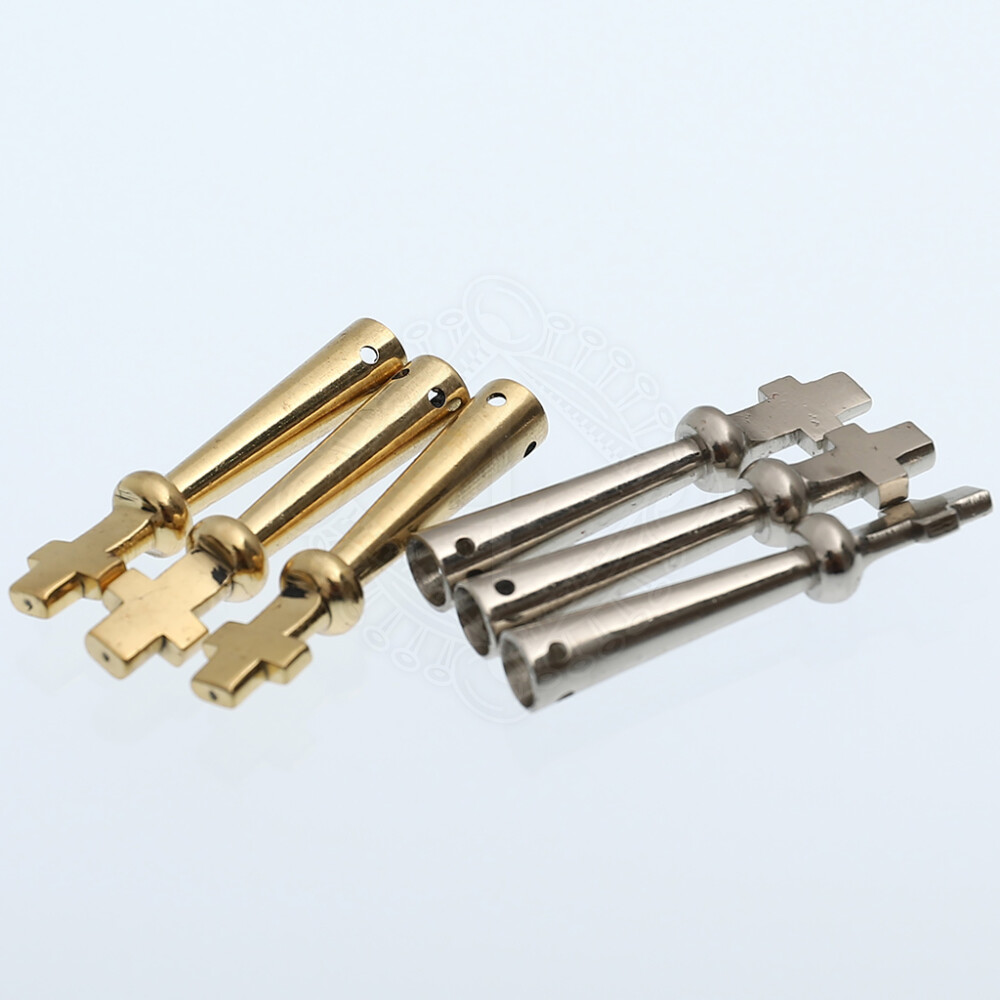
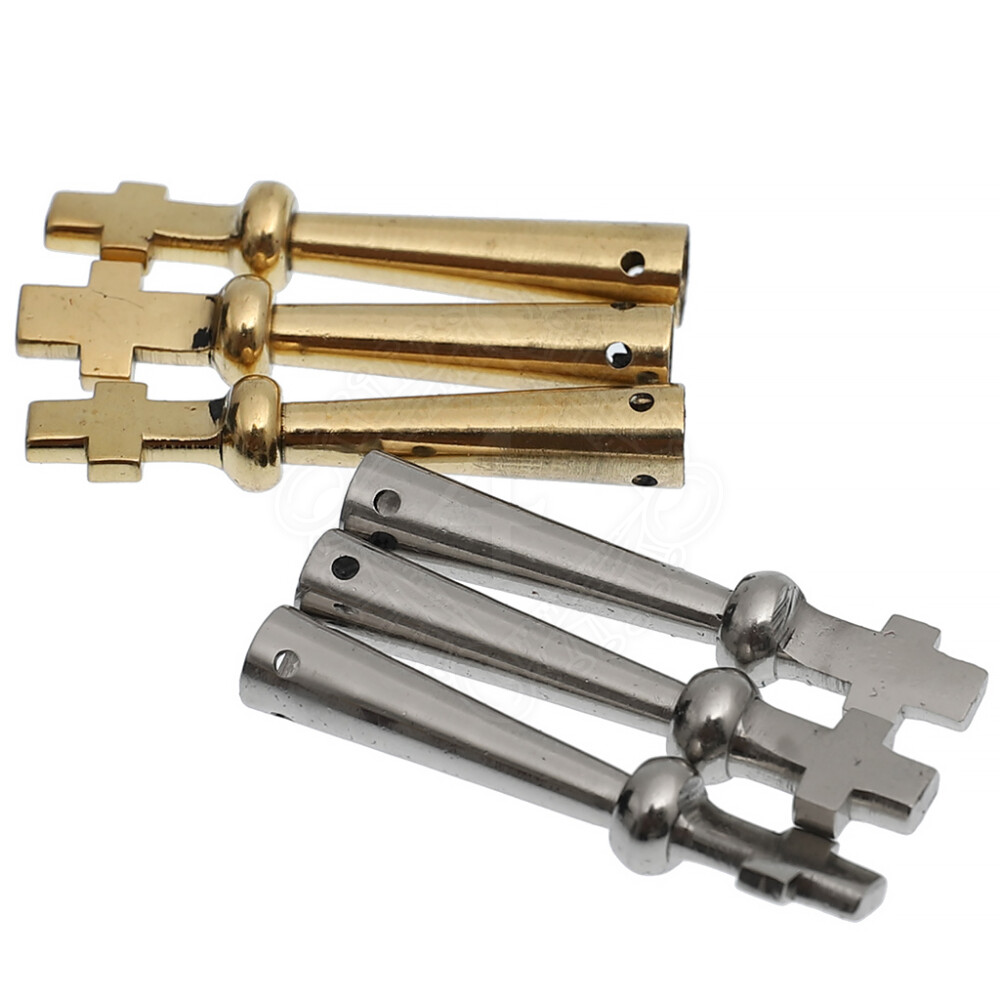
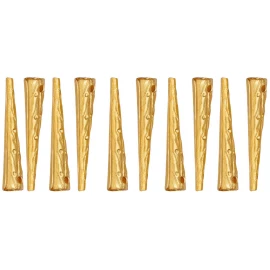
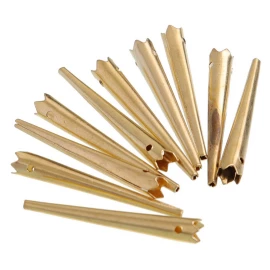
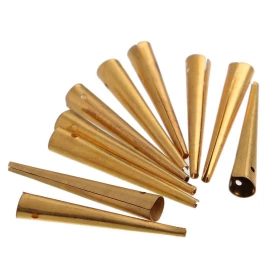
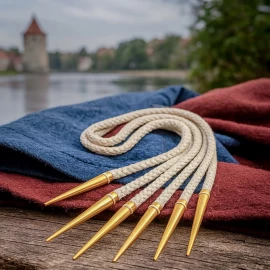
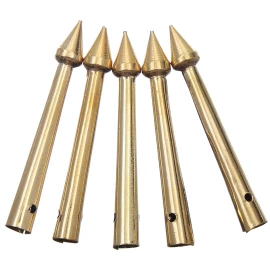
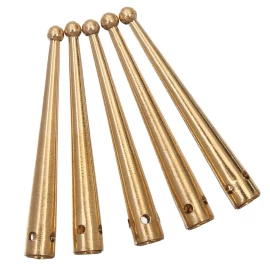
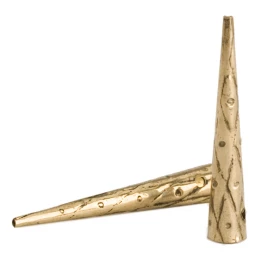
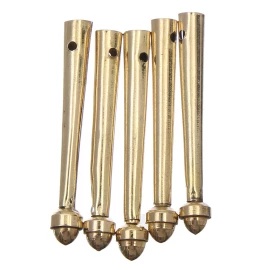
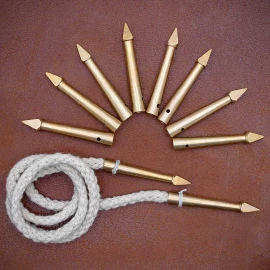
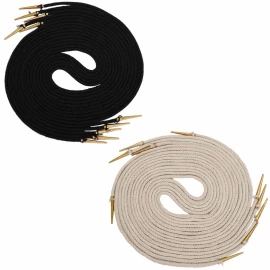
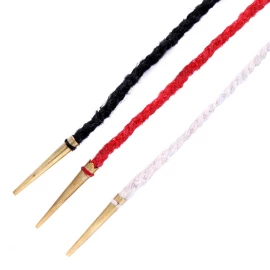
Looking for authenticity and a practical solution for lacing your historical garment, friend? This pair of decorative metal aglets featuring a cross motif offers the perfect finishing touch for any reenactor, LARP enthusiast, or living history practitioner. These aglets (also known as aiglets) securely bind the ends of textile or leather cords, making lacing through eyelets, rings, or bound laceholes incredibly smooth without fraying the cordage. Available in polished brass as well as silver-plated finishes, we recommend them for accenting hose, doublet sleeves, gambesons, and ladies' gowns for a truly authentic period appearance. Further product information ...
The following variants are currently available:
Decorative Brass Aglets with Cross Terminals for Laces (Pair)
History and Origins of Lacing Aglets
The historical design of these metal lace tips (known historically as aglets or aiglets) is rooted in the High to Late Middle Ages and Renaissance (14th to 16th centuries). During this era, European tailoring evolved to produce form-fitting garments that closely contoured the human body. As buttons were not the sole method of closure, lacing with points and cords became the primary system for attaching sleeves to armholes, tying hose to doublets, and cinching bodices tightly.
Metal aglets protected the ends of braided or woven cords from unraveling under tension. While common folk used simple rolled sheet-metal tags made of brass or iron, wealthy burghers and nobility favored cast aglets made of precious and copper-alloy metals decorated with figurative motifs, rosettes, or religious symbols such as the cross. Cords tipped with these ornate metal points were often worn prominently displayed as fashionable status symbols.
Mounting and Assembly Instructions
Attaching these metal aglets to your lacing cord is quick and easy to accomplish in your workshop:
- Prepare the Cord: Select a round or flat lace (made of linen, wool, or leather) up to 5 mm (approx. 0.20 in) in diameter. Trim the end neatly and lightly coat it with beeswax or a drop of glue to prevent fraying while inserting.
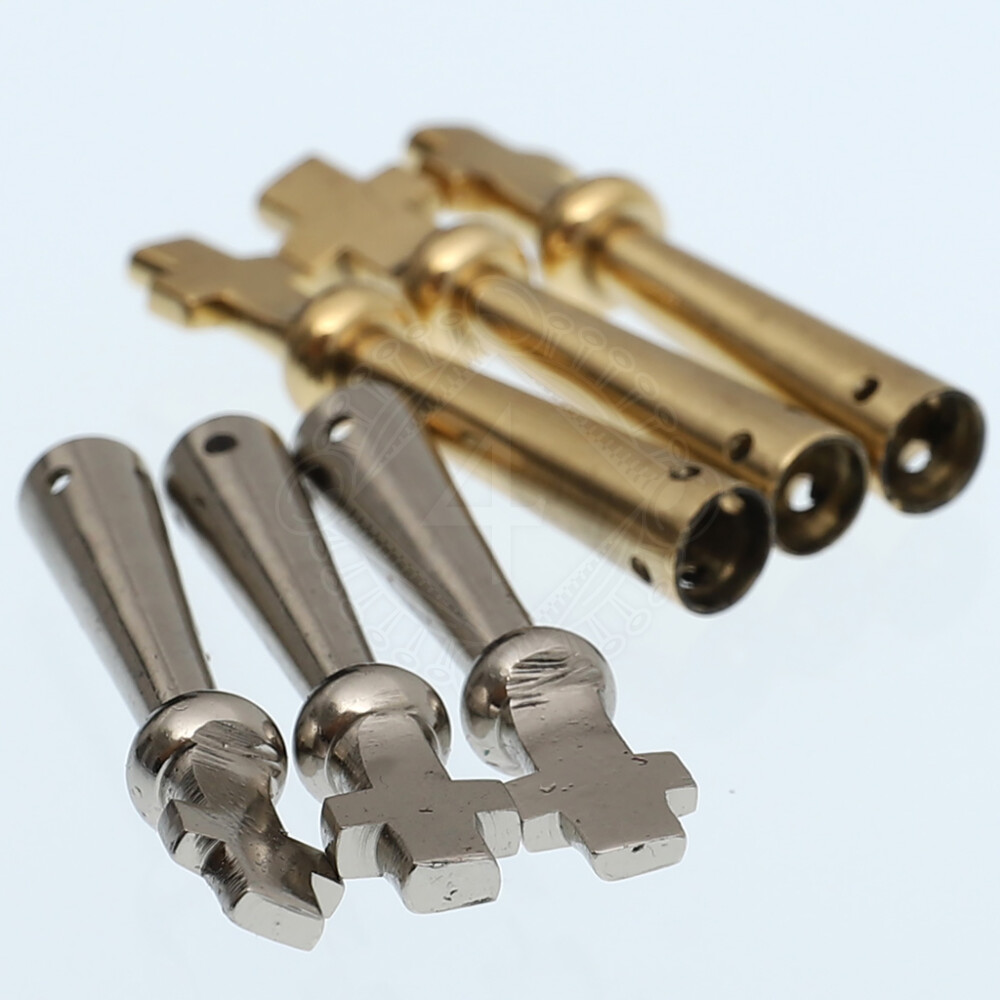
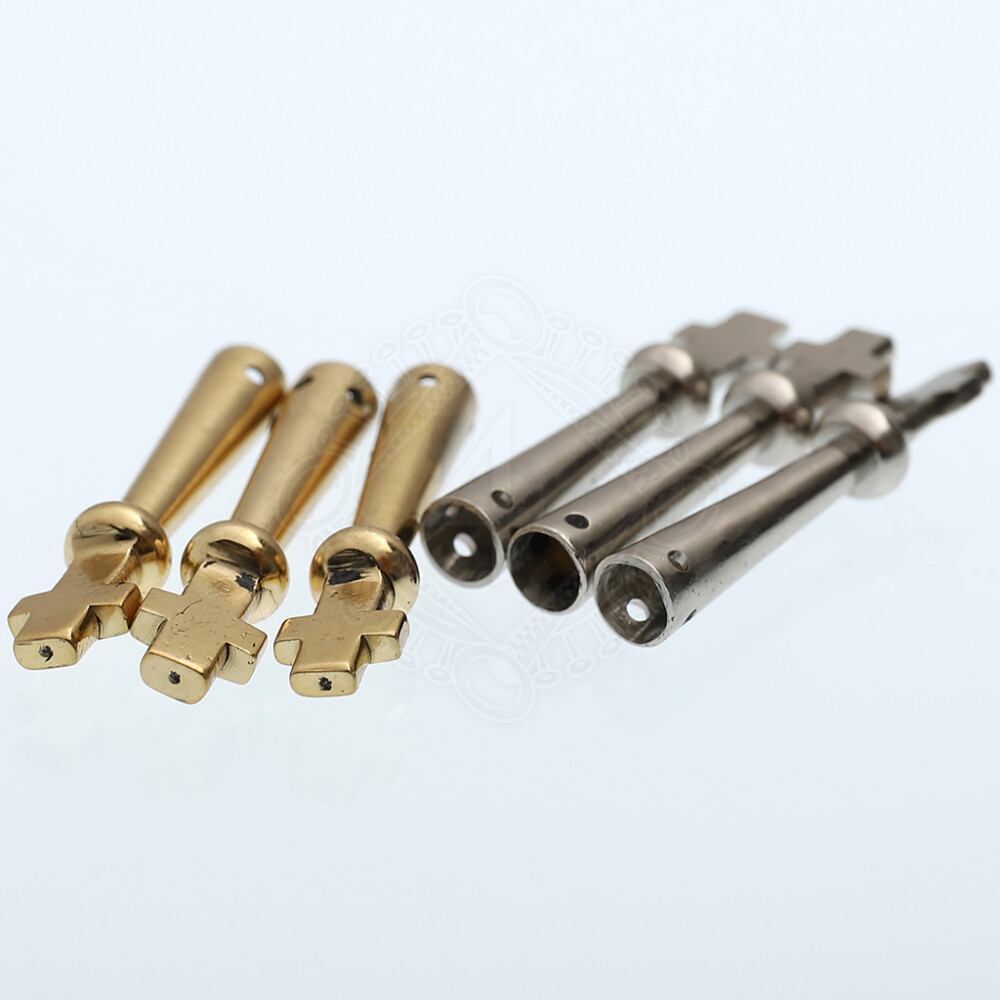
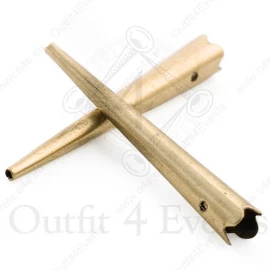
- Insert into Socket: Push the cord tip into the wider funnel-shaped socket opening of the aglet.
- Secure the Tip: The upper section of the socket features a small mounting hole. Secure the lace inside by stitching through this hole using strong thread, or fasten it with a small rivet or by gently crimping the metal collar.
Technical Specifications
| Parameter | Value |
|---|---|
| Product Type | Metal Lacing Aglets / Aiglets (Pair = 2 pcs) |
| Historical Era | High Middle Ages to Renaissance (14th–16th Century) |
| Motif | Shaped Cross Terminal |
| Material | Brass / Silver-plated Brass |
| Overall Length | 38.5 mm (approx. 1.52 in) |
| Socket Internal Diameter (Entry) | approx. 5.0 mm (approx. 0.20 in) |
| Cross Dimensions | 7.8 mm W × 2.3 mm T (approx. 0.31 × 0.09 in) |
| Weight (1 pc) | approx. 4.0 g (approx. 0.14 oz) |
Care and Safety Instructions
Cast brass and silver-plated finishes are durable materials that maintain their luster for years with basic care. Follow these simple guidelines:
- Wipe the aglets with a soft dry cotton cloth after laundering garments or following exposure to moisture.
- Avoid harsh chemical cleaners or abrasive polishing pastes that could strip the silver plating or remove the antiqued patina.
- Do not pull on the metal aglets with excessive force while lacing to avoid tearing the cord out of the socket.
- Keep out of reach of small children due to choking hazards.
Recommended Accessories
We recommend pairing these aglets with woven linen or woolen lacing cords from our store, a 14th–15th century Gothic doublet or tunic, woolen chausses/hose, or a laced medieval dress. These aglets historically and visually complement High Medieval and Renaissance costuming seamlessly.
We are here for you!