Čeština
 Deutsch


Brass Aiglets for Medieval Lacing, Set of 10


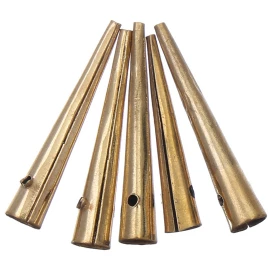
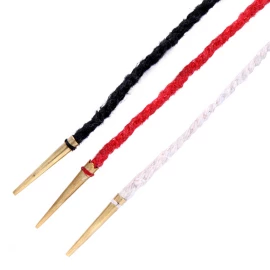
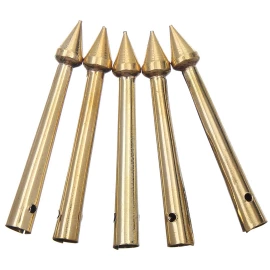
Complete your historical clothing with a small but essential detail used throughout the medieval and early modern periods. This set contains ten plain brass aiglets designed to protect the ends of cords from fraying and make them easier to pass through eyelets, loops and narrow lacing holes. Fit them to tunics, gowns, bodices, doublets, gambesons, pouches and costume accessories. Their simple undecorated form works equally well for the clothing of a craftsman, soldier, townsman, servant or wealthy noble. Further product information ...

 Delivery options
Brass Aiglets for Medieval Lacing, Set of 10
Practical Tips for Laces and Cords
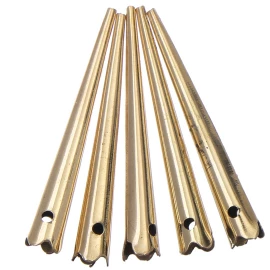
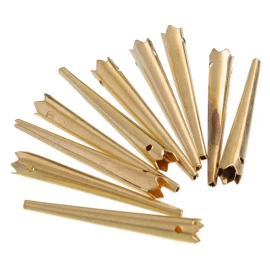
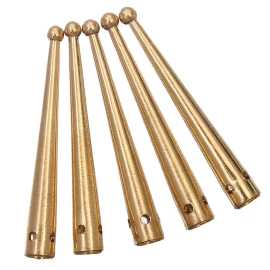
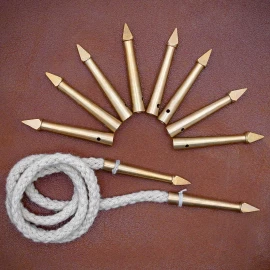
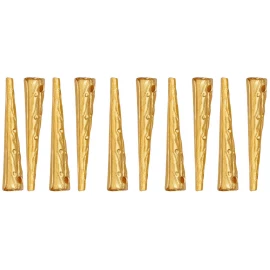
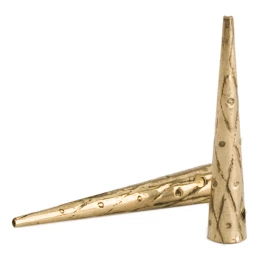
Each aiglet is formed from thin brass sheet rolled into a long tapered sleeve. The longitudinal split allows the fitting to close slightly around the cord, whilst a small hole near the wider end provides an additional method of securing it.
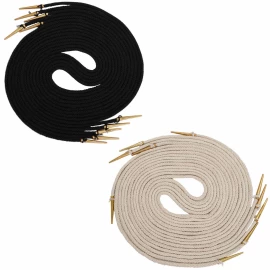
The narrow tip performs the same basic function as the end of a modern shoelace. It passes easily through a small opening and prevents individual fibres from catching on the edges of eyelets. The fittings may be used with cotton, linen, woollen or leather cords measuring up to approximately 4 mm / 5/32 in in diameter.
Aiglets in 14th–17th-Century Clothing
Metal lace tips are commonly known as aiglets or aglets. In historical English usage, the cords themselves were often called points, whilst the metal fittings attached to their ends were the aiglets.
Such cords were particularly important in European dress from the Late Middle Ages into the early modern period. They were used to lace bodices, gowns and doublets, suspend separate hose, attach removable sleeves and close purses or fabric bags.
Strong points with metal tips were also used to tie certain pieces of plate armour to a padded arming garment. For highly stressed armour connections, however, we recommend using suitably strong cord and robust purpose-made arming-point aiglets rather than lightweight decorative laces.
A Simple Form Suitable for Several Centuries
The plain tapered form has no decoration that would restrict it to one short period. It may therefore be used with costumes inspired by the 14th through the 17th centuries. Similar undecorated fittings could be worn by soldiers, craftspeople, townspeople and servants, whilst wealthy owners might choose elaborate examples made from silver, gilded alloys or precious metals.
These are historically inspired costume fittings rather than declared reproductions of one specifically identified archaeological find.
How to Fit an Aiglet
- Cut the cord end square and twist any loose fibres tightly together.
- When using a soft natural-fibre cord, bind the end with strong waxed thread before fitting the sleeve.
- Insert the cord as deeply as possible into the wider opening.
- Close the sleeve gently around the cord with smooth-jawed flat pliers.
- Place a piece of leather or heavy fabric between the pliers and brass to avoid scratching the surface.
- For additional security, pass strong thread or fine brass wire through the small side hole.
- Test the connection with a gentle pull before using the finished lace.
Do not crush the sleeve with one heavy blow. Several light presses around its circumference will create a neater and more even fit. Excessive pressure may split the brass or cut into the cord.
Suggested Uses
- Medieval tunics and gowns: tips for neckline and sleeve cords
- Bodices and women’s clothing: easier threading of long lacing cords
- Doublets and fitted jackets: attachment of fronts, sleeves or separate hose
- Gambesons and padded garments: finishing of closure cords
- Arming points: for lighter costume fittings and connections that are not highly stressed
- Pouches and fabric bags: decorative tips for drawstrings
- Reenactment, LARP and cosplay: construction and repair of historical costumes
Technical Specifications
| Specification | Details |
|---|---|
| Product type | Aiglet, aglet, lace tip or cord-end sleeve |
| Material | Brass |
| Construction | Rolled tapered brass-sheet sleeve with a longitudinal split |
| Finish | Plain golden brass |
| Overall length | Approx. 36–38 mm / 1 7/16–1 1/2 in |
| Internal diameter of wide opening | Approx. 4 mm / 5/32 in |
| External diameter at wide end | Approx. 5.5 mm / 7/32 in |
| Securing hole | 1 small side hole |
| Recommended cord diameter | Up to approx. 4 mm / 5/32 in |
| Suggested historical period | Approximately 14th–17th century |
| Contents | 10 brass aiglets |
Measurements are approximate. As the pieces are formed from rolled sheet, individual aiglets may vary slightly in length, diameter, width of the split and tone of the brass surface.
Care of the Brass Aiglets
- Wipe the brass with a soft, dry cloth after use.
- Allow wet fittings to dry completely before storage.
- Use a mild brass polish when a brighter finish is required.
- Do not use steel wool, wire brushes or coarse abrasive cleaners.
- Avoid prolonged contact with perspiration, salt and aggressive chemicals.
- Store completed cords loosely coiled to prevent the metal tips from bending.
Brass naturally oxidises and may develop a darker patina over time. This is not a material defect. Leave the patina in place for an aged appearance or remove it with careful polishing.
Installation and Safety Information
- The fittings have narrow metal tips and should be handled carefully.
- Wear eye protection and use a stable work surface when closing them with pliers.
- Keep these small metal parts away from children.
- Inspect each aiglet before wearing the garment and do not use one that has split or developed a sharp edge.
- During contact LARP or stage combat, secure loose cords so that the pointed ends cannot strike the face or eyes.
- Do not use weak decorative cord to support heavy pieces of armour.
Recommended Accessories
- Linen or cotton cord for clothing inspired by the 14th–17th centuries
- Leather thong for pouches and stronger costume fittings
- Waxed saddler’s thread for securing the aiglet through its side hole
- Smooth-jawed flat pliers for closing the brass sleeve without heavy marking
- Gambeson or arming doublet for a 14th–16th-century armour outfit
- Medieval hose and doublet for a 14th–16th-century clothing set
- Historical drawstring pouch for medieval and Renaissance costume
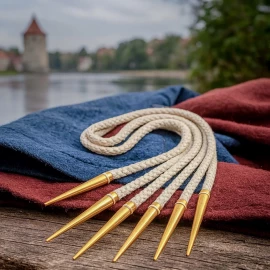
Cords, garments, pouches and other accessories shown in the photographs are not included.
We are here for you!