
 Čeština
 Deutsch


Medieval Bronze Heraldic Eagle Mount, 13th–15th Century
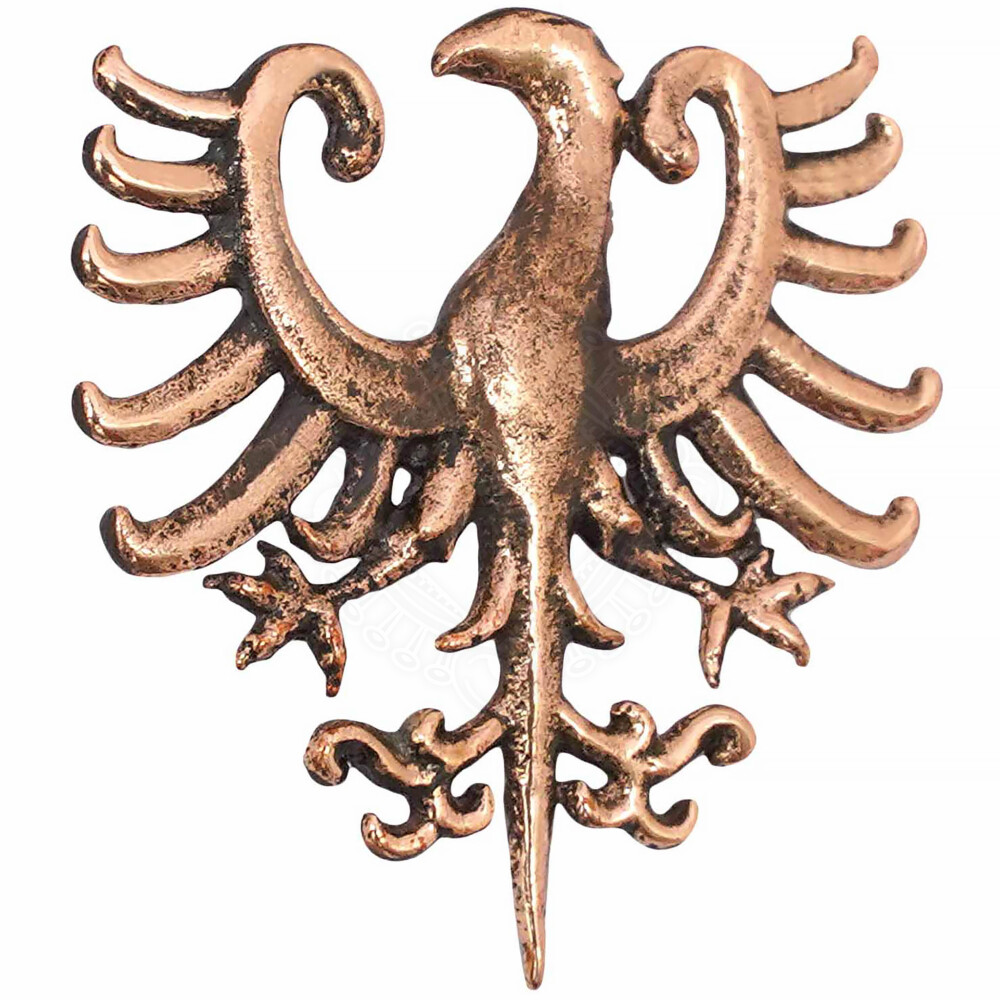
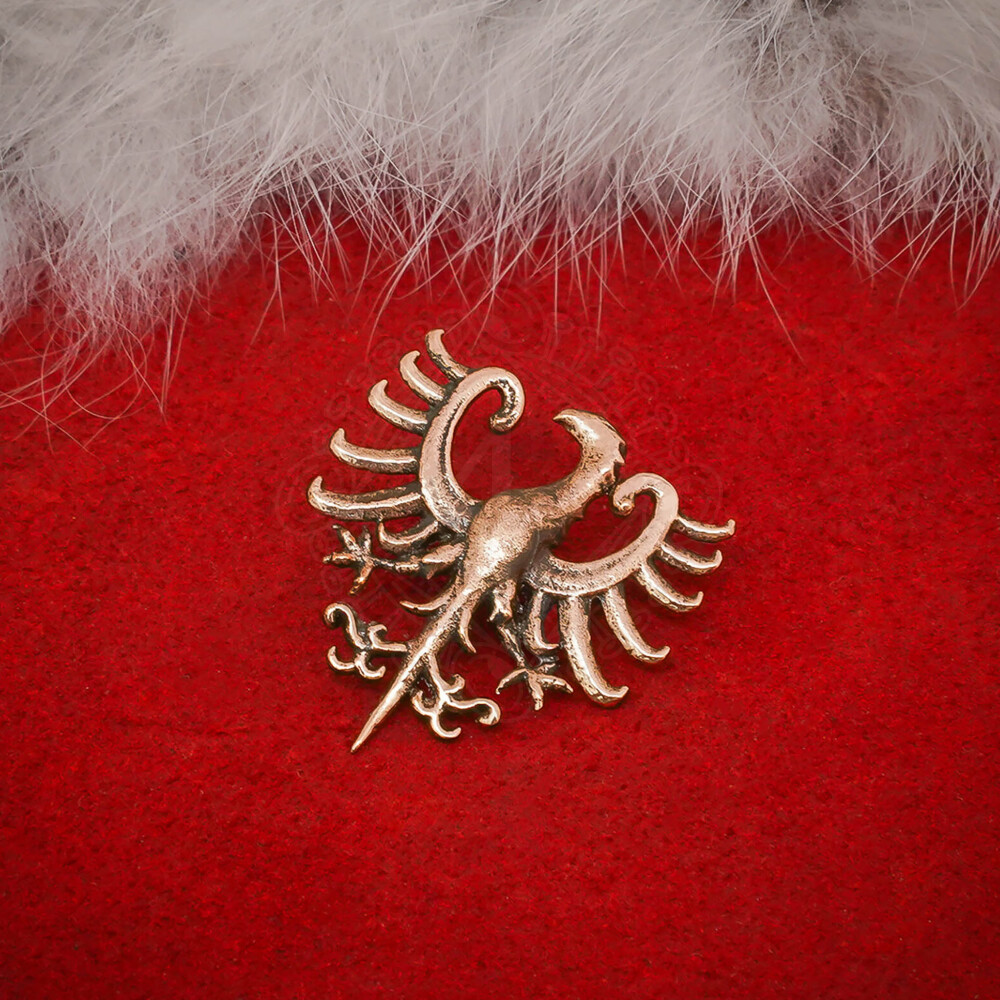
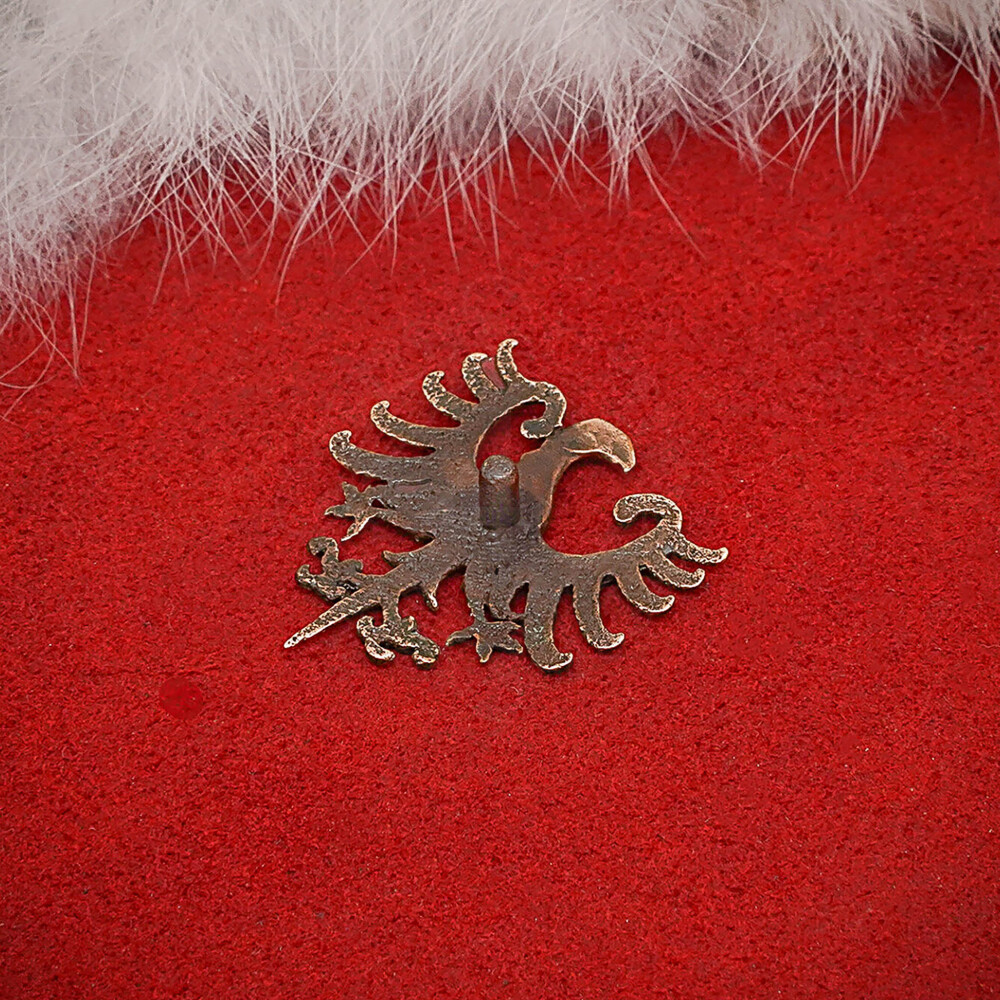

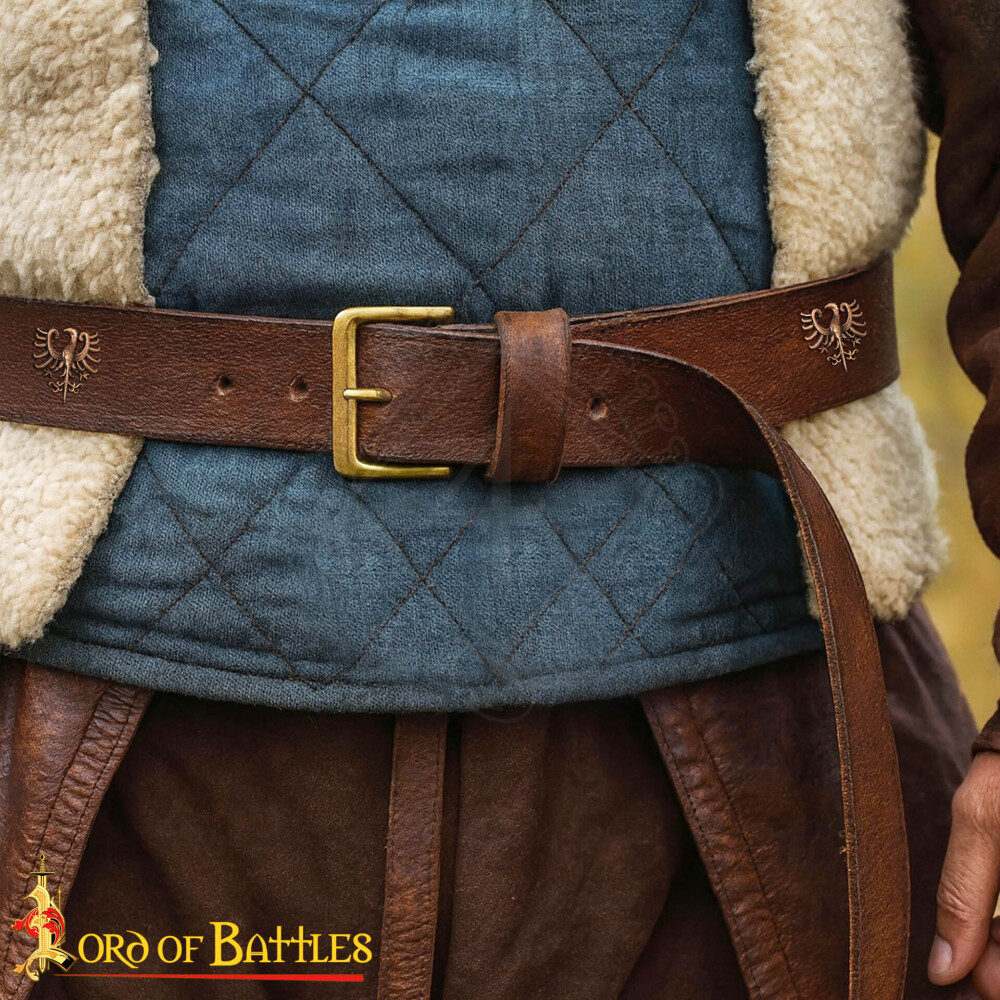
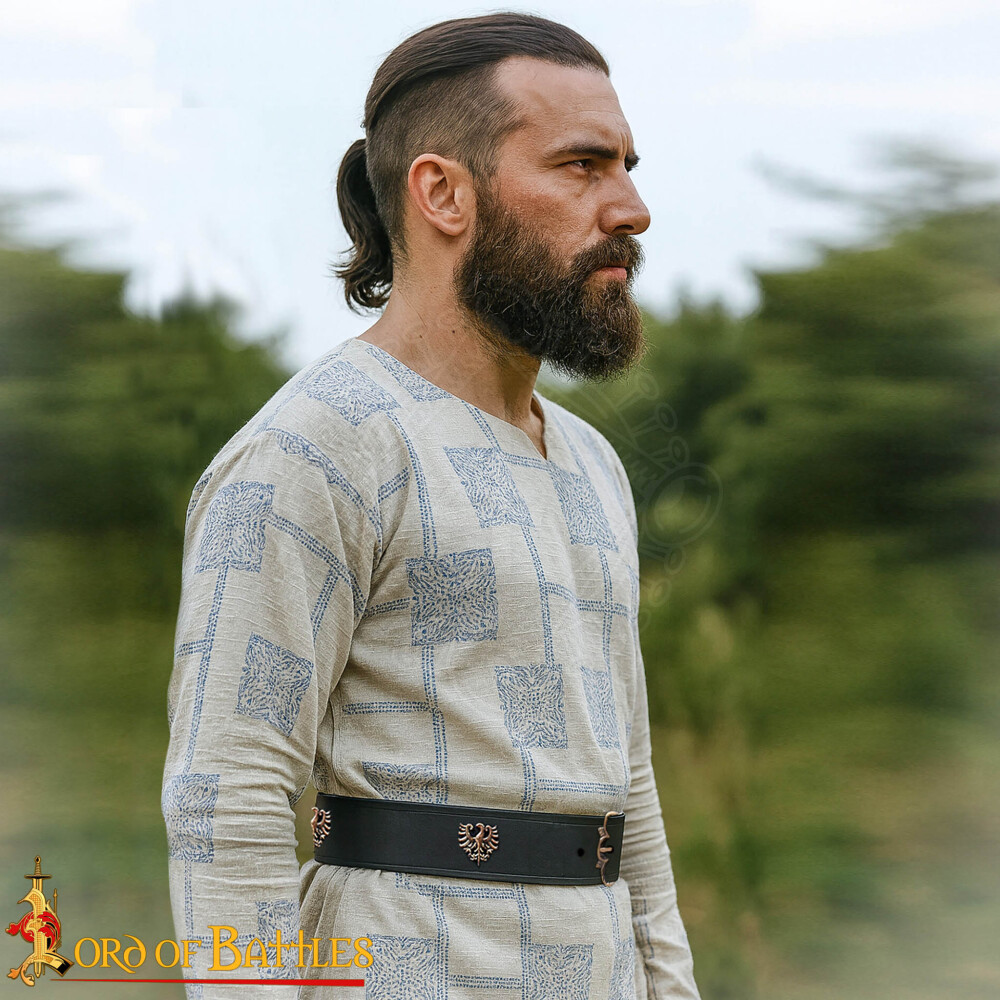

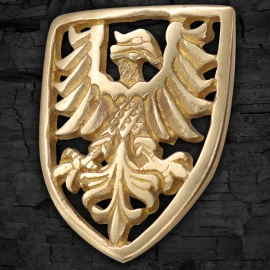
This intricately detailed mount, featuring a heraldic eagle, is a precise replica of the decorative metalwork common throughout the High and Late Middle Ages. It is crafted from solid bronze using the traditional lost-wax method, ensuring each piece is truly unique. It serves as the perfect adornment for your historical costume, whether you are involved in re-enactment, LARP, or simply wish to add a touch of authenticity to your clothing and accessories. Decorate your belt, bag, hat, or garment to signify your status. Further product information ...

 Delivery options
The following variants are currently available:
Medieval Bronze Heraldic Eagle Mount, 13th–15th Century
Appearance and Craftsmanship
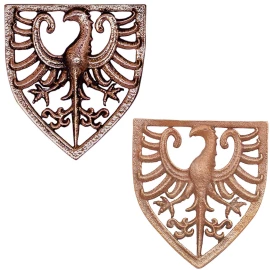
The mount is shaped as a stylised single-headed eagle with its wings spread wide and its plumage rendered in fine detail. Its talons are elegantly and decoratively intertwined, adding to its noble appearance. The entire piece conveys a sense of dynamism and power, befitting the heraldic tradition. It is cast using the lost-wax (cire perdue) method, a technique that allows for the finest details to be captured. You can choose between two available finishes:
- Polished Bronze: A bright and shiny finish, reminiscent of a newly forged item.
- Antique Bronze (Patinated): A darker, antiqued look with a patina that evokes the feel of a genuine historical artefact.
How to Use Your Mount
This decorative piece is highly versatile. You can affix it in several ways:
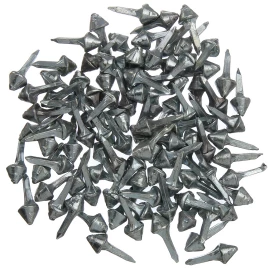
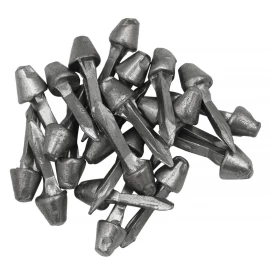
- On Leather: Using small rivets (not included), you can attach it to a leather belt, strap, piece of armour, or bag.
- On Fabric: The mount can be securely stitched onto heavy fabrics such as woollen cloth or felt. This makes it ideal for decorating cloaks, hats, caps, or doublets (wams).
Consider the placement carefully before attaching it to achieve the best visual impact.
A Symbol of Power and Nobility in History
In the Middle Ages, the eagle was one of the most powerful and widespread symbols. As the "King of Birds," it represented strength, courage, foresight, and nobility. Its depiction was the privilege of the highest echelons of society – emperors, kings, and princes.
The single-headed eagle appears in heraldry from the 12th century onwards and became the emblem of many prominent families and states. It is most famously associated with the Holy Roman Empire, where it symbolised the power and authority of the Emperor as the successor to the Roman imperators. To wear such a symbol on one's clothing or belt was a clear demonstration of high status, loyalty, or direct service to a sovereign.
A Point of Historical Interest
Did you know that the original Imperial Eagle (Reichsadler) of the Holy Roman Empire was single-headed? The double-headed eagle was only systematically adopted by Emperor Sigismund of Luxemburg in the 15th century to emphasise both his secular and ecclesiastical power, as well as his claim to universal rule. The single-headed eagle, therefore, remains a potent symbol of the earlier, High Medieval imperial authority.
How to Care for Your Mount
To keep your bronze mount looking its best for as long as possible, follow these simple guidelines:
- Wipe it regularly with a soft, dry cloth to remove dust and dirt.
- Avoid unnecessary exposure to moisture and harsh chemicals.
- Remember that bronze will naturally develop a patina over time. This is a natural process that adds to the item's historical authenticity.
- If you prefer a bright shine, you can gently polish it with a suitable bronze cleaner.
Do not clean the mount with steel wool or abrasive pastes, as this could permanently damage the surface and its fine details.
Product Specifications
| Material | Solid Bronze (Lost-Wax Cast) |
| Approx. Weight | 7 g |
| Period | 13th – 15th Century |
We are here for you!






.3773623034.1696456237.png.webp)

.3773623034.1696456268.png.webp)
.3773623034.1696456247.png.webp)