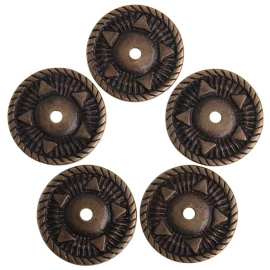

Medieval Brass Rosette Belt Mounts, Set of 5
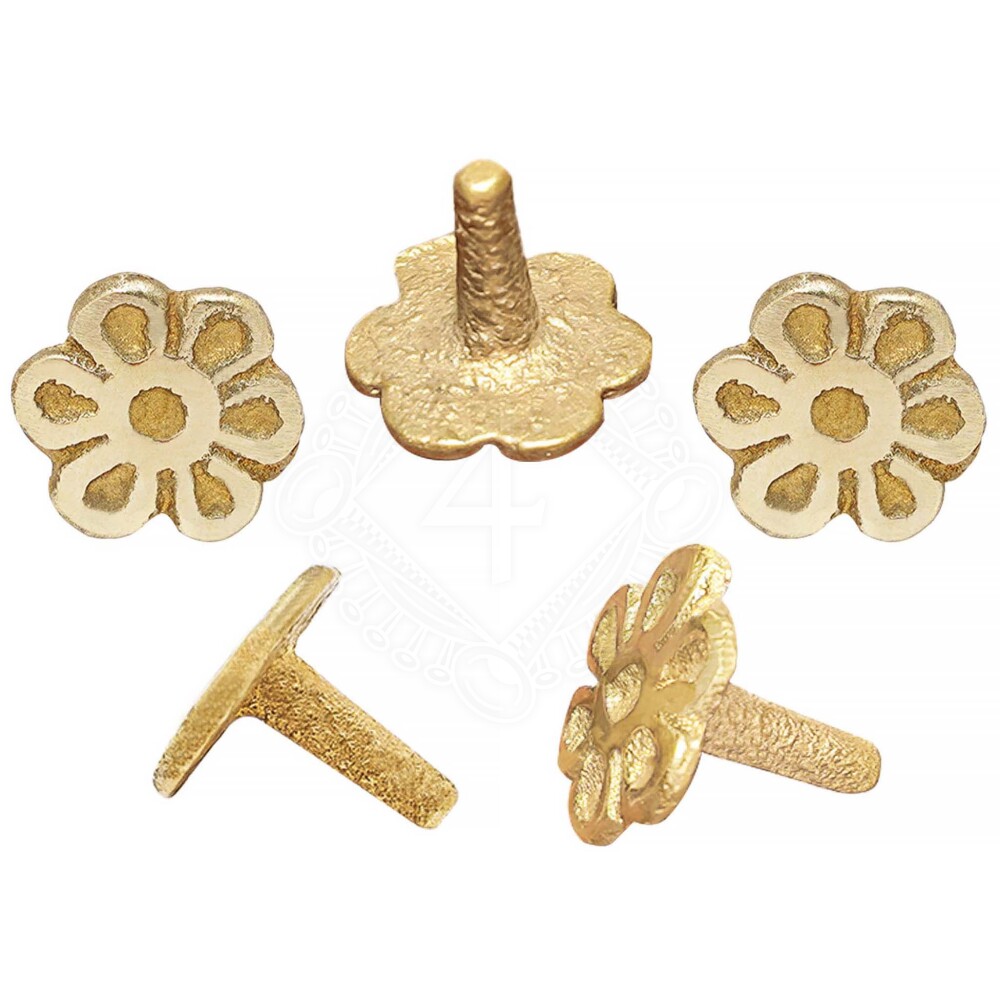
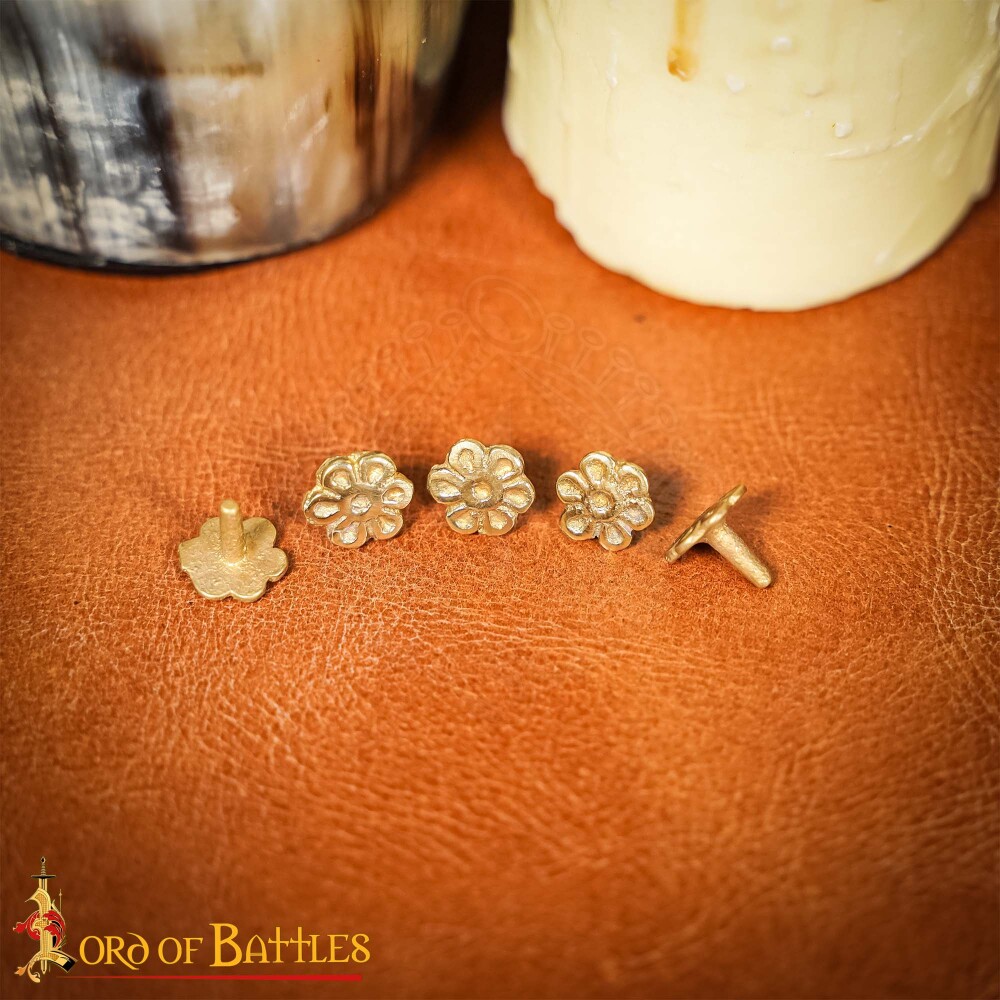
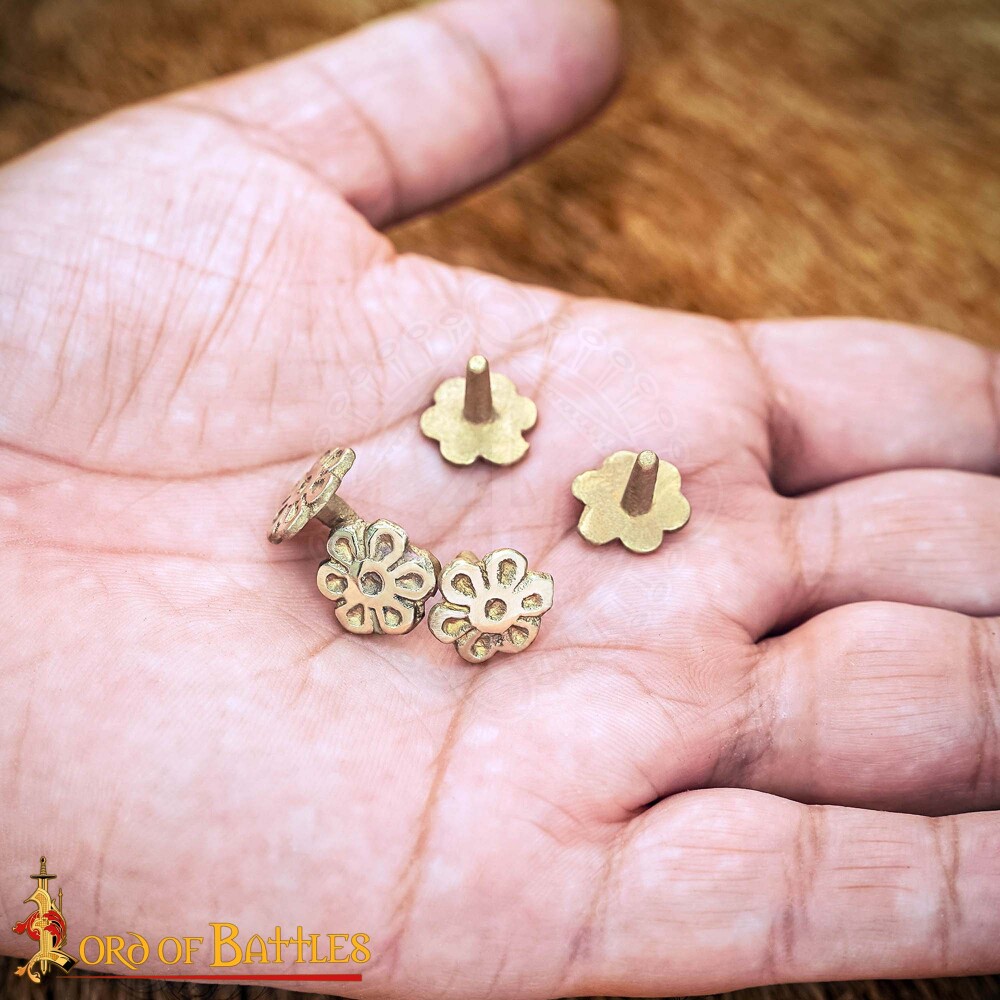
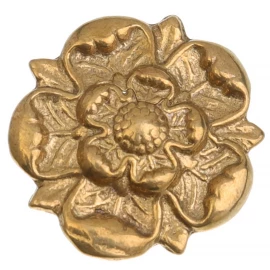
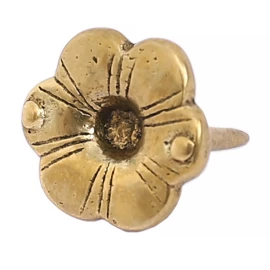
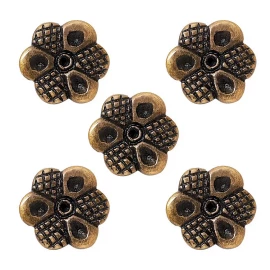
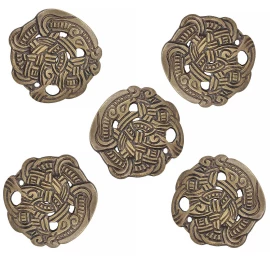
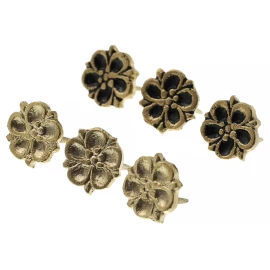
Turn a plain leather strap into a distinctive piece of medieval kit with this set of 5 brass rosette belt mounts. Each fitting is shaped as a six-petalled flower and features an integral shank on the reverse for riveting directly to leather. Once properly fitted, no screw is visible from the front, leaving only the decorative floral face on display. These compact brass studs are ideal for medieval belts, pouches, scabbards, harness decoration, reenactment equipment and LARP leatherwork. Their warm golden surface can be kept polished or allowed to develop a natural patina for a more aged appearance. Further product information ...
Medieval Brass Rosette Belt Mounts, Set of 5
Gothic Rosette Inspired By A Medieval Salisbury Find
The historical model for this medieval belt mount is stated to be artefact no. 44 in the Salisbury Museum Medieval Catalogue in England. The supplied product information does not provide a precise date for that individual catalogue object, so we do not assign it to an unsupported specific year or decade. Comparable small decorative belt fittings belong particularly well within the context of the High and Late Middle Ages, especially the 14th and 15th centuries.
The six-petalled rosette represents a simple Gothic floral ornament. Floral decoration was widely employed in medieval decorative arts and could appear on jewellery, buckles, belt fittings, scabbards, harness equipment and other personal accessories. A repeated row of bright metal mounts could transform an otherwise simple leather belt into a much more conspicuous element of medieval dress.
Six-Petalled Solid Brass Rosette
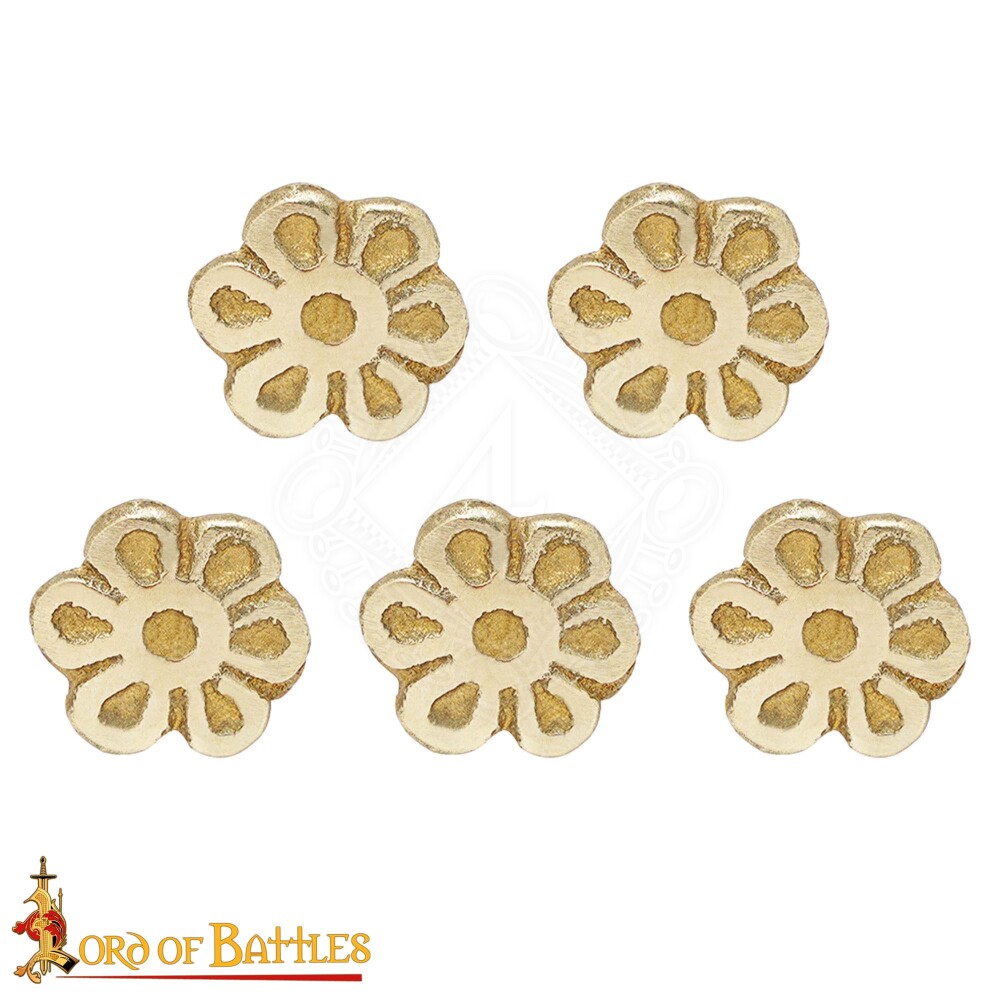
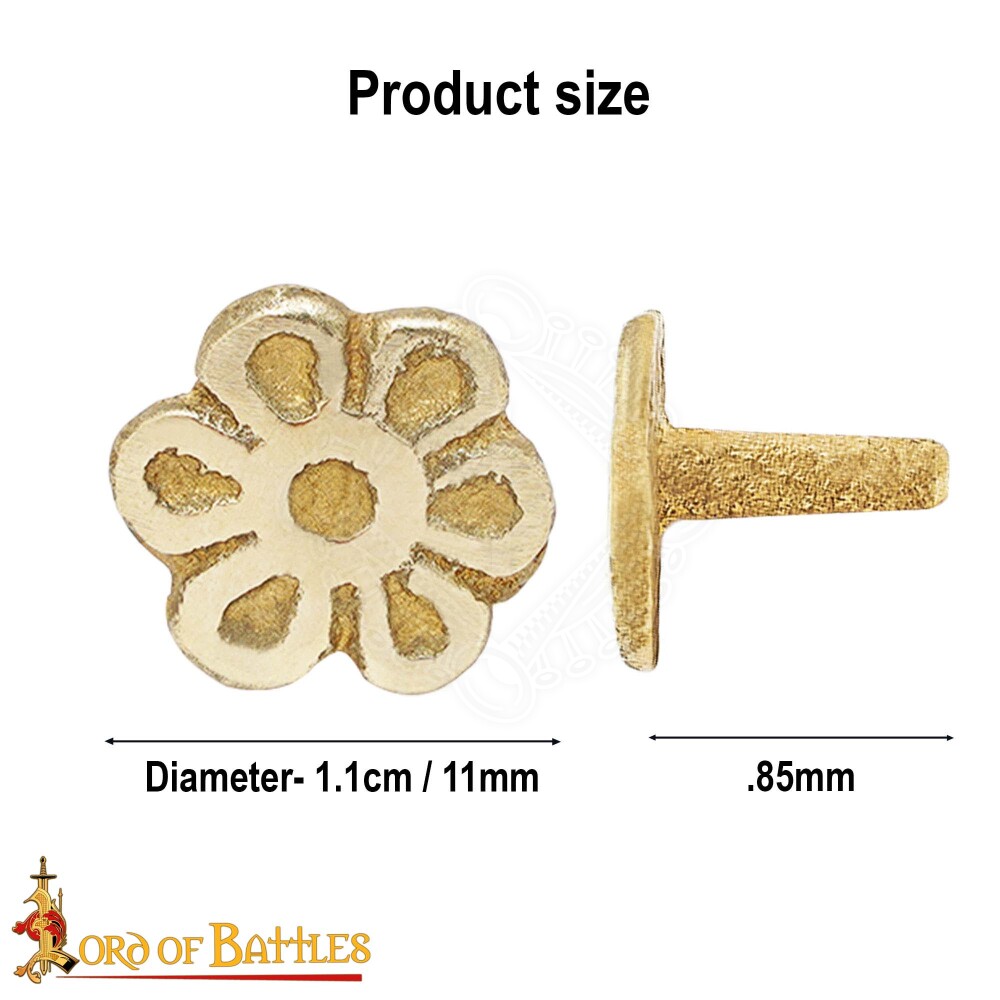
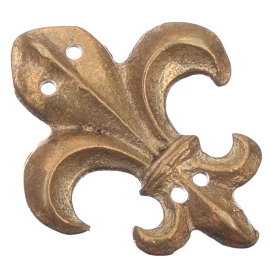
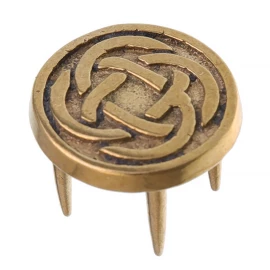
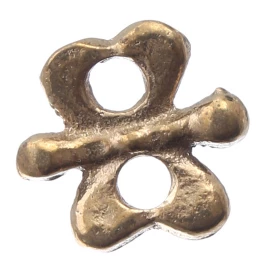
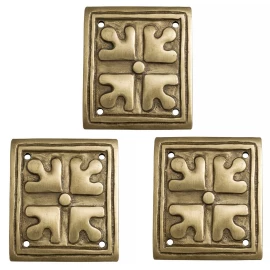
The visible head takes the form of a six-petalled flower with a circular centre. Each petal contains a recessed inner field, creating a contrast between the raised smooth outlines and deeper textured areas. This gives the fitting a pronounced three-dimensional appearance despite its compact diameter of approximately 12 mm / 1/2 in.
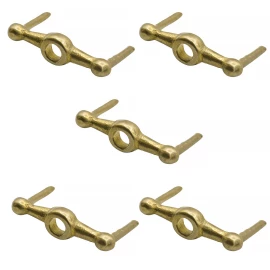
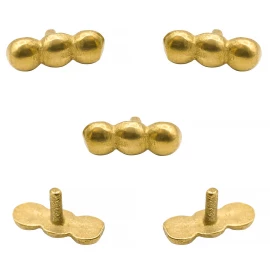
Each fitting is made from brass and has an integral round riveting shank on the reverse. It is therefore not a screw-back concho or a two-part rapid rivet. Once installed, only the decorative rosette remains visible on the face of the leather.
How To Rivet The Mount Onto Leather
Begin by marking the exact positions of the rosettes on your strap. When creating a repeated row, check the spacing carefully before punching any holes. Consistent spacing makes a considerable difference to the finished appearance.
- Punch a hole matching the diameter of the shank. Avoid making it unnecessarily large, as the mount should not wobble in the leather.
- Push the shank through the leather from the finished face.
- Place the decorative head face down on a firm, smooth support. A thin scrap of leather between the brass and the metal support can help protect the relief from marks.
- Use light blows from a ball-peen hammer to spread the projecting end of the shank on the reverse.
- Work evenly around the end of the shank until it mushrooms out and grips the leather securely.
- Do not use excessive force. Heavy blows may crack the shank, distort the rosette or damage the leather.
If your leather is considerably thinner than the available shank length, the shank may need to be professionally shortened before riveting. Once fitted, inspect the reverse carefully. The peened end should have no sharp projections capable of catching clothing or scratching the wearer.
Suitable Uses
- medieval and Gothic leather belts,
- sword belts and suspension straps,
- leather bags and pouches,
- flaps on medieval belt pouches,
- leather components of scabbards,
- decorative elements on costume and armour,
- decorative historical harness work,
- LARP, reenactment, cosplay and leathercraft projects.
Technical Specifications
| Specification | Details |
|---|---|
| Product type | Decorative belt mount with integral riveting shank |
| Design | Six-petalled floral rosette |
| Material | Brass |
| Construction | Cast fitting |
| Historical inspiration | Medieval England, model stated to be based on find no. 44 in the Salisbury Museum Medieval Catalogue |
| Recommended period | High to Late Middle Ages, especially 14th–15th century |
| Decorative style | Gothic floral ornament |
| Outer diameter | Approx. 11.5–12.4 mm / 7/16–1/2 in |
| Rosette thickness | Approx. 1.5 mm / 1/16 in |
| Shank diameter | Approx. 3.1 mm / 1/8 in |
| Shank length | Approx. 7.5 mm / 5/16 in |
| Weight of set | Approx. 8 g / 0.28 oz |
| Quantity | 5 pieces |
| Attachment | Integral shank peened over on the reverse of the material |
| Suitable base material | Leather and other materials suitable for mechanical riveting |
All dimensions are approximate. Minor differences in surface texture, detail and dimensions may occur between individual cast pieces without affecting their intended function.
Care And Safe Use
- Wipe the brass fittings with a soft dry cloth after use, particularly after exposure to moisture or perspiration.
- Brass naturally darkens and develops a patina with age. Leave this intact if you prefer a more antique appearance.
- For a brighter finish, use a suitable brass polish sparingly and take care not to stain the surrounding leather.
- Avoid coarse abrasives, as they can remove the finer details of the floral relief.
- Store leatherwork with brass fittings in a dry place and do not leave it wet for prolonged periods.
- Wear eye protection and work on a stable surface when riveting the mounts.
- Never strike the decorative face directly with a hammer, as this may flatten the relief or mark the brass.
- After installation, inspect the reverse and carefully remove any sharp burrs.
- These rosettes are decorative fittings. Do not rely on them as safety-critical or load-bearing fasteners for armour, harness or other heavily stressed equipment.
Recommended Accessories
For a 14th–15th-century Gothic belt, we recommend a good-quality leather strap, a suitable medieval brass buckle and a period-style strap end. A leather punch, small ball-peen hammer and firm smooth metal support will make installation easier. Arrange the rosettes at regular intervals along the entire belt or use them more sparingly around the buckle and strap end. A medieval leather pouch, sword suspension system or brass-fitted scabbard will complement the finished belt particularly well.
We are here for you!