
 Čeština
 Deutsch


Bronze Mouthpiece for Signal Horn in Urnes Style
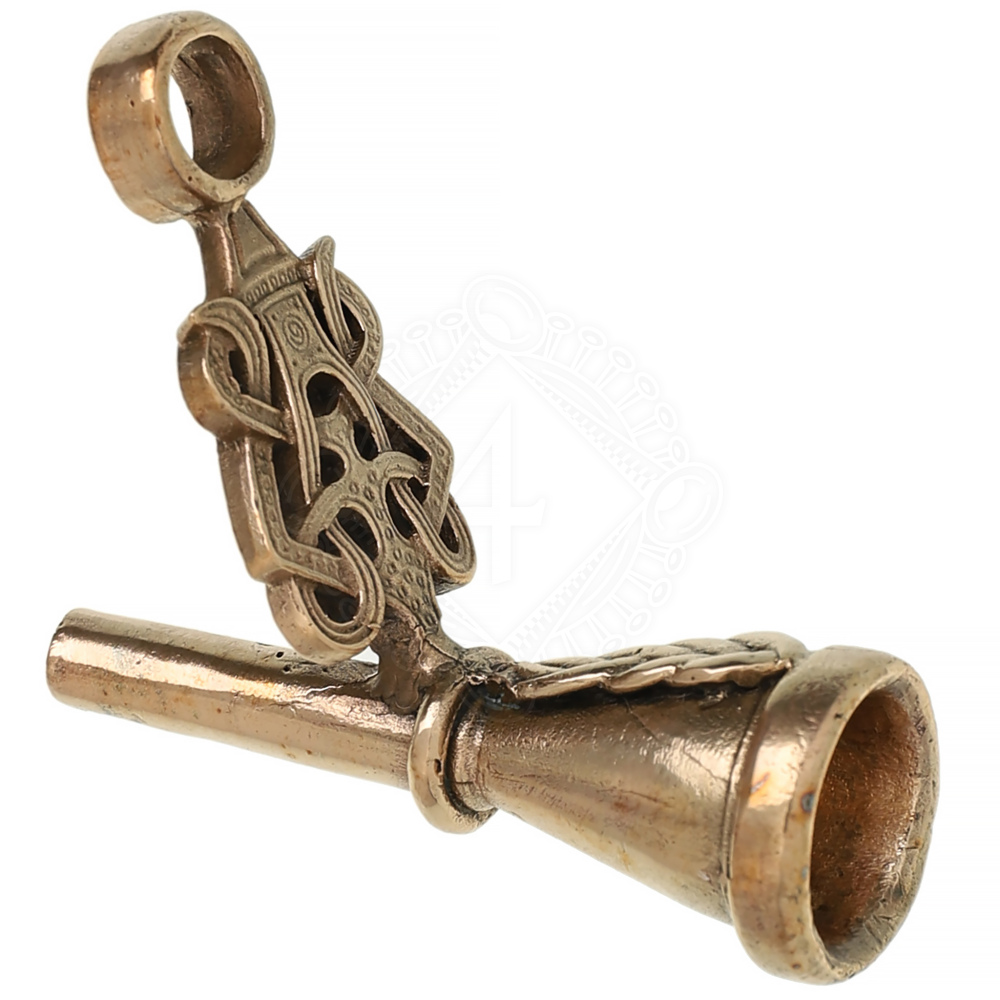
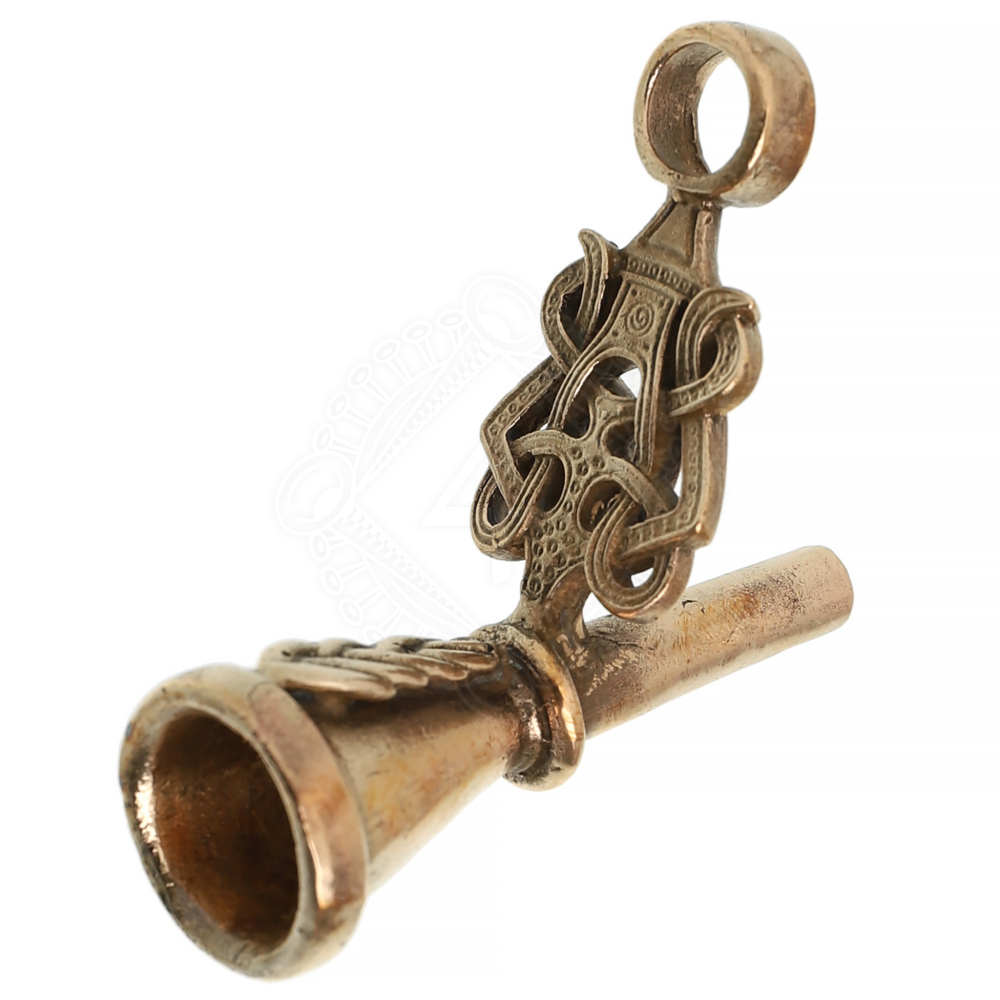
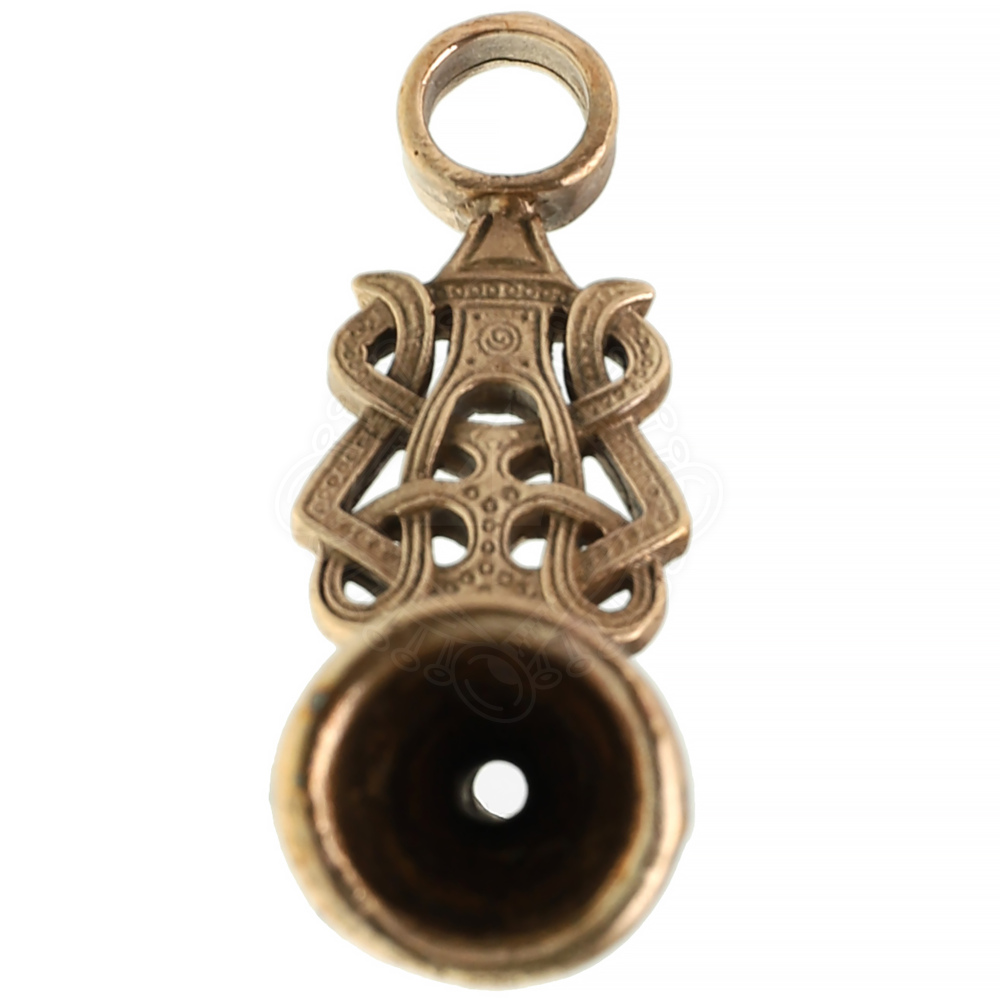
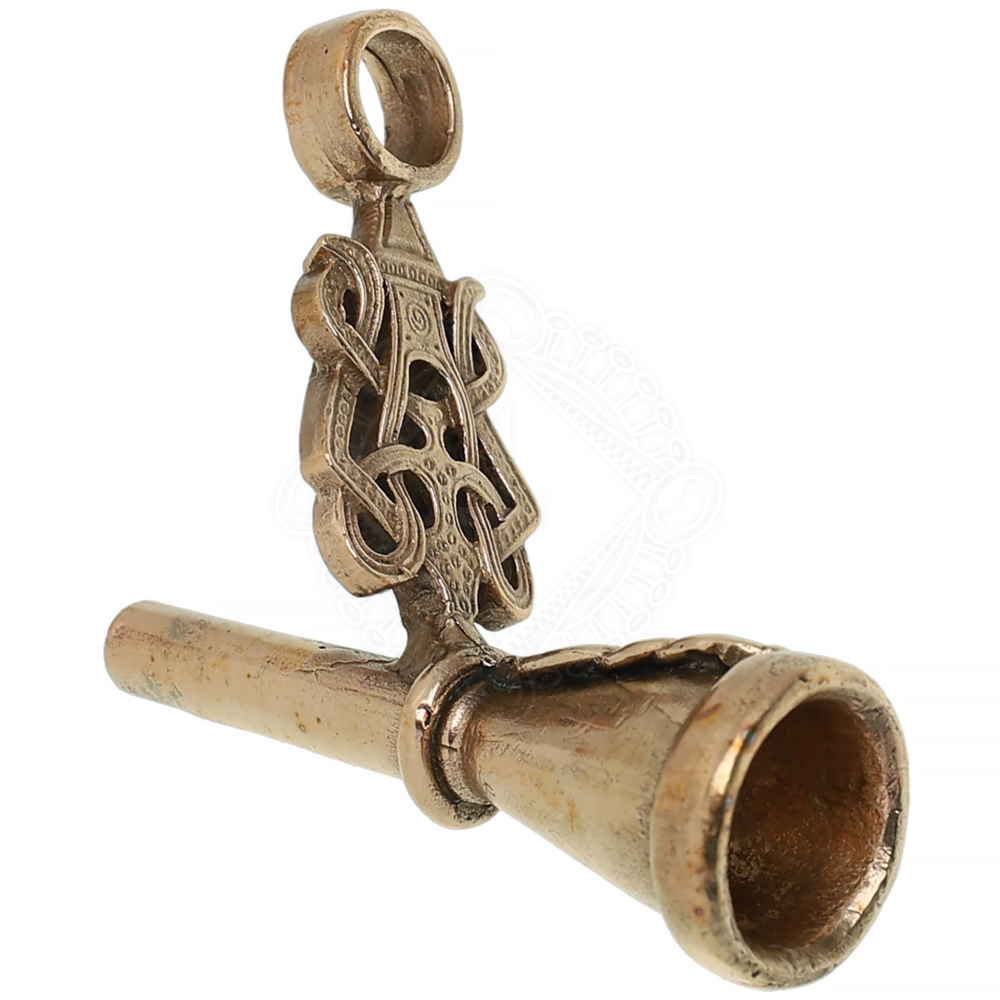
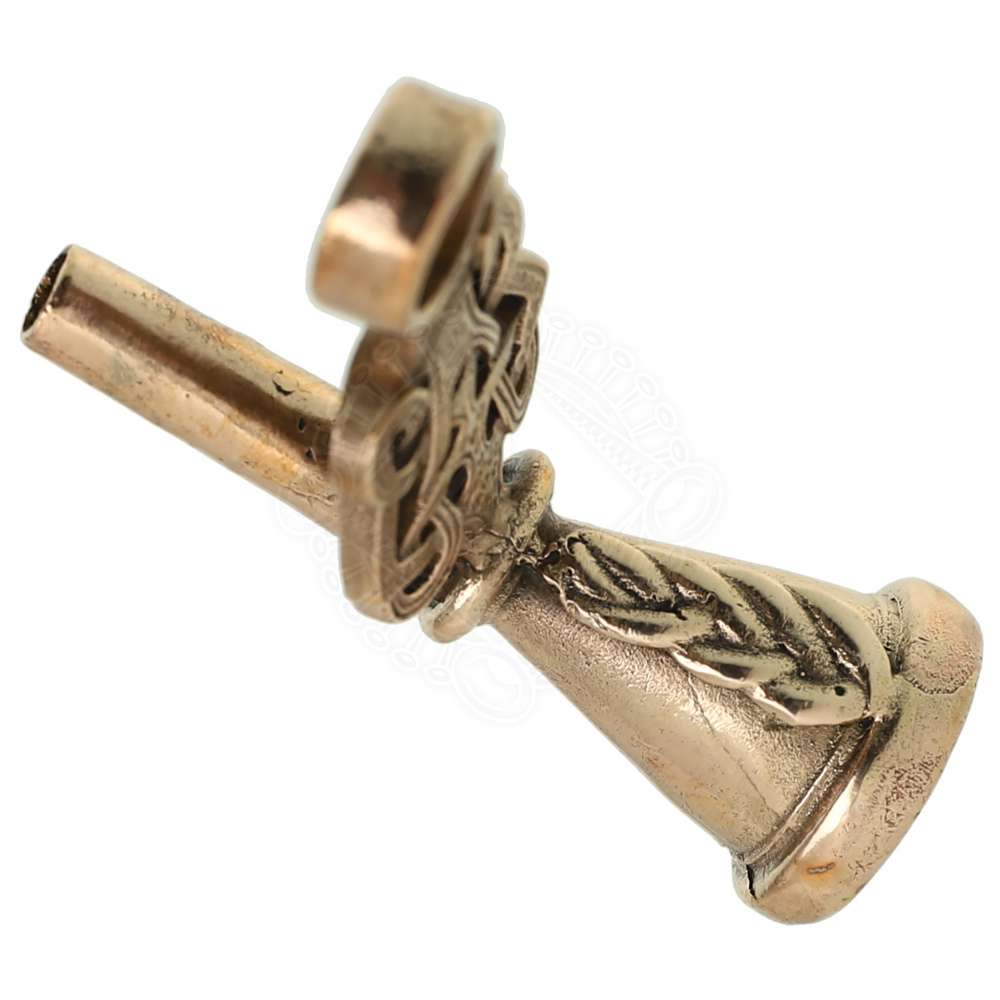
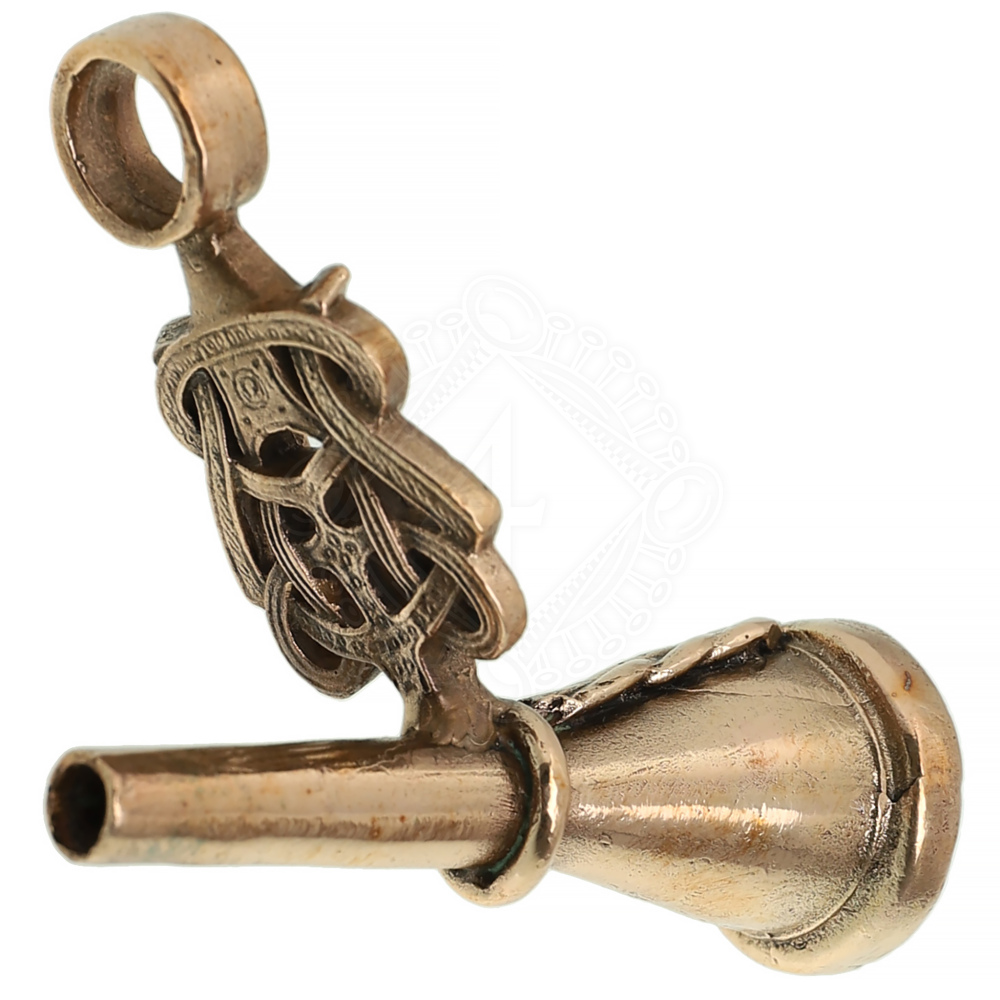

Enhance your signal or blowing horn with this magnificent bronze mouthpiece, featuring decoration inspired by the history of brave Nordic warriors. It is not just a functional accessory that makes blowing easier and improves the horn's sound, but also an authentic piece of jewellery that will accentuate your Viking, Celtic, or any early medieval warrior costume. Thanks to the precise bronze casting and detailed craftsmanship, you get an accessory that looks like a genuine archaeological find. Further product information ...

 Delivery options
Bronze Mouthpiece for Signal Horn in Urnes Style
Detailed Product Description
This mouthpiece is cast from high-quality bronze and consists of several parts. The main component is the conical cup that you press to your lips. A narrow shank extends from it, which is inserted into the opening at the tip of the horn. However, the most striking feature is the decorative plate, which is firmly attached to the shank.
Decoration in the Viking Urnes Style
The ornament on the plate is executed in the so-called Viking Urnes style. This artistic style, named after the decoration on the portal of the Urnes Stave Church in Norway, represents the final phase of Viking art (c. 1050 – 1125 AD). It is characterized by slender and intertwined animal bodies, most often snakes or dragons, which create elegant and asymmetrical loops. The knotwork on this mouthpiece is openwork, giving it a sense of lightness and sophistication. At the bottom of the decorative part, there is a small loop through which you can thread a leather strap to secure the mouthpiece against loss.
Use in History and Today
In the Early Middle Ages, signal and blowing horns were an indispensable tool. The Vikings used them for signalling at sea and in battle, for summoning men to the Thing (assembly), or for warning of danger. The sound of the horn carried over long distances and was clearly recognizable. The mouthpiece not only protected the blower's lips but also allowed for the creation of a stronger and clearer tone.
A Tidbit from Mythology
The most famous horn in Norse mythology is undoubtedly the Gjallarhorn, which the god Heimdall, guardian of Asgard, will sound to announce the beginning of the final battle – Ragnarök. Its blast will be heard in all nine worlds.
How to Use the Mouthpiece?
- At the tip of your horn (which must not be a drinking horn), drill a hole approximately 7 mm in diameter.
- Carefully insert the mouthpiece's shank into the hole. It should fit snugly.
- For a permanent and secure fit, we recommend gluing the mouthpiece into the horn using a two-part epoxy adhesive.
- To blow, press your lips together firmly, place them against the mouthpiece, and create a tone by "buzzing" as you exhale, similar to playing a trumpet.
Care and Maintenance
Bronze is an alloy of copper and tin and will naturally darken and develop a patina over time, which only enhances its historical appearance. If you wish to maintain a shiny surface, you can polish the mouthpiece from time to time with a cloth and a suitable metal polish. After each use, especially if it has come into contact with saliva, we recommend rinsing it with clean water and drying it thoroughly to prevent the formation of verdigris. Do not clean it with steel wool or abrasive pastes, as this would scratch the surface.
Specifications
| Material | Bronze (cast) |
| Weight | approx. 50 g |
| Total Length | approx. 60.7 mm (6.1 cm) |
| Outer Diameter of Mouthpiece Cup | approx. 23.4 mm |
| Outer Diameter of Shank | approx. 7 mm |
| Inner Diameter of Shank | approx. 4.8 mm |
| Dimensions of Decorative Plate (W x H) | approx. 24.2 mm x 46 mm |
| Inner Diameter of Suspension Loop | approx. 9.9 mm |
Please note: Due to the handmade nature of this item, dimensions and weight may vary slightly from piece to piece.
We are here for you!






.3773623034.1696456237.png.webp)

.3773623034.1696456268.png.webp)
.3773623034.1696456247.png.webp)