
Hand-Forged Iron Ring Pull & Door Knocker | Medieval Style
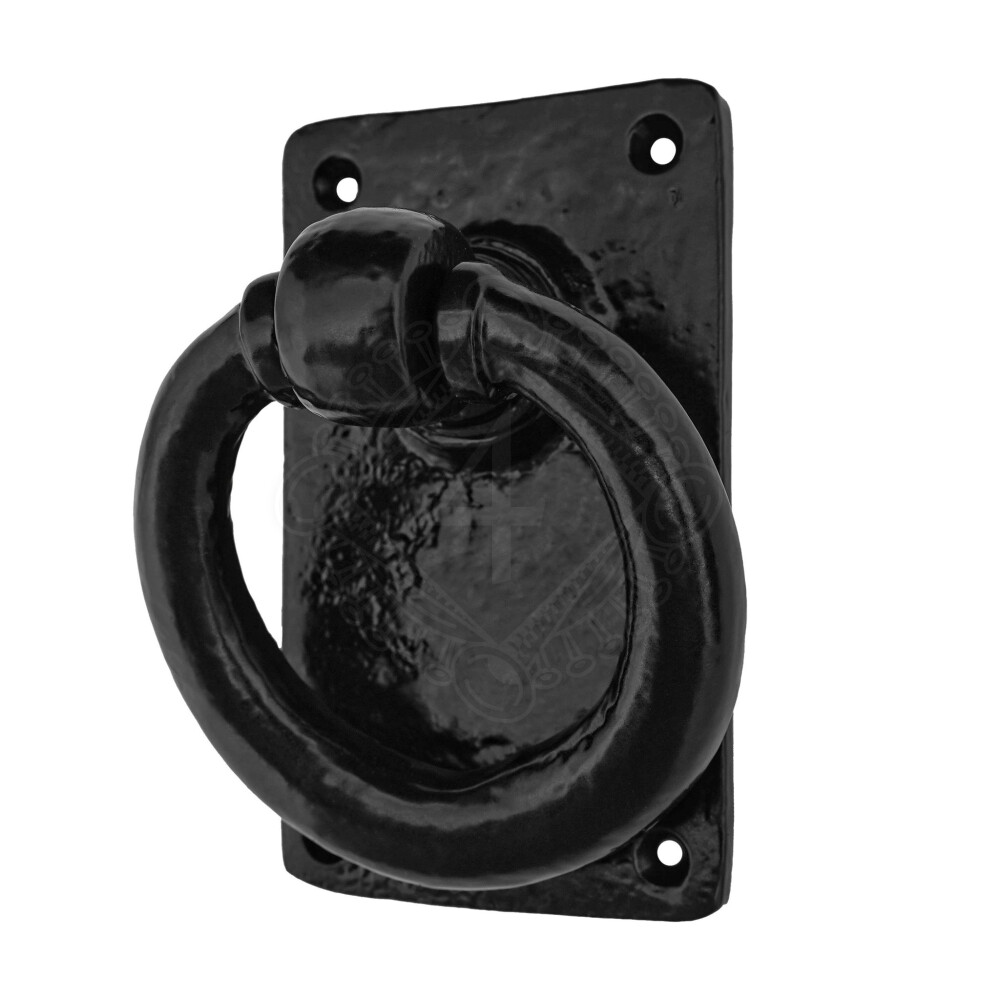
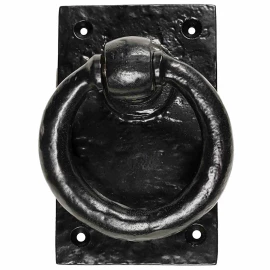
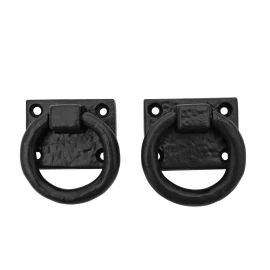
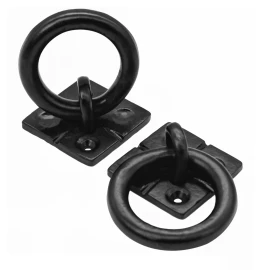
Give your door, gate or substantial wooden chest a bold historical character. This ring pull with door-knocker function combines a large moving ring, a robust upper pivot and a rectangular backplate with a deliberately irregular surface. Its black protective finish complements both pale and dark timber. Grip the ring firmly to pull open a heavy door, or lift and release it against the metal plate to produce a deep, clearly audible knock. We recommend it for cottages, cellars, barns, courtyard gates and interiors decorated in medieval, Gothic, rustic or fantasy style. Further product information ...

Available immediately 15 pcs
Item physically stored in our Warehouse in Kadan
, dispatch on: Today
Delivery options
22,00 €
18,18 € excl. VAT

Black Medieval Ring Pull and Door Knocker

Substantial Ring Pull with Two Functions

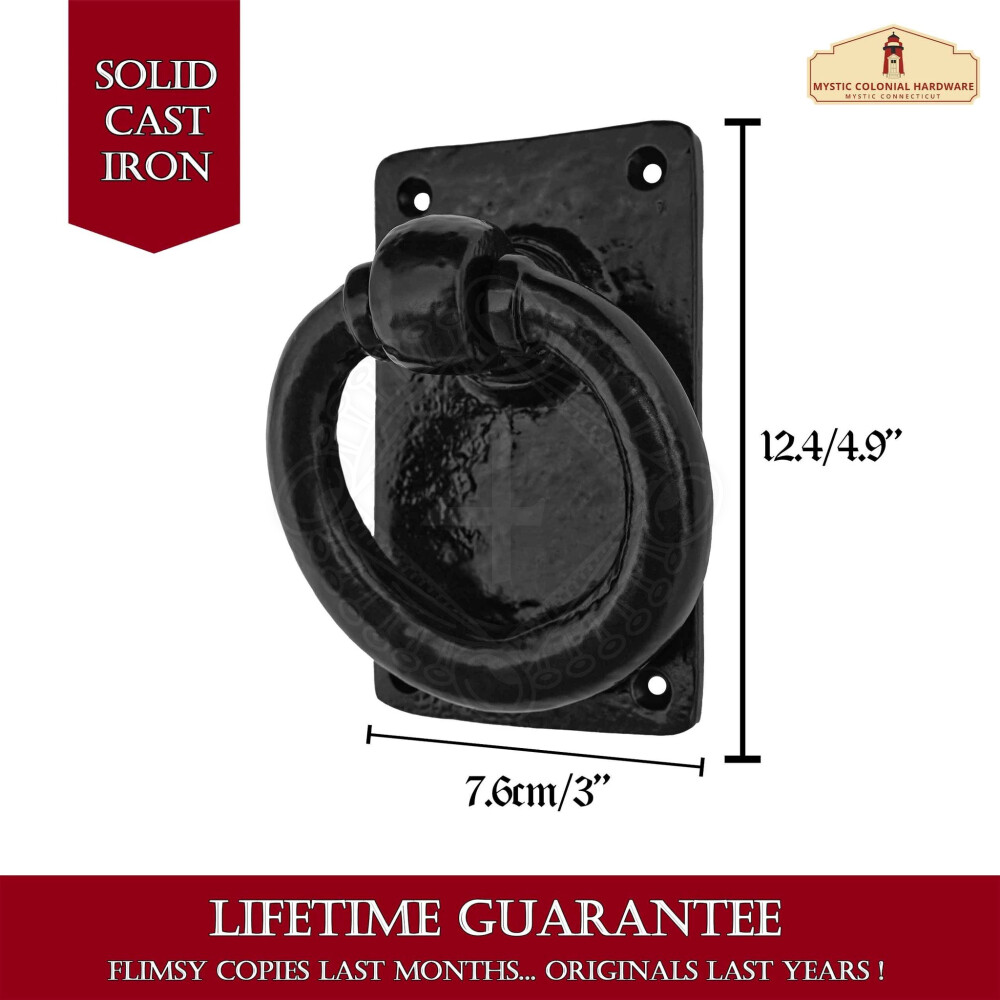
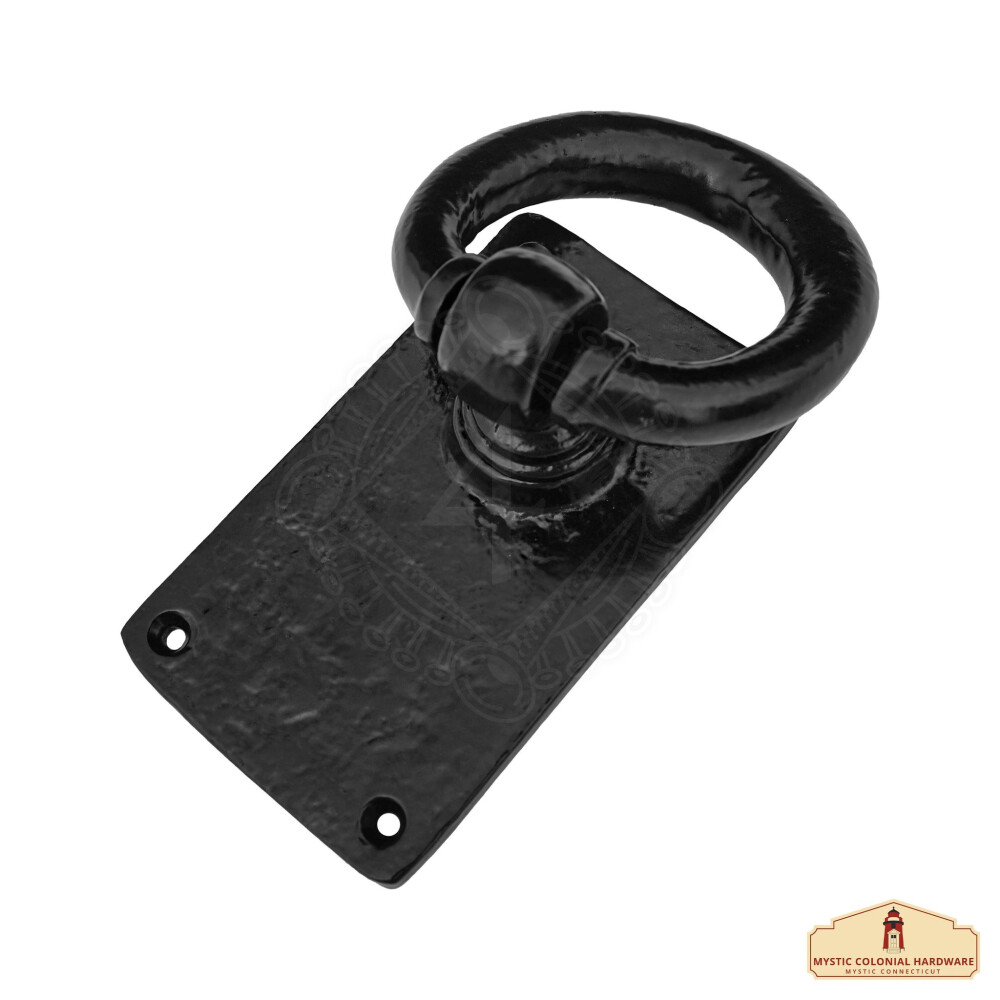
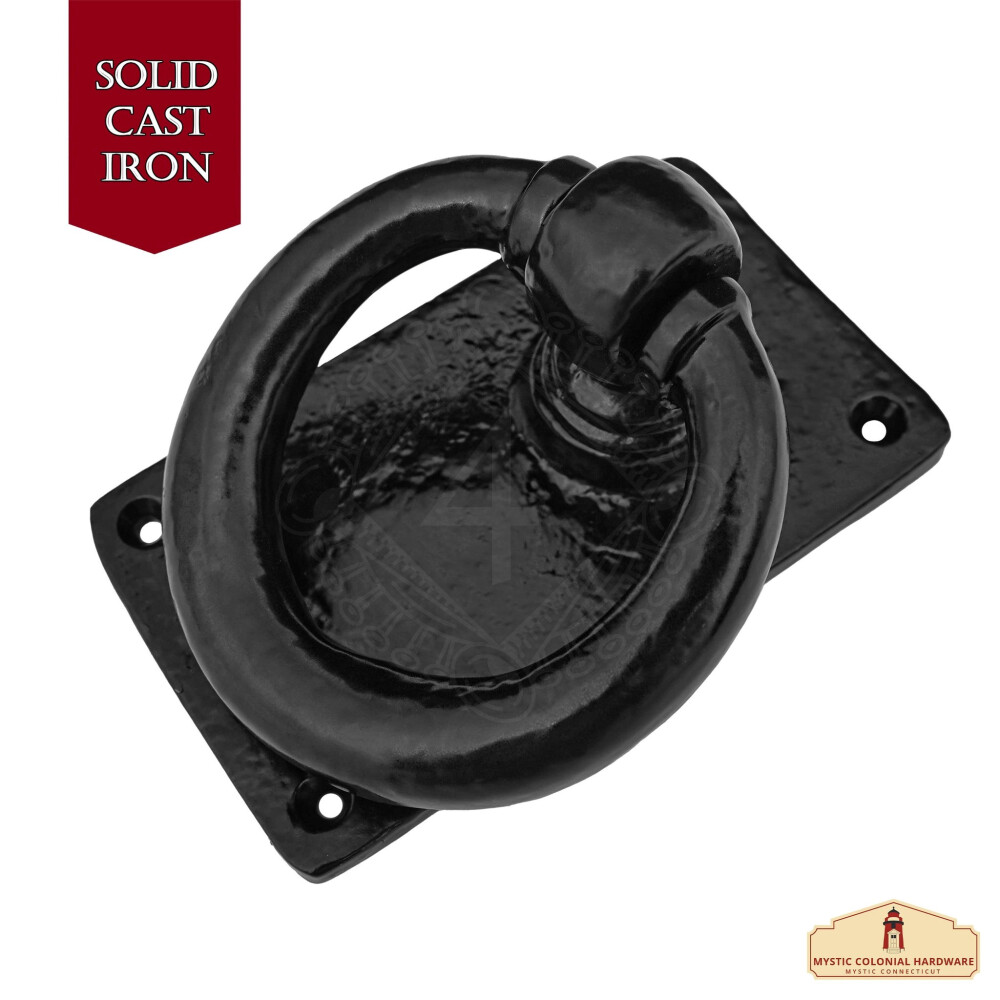
The principal feature is a thick circular ring suspended from a moving upper fitting. It provides enough room for a secure full-hand grip and can be used as a substantial door pull. When released, the ring hangs against the backplate and projects less prominently into the surrounding space.

The same ring also serves as a door knocker. Lift it away from the plate and allow it to strike the metal with controlled force. The resulting sound announces a visitor without the need for a separate bell. Its tone and volume will vary according to the material, thickness and construction of the door.

The rectangular mounting plate has four fixing holes positioned near its corners. It distributes pulling force across a broader area of the door and protects the timber from repeated contact with the ring. Its uneven texture evokes traditional hand-worked architectural ironmongery.

Material and Rustic Finish

The fitting is made from hand-worked mild structural steel with a black protective finish. Small depressions, working marks and slightly irregular edges contribute to the intended rustic appearance and should not be regarded as faults.

The black coating reduces direct exposure of the steel to moisture, although it is not a permanent barrier against corrosion. For outdoor use, we recommend inspecting the surface regularly and protecting it with suitable metal wax or a light coating of non-acidic conservation oil.

Suitable Applications

  • Substantial external and internal timber doors.
  • Barn doors and entrances to workshops, sheds or log stores.
  • Garden gates, courtyard gates and wine-cellar doors.
  • Large wooden chests, cupboards and historically styled furniture.
  • Cottages, taverns, guest houses and themed restaurants.
  • Film, theatre, museum and LARP scenery.

This product is not a certified security component or a load-rated anchoring point. Do not use it for personal protection, lifting loads, tethering animals or exercise.

Ring Pulls and Door Knockers in History

Metal ring handles were known in antiquity and became common fittings on medieval doors, gates, chests and furniture. They were especially widespread from the High Middle Ages of the 12th–15th centuries and continued in many forms throughout the early modern period.

A single ring could perform several tasks. It might serve as a pull handle, a knocker and, in some constructions, a moving component of a simple latch. Its uncomplicated shape was durable, economical and easy to operate, even by someone wearing a thick working glove or an armoured gauntlet.

Elaborate Romanesque and Gothic ring knockers survive on churches and important buildings, often mounted on sculpted animal heads or richly ornamented plates. Farm buildings and ordinary houses usually carried simpler, more practical fittings. This design is broadly inspired by medieval and early modern architectural hardware rather than being an exact reproduction of one documented historical object.

How to Install the Ring Pull

  • Select a sound position where the ring is easy to reach and will not interfere with the door edge, lock or other hardware.
  • Hold the backplate against the door and check that the ring can swing freely without obstruction.
  • Align the plate with a spirit level and mark the centres of all four fixing holes.
  • Drill pilot holes in timber, making them slightly smaller than the selected screws to reduce the risk of splitting.
  • Fit all four screws loosely at first, check the alignment and then tighten them evenly.
  • Use the supplied screws only when their type and length are suitable for the door material.
  • For a heavy gate or frequently used door, we recommend through-bolts with washers and nuts.
  • After installation, test both the pulling action and the knocking movement and check that the plate remains firmly seated.

The ring may also be mounted horizontally on a chest lid or hatch. Always confirm that the supporting material is strong enough and that projecting screw points cannot cause injury on the reverse side.

Technical Specifications

Specification Details
Product type Ring door pull and door knocker
Material Hand-worked mild structural steel
Finish Black protective finish with a rustic appearance
Overall height Approx. 4.9–5 in / 12.4–12.6 cm
Overall width Approx. 3–3.03 in / 7.6–7.7 cm
Backplate width Approx. 2 in / 5.2 cm
Outer ring diameter Approx. 4 in / 10 cm
Internal ring clearance Approx. 3.5 in / 9 cm
Number of fixing holes 4
Mechanism Moving ring suspended from an upper pivot
Suitable for Doors, gates, chests, cupboards and decorative projects
Historical inspiration Medieval and early modern periods, approximately 12th–17th centuries
Style Medieval, Gothic, rustic, farmhouse and fantasy
Package contents 1 ring pull with backplate and 4 screws

All measurements are approximate. As the fitting is hand worked, individual pieces may vary slightly in surface texture, edge shape, shade of the black finish and minor production marks.

Care and Safe Use

  • Remove dust and ordinary dirt with a soft dry or slightly damp cloth.
  • Dry the fitting thoroughly after cleaning or exposure to rain.
  • For outdoor use, apply metal wax or a light coating of non-acidic conservation oil when required.
  • Lubricate the moving pivot sparingly from time to time to keep the ring swinging freely.
  • Do not use wire wool, abrasive pads, acidic cleaners or aggressive rust-removing chemicals.
  • Inspect all four screws and the condition of the supporting timber regularly.
  • Use controlled force when knocking; excessive impact may damage the door, coating or pivot.
  • Keep your fingers clear of the space between the ring and backplate while knocking.
  • Do not use the fitting as a step, suspension point, safety anchor or tethering ring.
  • Its practical load capacity depends upon the supporting material, fixings and quality of installation.

Recommended Accessories

  • Black strap hinges inspired by architectural ironwork of the 14th–19th centuries.
  • Medieval-style door latch or sliding bolt for securing the door mechanically.
  • Decorative black nails and screw covers for historical or farmhouse-style joinery.
  • Through-bolts, washers and nuts for fitting the pull to a heavy gate.
  • Gothic-style door lever or escutcheon for a coordinated set of ironmongery.
  • Metal wax or conservation oil for routine protection of the black surface.

Similar products (43)