
 Čeština
 Deutsch


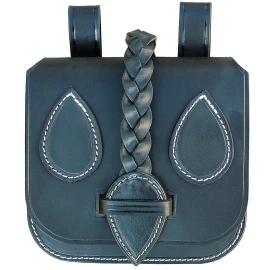
Gothic Leather Pouch Bag
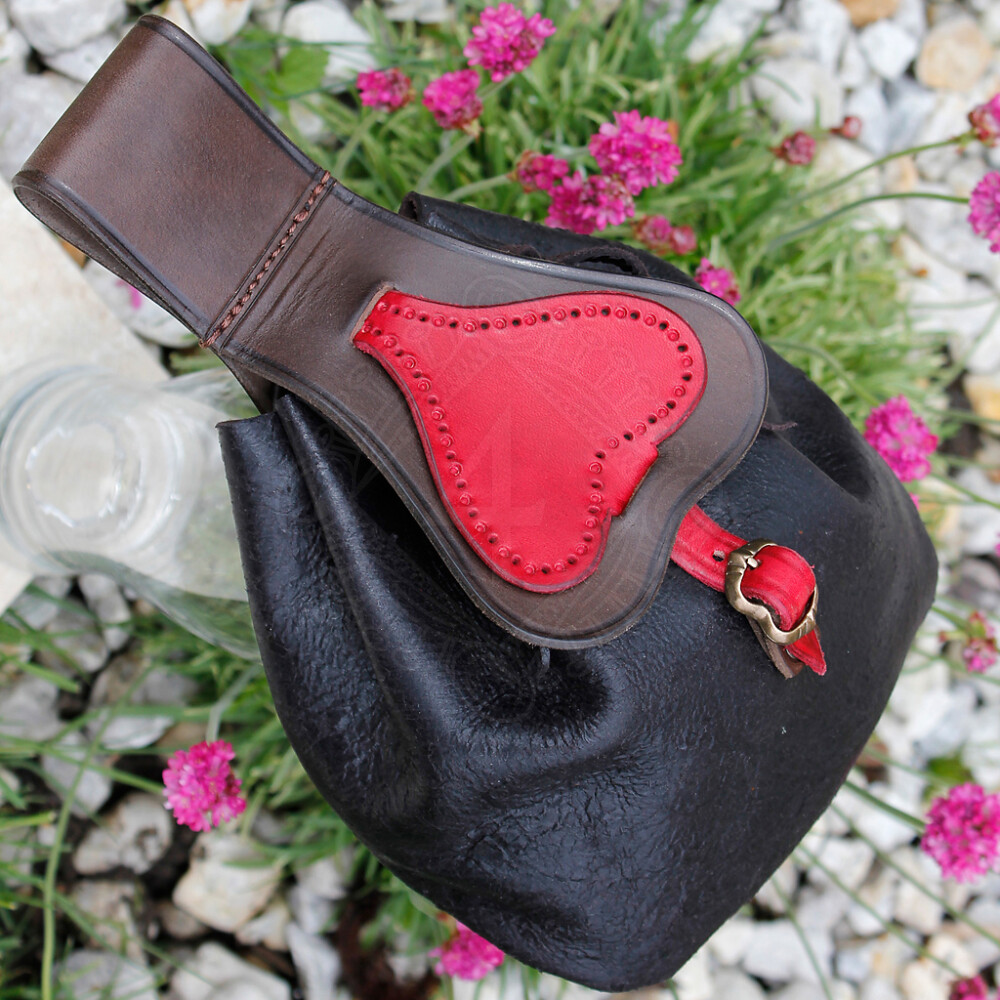
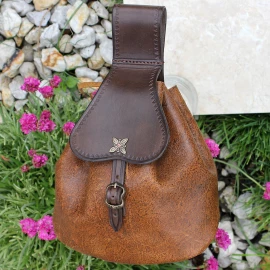
Are you looking for a spacious and historically accurate bag for your 14th-century costume? This Gothic pouch bag will thrill you with its blend of practicality and striking design. Its soft body, made of black milled leather, effortlessly accommodates a surprising amount of your essentials without looking out of place. Furthermore, the sturdy brown flap crafted from thick smooth leather is decorated with an eye-catching red appliqué in the shape of a perforated leaf, guaranteed to draw attention in any period encampment. It is the absolutely ideal and reliable accessory for the attire of a townsman, merchant, wandering artisan, or rogue. Thanks to precise handcrafting, you acquire a piece that will survive countless historical festivals and keep your valuables safely protected. Further product information ...

Would you like to be notified as soon as the item is in stock?
You will receive a short e-mail as soon as we have it back in stock.
Gothic Leather Pouch Bag with Red Appliqué and Buckle
Historical Context and Practical Wear
Although modern pop culture or older catalogues sometimes inaccurately dub similar bags as "Viking", the true origin and cut of this specific model correspond to the 14th century. This specific pouch-like shape was incredibly popular in the High and Late Middle Ages simply because period dresses and hosen lacked pockets. The bag is very easy to wear—its back panel extends into a massive, wide loop that you simply slide directly onto your belt (it accommodates belts up to 6 cm / 2.4 in wide). The rigid back section maintains a stable shape on the hip, while the front panel made of soft milled leather, whose surface faithfully mimics medieval processing, flexibly adapts to the volume of the stored items. The contents are reliably secured by a red leather strap with a brass buckle.
Care and Maintenance of Leather Gear
High-quality natural leather will reward you with amazing longevity if you provide it with proper care. We recommend carefully treating both the sturdy brown smooth leather and the softer milled black leather at least twice a year with a colourless leather balm, ideally one containing natural beeswax. The balm deeply nourishes the leather, keeps it supple, and significantly increases its resistance to rain. If your bag gets soaked at a historical event, never dry it near a blazing fire or on a hot radiator. Extreme heat would dry out the leather, causing it to harden and potentially crack irreversibly. Always allow it to air dry naturally at room temperature. Minor variations in colour and surface texture are natural hallmarks of genuine leather, forming its beautiful and highly sought-after patina over time.
Safety Instructions for Proper Use
This pouch is designed as a historical clothing accessory for the everyday carrying of light personal items (coins, keys, mobile phone, flint and steel). It is not rated for transporting extremely heavy objects, such as lead musket balls or large quantities of stones, which could deform the soft front panel or unexpectedly tear out the massive belt loop. Under no circumstances should a genuine leather product be placed in a washing machine or a tumble dryer, as this would result in its total destruction.
Recommended Costume Accessories
To stylishly suspend this pouch bag, we highly recommend acquiring a sturdy medieval leather belt with a forged or brass buckle, as well as a period-accurate linen coin purse to help you maintain neat organisation within the large interior space.
Technical Specifications of the Pouch
| Front Panel Material | Milled cowhide leather (black, very soft) |
| Front Leather Thickness | up to 2 mm (0.08 in) |
| Back Panel & Flap Material | Smooth cowhide leather (brown) |
| Back Leather Thickness | up to 3.5 mm (0.14 in) |
| Overall Height | 27 cm (10.6 in) including the belt loop |
| Pouch Width | 17 cm (6.7 in) |
| Pouch Depth | 7 cm (2.8 in) |
| Max. Belt Width | 6 cm (2.4 in) |
| Fastening Method | Red leather strap with a brass buckle |
| Decoration | Red leather appliqué with perforation (leaf shape) |
| Historical Period | 14th Century (High/Late Middle Ages) |
We are here for you!





.3773623034.1696456237.png.webp)

.3773623034.1696456268.png.webp)
.3773623034.1696456247.png.webp)