 Čeština
 Deutsch


Early Medieval "Kievan Rus" Helmet with Leather Ribs
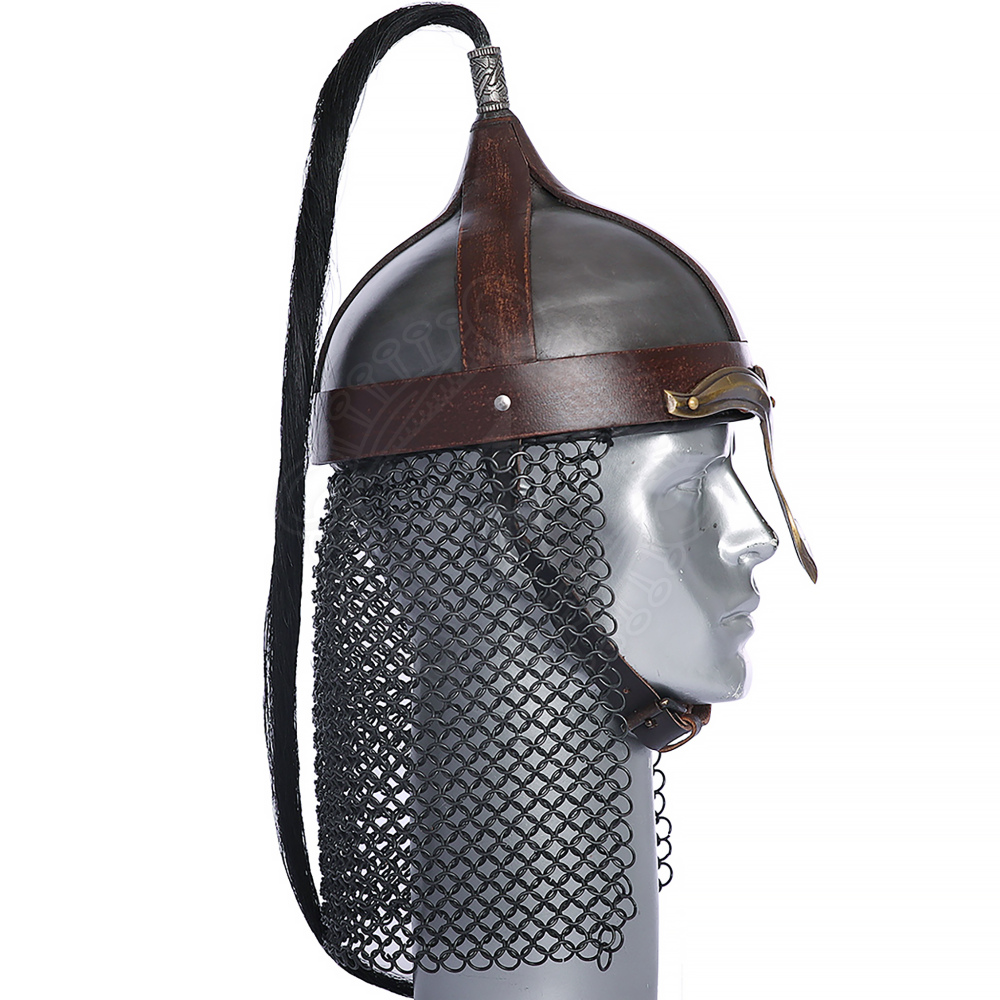
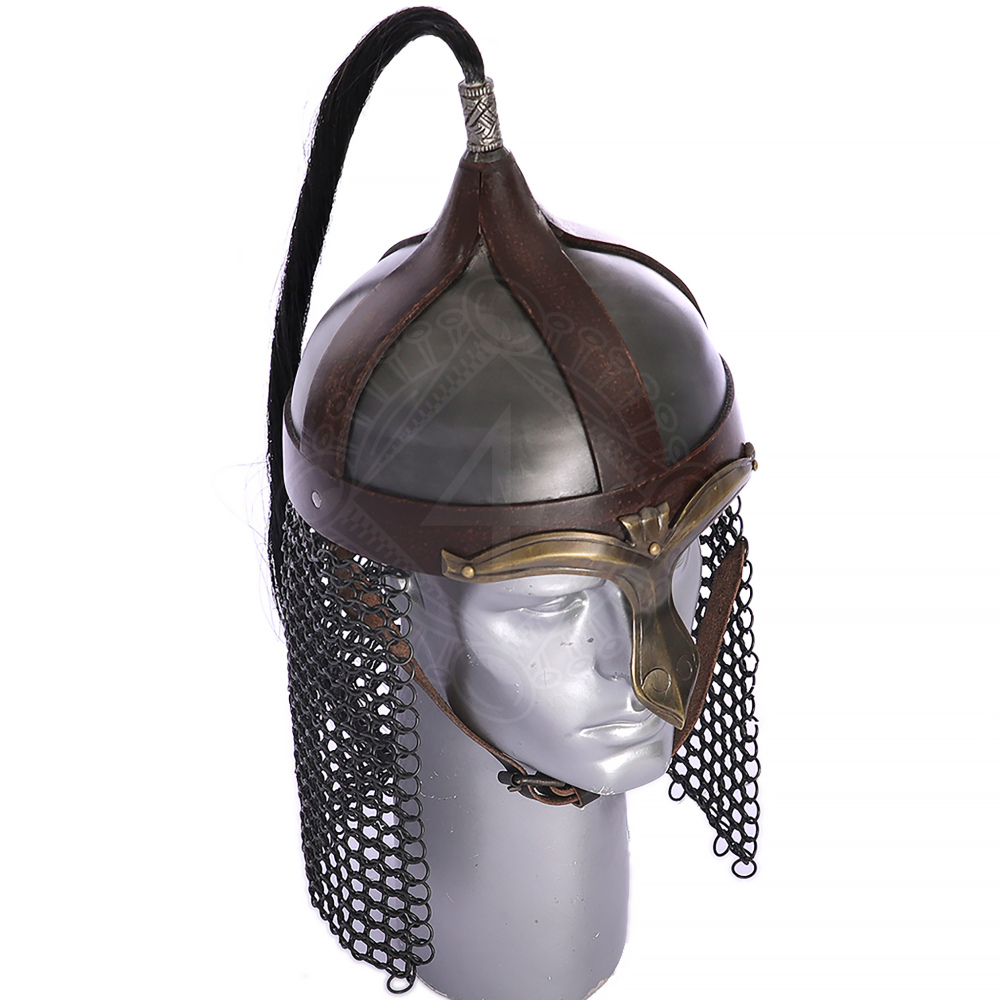
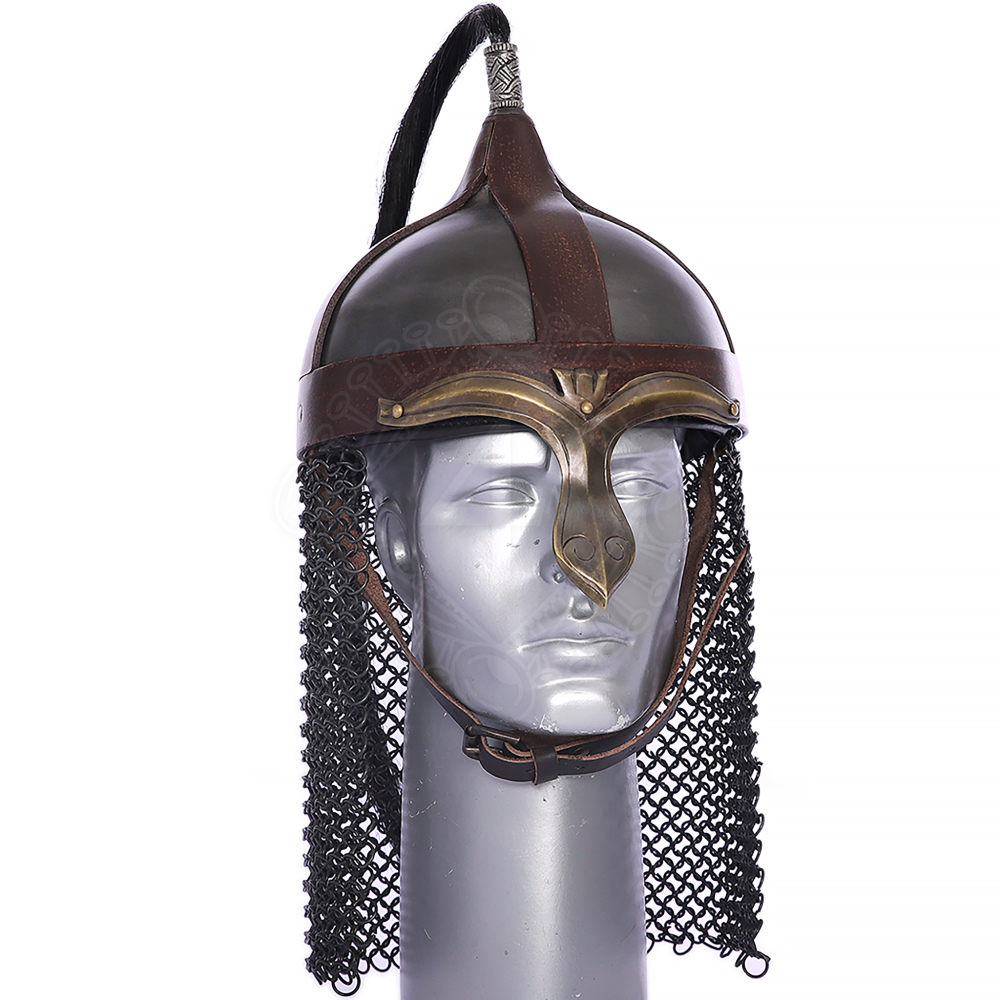

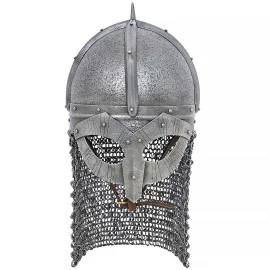
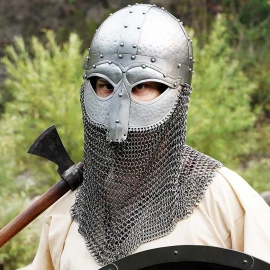
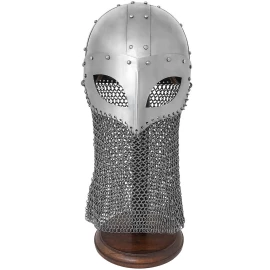
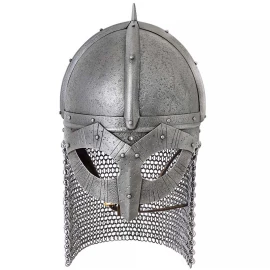
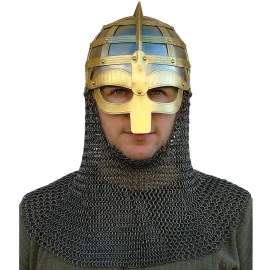
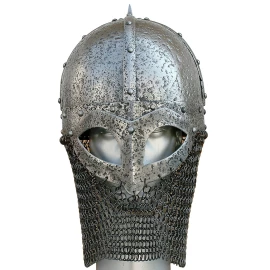
Are you looking for a distinctive piece for your costume as a Slavic warrior, Varangian, or member of the Kievan Rus druzhina? This Early Medieval helmet from the 9th–10th century is exactly what you need to give your armour an authentic and rugged look. The combination of patinated steel, decorative leather straps, and a majestic plume made of genuine horsehair makes it an unmissable piece of gear. Thanks to the pre-installed chainmail aventail protecting the neck and throat, and the adjustable liner, the helmet is ready for immediate wear. It is the ideal choice for LARP, theatre performances, or as an impressive part of a costume that transports you directly to the times of Prince Sviatoslav. Further product information ...

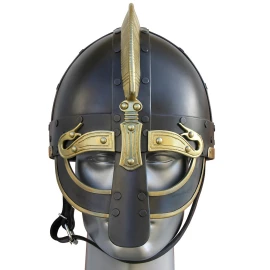
Early Medieval "Kievan Rus" Helmet with Leather Ribs, Brass Nasal and Horsehair Plume
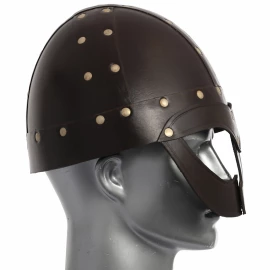
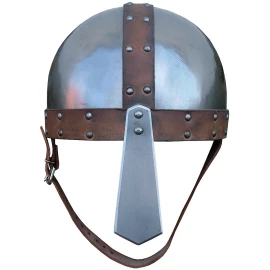
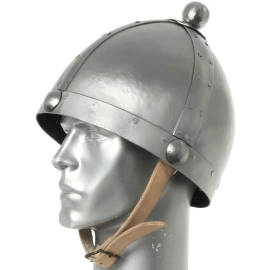
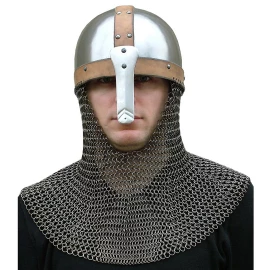
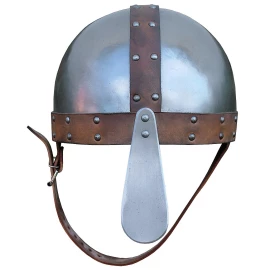
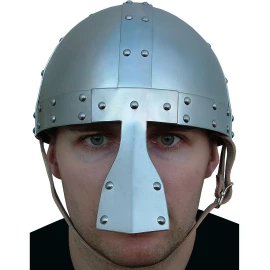
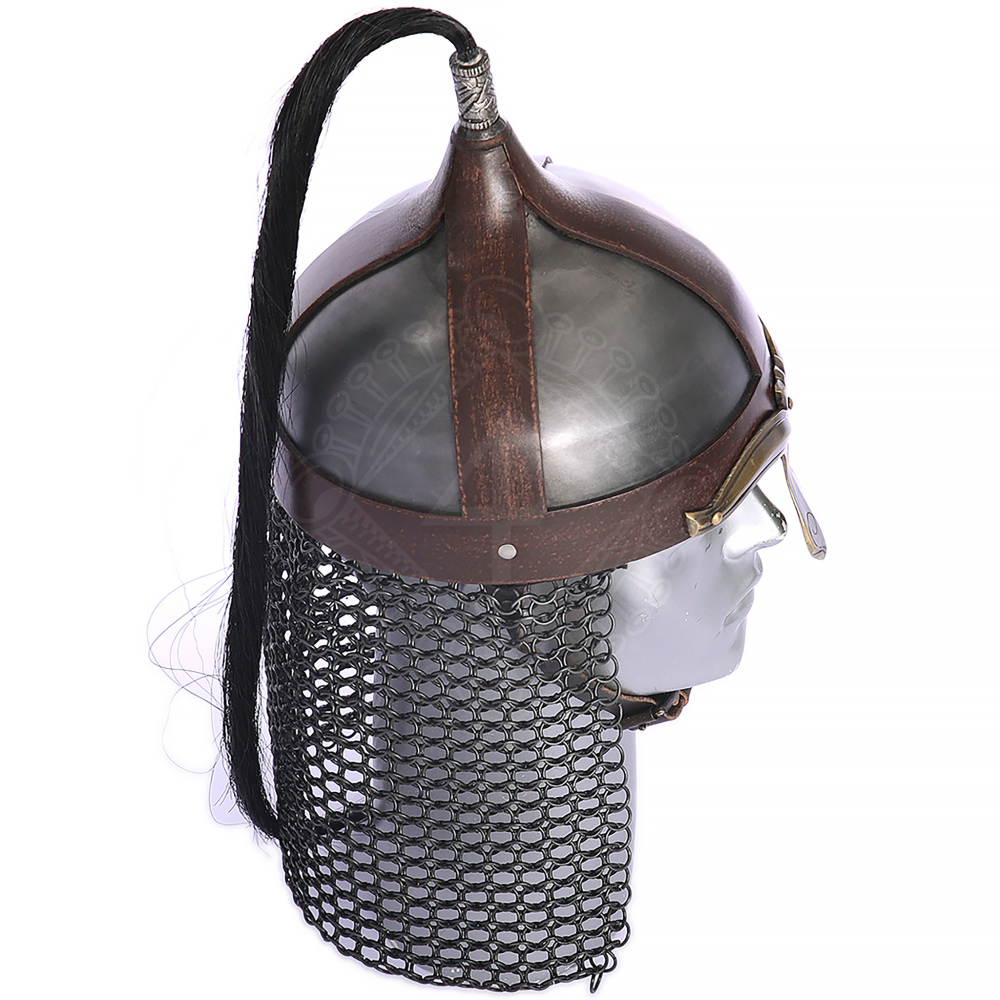
This helmet is structurally based on conical and spheroconical helmets used in Eastern Europe and Scandinavia. The helmet bowl is made of mild steel with a thickness of approx. 1 mm (19 gauge) and features a dark patinated finish, giving it the appearance of a battle-hardened piece. A unique feature is the external "crown" made of leather straps approx. 2.7 mm thick. These straps mimic the metal bands (spangen) typical of older helmet types, but here they serve an aesthetic and partially cushioning function.
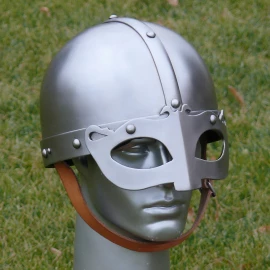
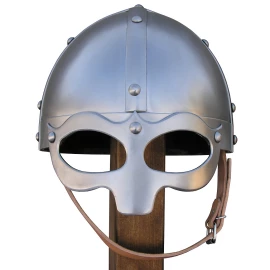
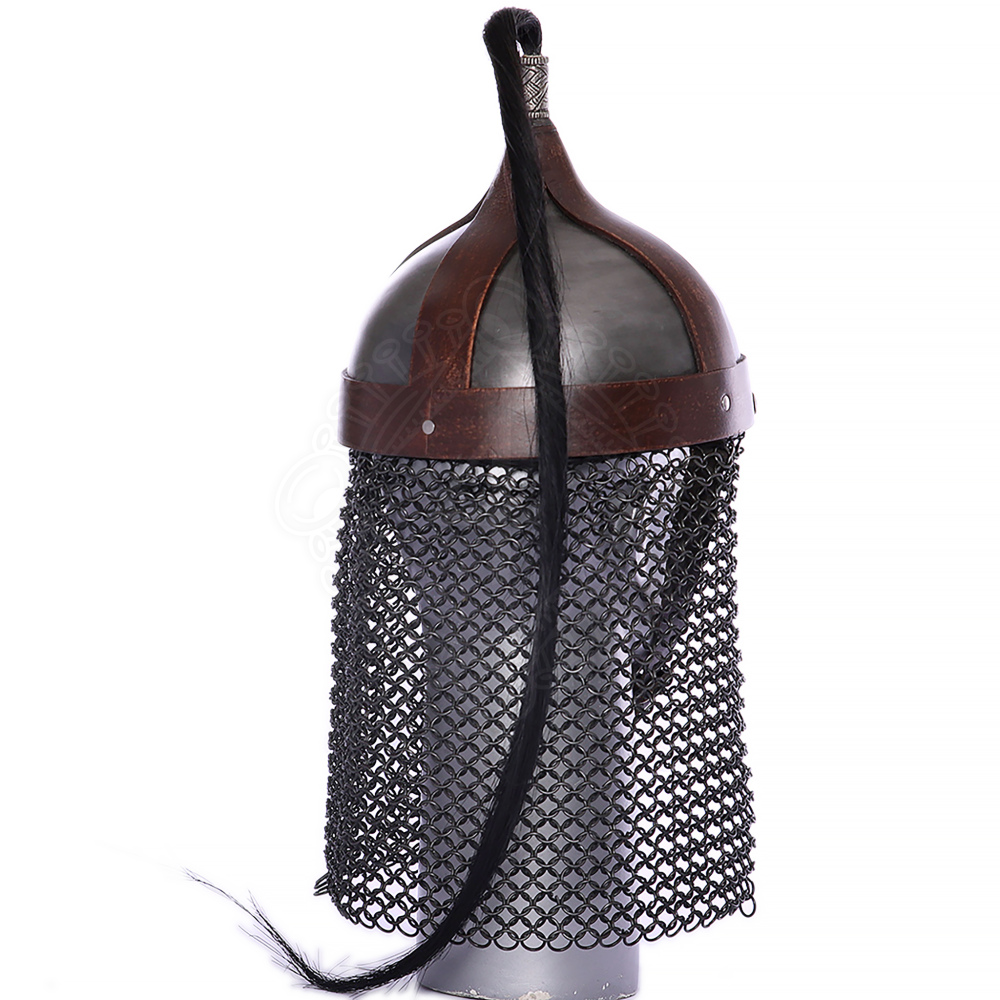
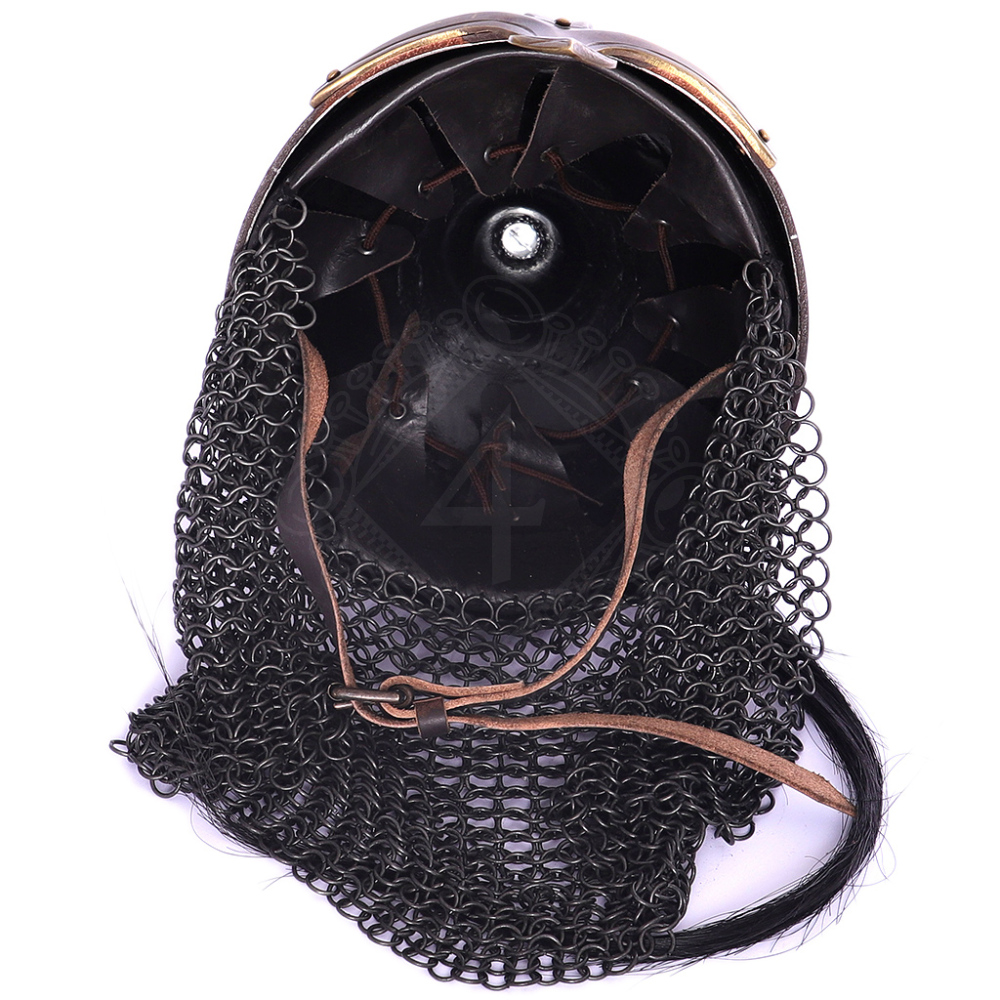
Your face will be dominated by a massive cast brass nasal guard with an impressive thickness of 3 mm. It is stylized in the shape of eyebrows, an element known from finds in the Chernihiv region and other Kievan Rus locations. The top of the helmet is adorned with a socket holding a thick black plume of genuine horsehair, which is screwed in from the inside and adds dynamism to your figure when moving.
Protection for the neck and nape is provided by a chainmail aventail made of butted rings. For your comfort, the interior of the helmet is equipped with an adjustable leather liner (spider) and a chin strap, ensuring the helmet sits firmly and does not slip.
Important Usage Warning (Protection Class)
Due to the thickness of the steel bowl (approx. 1.05 mm / 19 gauge), this is a costume replica. This helmet is not intended for full-contact combat, buhurt, HMB, or Battle of the Nations. Strong blows with steel weapons could deform the bowl. However, it is excellent for:
- LARP (when using foam weapons).
- Cosplay and costume events.
- Stage fencing and theatre (with choreographed routines without direct blows to the head).
For maximum comfort and additional shock absorption, we strongly recommend wearing a padded coif (arming cap) under the helmet.
Specifications
| Bowl Material | Mild steel (patinated) |
| Bowl Steel Thickness | approx. 1.05 mm (approx. 19 gauge) |
| Nasal Guard Material | Brass (cast) |
| Nasal Thickness | approx. 3.0 mm |
| Decorative Elements | Genuine leather (approx. 2.7 mm), horsehair |
| Inner Circumference | approx. 66 cm (approx. 26 inches) |
| Total Weight | approx. 1762 g (approx. 3.9 lbs) |
| Manufacturer | Windlass Steelcrafts® |
Note: The above parameters may vary slightly from piece to piece due to the manual manufacturing process.
Historical Context: Helmets of the Kievan Rus
In the 9th and 10th centuries, the region of Kievan Rus was a melting pot of cultures. Here, Vikings (Varangians) sailing down rivers south to Byzantium met local Slavic tribes and nomadic peoples from the steppes (Khazars, Pechenegs). This was also reflected in their armament. While Western Europe still relied on classic conical Norman helmets, spheroconical helmets (high and pointed), often richly decorated and equipped with plumes, began to appear in the East. The horsehair plume was not just for decoration – in the heat of battle, it helped identify a commander or allegiance to a specific warband and optically increased the warrior's height, which had a psychological effect on the enemy.
Care and Maintenance
To ensure the helmet serves you for many years and stays looking great, give it some care:
- Steel: As this is carbon steel, it is prone to rust. Wipe it dry after every use and oil it (e.g., with WD-40, Ballistol, or gun oil). Store the helmet in a dry place.
- Leather: Occasionally treat the leather straps on the bowl and the inner liner with leather balm or beeswax to prevent cracking and keep it supple.
- Brass: You can polish the nasal guard with a metal polish if needed, but the patinated look suits it better.
- Horsehair: You can gently comb the plume. If it gets "messy" during transport, it can be straightened using steam, but be careful not to get the leather and steel wet.
We are here for you!