
 Čeština
 Deutsch


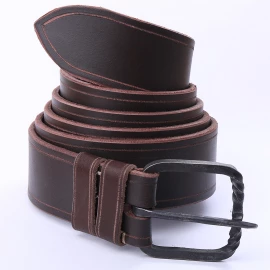
Early Medieval Viking Leather Belt Hedeby
3x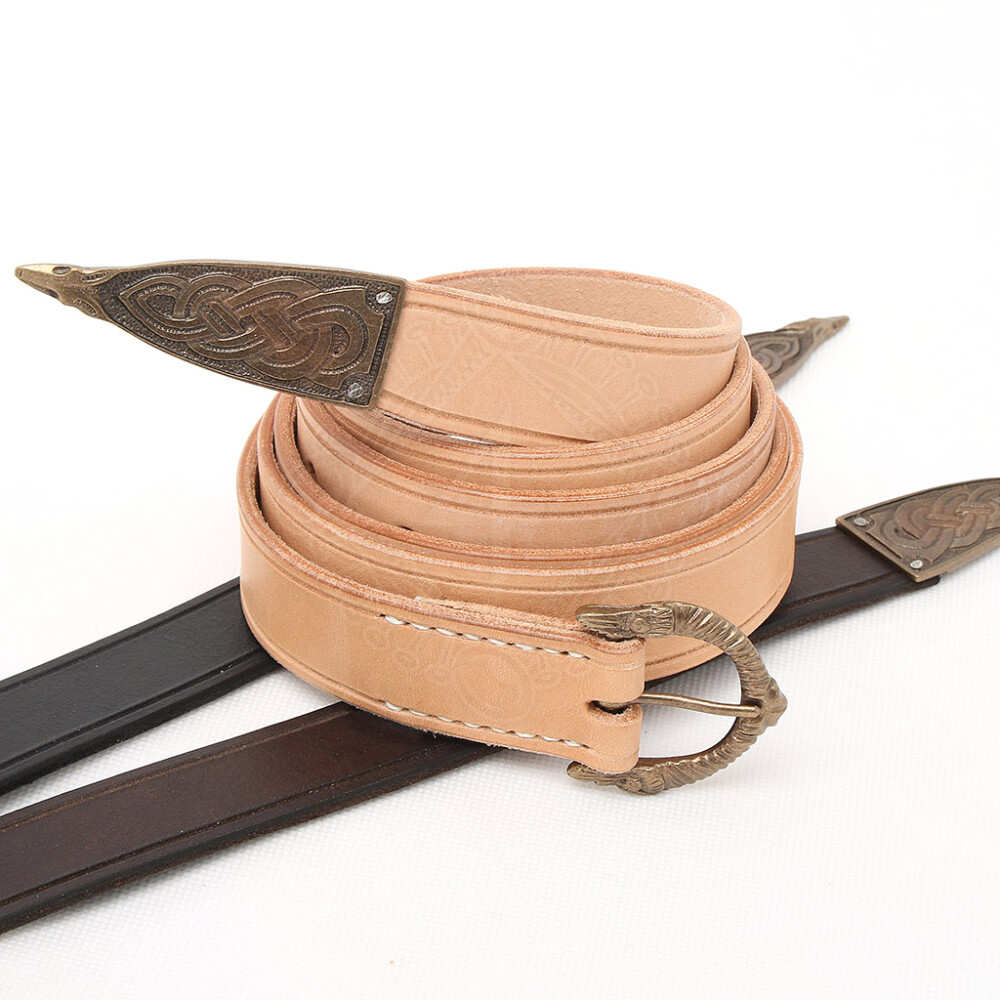
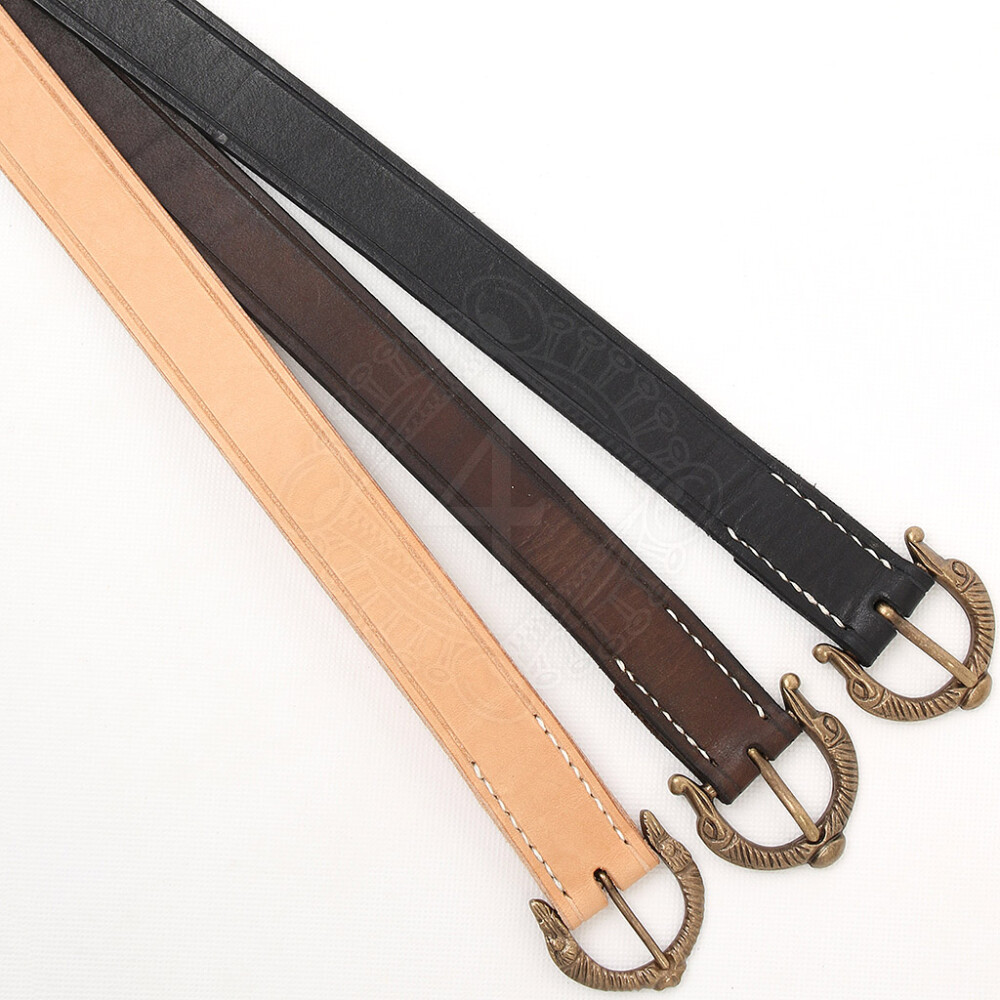
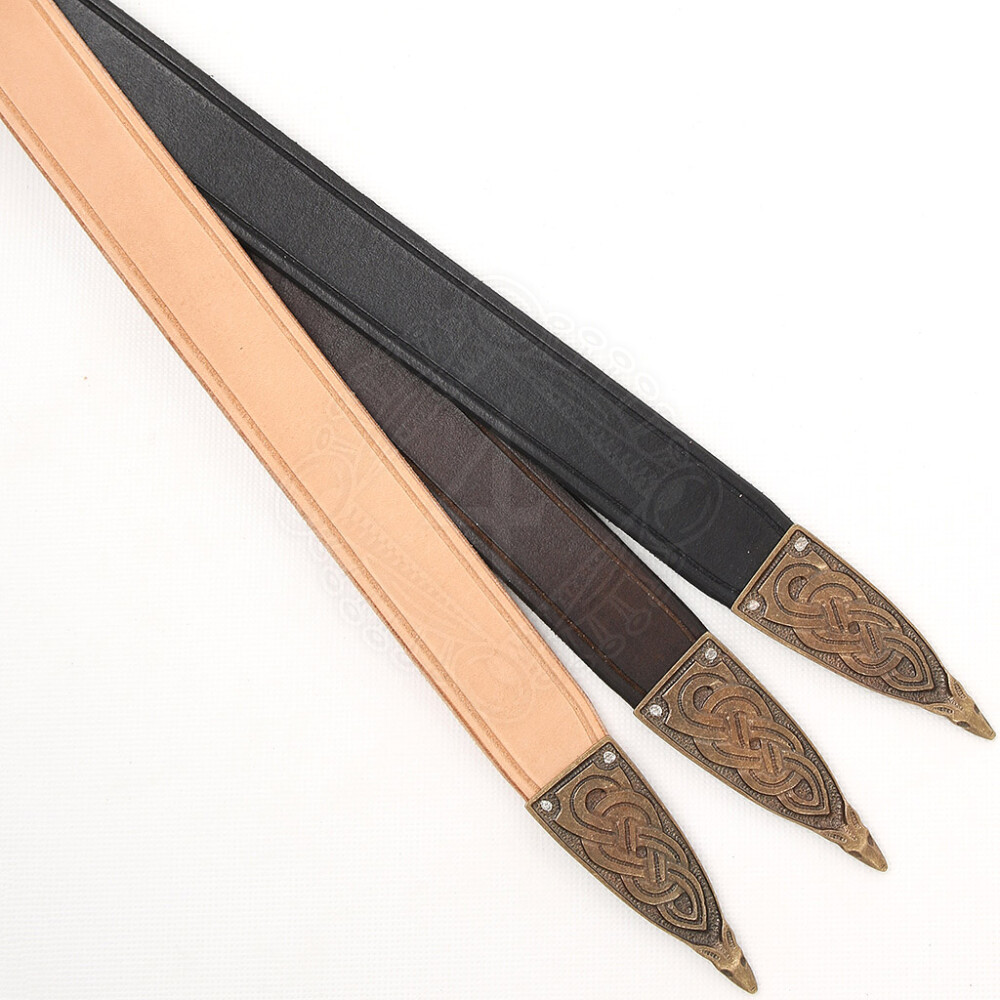
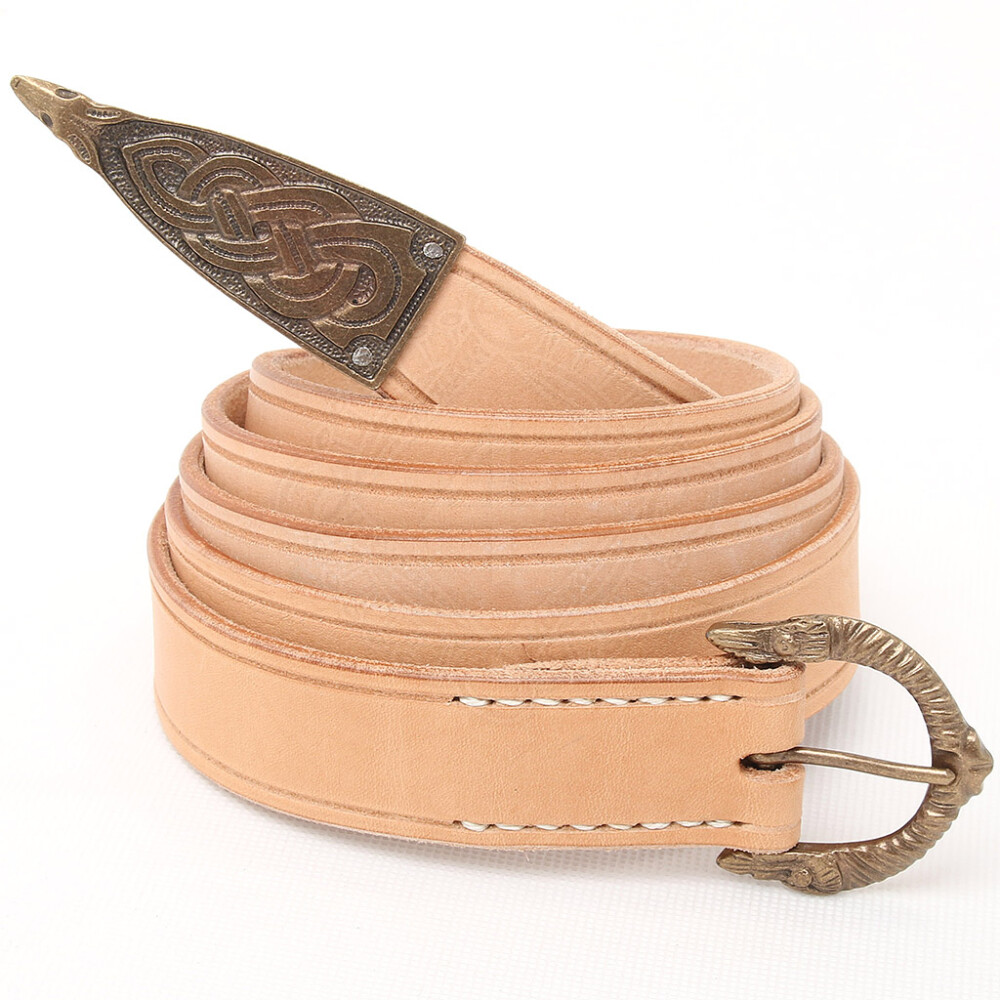
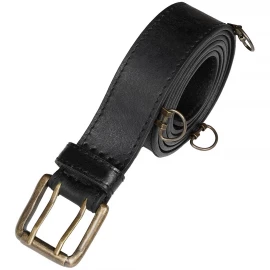
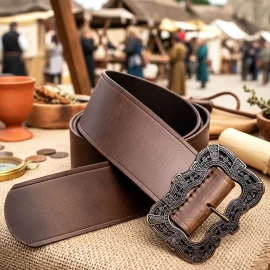
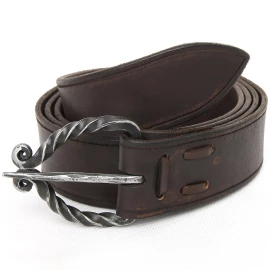
Are you looking for an authentic and robust accessory for your Norse costume? This meticulously crafted Viking leather belt, inspired by the famous archaeological finds from the trading settlement of Hedeby, is the perfect choice for any reenactor, LARPer, or fierce warrior. You will gain not only a highly functional belt made of solid ox leather that will reliably hold your gear but also a beautiful piece of art. The striking cast buckle with animal heads and the richly decorated strap end (chape) with traditional Norse knotwork will give your outfit the hallmark of a genuine Norseman from the golden age of Viking raids. Further product information ...
Early Medieval Viking Leather Belt Hedeby with Knotwork Fittings
Historical Context and Art Style
This belt is a direct link to the Viking Age (roughly 9th to 11th century) when the settlement of Hedeby (Haithabu) on the Jutland peninsula was one of the most important trading hubs in Northern Europe. The belt fittings – the buckle and the chape – bear typical features of Norse animal art, likely in the Borre or Jelling style. These styles are characterised by interlacing ribbons and stylised animal (dragon or serpent) heads, which were intended to protect the wearer and grant them strength. Decorative metal elements clearly demonstrated the wealth and social status of the owner at the time.
How to Wear and Use the Belt Properly
In the Middle Ages, belts with ornate chapes were worn in a specific way to highlight the beauty of the fittings. The strap is classically threaded through the buckle, then passed under the belt itself, and looped over it downwards. This creates an elegant medieval knot, allowing the long end of the belt with the decorative chape to hang vertically straight down. This method of wearing also prevents the belt from loosening on its own. The 3 cm (approx. 1.18 inches) wide belt is ideal for hanging a leather pouch, a Viking bag, or a scabbard with a combat knife (seax). The holes in the belt are punched to measure, so do not forget to state your exact waist circumference (measured over the layer of clothing on which you will wear the belt) when placing your order.
Leather Care and Safety Principles
High-quality natural ox leather requires regular maintenance to retain its strength and suppleness. We recommend treating the belt at least twice a year with a high-quality leather balm containing beeswax. If you get caught in the rain on your expedition, always dry the belt slowly at room temperature. Strictly avoid drying it on a hot radiator, with a hair dryer, or near an open fire – the leather would irreversibly harden and crack. From a safety perspective, remember that this is a historical costume accessory. Never use it as a securing element for climbing, abseiling, or pulling heavy loads.
Technical Parameters of the Belt
| Historical period | 9th - 11th century (Viking Age) |
| Strap material | High-quality ox leather |
| Leather thickness | Up to 4 mm (approx. 0.16 inches) |
| Belt width | 3 cm (approx. 1.18 inches) |
| Buckle size | 4.5 x 4.5 cm (approx. 1.77 x 1.77 inches) |
| Fittings material (buckle and chape) | Metal alloy with a historical patina |
| Buckle attachment | Hand-stitched with historical linen thread |
| Chape attachment | Two solid metal rivets |
| Strap decoration | Longitudinal engraved groove along the edges |
Note: This product is completely handcrafted from genuine natural leather. Minor variations in colour and surface texture are an absolutely natural characteristic, not a material defect. Every crafted piece is thus a unique original.
Recommended Accessories
To make your Norse costume absolutely flawless, we highly recommend purchasing a period linen tunic with embroidery, a leather Viking pouch, and a finely crafted scramasax to go with this belt.
We are here for you!





.3773623034.1696456237.png.webp)

.3773623034.1696456268.png.webp)
.3773623034.1696456247.png.webp)