
 Čeština
 Deutsch


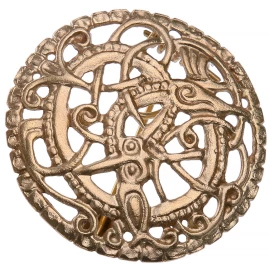
Viking Disc Brooch in Bronze, Urnes Style Filigree Fibula
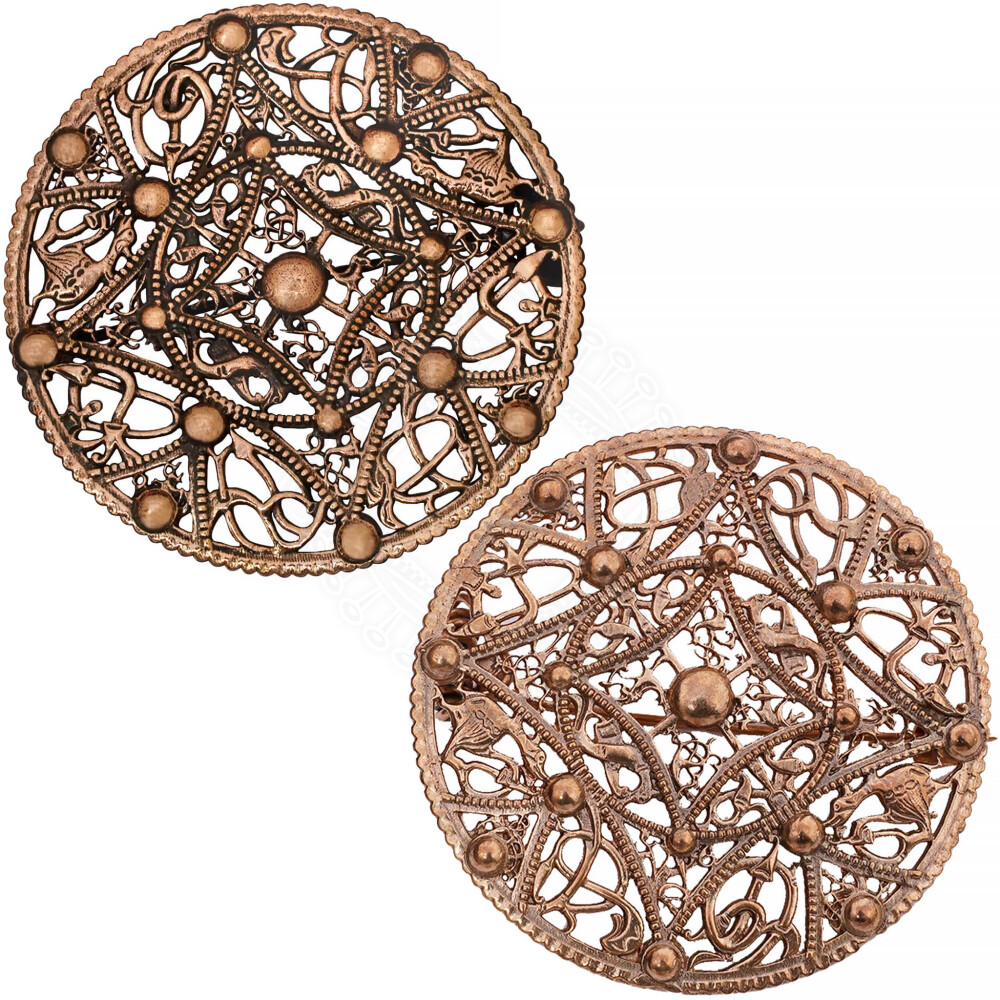
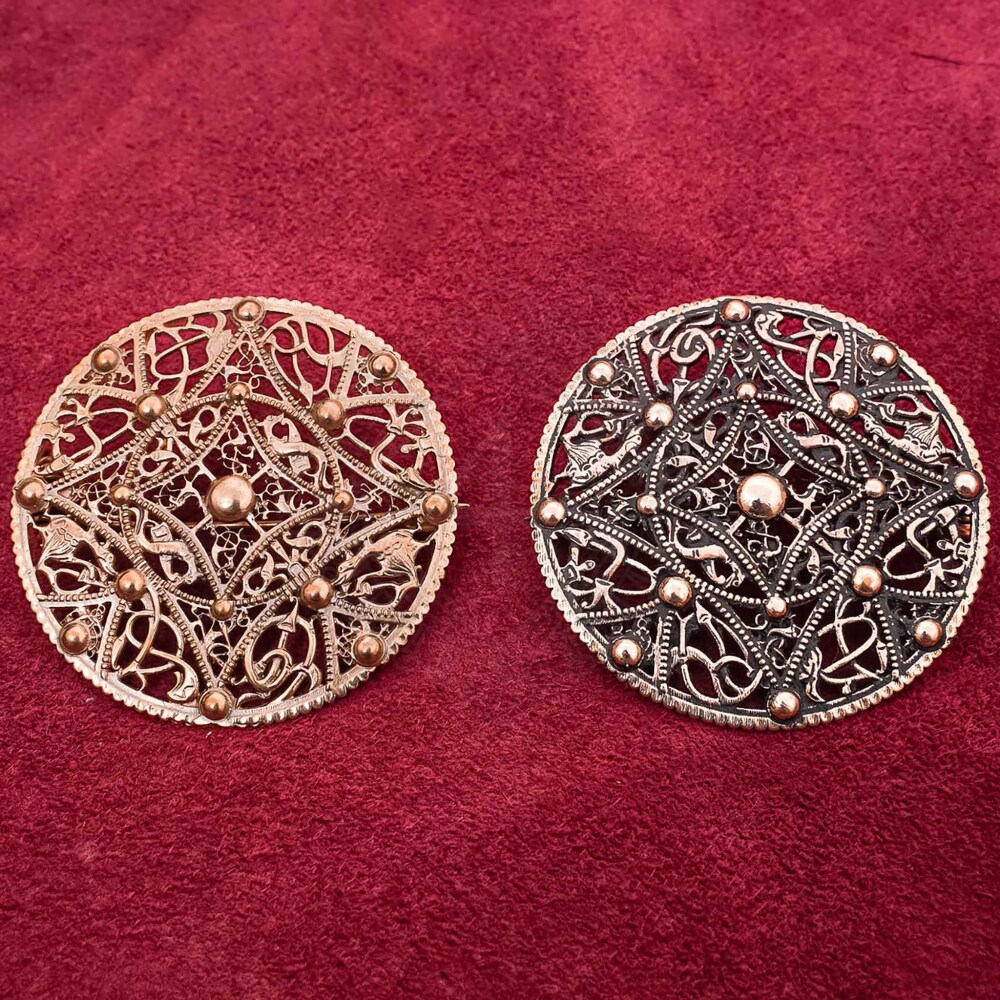
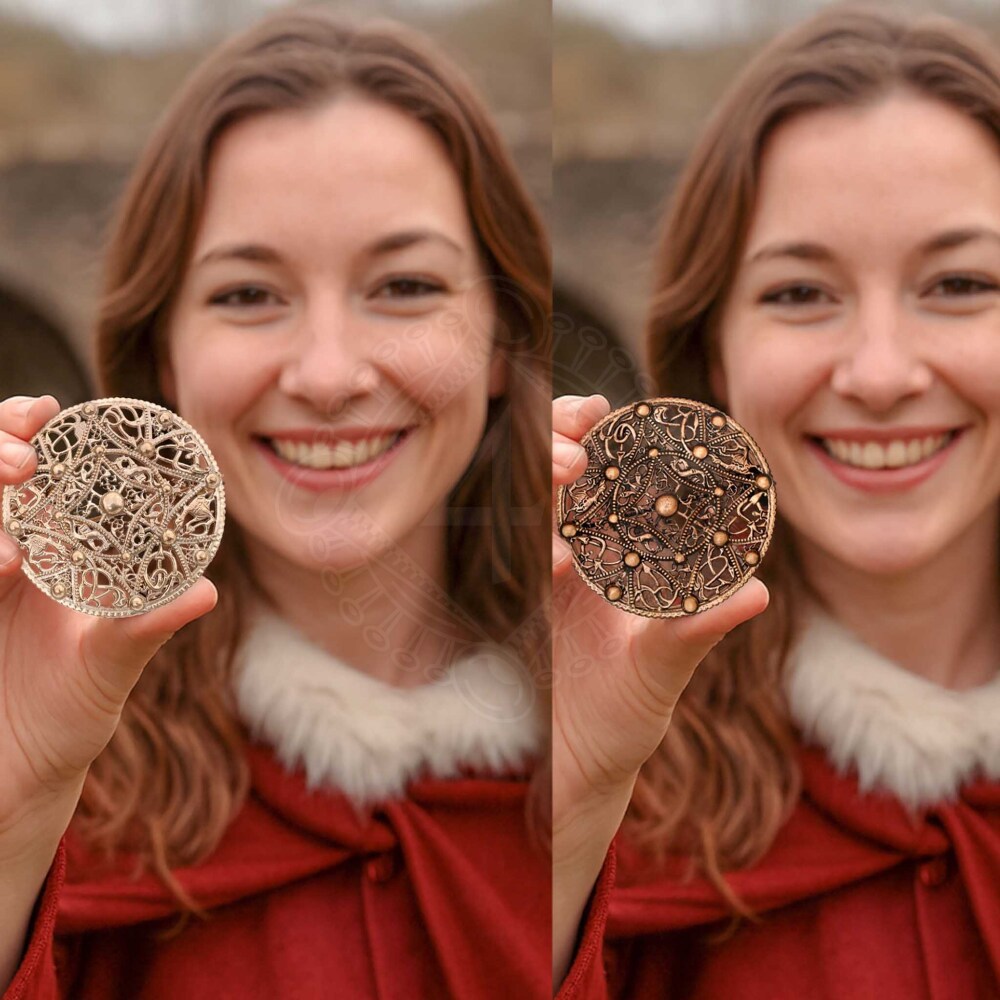

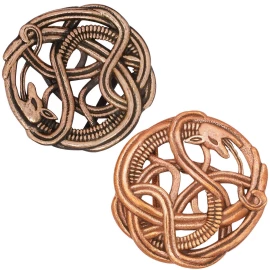
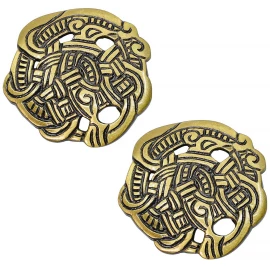
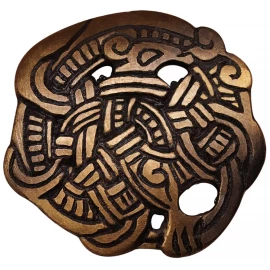
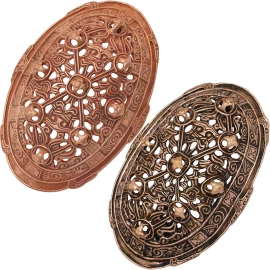
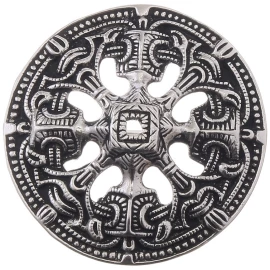
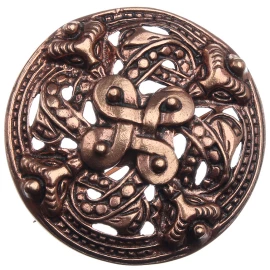
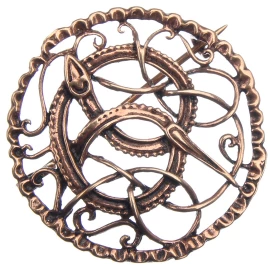
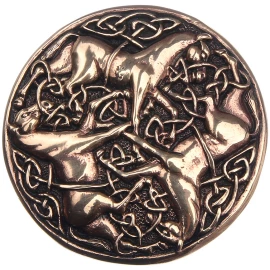
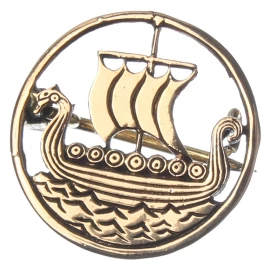
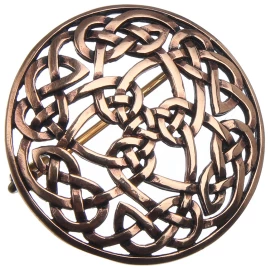
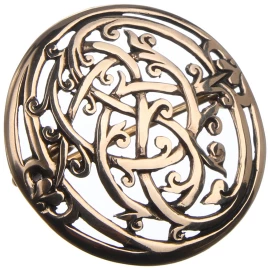
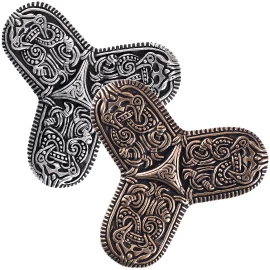
Complete your Viking attire with this gorgeous and functional piece of jewellery. Inspired by 10th-century archaeological finds, this solid bronze brooch is not just a practical accessory for fastening your cloak or tunic, but also a faithful replica that enhances the historical authenticity of your costume. Crafted using the traditional lost-wax casting method, it captivates with its intricate filigree pattern in the Urnes style, which is typical of the late Viking Age. It is available in two distinct finishes: polished bronze and antiqued bronze with a patina. Further product information ...

Viking Disc Brooch in Bronze, Urnes Style Filigree Fibula
A Detailed Look at This Viking Jewellery
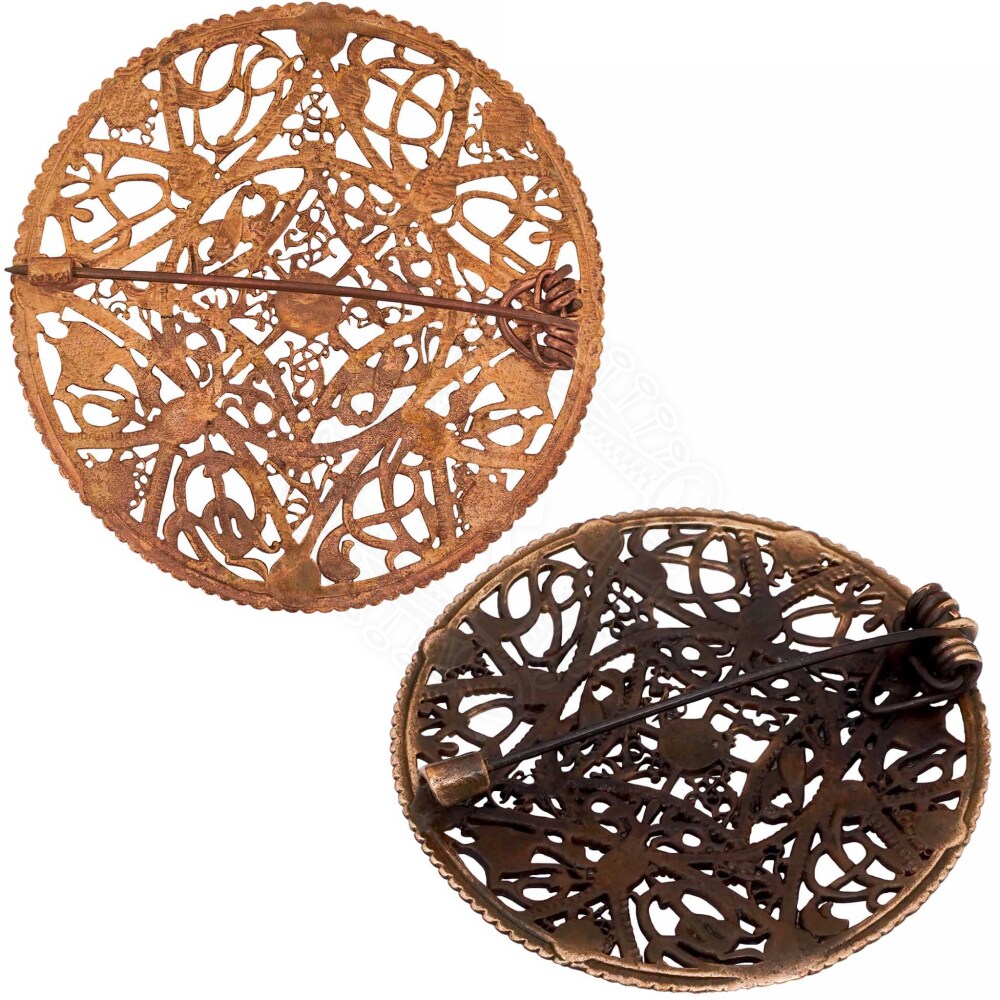
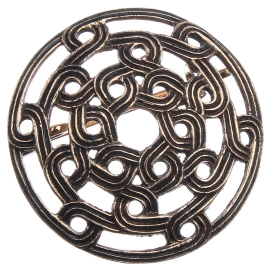
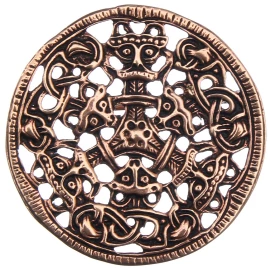
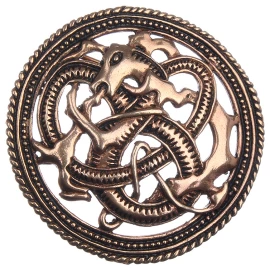
This circular brooch, also known as a disc fibula, is crafted from solid bronze. Its surface features a complex, openwork (or filigree) design. The dominant feature is a central square set on its point, with a smooth, domed boss at its heart. The patterns are composed of symmetrical scrolls, knots, and interlace, which are hallmarks of Norse art. Stylised animal motifs can be seen in the corners. The edge of the brooch is decorated with a fine, beaded border. On the reverse, a sturdy, slightly tapered pin is attached, designed to securely hold even heavy woollen cloak fabric.
A Symbol of Status and a Practical Garment
From the 9th to the 11th century, brooches like this were an indispensable part of a Norse woman's dress, though they were also worn by men. They were used to fasten a cloak at the shoulder or to secure an overdress. However, their design and material were not merely a matter of practicality—they were a powerful symbol of social status, wealth, and clan identity. The more complex and ornate the brooch, the higher the owner's standing in society.
A Snippet of History: The Art of Lost-Wax Casting
The lost-wax casting method used to create this brooch is thousands of years old. Each piece begins as a detailed wax model. This model is encased in a clay mould, which is then fired. During firing, the wax melts and runs out, leaving a perfect cavity into which molten bronze is poured. Once cooled, the mould is broken away. This means that every brooch made this way is essentially a unique original, as the mould is destroyed for each casting.
How to Use and Care For Your Brooch
How to Wear Your Brooch
Pierce the fabric of your cloak, shawl, or tunic with the pin where you wish to fasten the garment. Ensure the pin goes through a sufficiently thick layer of fabric to hold the brooch securely and avoid damaging thinner material. Then, secure the pin in the catch-plate on the back of the brooch.
Maintaining Its Beauty
- To preserve the original finish, especially on the antiqued version, avoid harsh chemical cleaners and metal polishes.
- If necessary, gently clean the brooch with a soft cloth and lukewarm soapy water.
- Always dry it thoroughly after cleaning to prevent surface oxidation.
- Never use the brooch as a tool for prying or other tasks for which it is not intended. This could bend or break the pin.
Specifications
| Material | Solid Bronze |
| Diameter | Approx. 6 cm |
| Pin Length | Approx. 5.5 cm |
| Weight | Approx. 25 g |
| Finish | Polished Bronze / Antiqued Bronze |
We are here for you!





.3773623034.1696456237.png.webp)

.3773623034.1696456268.png.webp)
.3773623034.1696456247.png.webp)