Čeština
 Deutsch


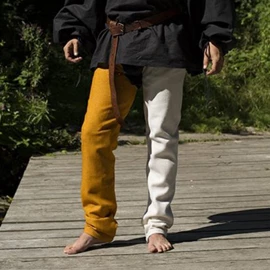
Medieval Split Wool Chausses in Two Colours


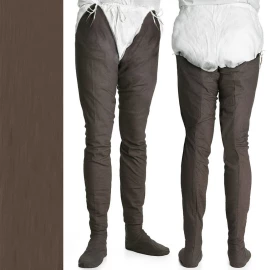
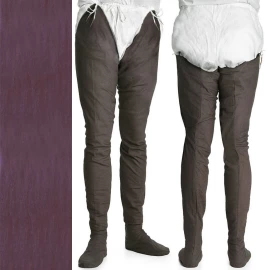
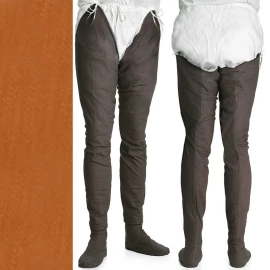
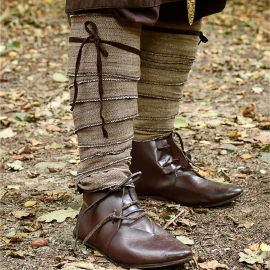
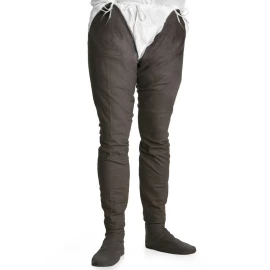
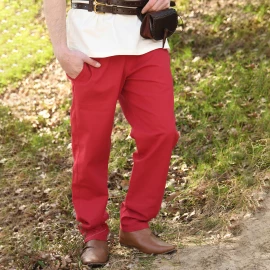
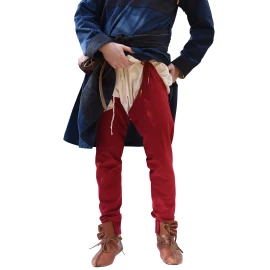
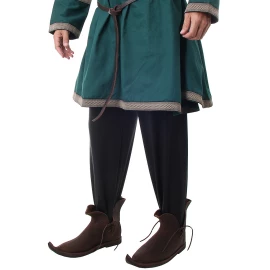
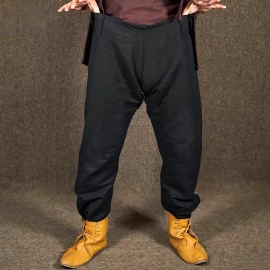
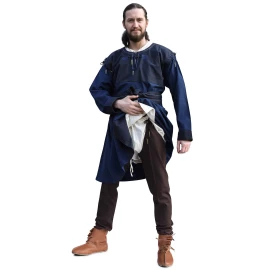
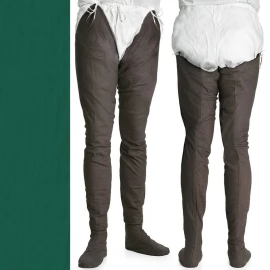
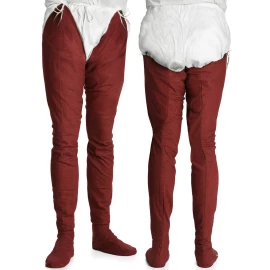
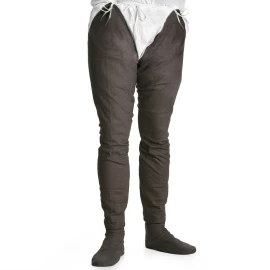
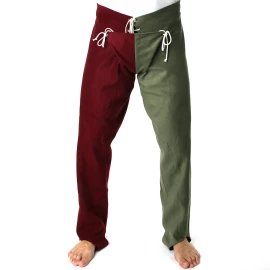
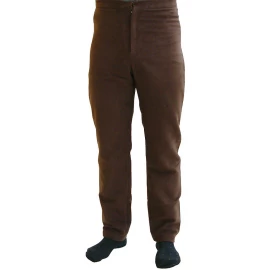
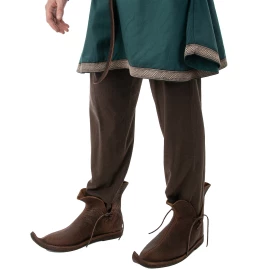
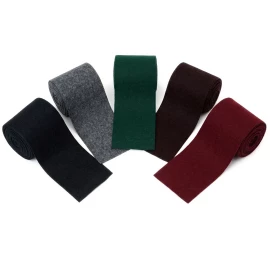
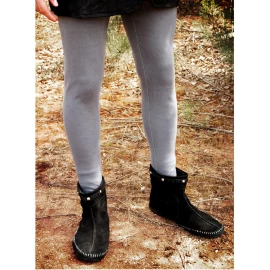
Complete your medieval outfit with a warm and practical layer that preserves freedom of movement, warrior. These split wool chausses consist of two separate legs attached to braies or a suitable supporting belt. Their relatively close cut fits comfortably inside low or high historical footwear without obstructing walking, riding or swordplay. Made from 100% recycled wool, the fabric provides useful insulation and continues to feel warm even when slightly damp. Choose wine red or green for reenactment, LARP, medieval festivals, theatre and historically inspired costumes. Further product information ...

 Delivery options
The following variants are currently available:
Medieval Split Wool Chausses in Two Colours
Separate Legs Based on Medieval Clothing
The garment consists of two independent hose legs, one for the left leg and one for the right. Each piece extends from the upper thigh to the ankle and has an opening at the upper point for an attachment cord. This arrangement allows the height to be adjusted to the wearer while leaving the crotch open for a pair of braies.
These wool chausses are particularly suitable for outfits inspired by the High and Late Middle Ages, approximately the 11th to 15th centuries. They can be used for portraying a foot soldier, archer, craftsman, townsman, squire or nobleman. For earlier impressions, the overall cut and attachment method should always be matched to the chosen century and region.
How to Put On and Attach the Chausses
Begin by putting on a pair of linen braies with a strong waistband or suitable lacing holes. Pull each hose leg over the corresponding leg with the upper point directed towards the hip. Pass a textile point or lacing cord through the opening and tie it securely to the braies or a load-bearing belt.
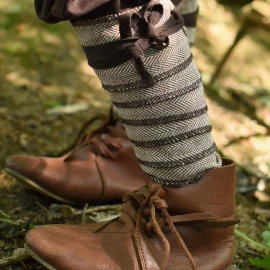
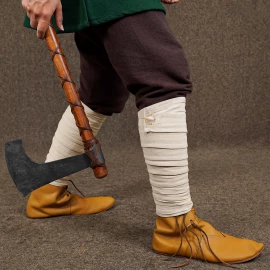
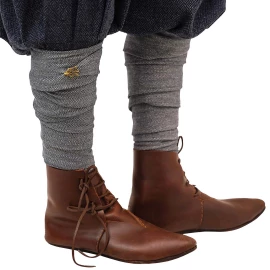
Tighten both legs evenly. They should sit high on the thighs without cutting into the body or pulling when you kneel and take a long step. Walk around, squat and raise your knees before securing the knots permanently. Depending on your chosen costume, the lower legs may be tucked into footwear or held in place with leg wraps.
The Historical Development of Chausses
Separate hose became an important part of European clothing during the Early and High Middle Ages. Earlier forms covered the legs and were tied to braies or a belt. During the 13th and 14th centuries, they became increasingly long and close-fitting. By the 15th century, the two legs were often joined into a single garment, contributing to the later development of joined hose and close-fitting men's breeches.
Well-fitted chausses served more than a fashionable purpose. They protected the legs from cold, wind, dirt and chafing while remaining compatible with low leather shoes, taller boots and selected pieces of armour.
Why Wool Works Well for Historical Legwear
Wool is naturally insulating, breathable and able to absorb a degree of moisture without immediately feeling cold. These qualities make it useful for long outdoor events and changing weather. Recycled wool gives existing textile fibres a further use and reduces the need for newly produced raw material.
The surface may show occasional visible fibres, slight variations in colour or minor irregularities. These are normal characteristics of recycled wool and contribute to the rustic appearance of the garment.
Technical Specifications
| Specification | Details |
|---|---|
| Product type | Medieval split hose or chausses |
| Number of pieces | 2 separate hose legs, left and right |
| Material | 100% recycled wool |
| Colours | Wine red or green |
| Cut | Straight to moderately close-fitting |
| Waist | No joined waistband |
| Attachment | Tied to braies or a supporting belt |
| Historical inspiration | European Middle Ages, particularly the 11th–15th centuries |
| Available sizes | S, M, L, XL, XXL and XXXL |
| Recommended use | Reenactment, LARP, medieval costume, theatre, film and historical events |
Size Guide
| Size | Overall Hose Length | Thigh Circumference | Knee Circumference | Ankle Circumference | Inside Leg Length |
|---|---|---|---|---|---|
| S | 88 cm / 34.5 in | 50 cm / 20 in | 32 cm / 13 in | 29 cm / 11 in | 76 cm / 30 in |
| M | 92 cm / 36 in | 56 cm / 22 in | 36 cm / 14 in | 33 cm / 13 in | 80 cm / 31.5 in |
| L | 96 cm / 37.5 in | 62 cm / 24 in | 41 cm / 16 in | 37 cm / 14 in | 84 cm / 33 in |
| XL | 100 cm / 39 in | 69 cm / 27 in | 44 cm / 17 in | 41 cm / 16 in | 88 cm / 34.5 in |
| XXL | 102 cm / 40 in | 76 cm / 30 in | 46 cm / 18 in | 43 cm / 17 in | 90 cm / 35.5 in |
| XXXL | 104 cm / 41 in | 80 cm / 31 in | 48 cm / 19 in | 45 cm / 18 in | 92 cm / 36 in |
The listed values are approximate garment measurements. Measure your thigh at its widest point, your knee across the kneecap and your ankle where the hose will finish. Allow a small amount of ease for movement and any underlayers. When you fall between two sizes, we recommend choosing the larger option.
Caring for the Wool Chausses
- Air the hose thoroughly after wear and remove surface dirt with a soft clothes brush.
- Wash only when genuinely necessary.
- Gentle hand washing in cool or lukewarm water with a wool detergent is recommended.
- Do not scrub, twist or wring the fabric, as the wool may shrink or felt.
- Press excess water out with a towel and dry the hose flat in their correct shape.
- Do not use bleach, aggressive stain removers or fabric conditioner.
- Do not tumble dry or place the garment directly on a radiator.
- When ironing is necessary, use a low temperature and place a damp cotton cloth between the iron and the wool.
Safe Use
Before walking, running or swordplay, make sure that both legs are securely attached and that the cords cannot catch on your equipment. Excessively tight lacing may restrict movement or circulation. Tuck loose cord ends beneath your clothing. Keep the wool away from open flames, sparks and hot objects.
The chausses form part of a costume and do not provide protection against impacts, cuts, punctures or high temperatures.
Recommended Accessories
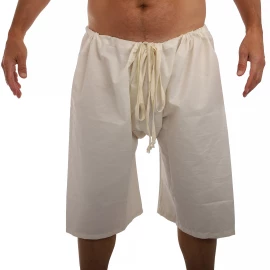
- Linen braies – the essential undergarment and supporting layer for chausses of the 11th–15th centuries.
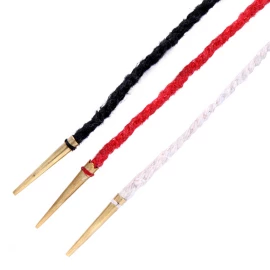
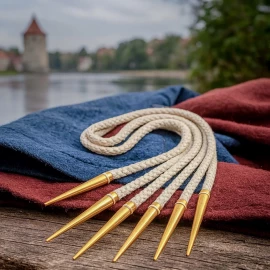
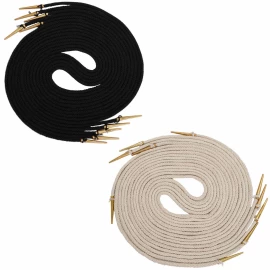
- Textile points – cords used to attach the hose to braies or a supporting belt.
- Medieval leather belt – an alternative supporting layer for selected costumes.
- Medieval tunic – a suitable upper garment for an 11th–15th-century outfit.
- Historical leather shoes – practical footwear to combine with the narrow lower legs.
- Wool cloak – a useful addition for cold and windy conditions.
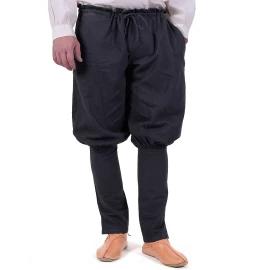
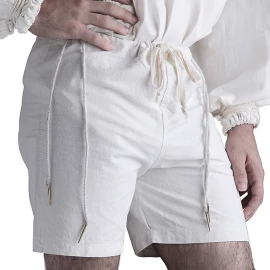
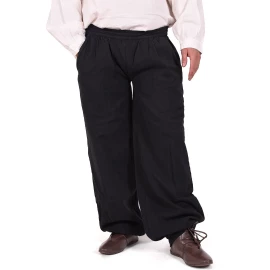
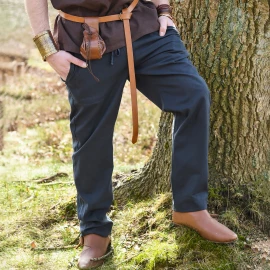
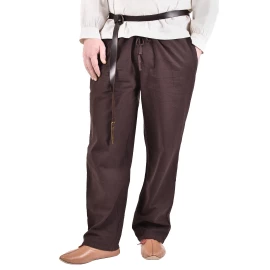
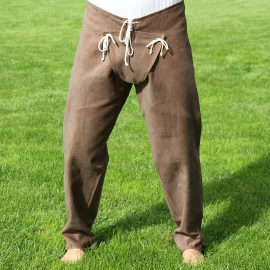
Only one pair of split hose is included. The braies, tunic, doublet, cords with metal tips, footwear, belt, weapons and all other accessories shown in the photographs are not supplied with the product.
We are here for you!