
 Čeština
 Deutsch


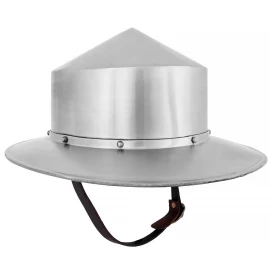
Pointed Kettle Hat, 14th Century (1.6 mm Steel)
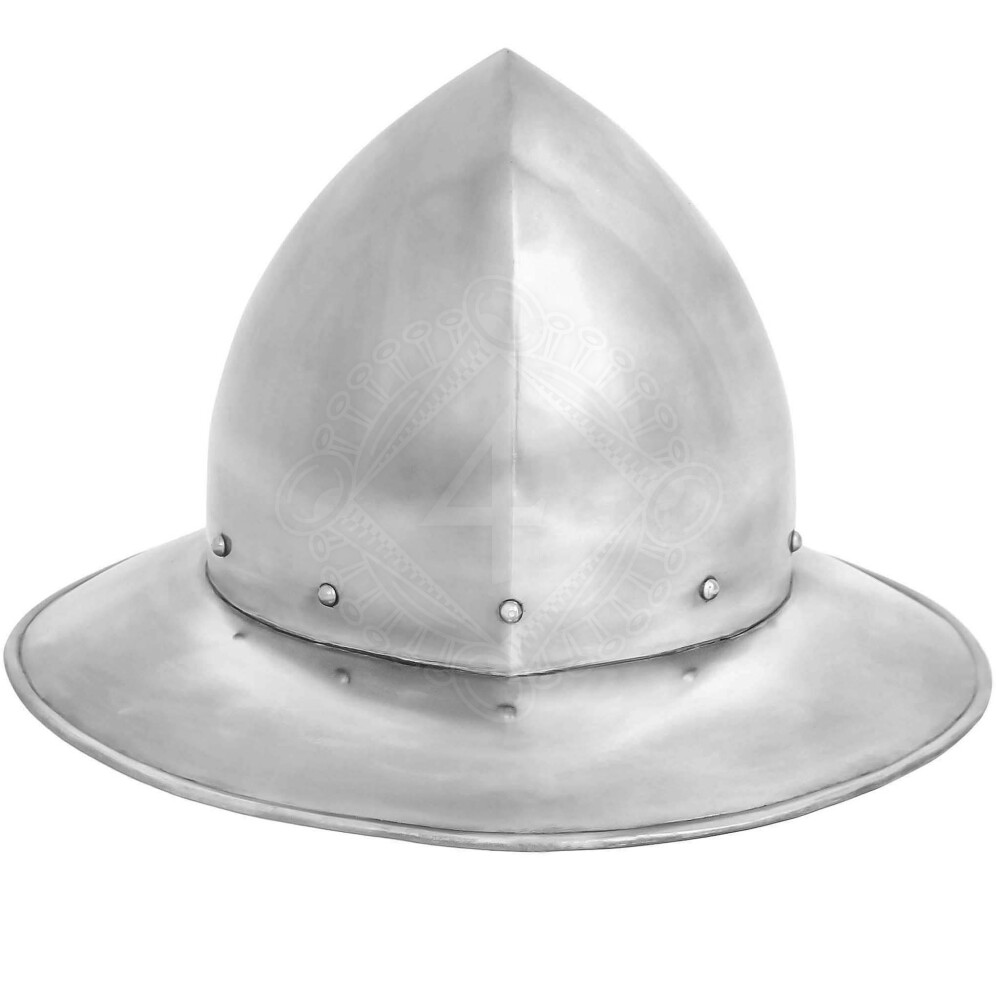
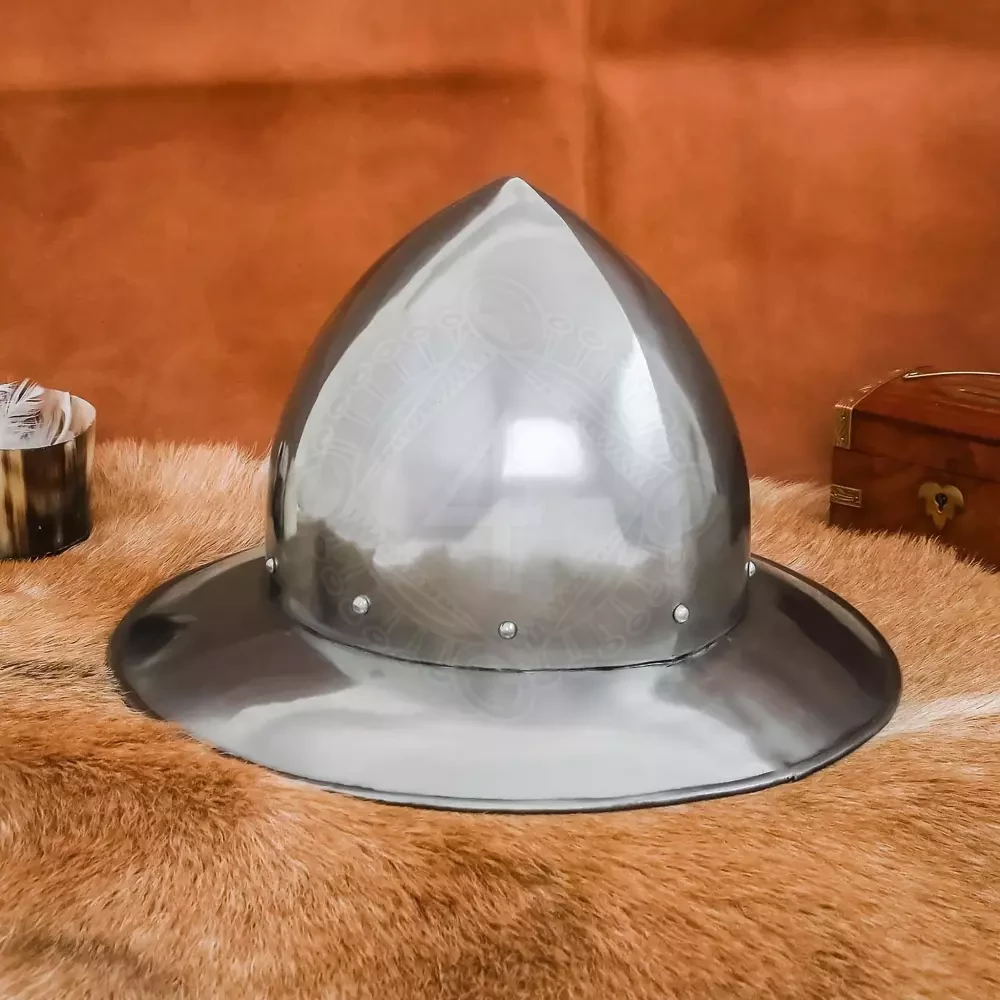
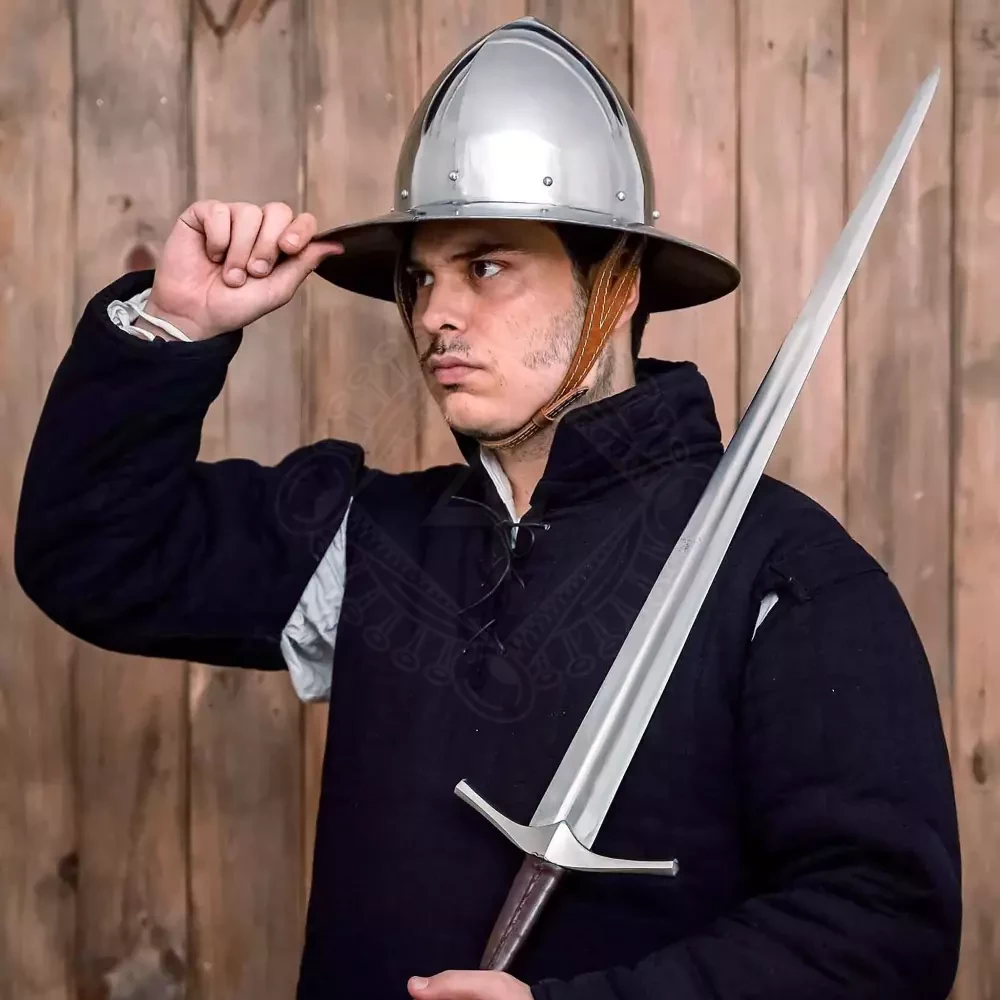
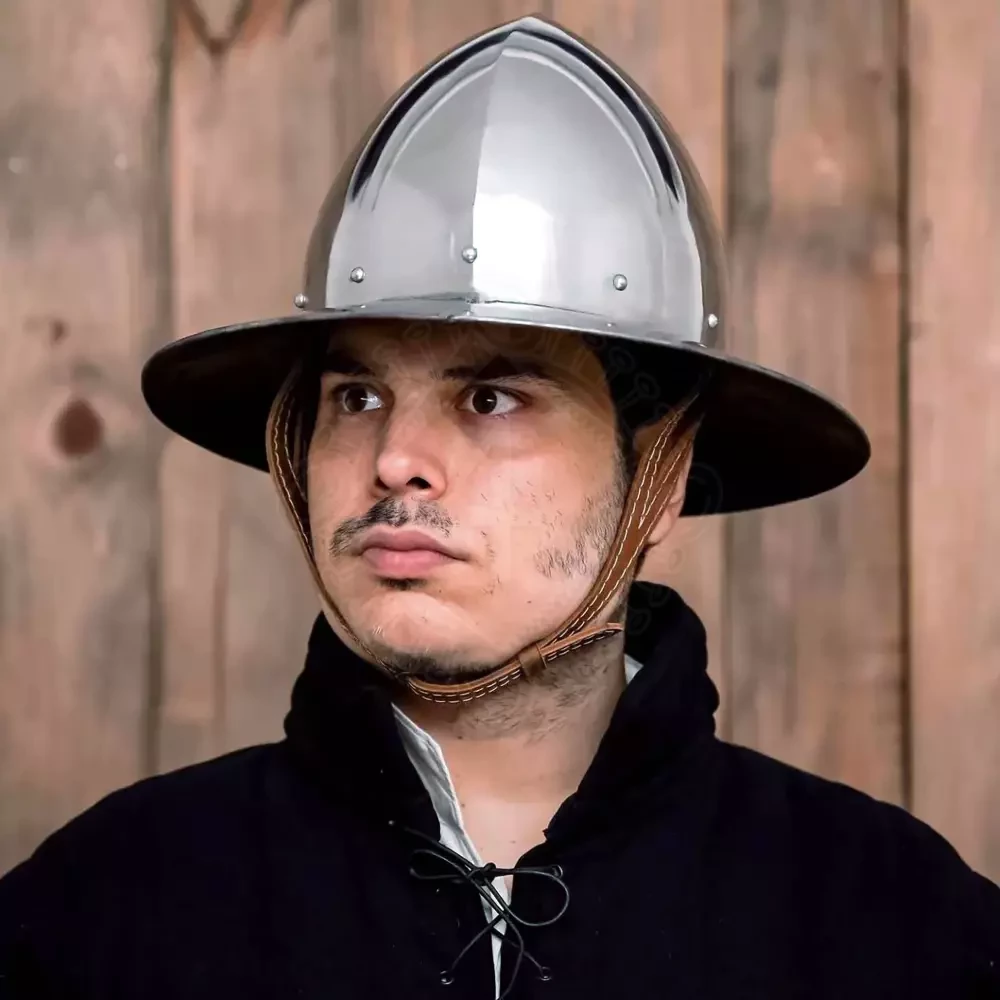

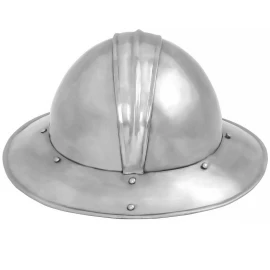
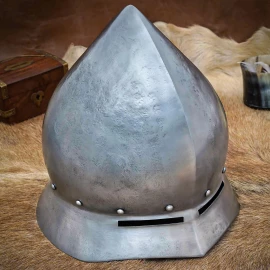
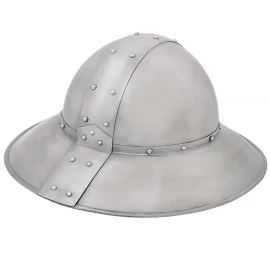
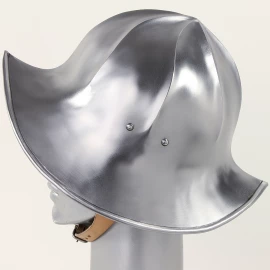
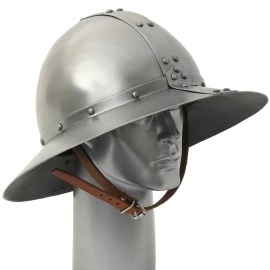
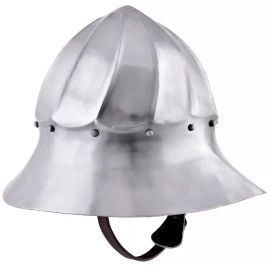
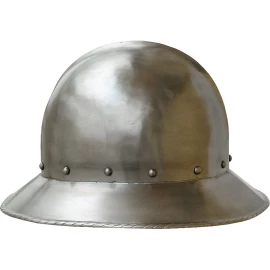
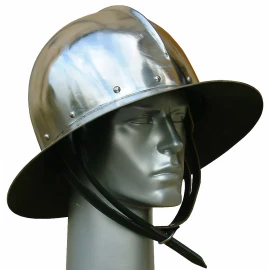
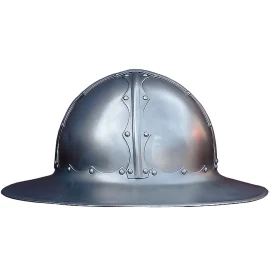
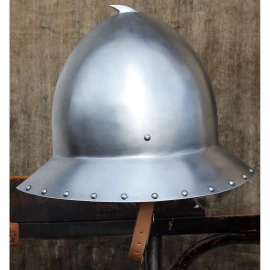
Enter the 14th-century battlefield with this robust and elegant replica of a kettle hat! Its characteristic pointed top not only reflects the fashion of the era but, more importantly, provides excellent protection against slashing and thrusting attacks from above. An indispensable piece of equipment for infantry, archers, and light cavalry, this helmet is the perfect choice for anyone seeking functionality, historical accuracy, and an impressive appearance. Further product information ...

 Delivery options
Pointed Kettle Hat, 14th Century (1.6 mm Steel)
Detailed Description and Construction
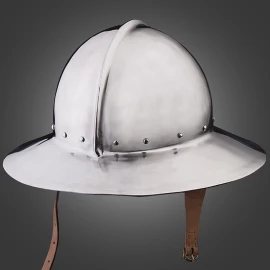
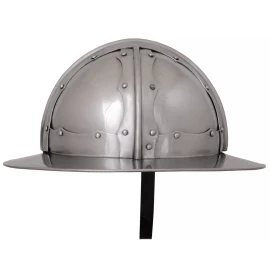
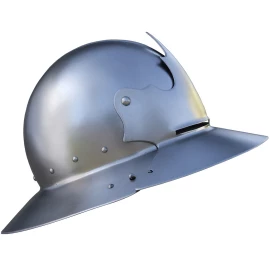
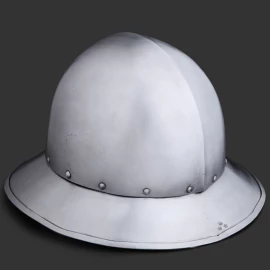
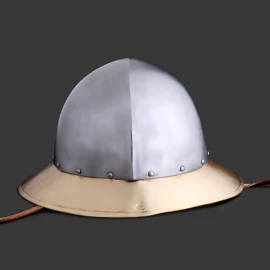
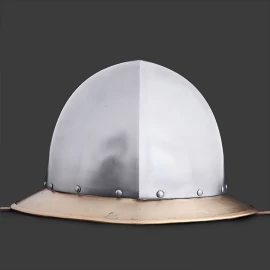
This helmet is hand-forged from strong 1.6 mm (16-gauge) mild steel, giving it considerable durability and a weight of approximately 2.5 kg (5.5 lbs). The helmet's skull tapers to a sharp point and features a central ridge that further strengthens the construction and helps to deflect blows. The wide, gently sloped brim, with its carefully flanged (rolled) edge for reinforcement, offers protection to the face, neck, and shoulders.
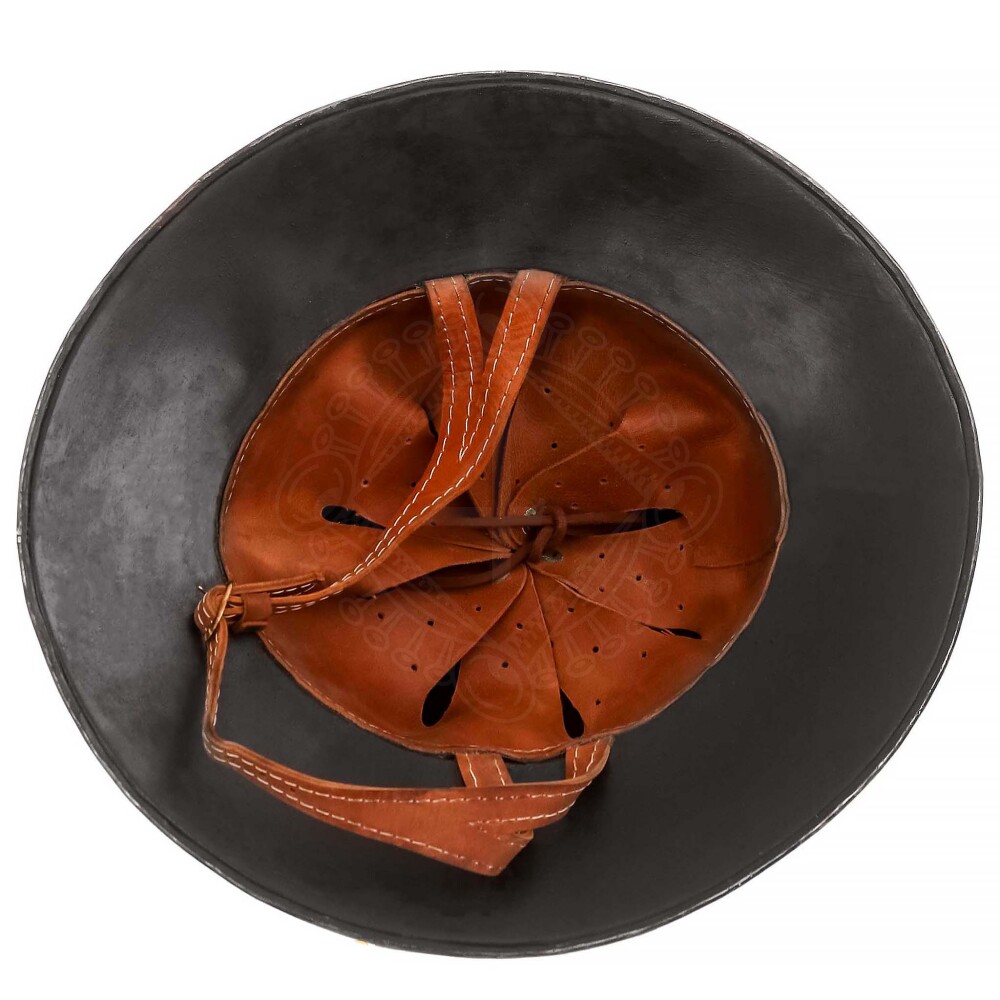
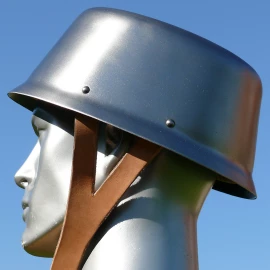
The helmet's surface is polished to a high shine, while the interior is painted black for enhanced corrosion resistance. Inside, you will find a fully adjustable genuine leather suspension liner and a sturdy chin strap to ensure the helmet stays firmly on your head, even in the heat of action.
How Can You Use This Helmet?
Thanks to its solid construction, this helmet is an excellent and versatile choice for:
- Reenactment and Living History: A perfect and durable accessory for portraying 14th-century soldiers.
- LARP and Costume Events: Elevates your costume to a higher level of authenticity and safety.
- HEMA and Historical Fencing Training: The 1.6 mm material thickness provides good protection for practicing techniques and light sparring.
- Theatre, Film, or as a Collector's Piece: An impressive and historically faithful exhibit.
Important Notice: Although this helmet is made from durable 1.6 mm steel, it is not certified as modern protective equipment. It is not designed for extreme high-impact or full-contact sports like buhurt or the Battle of the Nations, which require different standards and material thicknesses.
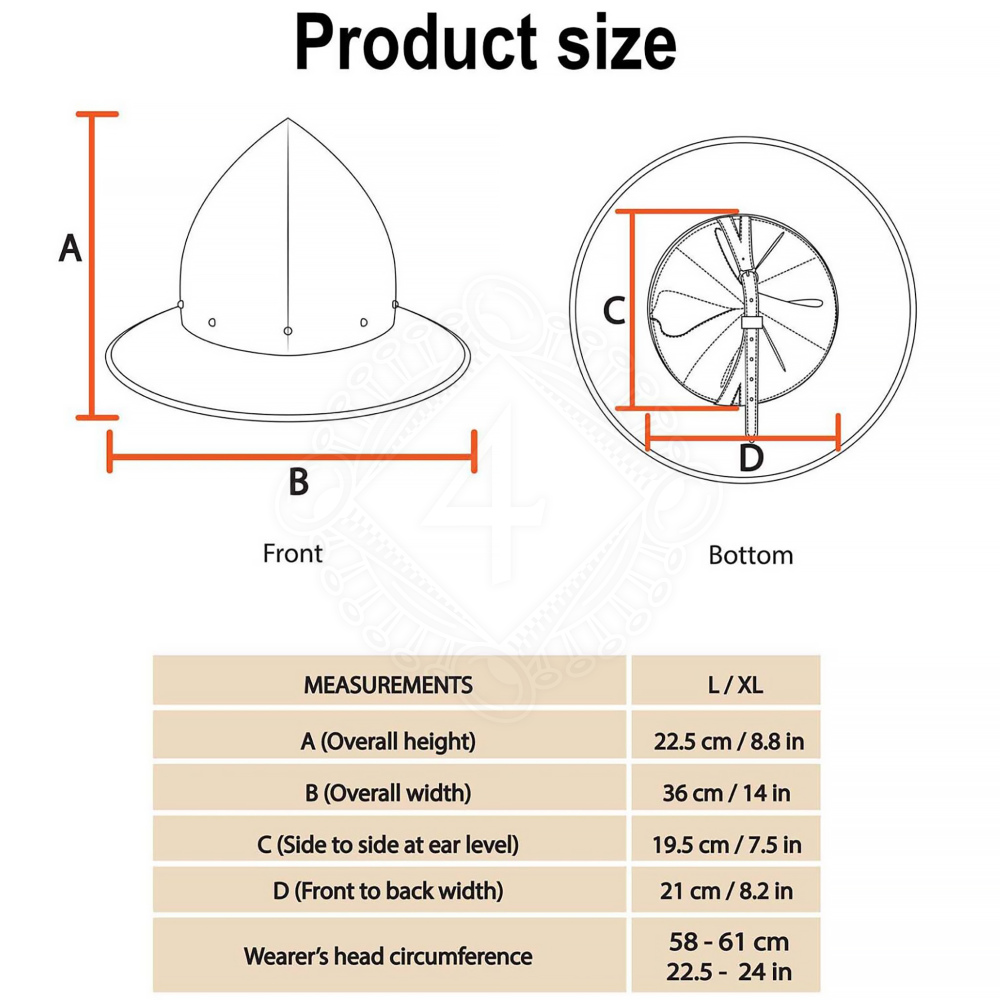
Size and Dimensions Chart
| Measurement | Value |
|---|---|
| Recommended Head Circumference | 58 - 61 cm / 22.5 - 24 in |
| Overall Height (A) | 22.5 cm / 8.8 in |
| Overall Width (B) | 36 cm / 14 in |
| Inner Width at Ear Level (C) | 19.5 cm / 7.5 in |
| Inner Depth Front-to-Back (D) | 21 cm / 8.2 in |
| Material | Mild Steel (16 gauge) |
| Material Thickness | 1.6 mm |
| Weight | Approx. 2.5 kg / 5.5 lbs |
| Liner and Strap | Genuine leather, adjustable |
Back in History
A Symbol of Infantry Combat
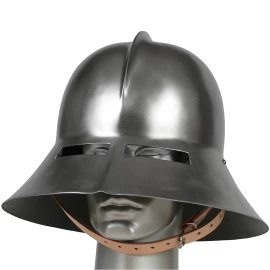
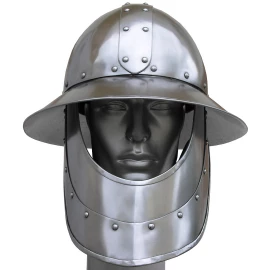
The kettle hat, or chapel de fer in French, was the defining helmet of the infantry throughout the High and Late Middle Ages. Its popularity stemmed from its practicality: unlike closed helms, it offered an unobstructed view, ventilation, and hearing, which were crucial for communication and situational awareness in the chaos of battle. The wide brim was an ingenious solution against arrows and anything that might be dropped on soldiers during a siege. This particular type with a pointed skull was popular in the 14th century, combining the advantages of the kettle hat with better protection against direct blows to the crown of the head.
A Fun Fact
Although the kettle hat is often perceived as equipment for the common soldier, its effectiveness and low production cost led to its widespread use across all social strata. It was worn not only by pikemen and crossbowmen but also frequently by knights and men-at-arms as a second, lighter helmet for situations outside of a direct cavalry charge, such as during sieges or dismounted skirmishes.
Care and Maintenance
To keep your helmet protected from rust and in perfect condition:
- The helmet is shipped from the manufacturer with a protective coating of oil. After unpacking, simply wipe it off with a cloth or paper towel.
- Keep the helmet in a dry place. After each use, dry it carefully, especially if it has been exposed to moisture.
- Periodically treat the polished exterior surface with a thin layer of preservation oil (e.g., WD-40, Ballistol) to prevent rust.
- It's a good idea to occasionally treat the leather liner and chin strap with a leather conditioner to keep them supple and prevent cracking.
We are here for you!






.3773623034.1696456237.png.webp)

.3773623034.1696456268.png.webp)
.3773623034.1696456247.png.webp)