
 Čeština
 Deutsch


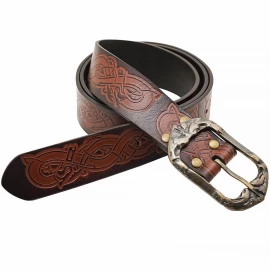
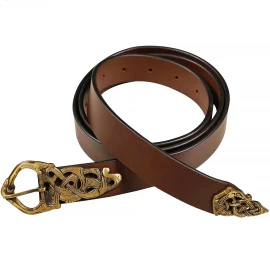
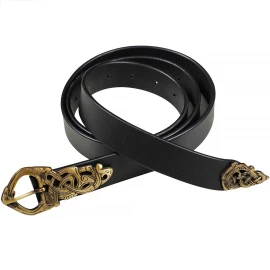
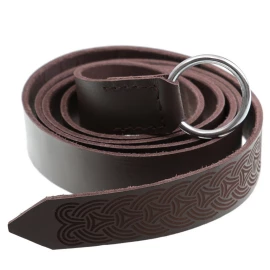
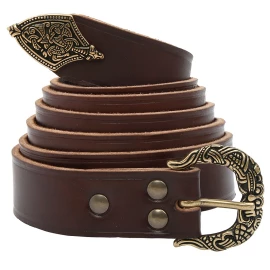
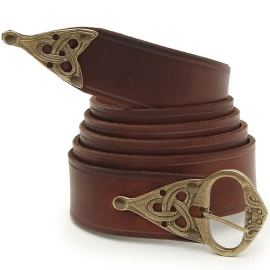
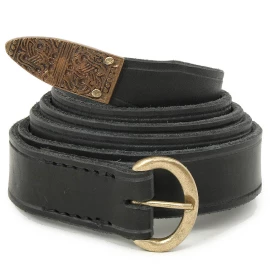
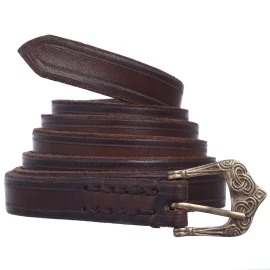
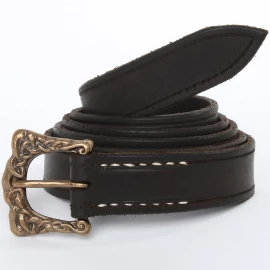
Viking Leather Belt with Brass Buckle and Chape, Birka Style
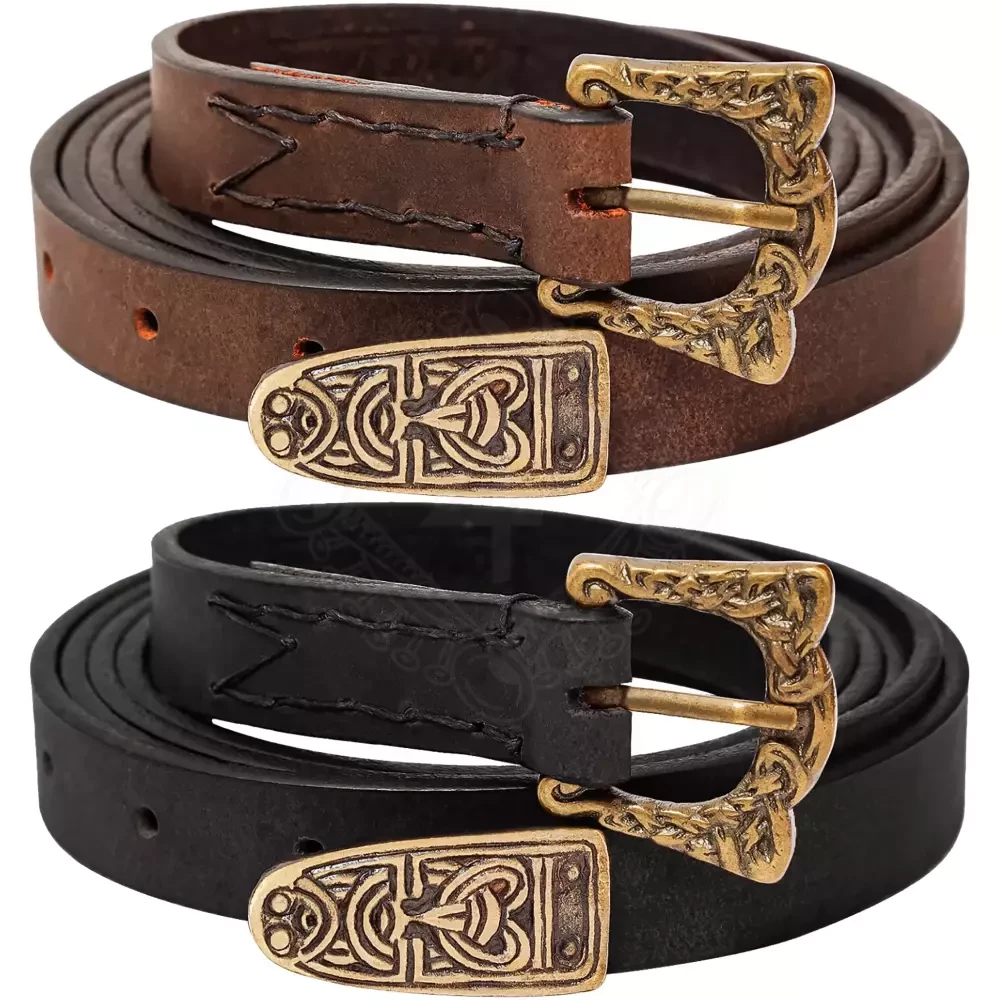
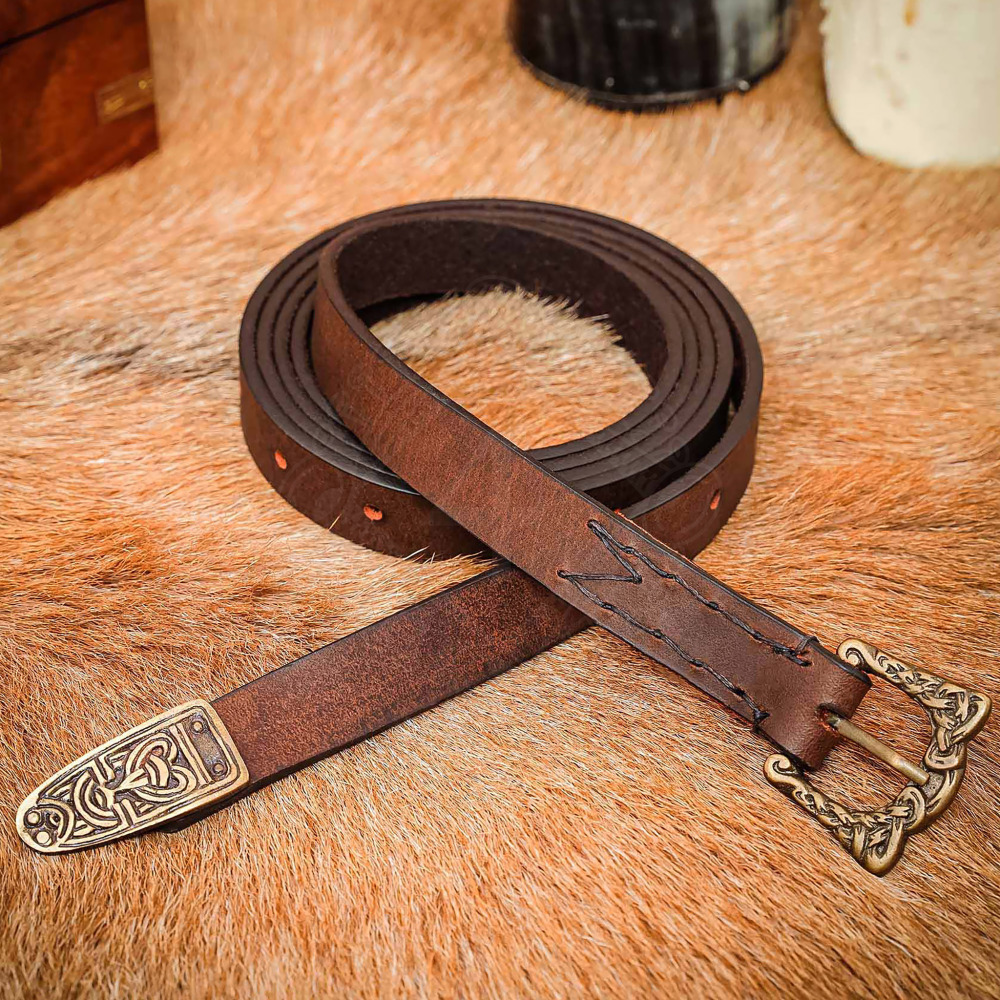
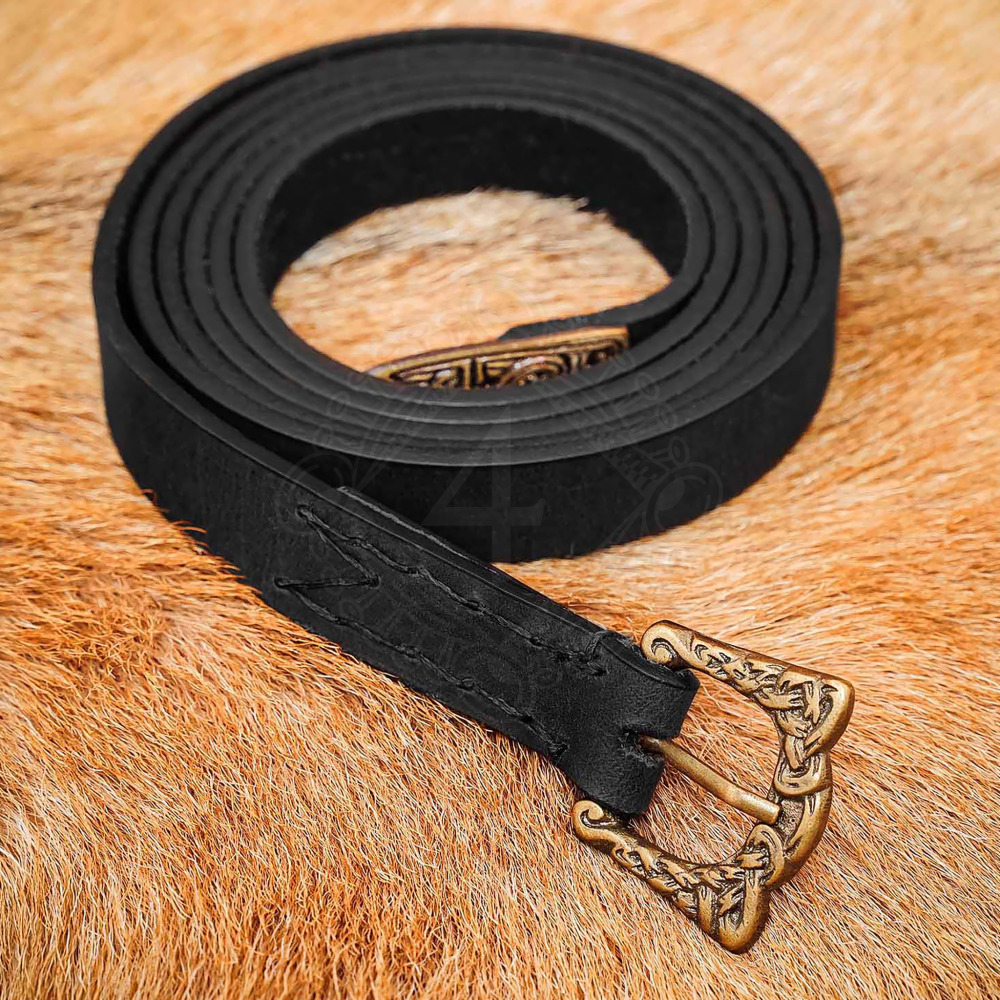
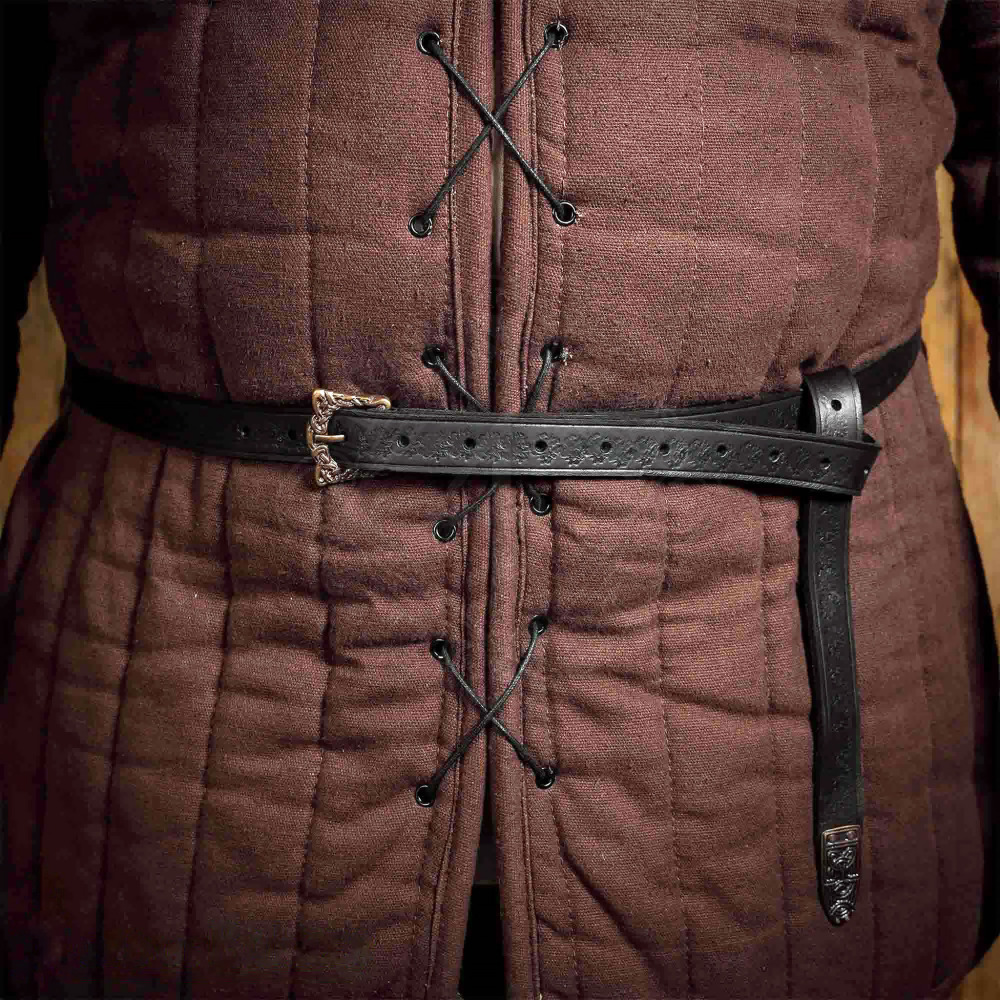
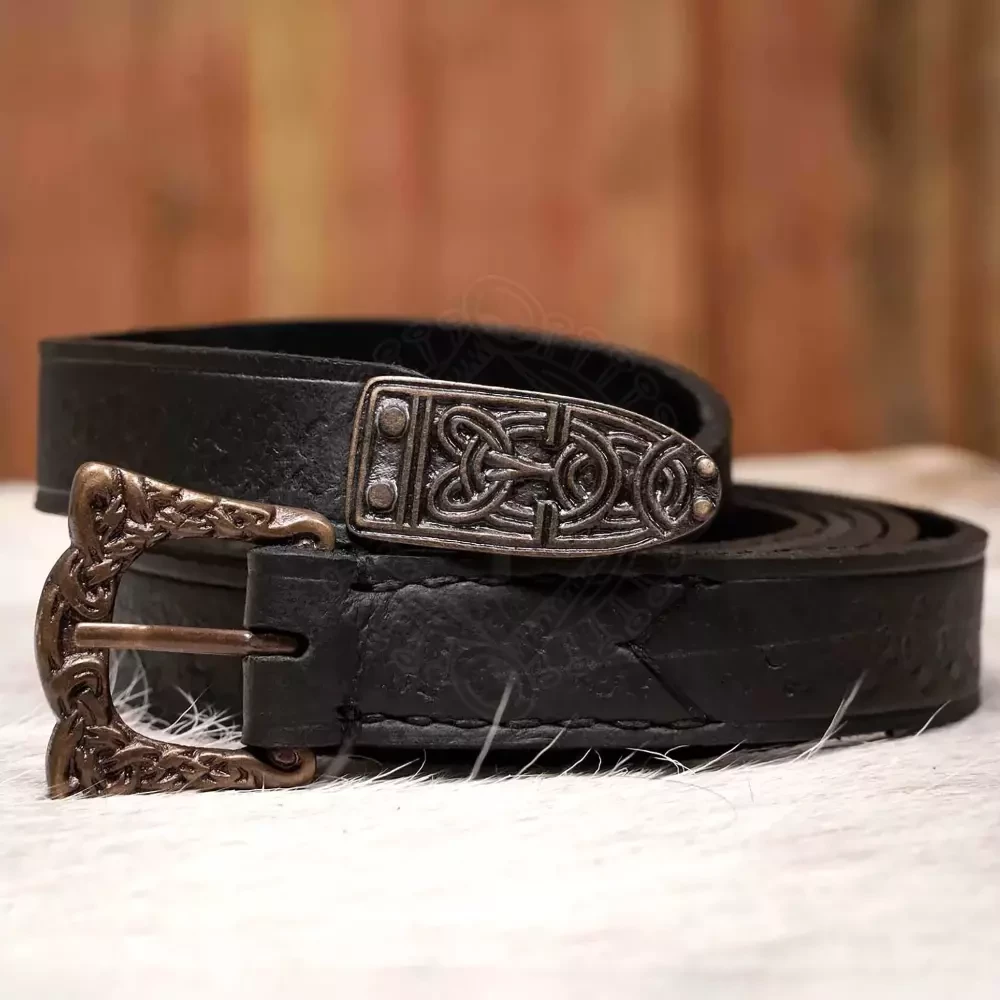
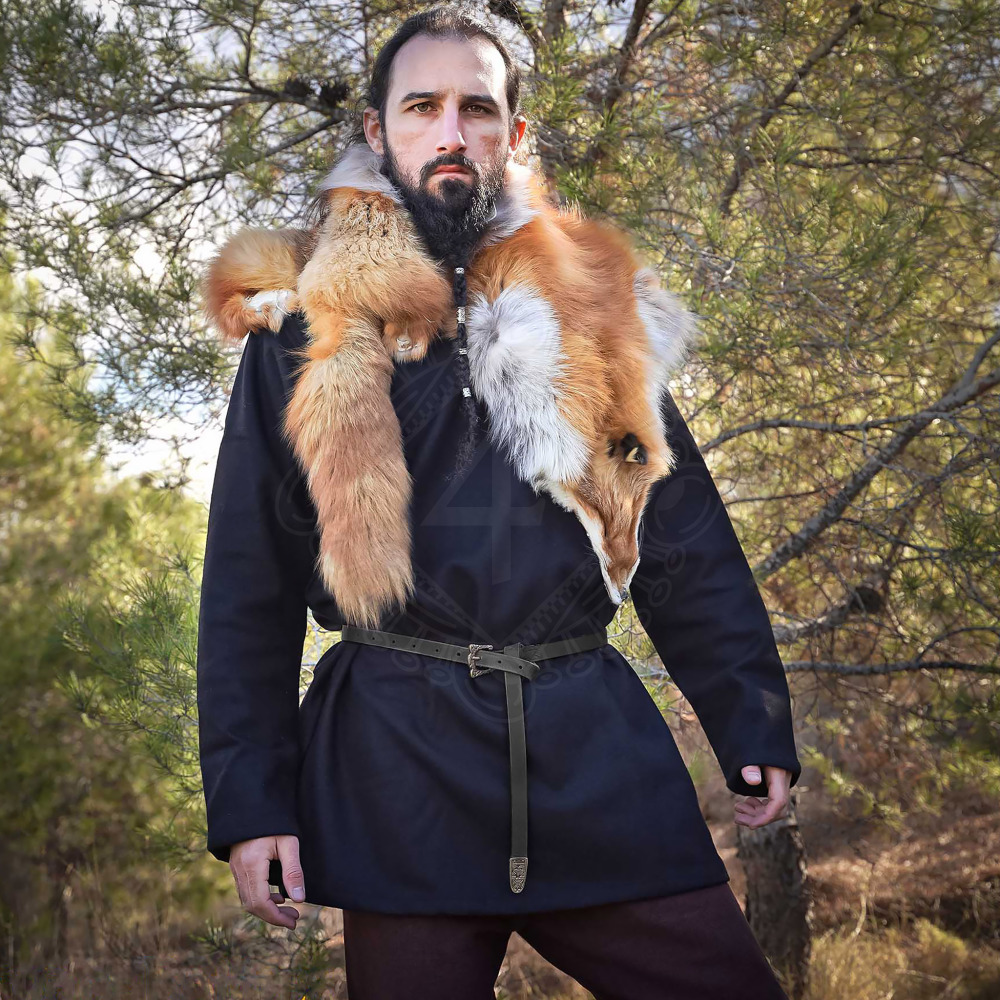

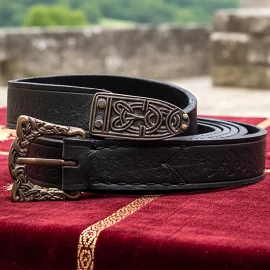
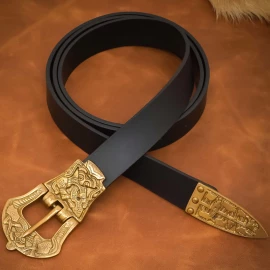
Complete your historical attire with a piece of true Norse artistry! This Viking belt is not just a practical accessory, but a status symbol inspired by the rich finds of the 10th century. It is crafted from genuine, high-quality leather over 3 mm thick, ensuring exceptional durability and a long lifespan. The belt is dominated by a beautifully decorated brass buckle and a matching chape (strap-end), whose intricate knotwork design is based on artefacts found in the legendary Viking trading centre of Birka. Whether you are heading to a LARP, a historical festival, or simply wish to add a touch of Norse mythology to your style, this belt is the perfect choice. Further product information ...

 Delivery options
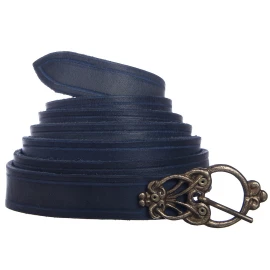
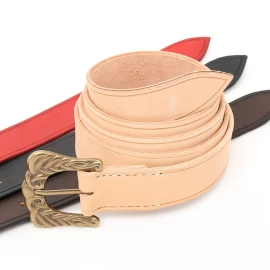
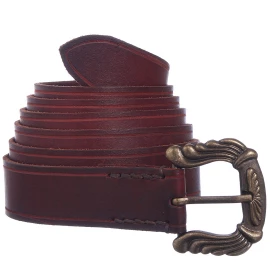
The following variants are currently available:
Viking Leather Belt with Brass Buckle and Chape, Birka Style
Key Features of the Belt
Every detail of this belt has been designed with authenticity, functionality, and aesthetics in mind.
- Premium Genuine Leather: The belt is made from leather approximately 3–3.2 mm thick. This material is not only strong but also develops a unique patina over time that enhances its character.
- Authentic Brass Hardware: Both the buckle and chape are crafted from brass with an antique finish, giving them an aged appearance. The complex Viking knotwork patterns are faithful to historical examples.
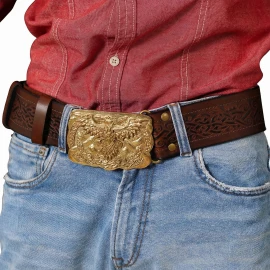
- Versatile Width: At 1.9 cm wide, the belt is subtle enough to look elegant, yet strong enough to support a pouch, knife, or other accessories.
- Long Cut: The lengths of 130, 150, and 170 cm correspond to the historical way of wearing long belts, with the free end hanging down along the leg.
A Glimpse into History: The Belt as a Status Symbol
In Viking society, a belt was more than just a means to cinch a tunic. It was an important indicator of wealth and social standing. While common folk wore simple leather or textile belts, chieftains, successful traders, and warriors prided themselves on belts with richly decorated buckles and chapes made of bronze, silver, or even gold. The finds from Birka, one of the most significant Viking towns, provide us with a stunning insight into the craftsmanship of the era. The intricate interwoven patterns (knotwork) were not just for decoration but often held symbolic meaning, alluding to mythology and fate.
How to Wear a Long Viking Belt Correctly
Achieving an authentic look is easy! The long end of the belt isn't left to flap about but is secured elegantly.
- Fasten the belt as you normally would by passing the end through the buckle.
- Take the loose, hanging end and bring it up and UNDER the fastened belt, right next to the buckle.
- Now, pass the end down through the loop you've just created.
- Pull to tighten the knot. This simple method secures the end of the belt, allowing it to hang neatly without getting in your way.
Caring for Your New Belt
To ensure this fantastic piece serves you for as long as possible, follow a few simple rules:
- Protect the leather from excessive moisture. If the belt gets wet, allow it to air dry at room temperature.
- Clean it regularly with a soft, dry cloth.
- To revitalise and condition the leather, you can occasionally apply a beeswax-based leather care product.
- Avoid prolonged exposure to direct sunlight to prevent the colour from fading.
Size Chart
| Size | Total Length | Width |
|---|---|---|
| M | 130 cm | 1.9 cm |
| L | 150 cm | 1.9 cm |
| XL | 170 cm | 1.9 cm |
We are here for you!






.3773623034.1696456237.png.webp)

.3773623034.1696456268.png.webp)
.3773623034.1696456247.png.webp)