 Čeština
 Deutsch


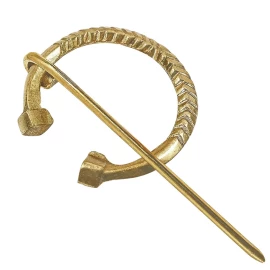
Roman Brass Fibula with Disc Terminals, 1st-2nd Century AD
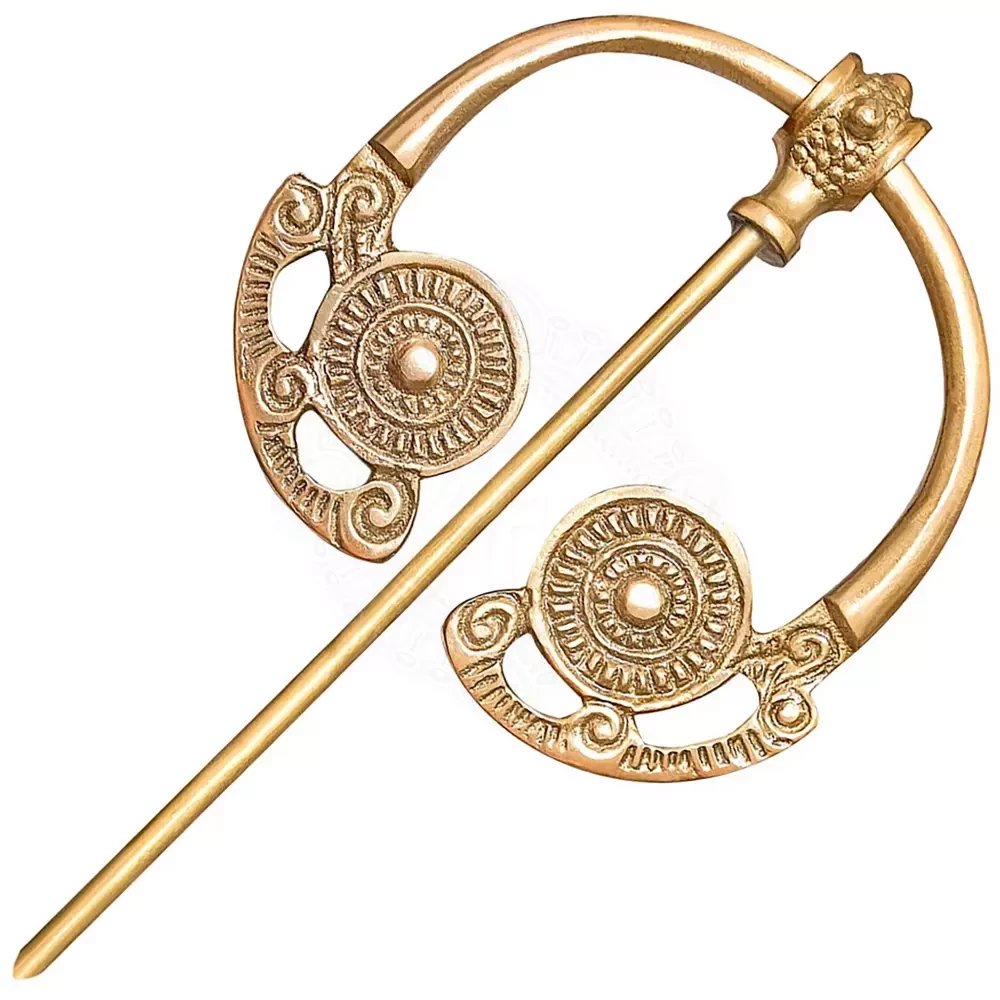
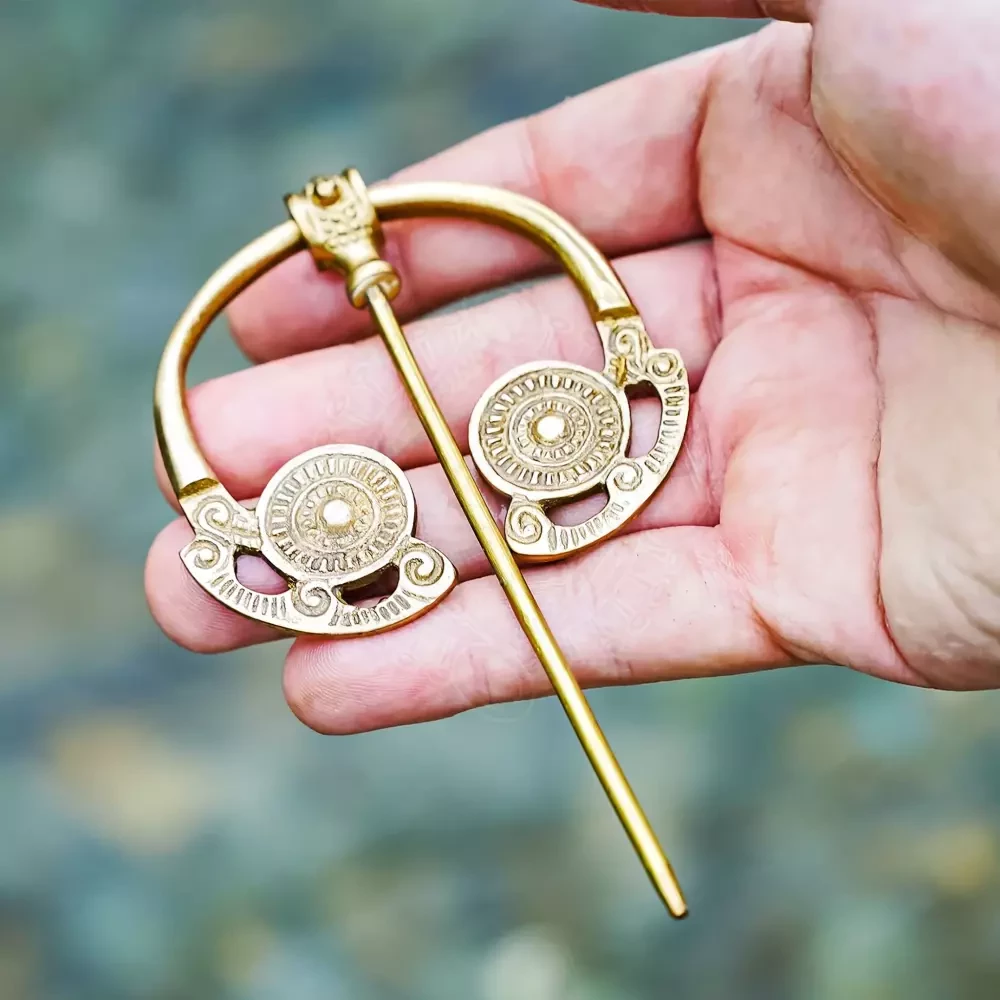
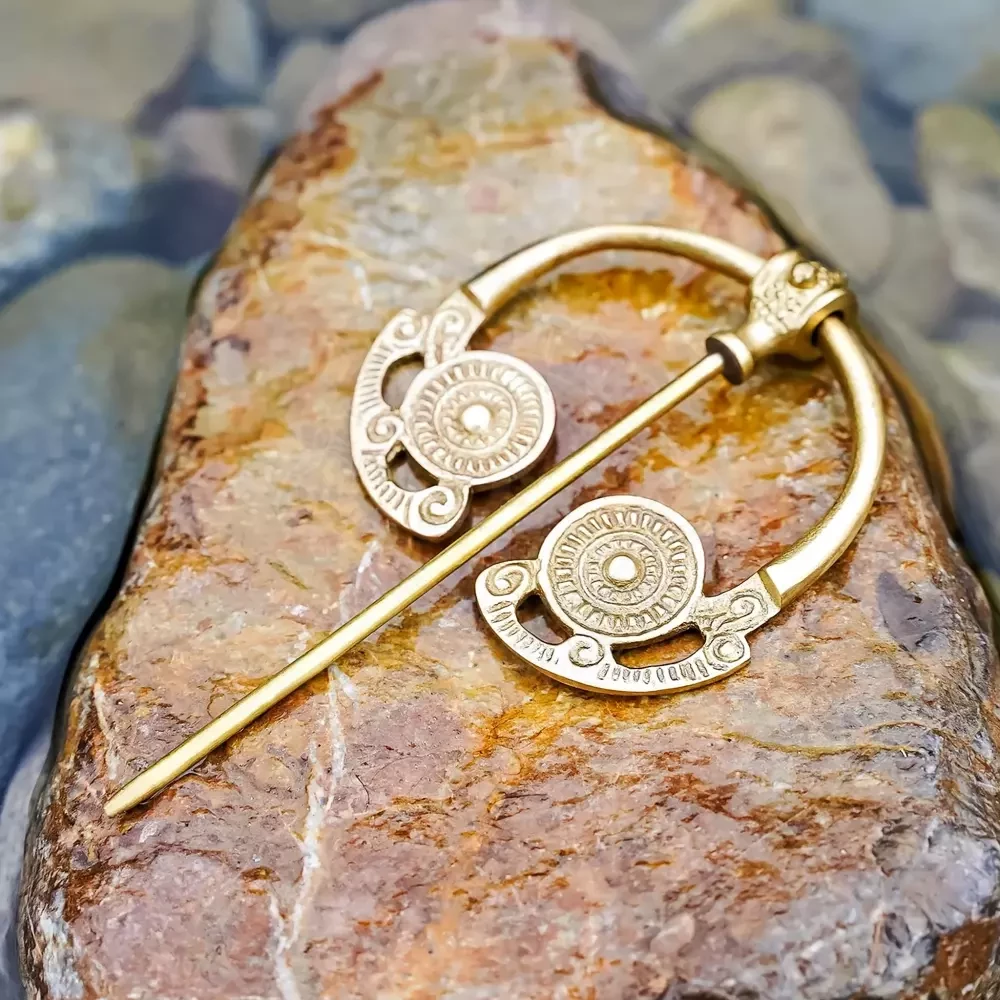
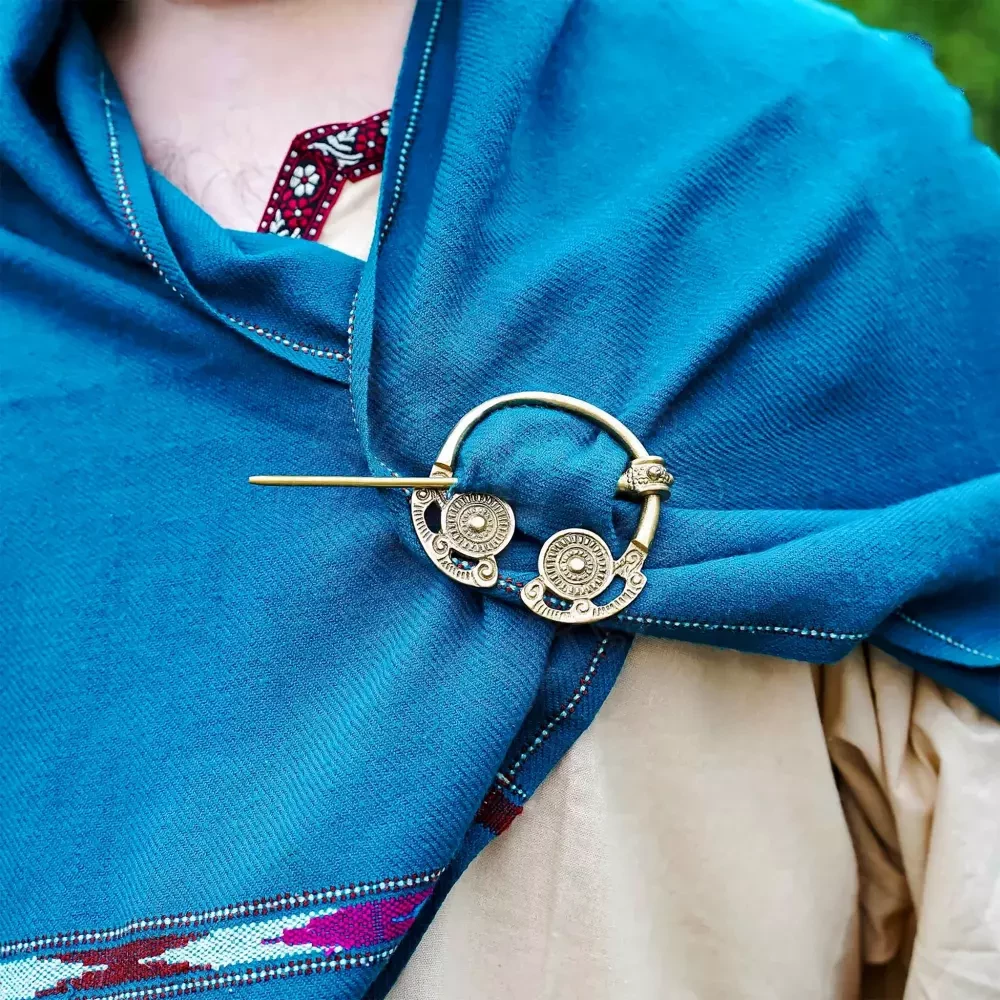
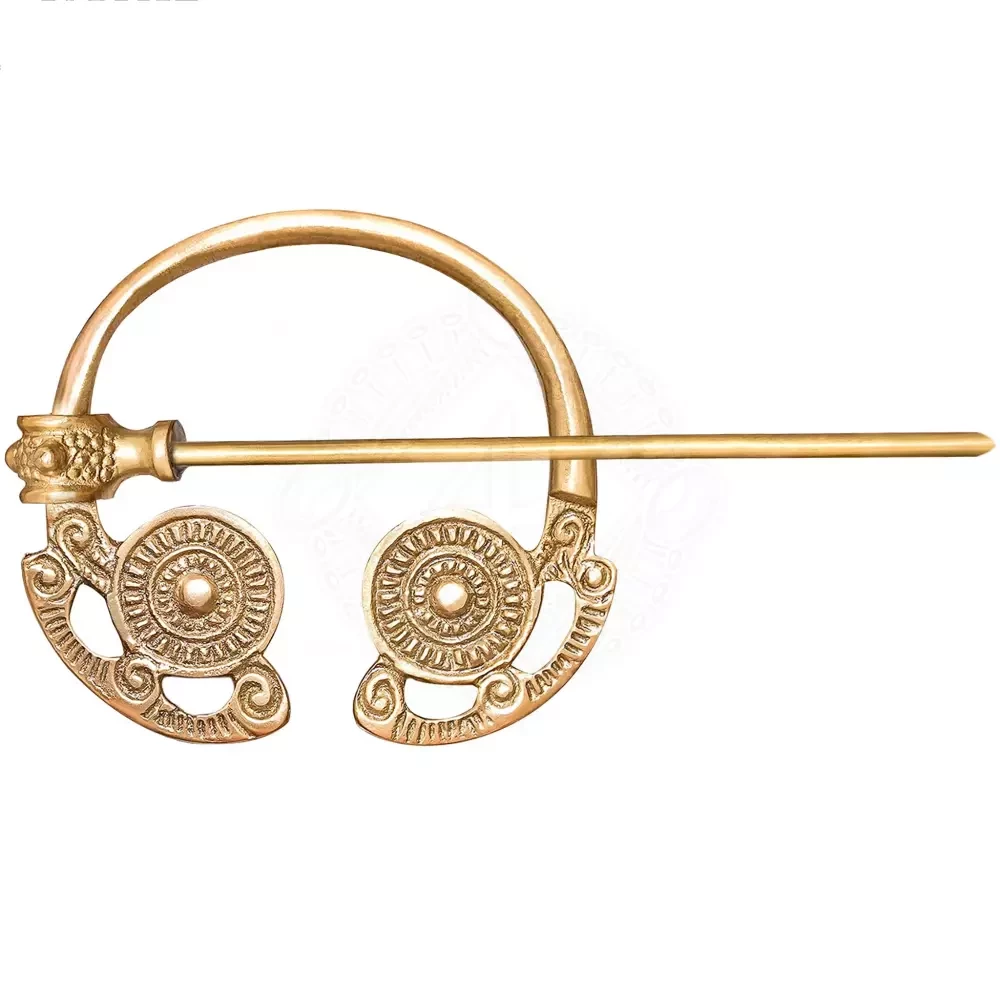

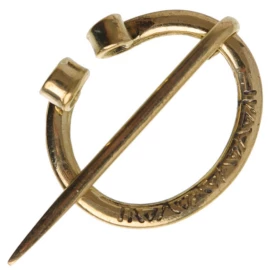
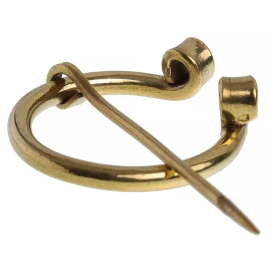
Complete your garment with a functional and historically faithful accessory. This Roman fibula is a precise replica of finds from the 1st to 2nd century AD. It's not just an ornament; it's an essential accessory for fastening your cloak (sagum), tunic, or other heavy garment. Crafted from solid cast brass, it features a unique design with two ornate disc terminals and a hinged pin. Whether you are a legionary, a civilian, or a Roman re-enactment enthusiast, this brooch adds a touch of authenticity to your costume and will hold your cloak securely in place. Further product information ...

Roman Brass Fibula with Disc Terminals, 1st-2nd Century AD
Detailed Design
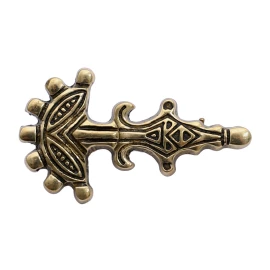
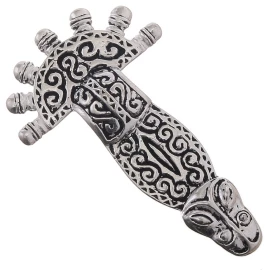
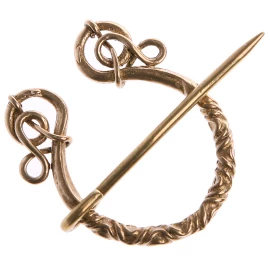
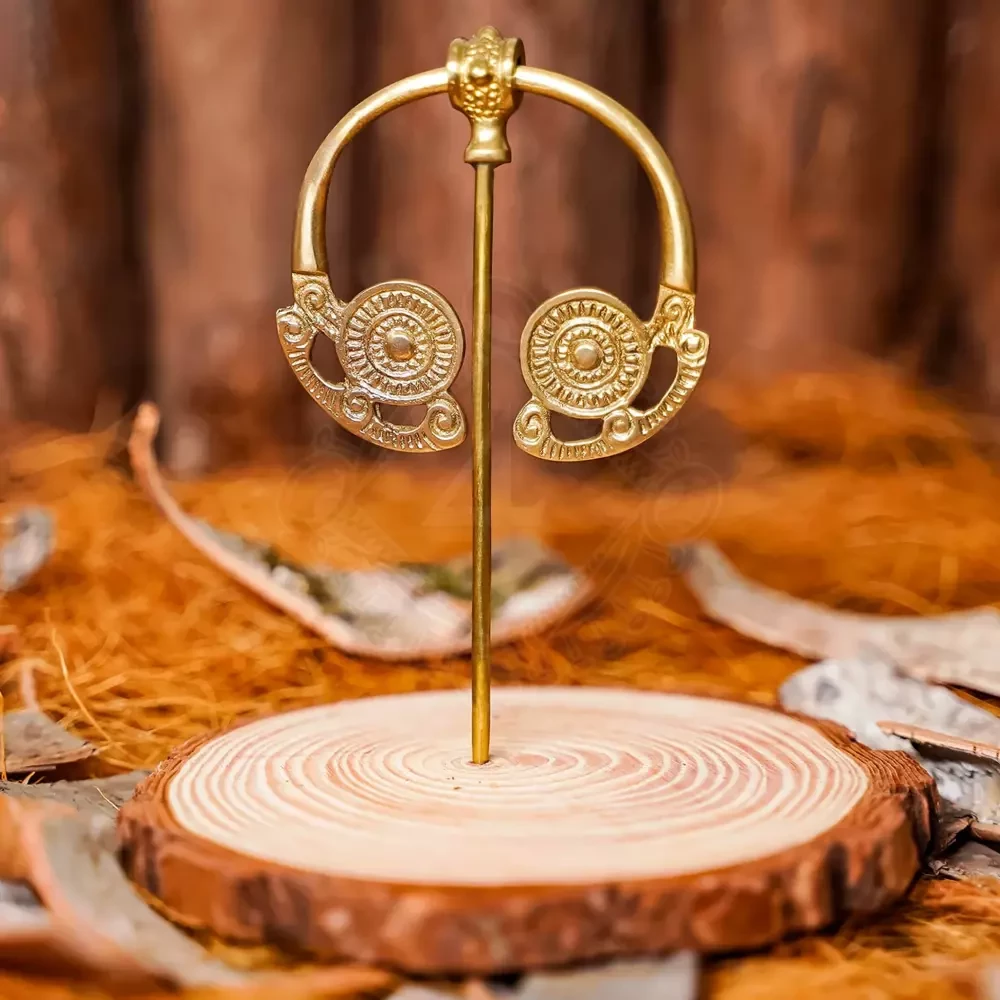
The fibula is cast from solid brass with a matte, slightly antiqued finish, giving it a period look. It consists of a semi-circular body that terminates at both ends with flat, decorated discs. These discs feature a pattern of concentric circles and radial lines, complemented by scroll accents. At the apex of the arch, a decorative hinged mechanism holds the long, sharp pin. This design is typical of fibulae from the Roman Empire during this period.
How to Use the Brooch
Despite its robust appearance, using this fibula is very straightforward. Unlike some Celtic brooches with a free-moving pin, this pin is securely attached by a hinge. To fasten your garment:
- Gather a sufficient amount of fabric (for example, both edges of your cloak on the shoulder) onto the long pin (10 cm).
- Pierce the fabric and guide the pin, much like a modern safety pin.
- The pin's tip will rest freely against the fabric. Thanks to its sturdy construction, weight (approx. 45 g), and pin length, the brooch holds securely even on very heavy and thick woollen fabrics.
Historical Context
Fibulae of this type were extremely popular across the Roman Empire in the 1st and 2nd centuries AD. They were worn by both soldiers (legionaries to fasten their sagum cloak) and civilians. They were not just practical accessories but also indicators of social status and personal identity. Archaeological finds of similar brooches have been discovered in many provinces, including Britain, Gaul, and along the Danube frontier.
| Needle Length | approx. 10 cm (approx. 3.9 in) |
| Inner Diameter (Arch) | approx. 5.5 cm (approx. 2.2 in) |
| Weight | approx. 45 g (approx. 1.6 oz) |
| Material | Solid cast brass |
| Manufacture | Sand-cast, hand-finished |
| Period | Roman Empire (1st–2nd Century AD) |
Care for Your Brass Brooch
To maintain the brooch's appearance, simply wipe it occasionally with a soft, dry cloth. Brass may develop a natural patina over time, which only adds to its antique character and authenticity. Avoid exposing the brooch to unnecessary moisture or modern cleaning chemicals. Store it in a dry place, ideally in a cloth pouch.
Please note: Each brooch is individually sand-cast and hand-finished. Slight differences in texture or detailing are normal and reflect the handmade nature of the crafting process, adding to the uniqueness of each piece.
We are here for you!