 Čeština
 Deutsch


Viking Age Cloak Clasp 'Gulbische', Hand-Cast Brass
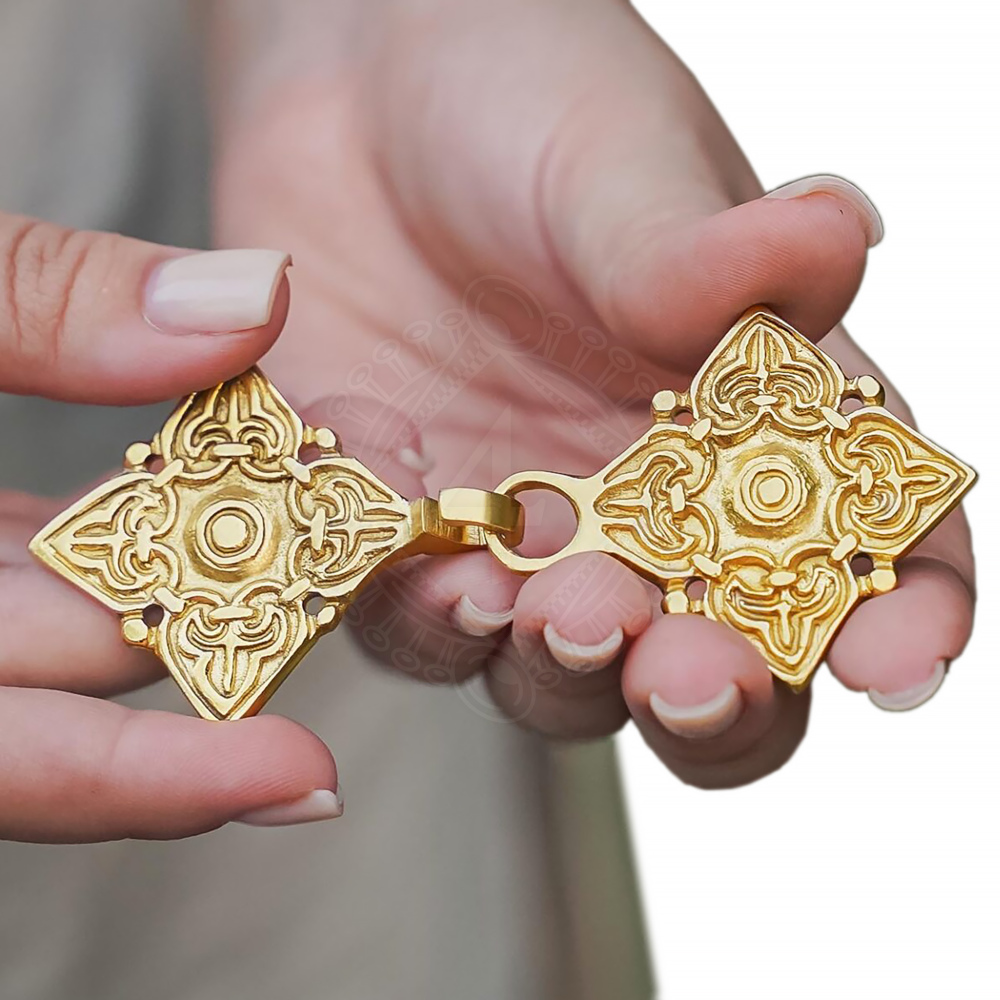



Complete your historical attire with a piece of jewellery that is both functional and truly captivating. This two-part clasp is a faithful reproduction of a 10th-century find, making it the perfect finishing touch for any Viking, Rus', or Varangian costume. Not only will it hold your heavy woollen cloak securely in place, but it will also serve as a clear symbol of your status. Further product information ...
Would you like to be notified as soon as the item is in stock?
You will receive a short e-mail as soon as we have it back in stock.
Viking Age Cloak Clasp 'Gulbische', Hand-Cast Brass
A Design That Tells a Story
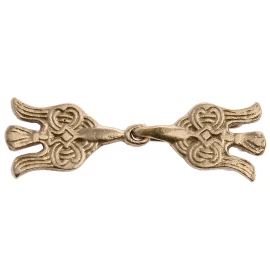
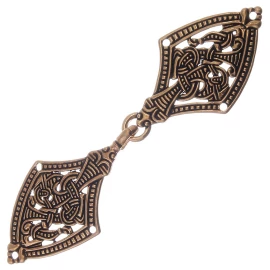
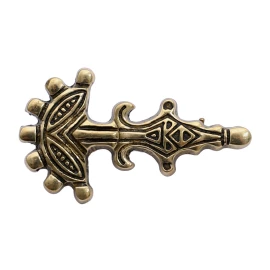
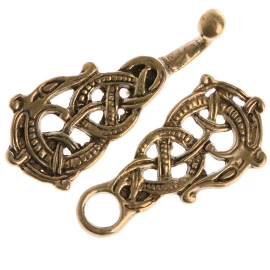
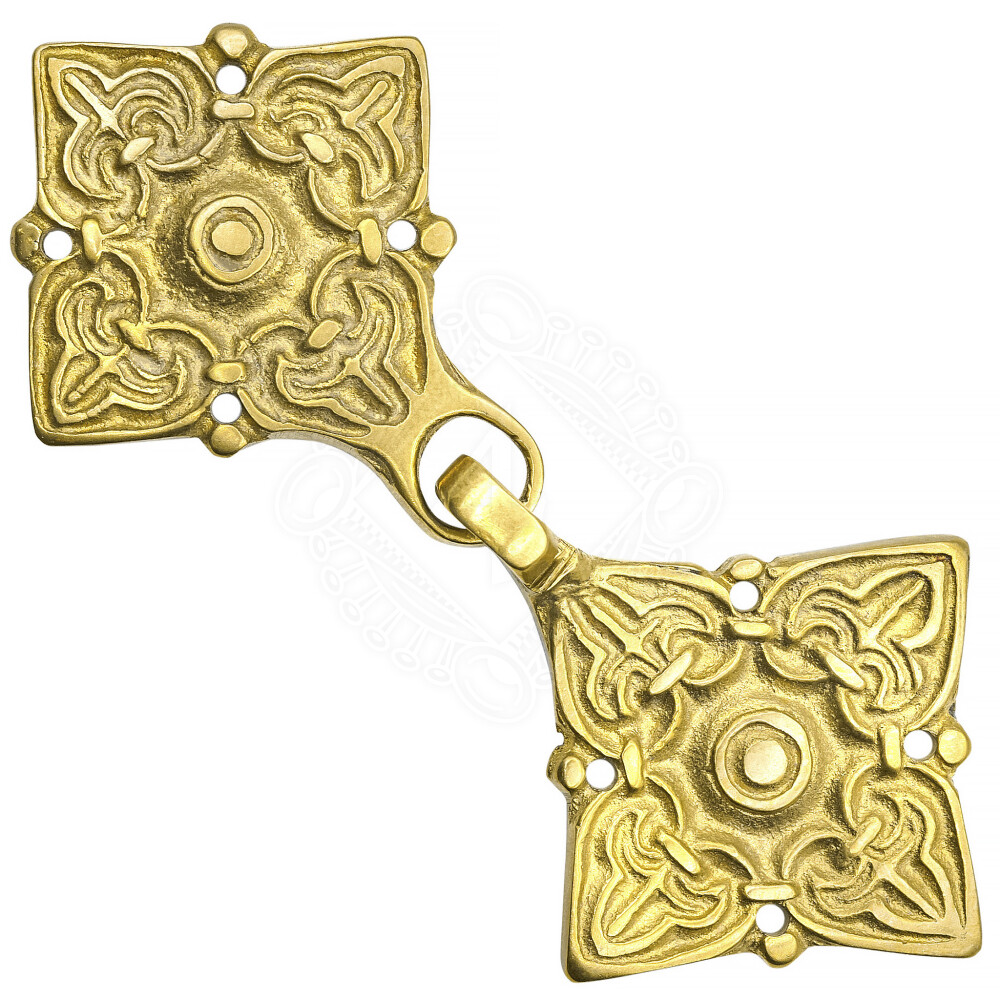
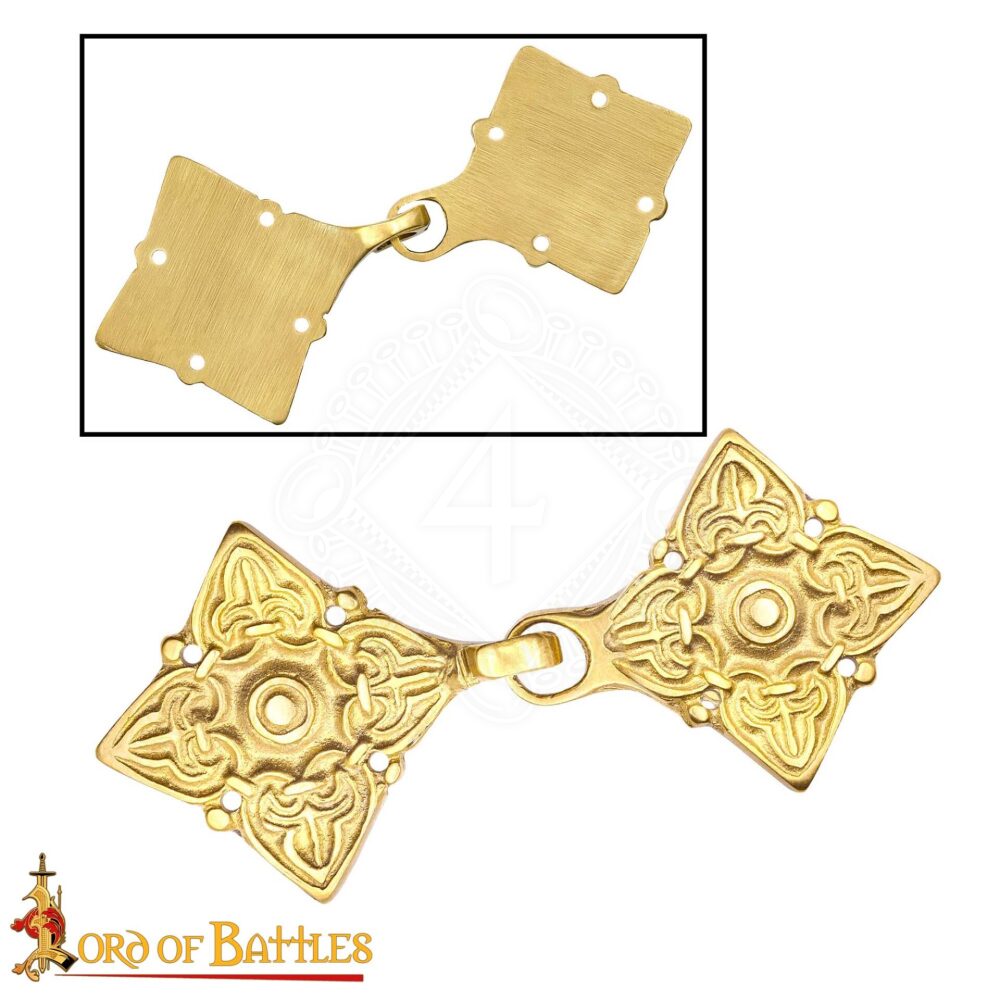
This cloak fastener consists of two separate, symmetrical parts that connect via a simple yet sturdy hook-and-eye system. Each part is shaped like an ornate rhombus (or diamond) and is crafted from solid brass using the traditional sand-casting method. This process ensures that every piece is an original, bearing slight, unique variations.
The front face is decorated with an intricate relief featuring a central circular boss and four stylised points with interlaced knotwork, typical of Viking Age art. The reverse side is flat and equipped with four pre-drilled holes, allowing for easy and secure attachment to your garment.
How to Use Your Clasp Correctly
Attaching the clasp is straightforward. Firmly sew both parts to the edges of your cloak or kaftan using the pre-drilled holes. We recommend a strong linen thread or waxed cord for maximum durability. Once attached, simply hook the two parts together for a secure and stylish closure. After each use, wipe the clasp with a soft, dry cloth to maintain its lustre.
A Clasp as a Badge of Power and Wealth
Historical Context
The original artefact that inspired this clasp was unearthed in one of the richest Viking Age graves, discovered in a burial mound (kurgan) at Gulbische, near modern-day Chernihiv, Ukraine. During the 9th to 11th centuries, this region was a crucial hub on the famous trade route "from the Varangians to the Greeks," which connected Scandinavia with the Byzantine Empire.
Such elaborate two-part clasps were more than just practical accessories; they were powerful symbols of high social status. They are found in the graves of wealthy Varangian and Rus' chieftains, warriors, and merchants. Their complex design and the use of valuable materials like brass or silver clearly distinguished the elite from the common folk.
A Tidbit from History
Unlike the single-pin fibulae common in Western Europe, two-part clasps became a characteristic feature of dress in Northern and Eastern Europe. They were perfectly suited for fastening the heavy, dense cloaks that offered protection against the harsh northern climate.
Caring for Your Historical Treasure
To ensure your clasp retains its beauty for years to come, follow these simple guidelines:
- After use, wipe it with a soft, dry cloth to remove moisture and dirt.
- Store it in a dry place, ideally wrapped in a cloth pouch.
- To restore its original shine, you can gently polish it from time to time with a suitable brass cleaner.
- Alternatively, if you prefer an ancient look, allow the clasp to oxidise naturally to develop an authentic patina.
- You should never use wire wool, abrasive cleaners, or harsh chemicals, as these could permanently scratch its surface.
Product Specifications
| Material | Solid cast brass |
| Origin of Replica | Gulbische (near Chernihiv, Ukraine), 10th Century |
| Period | Viking Age (9th – 11th Century) |
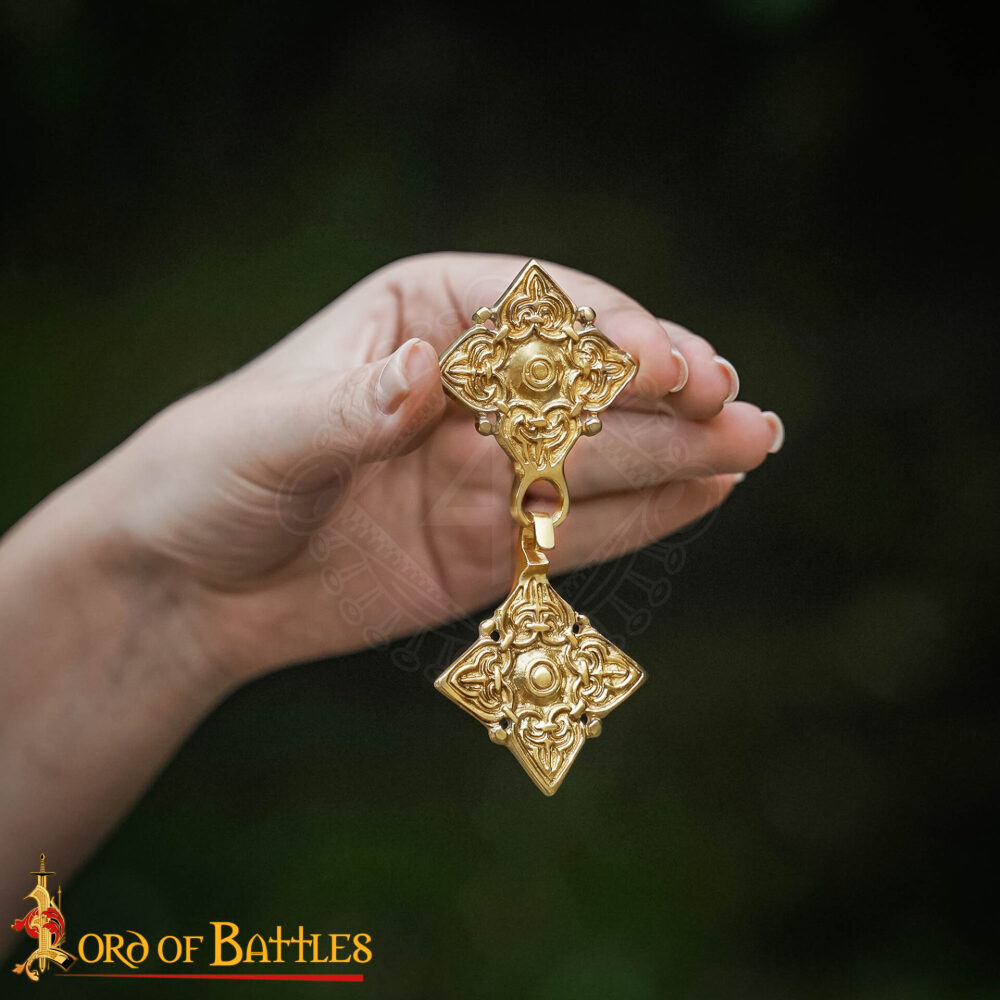
| Dimensions of One Part | Approx. 5.5 cm × 4.5 cm |
| Total Width When Fastened | Approx. 10.5 cm (before sewing) |
We are here for you!