
 Čeština
 Deutsch


Scottish Basket-Hilted Broadsword "Claymore", 1828 Pattern Replica

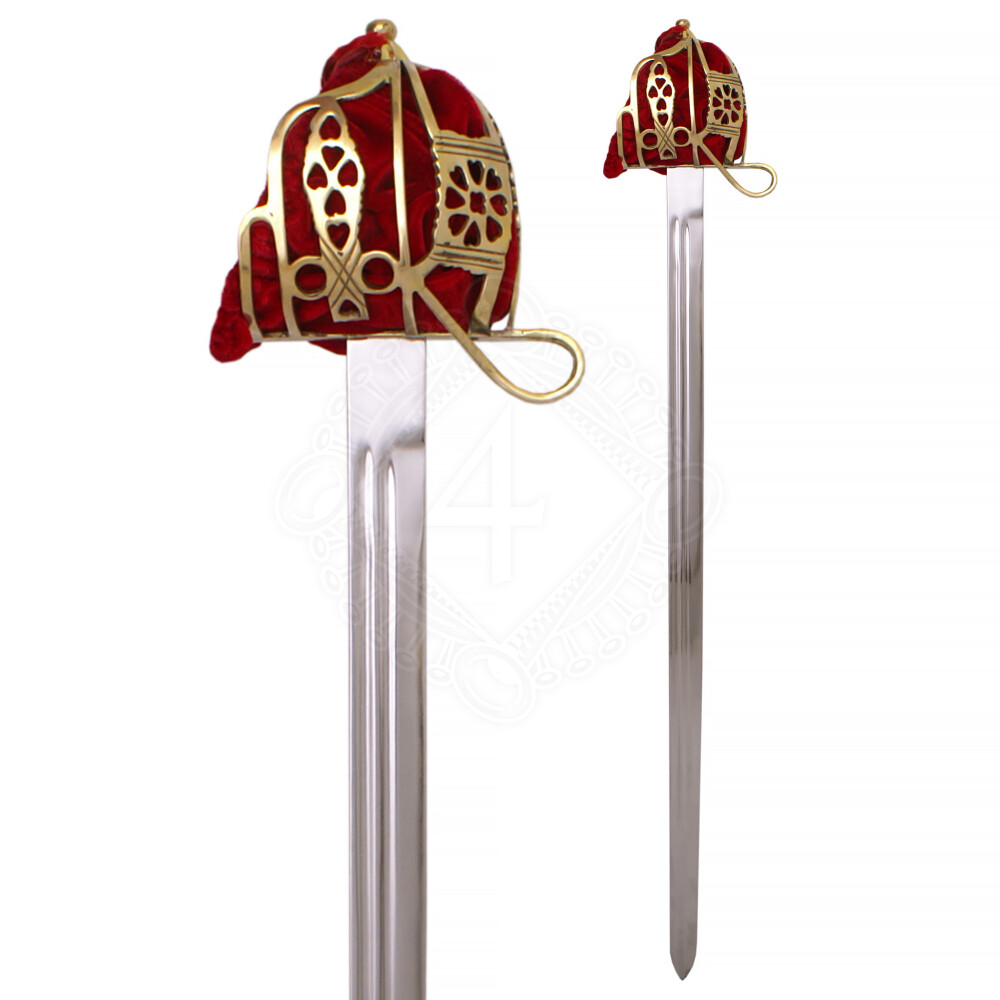
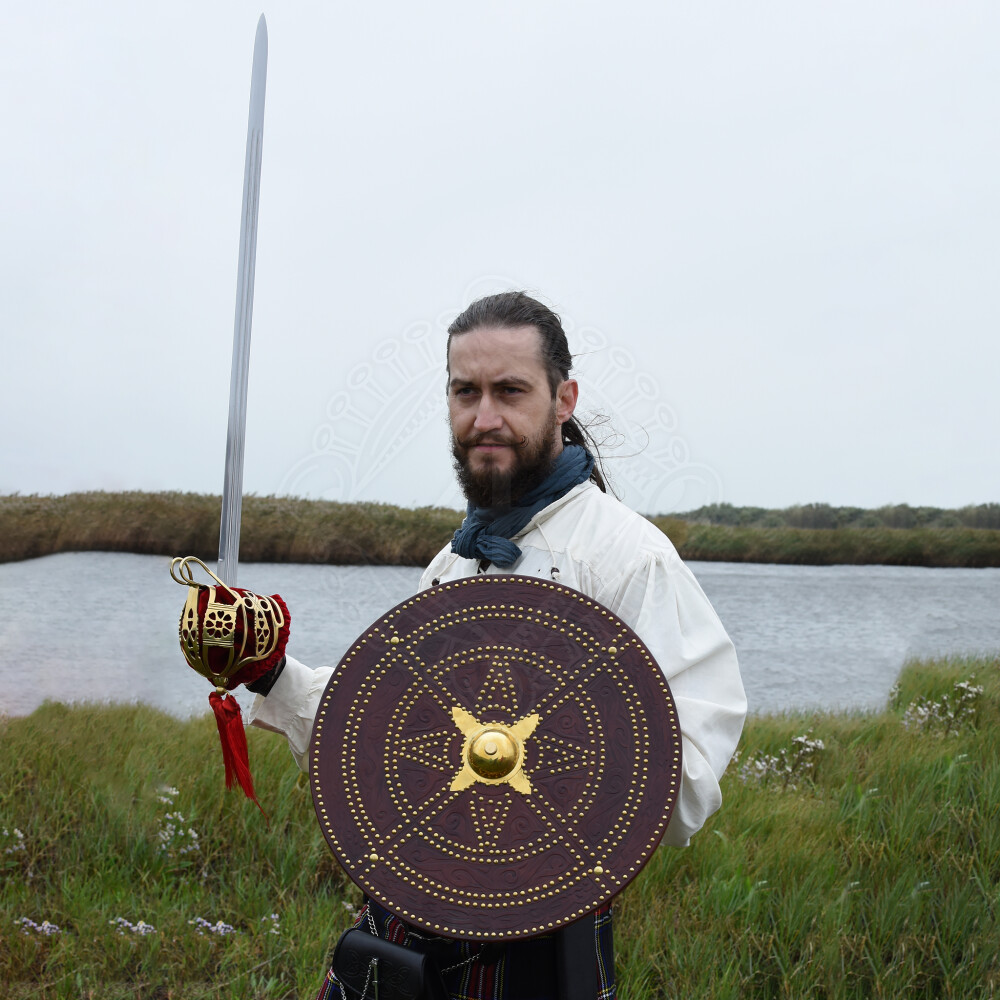

Capture the spirit of the Highland regiments with this superb replica of a Scottish broadsword, modelled on the official 1828 British Army pattern. Instantly recognisable by its ornate protective basket, this type of sword is a true icon of Scottish martial history, often popularly known as a "Claymore". This piece is defined by its striking brass hilt and comes complete with a leather-and-wood scabbard, making it a fantastic choice for historical re-enactment, a defining accessory for a costume, or a distinguished display item for any collector. Further product information ...

 Delivery options
Scottish Basket-Hilted Broadsword "Claymore", 1828 Pattern Replica
Details and Construction
This Scottish sword is crafted to be an impressive and faithful reproduction. The most prominent feature is its full basket-hilt, made from solid, polished brass. The intricate, pierced metalwork is not just for show; it is lined with a rich, red velvet fabric, adding a touch of military grandeur. The grip itself is shaped to provide a firm and reliable hold.
The hand-forged, single-edged blade is made from high-carbon steel. Two fullers run along its length, a feature designed to lighten the blade without compromising its strength. For safety, the blade is unsharpened, with a blunt edge of approximately 1.5 mm, making it suitable for costume use and non-contact drills. The sword is housed in a durable scabbard built on a wooden core and wrapped in black leather. The brass chape and locket on the scabbard are the perfect finishing touch, matching the hilt beautifully.
This sword is the perfect sidearm for a 19th-century British Army re-enactment impression, a key component for a Scottish-themed LARP character, or simply a magnificent piece of history to display with pride alongside a kilt and targe.
Please Note
This is a replica of a historical weapon and is not intended for combat use. The edge thickness is approx. 1.5 mm. This sword falls into the category of Class C according to the sword classification for fencing, a product without warranty!
Claymore: A Tale of Two Swords
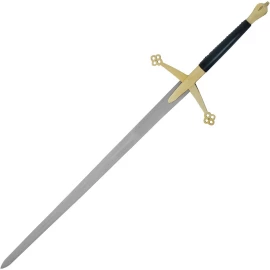
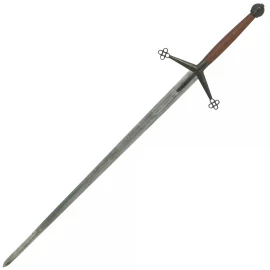
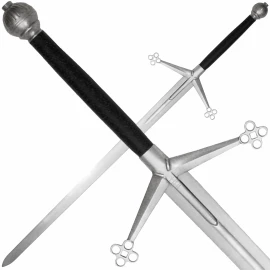
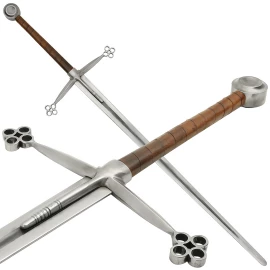
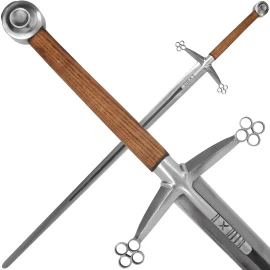
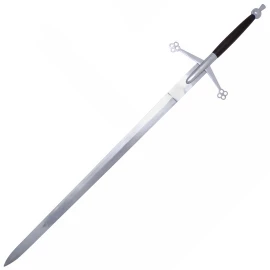
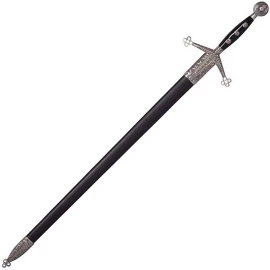
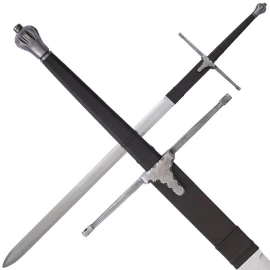
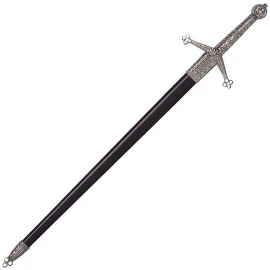
Did you know the name "Claymore" has a dual identity in Scottish history? The term originally comes from the Gaelic "claidheamh-mòr," meaning "great sword," and referred to the enormous two-handed sword used by Highlanders in the 15th-17th centuries. Much later, the name was popularly, though incorrectly, applied to the single-handed basket-hilted broadsword. This 1828 pattern is a direct descendant of that basket-hilted lineage, representing the standardised sidearm for officers in the British Crown's esteemed Scottish regiments.
Care and Maintenance
The carbon steel blade is susceptible to rust and requires proper care. Always ensure the blade is dry. After handling, wipe it with a clean, dry cloth and apply a thin coat of mineral or gun oil (like WD-40) to prevent corrosion. If the brass hilt tarnishes, it can be restored to a bright shine with a suitable brass polish. The leather scabbard should be kept dry and can be occasionally treated with a leather conditioner. Avoid long-term storage of the sword inside its scabbard, as this can trap moisture against the blade.
What to Avoid:
- Do not use the sword for contact sparring, or to strike hard surfaces.
- Do not expose the sword to prolonged damp or humid conditions.
- Do not attempt to sharpen the blade without professional knowledge.
- Never clean any part of this sword in a dishwasher.
Specification Table
| Overall length: | approx. 104 cm |
| Blade length: | approx. 89.5 cm |
| Maximum blade width: | approx. 3.8 cm |
| Edge thickness: | approx. 1.5 mm |
| Blade material: | Carbon Steel |
| Basket material: | Solid brass, velvet |
| Scabbard material: | Wood, leather, brass |
| Weight: | approx. 1.7 kg |
We are here for you!




.3773623034.1696456237.png.webp)

.3773623034.1696456268.png.webp)
.3773623034.1696456247.png.webp)