
 Čeština
 Deutsch


Knights Who Became Legends The Templars: Then and Now
 Interesting facts of the past
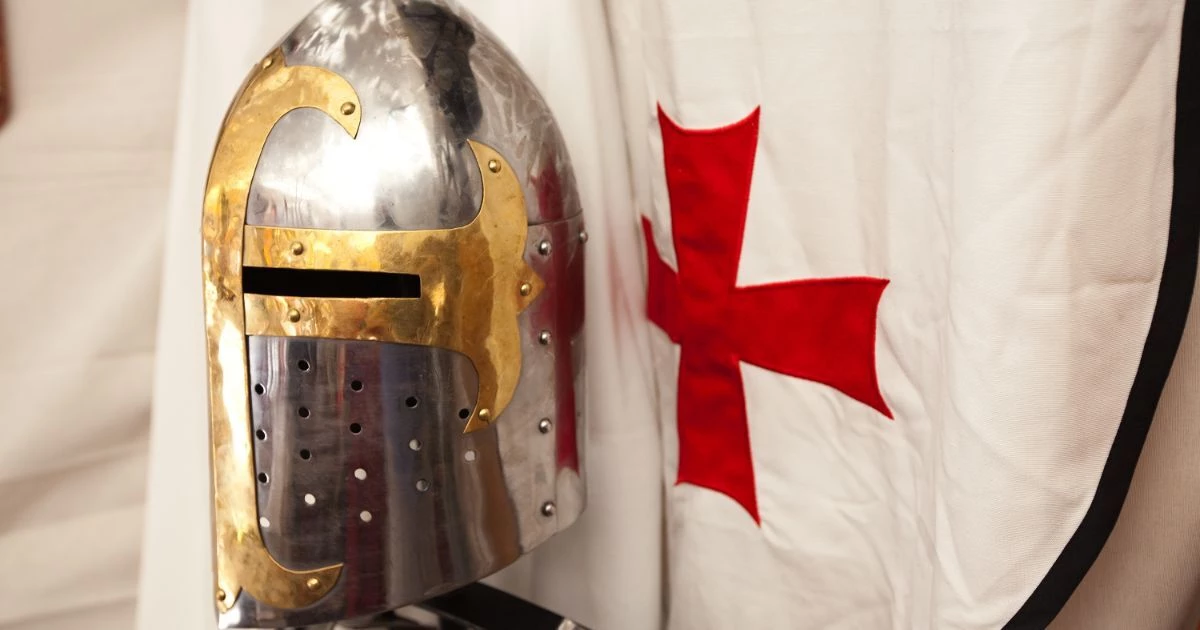
Born in the turbulent years after the First Crusade, the Order of the Knights Templar grew into one of the most powerful and wealthiest organizations of the Middle Ages. Their story became the stuff of legends – a blend of history, mystery, and myth that has captured imaginations for centuries. But what was life like for a real Templar knight?
Contents
The Knights Templar: A Legacy That Still Lives On Today
If you want to learn more about knights Templar, read our a separate article dedicated to the Order. Here’s a quick look back at the key milestones of their story – a tale still wrapped in secrecy and myths:
- Mysterious Beginnings: The Order was founded around 1119 in Jerusalem by nine knights, but we know surprisingly little about them.
- Original Purpose: At first, the Templars’ mission was to protect Christian pilgrims traveling through the Holy Land. But over time, they evolved into a powerful force that struck fear into enemy armies and European rulers alike.
- On the Rise: In 1139, Pope Innocent II issued a decree granting the Templars special privileges. They were exempt from paying tithes and could keep the spoils of war taken from their enemies.
- Expanding Influence: By the 12th and 13th centuries, the Order’s power stretched across Europe. They built strongholds in England, Portugal, and France (and reached the Czech lands around the year 1230).
- A Brutal Downfall: The Templars’ immense accumulated wealth made them a target. France’s King Philip IV “the Fair” owed them a fortune, and instead of looking for ways to repay his debts, he decided to destroy the order. Under his pressure, Pope Clement V dissolved the Order in 1312, marking the end of the Templars… or was it?
Life of the Templars – Daily Routine and Strict Rules
In their time, the Knights Templar were considered one of the most powerful organizations in Europe. They owed that reputation not only to their military might and wealth but also to the strict discipline and rules that governed every aspect of their lives.
- The Templars followed a set of regulations known as The Rule, believed by some historians to have been written by Bernard of Clairvaux (c. 1090–1153). These rules required members to take vows of poverty, chastity, and obedience, binding them to a life of service and devotion.
- A Templar’s daily life combined military duty with religious observance. Their days were structured around prayer, communal meals, maintaining their weapons and armour, and practical work.
- Interestingly, the Order placed strong emphasis on healthy eating habits – a surprising fact for medieval times. Templars were encouraged to eat meat in moderation (except for fish). Three times a week, they ate vegetables and washed down their meals with bitter orange juice instead of wine. Modern Italian researchers have found that this diet might have been the reason Templars lived longer than most of their contemporaries.
The Order’s Structure and Hierarchy
As the Templars’ influence spread far beyond the Holy Land, their organization grew increasingly complex and structured.
At the top stood the Grand Master, the supreme head of the Order. Below him, the members were divided into three main groups:
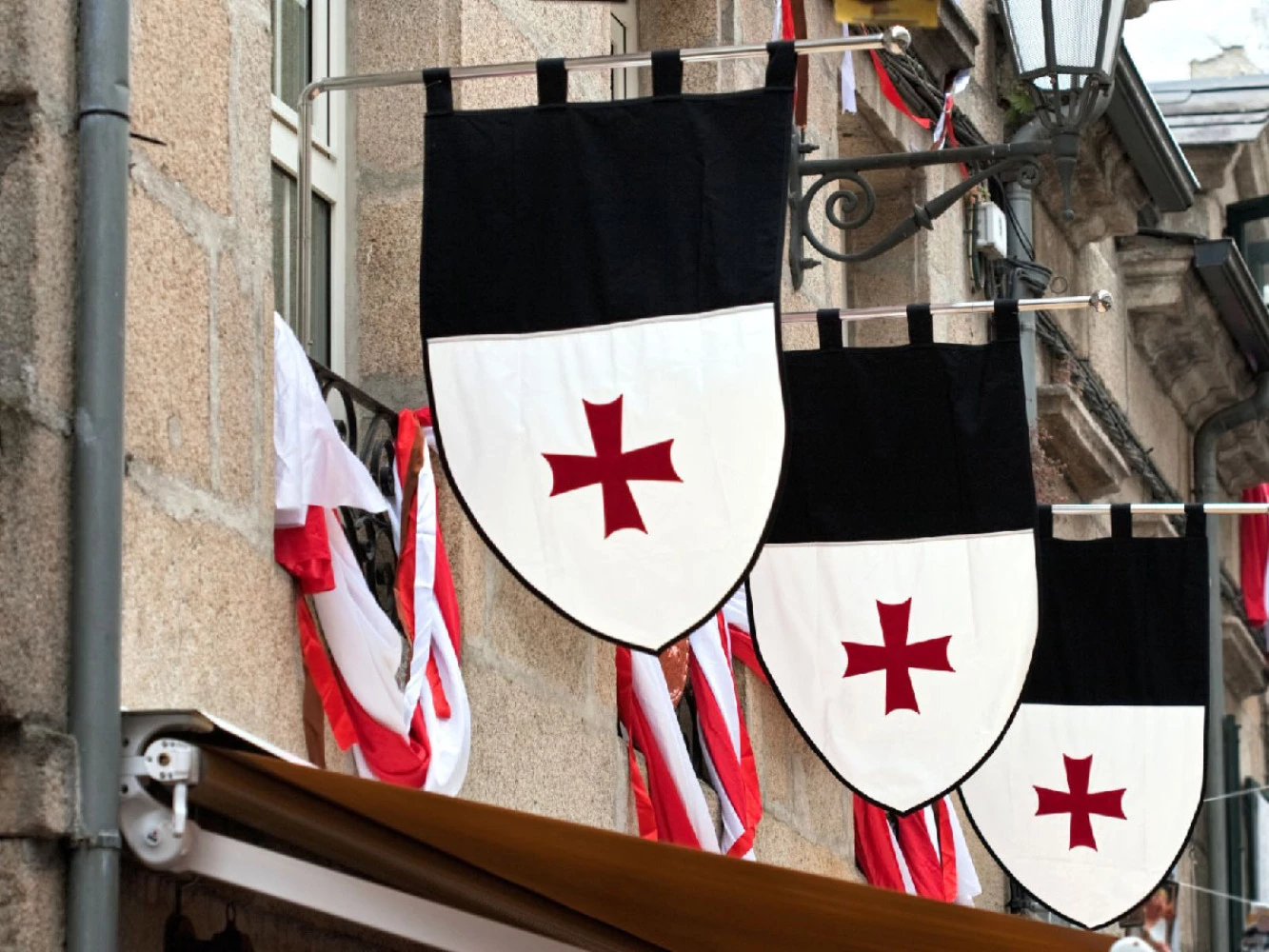
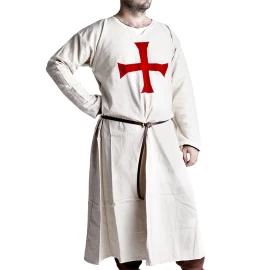
- Knight Brothers – usually of noble birth. They wore the iconic white mantle with the red cross, a symbol still recognized today.
- Sergeant Brothers – recruited from lower social classes. They worked as craftsmen, soldiers, or Templar weapon
- Chaplain Brothers – ordained priests who handled the Order’s spiritual duties.
Territorially, the Order was divided into provinces, each overseen by a Grand Preceptor – about twenty existed across Europe.
Each province was further divided into commanderies, run by a commander (commander or preceptor). A typical commandery included both a monastic section (with a church, refectory, and chapter hall) and a military section (fortifications and barracks).
There was often a hospital on-site as well as farms, vineyards, and workshops. This vast and carefully organized economic network allowed the Templars to fund their costly crusades and maintain influence across continents.
Myths and Facts About the Templars
The Knights Templar, with their blend of piety, secrecy, and power, have fascinated generations of people, from chroniclers of the Middle Ages to modern fans of medieval history.
What legends and conspiracy theories have they inspired?
1. The Templars and the Shroud of Turin
In 2009, historian Barbara Frale proposed a fascinating theory: based on her research of medieval documents, she suggested that the Templars may have venerated the Shroud of Turin – not some mysterious idol, as their accusers once claimed.
DID YOU KNOW… Frale also made another sensational discovery. While researching in the Vatican archives, she uncovered the so-called Chinon Parchment, which includes a papal absolution clearing the Templars of heresy.
2. The Templars and Baphomet
The first mention of Baphomet appears in 14th-century sources. It was said to be a demonic figure worshipped during secret Templar rituals.
Where the name came from, or what it truly meant, remains a mystery. Nonetheless, the accusation of Baphomet worship became a convenient pretext for disbanding the Order.
3. The Templars and the Holy Grail
Another enduring legend claims the Templars were the guardians of the Holy Grail, allegedly found among the ruins of Solomon’s Temple. While there’s no historical evidence for this, there is one intriguing connection.
According to surviving records, on Maundy Thursday, the Templars practiced a ritual known as the Cult of the Passion of Christ. During the ceremony, they took communion with wine, and drank it from a chalice reminiscent of the Grail itself.
The Templars Across Europe
The Knights Templar built an extensive network of fortresses, estates, and commanderies throughout medieval Europe. Their castles, strongholds and churches remain scattered across the continent – silent witnesses to a legacy that still captures Europe’s imagination:
- In France, their Paris Temple served as a financial and administrative hub.
- In Portugal, the Tomar Castle became the centre of their Iberian power and later the seat of the Order of Christ.
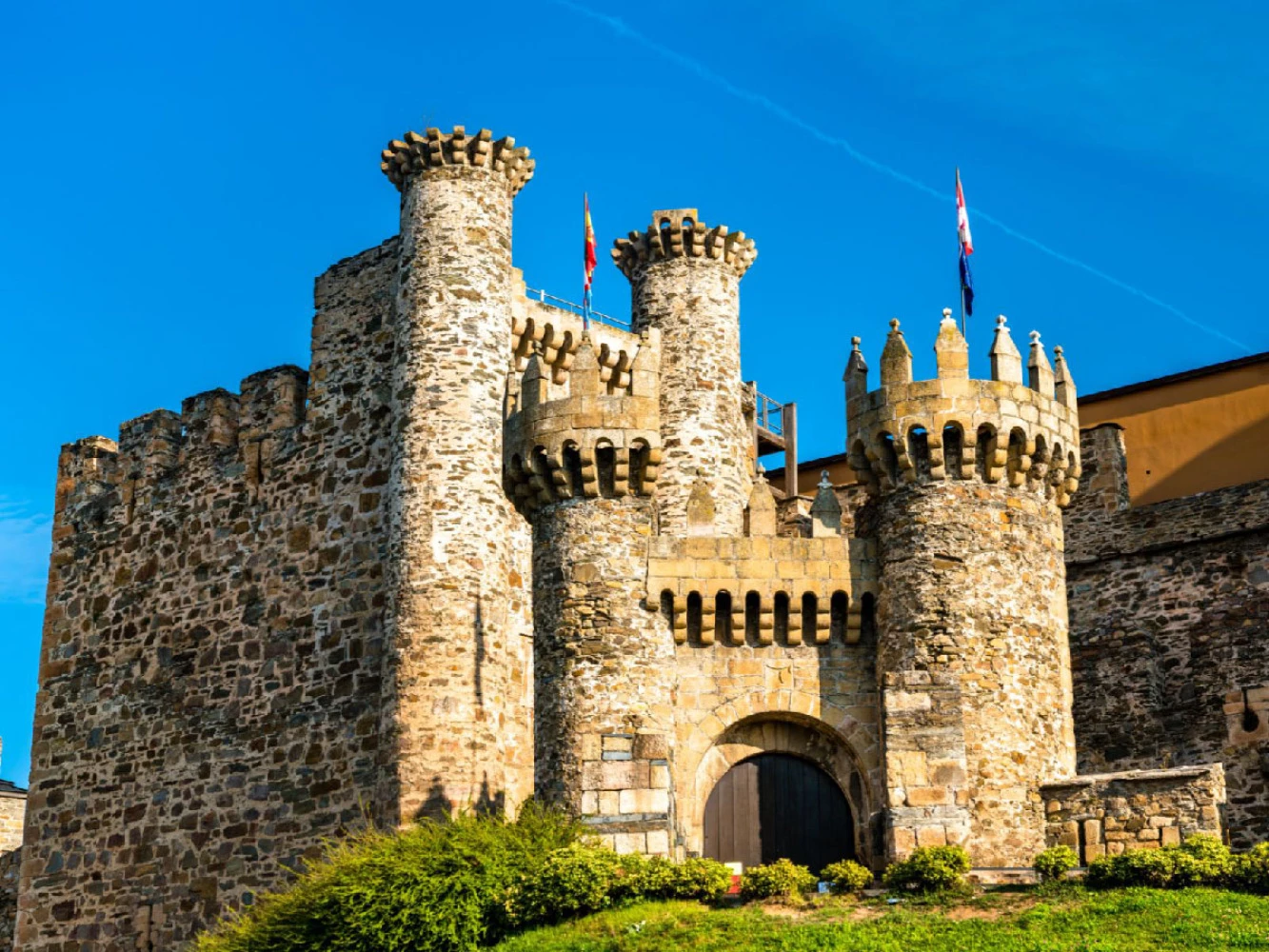
- In Spain, they defended frontier castles such as Ponferrada during the Reconquista. Across Europe, their commanderies managed land and trade to fund the Crusades.
Knights Templar in Modern Culture
The mysterious story of the Knights Templar still captivates people today. They appear everywhere, in books, films, and even video games.
- Knights Templar in literature: Author Dan Brown brought the Templars back into the spotlight with novels like The Da Vinci Code and The Lost Symbol.
- Knights Templar in films: Countless documentaries and historical dramas try to unravel the secrets of the Order, especially the legend of the lost Templar treasure.
- Knights Templar in video games: The Templars take centre stage in the Assassin’s Creed series, portrayed as a secret organization striving to control humanity.
- Knights Templar in modern society: Several modern organizations draw inspiration from Templar ideals. One example is the Temple Society, a Christian fellowship founded in Germany in 1861.
DID YOU KNOW… In September 2025, Dan Brown released a brand-new novel, this time set in Prague. Titled “The Secret of Secrets”, the 600-page thriller became an instant bestseller and is already being hailed as one of the biggest books of the year.
Want to Dress Like a Knight Templar?
If you’re heading to a costume party or a medieval re-enactment, we’ve got everything you need to look the part.
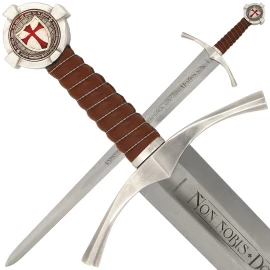
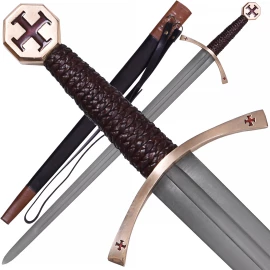
Explore our range of Templar costumes, swords, and Templar armour in our store. With our gear, you’ll make the enemy both impressed and terrified.
 Share
Share
 Share
Share
 Tweet
Tweet
Comments