
Takeda Shingen Samurai Armour with Kabuto and Menpo
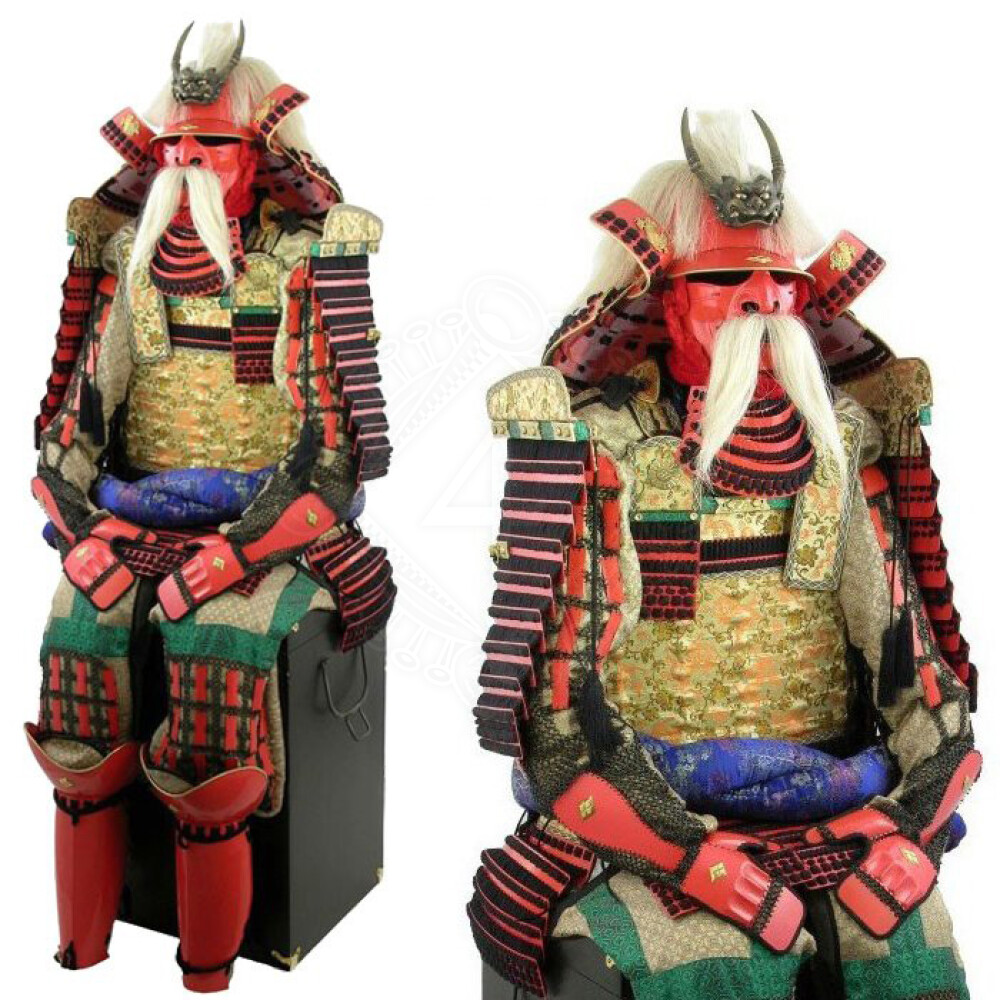
Transform a study, dojo or private collection into an impressive exhibition of Japanese military art. This complete samurai armour inspired by Takeda Shingen combines red-lacquered plates, black and red lacing, gold-coloured brocade and a dramatic kabuto crowned by a pale mane and horned demon crest. The suit may be worn carefully by a person of average height and build, although it is at its finest as a collector’s display. A decorated armour chest and wooden support frame are included, allowing you to assemble a stable and visually imposing presentation stand. Further product information ...
Would you like to be notified as soon as the item is in stock?
You will receive a short e-mail as soon as we have it back in stock.
Takeda Shingen Samurai Armour with Kabuto and Menpo
Armour Inspired by a Celebrated Sengoku Daimyo
Takeda Shingen, originally named Takeda Harunobu, lived from 1521 to 1573. As daimyo of Kai Province, he became one of the leading commanders of Japan’s Sengoku period, the “age of warring states”. He was renowned for military organisation, effective government and ambitious campaigns. His long rivalry with Uesugi Kenshin culminated in the celebrated encounters at Kawanakajima, which became some of the best-known episodes in Japanese military history.
Shingen is traditionally associated with the motto Furinkazan, adapted from The Art of War: swift as the wind, silent as the forest, fierce as fire and immovable as a mountain. The suit therefore evokes not only Japanese armour-making but also one of the most distinctive personalities of the samurai age.
This ensemble is an elaborately produced collector’s reproduction based on the traditional iconography of Takeda Shingen. It combines characteristics of 16th-century Japanese armour with the commanding appearance in which the warlord has been represented in later art, theatre and popular culture.
Dramatic Kabuto with a Horned Demon Crest
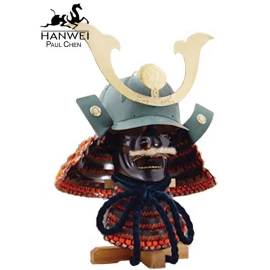
The centrepiece is a red-lacquered kabuto helmet. Its broad peak and outward-turning fukigaeshi are outlined in gold-coloured edging and decorated with black lacing. A long pale mane surrounds the rear of the helmet, broadening its silhouette and cascading over the shoulders.
A dark-patinated maedate rises from the crown in the form of a fearsome demon face with two long, curving horns. Distinctive helmet crests helped identify important commanders, expressed personal identity and could make the wearer appear more intimidating on the battlefield.
Menpo Mask with Moustache and Throat Guard
The face is covered by a red menpo mask with a strongly modelled nose, open mouth and long pale moustache. Gold-coloured teeth and a stern expression reinforce its martial appearance. Below the mask hangs a lamellar yodare-kake throat defence, its red plates connected by dense rows of black cord.
Historical face armour covered vulnerable areas, assisted with securing the kabuto and created an individual, recognisable appearance. On this reproduction, the menpo is primarily a decorative and costume component rather than modern protective equipment.
Plate Armour with Brocade and Odoshi Lacing
The torso is covered by a do cuirass combined with decorative fabric bearing an ornate gold-coloured botanical pattern. The strong mixture of gold, red, black, green and blue conveys the ceremonial splendour associated with the armour of a high-ranking samurai commander.
Large lamellar sode protect the shoulders. The arms are covered by kote incorporating textile, mail and plate components, ending in defences over the backs of the hands. Kusazuri hang beneath the cuirass, haidate cover the thighs and tall suneate protect the shins. Black and red odoshi lacing connects and decorates the separate elements.
The brocade, cords and coloured textiles were not merely ornamental features of Japanese armour. Lacing allowed a limited degree of movement between the lames whilst creating the characteristic pattern of horizontal lines. Colours and emblems could communicate allegiance, rank or the personal taste of the owner.
How to Assemble the Armour Display
Because of the weight and number of movable components, we recommend assembling the display with two adults. Begin by placing the decorated armour chest on a firm, level and stable floor. Fit the wooden support frame into its intended mounting points and make certain that the structure cannot rock or tip.
Place the do cuirass on the frame first. Arrange the kusazuri, haidate and remaining lower components so that they hang freely without sharp folds. Attach the kote and sode, straighten the lacing and carefully arrange the brocade sections. Install the kabuto and menpo last.
Lower the kabuto onto the upper support using both hands. Its weight must never rest on the horns, demon crest, fukigaeshi or hair decoration. Suspend the menpo so that it cannot scratch the helmet’s lacquer and allow the throat lames to hang naturally in front of the torso. Arrange the pale mane with your fingers or a very soft brush, always working in the direction of the fibres.
How to Wear the Samurai Armour
The suit is wearable by a person of approximately average height and build, but it does not have a universal fit. Before any presentation, we recommend a calm trial fitting to check strap length, mobility and the comfort of every component.
Wear a sturdy historical garment or a lightly padded foundation layer beneath the armour. This prevents metal, cords and edges from rubbing directly against the skin and helps protect the brocade from perspiration. Begin with the suneate and haidate, followed by the do, kote and sode. Put on the kabuto and menpo last.
Tighten cords and straps evenly, but never so firmly that they restrict circulation, breathing or joint movement. Owing to the overall weight, a second person should assist throughout the dressing process. Before walking, confirm that no part is loose, trapped beneath a neighbouring lame or obstructing your field of vision.
Technical Specifications
| Feature | Specification |
|---|---|
| Product type | Complete decorative and wearable samurai armour |
| Historical inspiration | Takeda Shingen, daimyo of Kai Province |
| Historical period | Sengoku period, 16th century |
| Style | Representational armour of a high-ranking samurai commander |
| Manufacturer | Hanwei |
| Primary colours | Red, black and gold-coloured |
| Additional colours | Green, blue and pale cream |
| Construction | Lacquered metal components, lames, textiles, brocade, lacing and decorative hair elements |
| Helmet | Kabuto with fukigaeshi, pale mane and horned demon maedate |
| Face defence | Menpo with moustache and lamellar yodare-kake |
| Torso defence | Do cuirass with decorative brocade and kusazuri |
| Shoulder defence | Lamellar sode |
| Arm defence | Kote with plate and mail components |
| Thigh defence | Haidate |
| Shin defence | Suneate |
| Lacing | Black and red textile odoshi |
| Size | Intended for a person of average height and build |
| Wearability | Wearable for short-term presentation, costume, film and theatre |
| Weight | Approx. 29.5 kg / 65 lb |
| Armour chest | Included, decorated with traditional-style Japanese painting |
| Display structure | Wooden support frame included |
| Recommended use | Collection, exhibition, decoration, museum-style display, dojo, film, theatre and cosplay |
| Protective function | Not certified personal protective equipment |
As the ensemble is assembled and finished by hand, individual examples may vary slightly in lacing position, textile shade, hair texture and minor finishing marks. Such differences are natural characteristics of decoratively produced armour.
Care of the Samurai Armour
- Wash and dry your hands thoroughly before handling the armour. Perspiration, skin oils and cosmetics may affect the lacquer, metal ornaments and brocade.
- Remove dust from lacquered surfaces regularly with a soft dry cloth or fine brush.
- Do not use abrasive polish, wire wool, alcohol or aggressive cleaning agents on the red lacquer, gold-coloured details or coloured lacing.
- Do not wet-clean the brocade or other textiles and do not vacuum them at high power. Use a particularly soft brush.
- Arrange the mane and moustache only with a soft brush, working in the direction of the fibres. Never pull forcefully at tangled sections.
- Protect the armour from prolonged direct sunlight, which may fade lacquer, cords and textiles.
- Keep it in a dry environment with a stable temperature. Avoid damp cellars, unheated stores and positions close to radiators.
- Place only completely dry components inside the armour chest. Separate lacquered parts with soft, acid-free fabric.
- When exposed steel becomes visible, treat only that area with a minimal quantity of protective oil. Keep oil away from lacquer, lacing and brocade.
- Inspect knots, straps, lame connections and the stability of the display frame periodically.
Safety Information
- The armour is not suitable for buhurt, Battle of the Nations, HEMA, kendo or any other contact or full-contact combat.
- Do not rely on it for protection against blows, edged weapons, projectiles, falls or road accidents.
- The complete ensemble weighs approximately 29.5 kg / 65 lb. Use the assistance of a second adult when dressing, carrying or assembling it.
- Walk slowly and only on level ground whilst wearing the armour. It restricts vision, hearing, movement and balance.
- Do not run, fence or fight whilst wearing the kabuto and menpo. Avoid stairs without assistance and keep away from crowds.
- The long horns may injure nearby people or catch on doors, curtains and lighting.
- Never lift the armour by its cords, lames, sode, horns, mane or helmet edges.
- Secure the display against tipping and keep it beyond the reach of small children and pets.
- Remove the armour immediately with assistance if you experience pain, shortness of breath, dizziness, numbness or overheating.
Recommended Accessories
- A 16th-century-style hitatare or samurai kimono as a suitable foundation garment and protection for the armour’s interior.
- A lightly padded 16th-century-style armour cap for a steadier kabuto fit and reduced pressure points.
- A Muromachi- or Sengoku-period katana, tachi or wakizashi replica to complement the display.
- A 16th-century nobori banner or personal sashimono for creating an impressive commander’s presentation.
- A 16th-century jinbaori surcoat for a ceremonial and authoritative appearance.
- A closed display cabinet or protective barrier to reduce dust and prevent unwanted handling.
We are here for you!