
 Čeština
 Deutsch


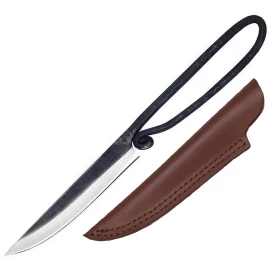
Hand-Forged Knife
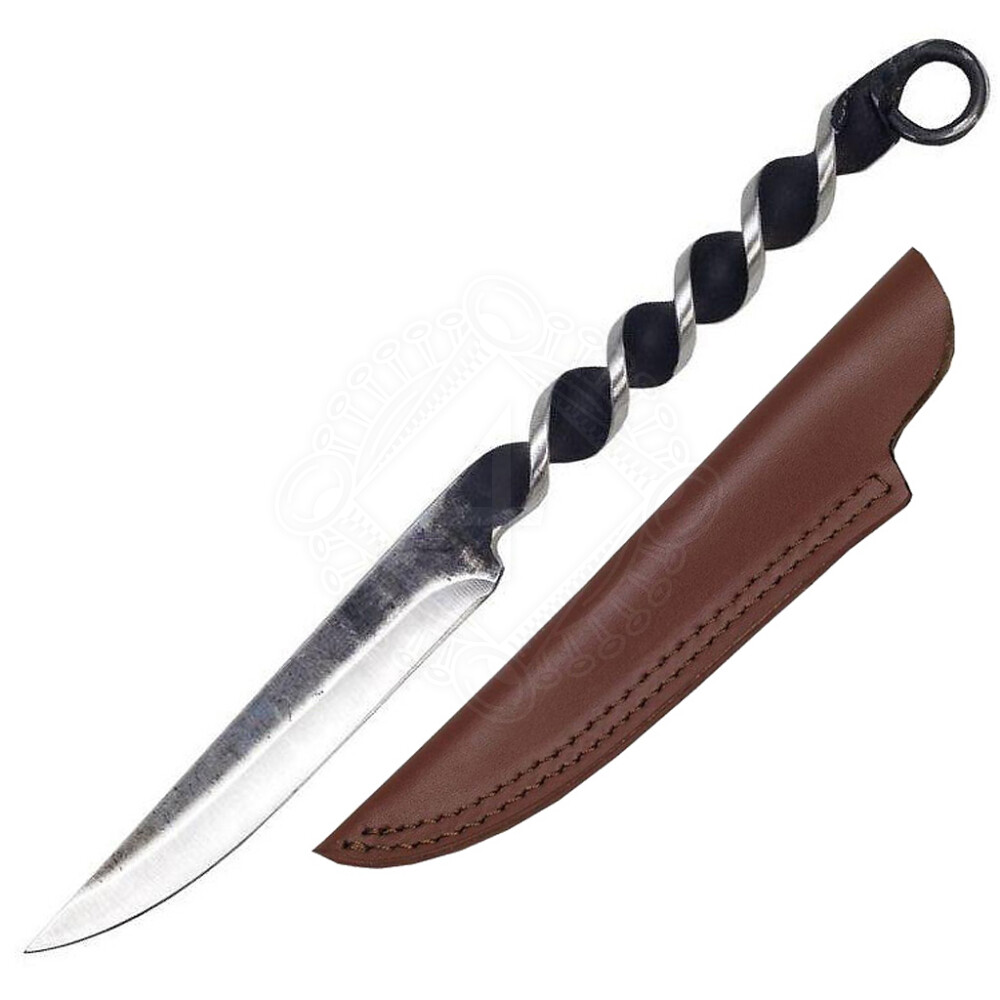
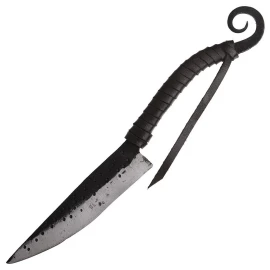
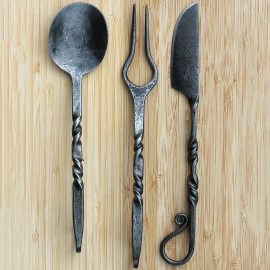
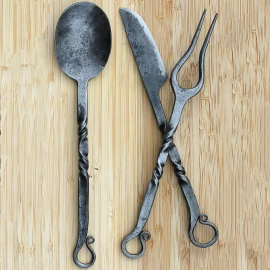
Are you looking for a faithful companion to accompany you by the campfire, at a historical fair, or for carving a piece of roast meat in an authentic period camp? This hand-forged knife is the embodiment of raw beauty and honest craftsmanship. Its blade bears authentic forging marks that give it an unmistakable character, while the elegantly twisted handle ending in a ring ensures a secure grip and a historically accurate look. It is not just a tool, but a piece of steel with a soul that will fit perfectly into your historical kit, whether you are a re-enactor, LARPer, or bushcraft enthusiast. Further product information ...

Would you like to be notified as soon as the item is in stock?
You will receive a short e-mail as soon as we have it back in stock.
Celtic Breath: Hand-Forged Knife with Twisted Handle and Leather Sheath
Practical Use and Maintenance
This knife is designed as a universal dining and utility tool. Thanks to its single-piece steel construction, it is extremely durable. How to use it correctly and what to avoid?
- Versatile Helper: The knife is ideal for period dining, food preparation in field conditions, or small craft tasks with wood and leather.
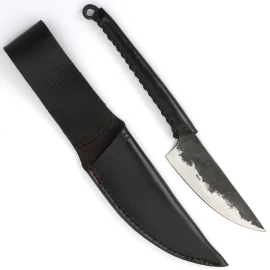
- Safe Carrying: The product comes with a leather sheath made of brown cowhide, which protects both the blade and your clothing when worn on a belt.
- Material: It is made of high-carbon steel, which holds an edge brilliantly but requires your attention to prevent oxidation (rusting).
Technical Specifications
| Parameter | Value |
|---|---|
| Blade Material | Carbon steel (hand-forged) |
| Blade Length | 110mm / approx. 4.3" |
| Total Length | 235mm / approx. 9.3" |
| Sheath Material | Genuine leather |
| Handle Finish | Twisted steel with smith's ring |
Historical Insight: Beauty Born of Fire
The twisted handle, also known as torsion, was not merely an aesthetic element in the Middle Ages and early modern period. This technique increased the torsional rigidity of the material while providing better ergonomics – the knife wouldn't slip even in a greasy hand during a feast. Knives with a ring at the end of the handle are typical for the period from the Early Middle Ages to the Renaissance, when commoners and soldiers often hung them on a cord or leather strap. The forging marks you see on the knife are proof that the product did not come from sterile mass production but was shaped under the heat of the forge and the strikes of a hammer, exactly as master blacksmiths have done for centuries.
Caring for High-Carbon Steel
Because the product is made of authentic carbon steel (not stainless steel), it requires specific care. After each use, especially after contact with acidic foods (fruit, onions), wash the knife carefully with water, dry immediately, and apply a thin layer of vegetable or mineral oil (Ballistol is ideal). Never leave the knife wet or put it in the dishwasher, as rust will develop. The patina that the steel acquires over time is not a defect but proof of the material's authenticity.
We are here for you!


.2152382459.1713555008.jpg.webp)



.3773623034.1696456237.png.webp)

.3773623034.1696456268.png.webp)
.3773623034.1696456247.png.webp)