
Hand-Forged Viking Utility Knife with Leather Grip

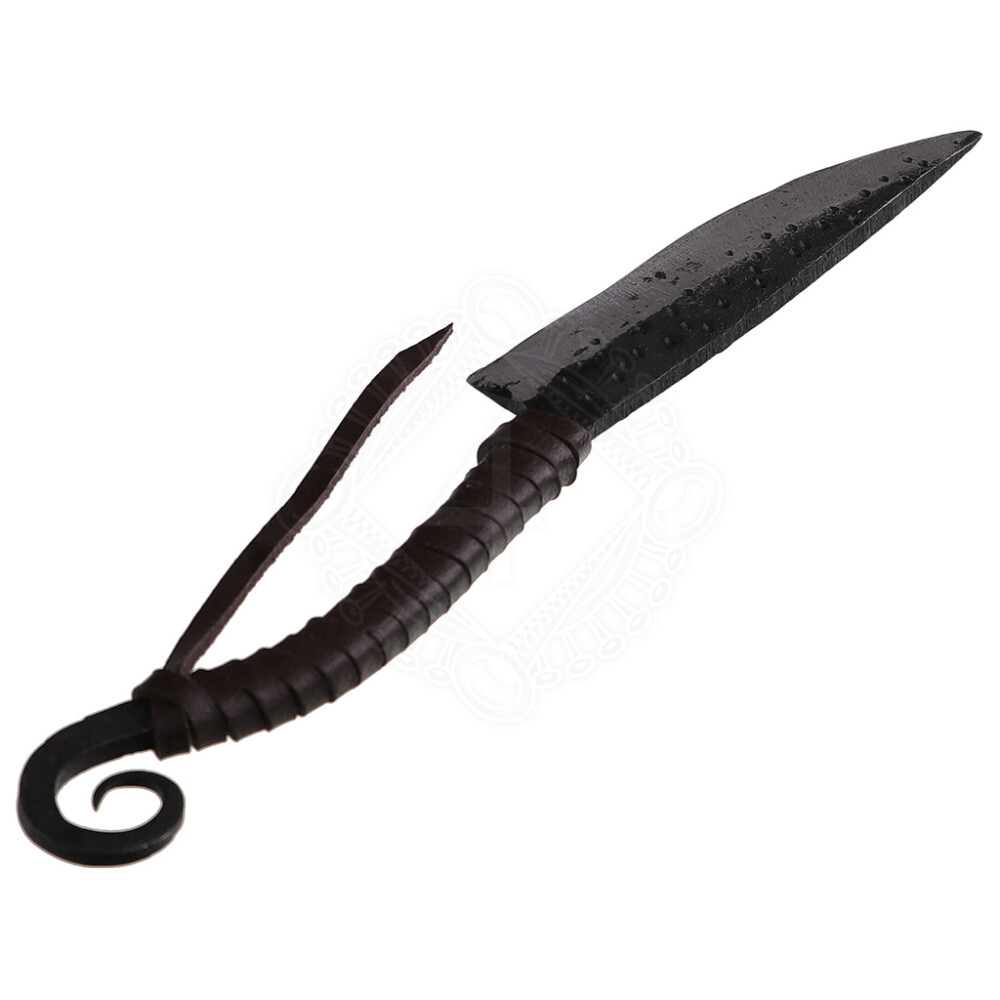
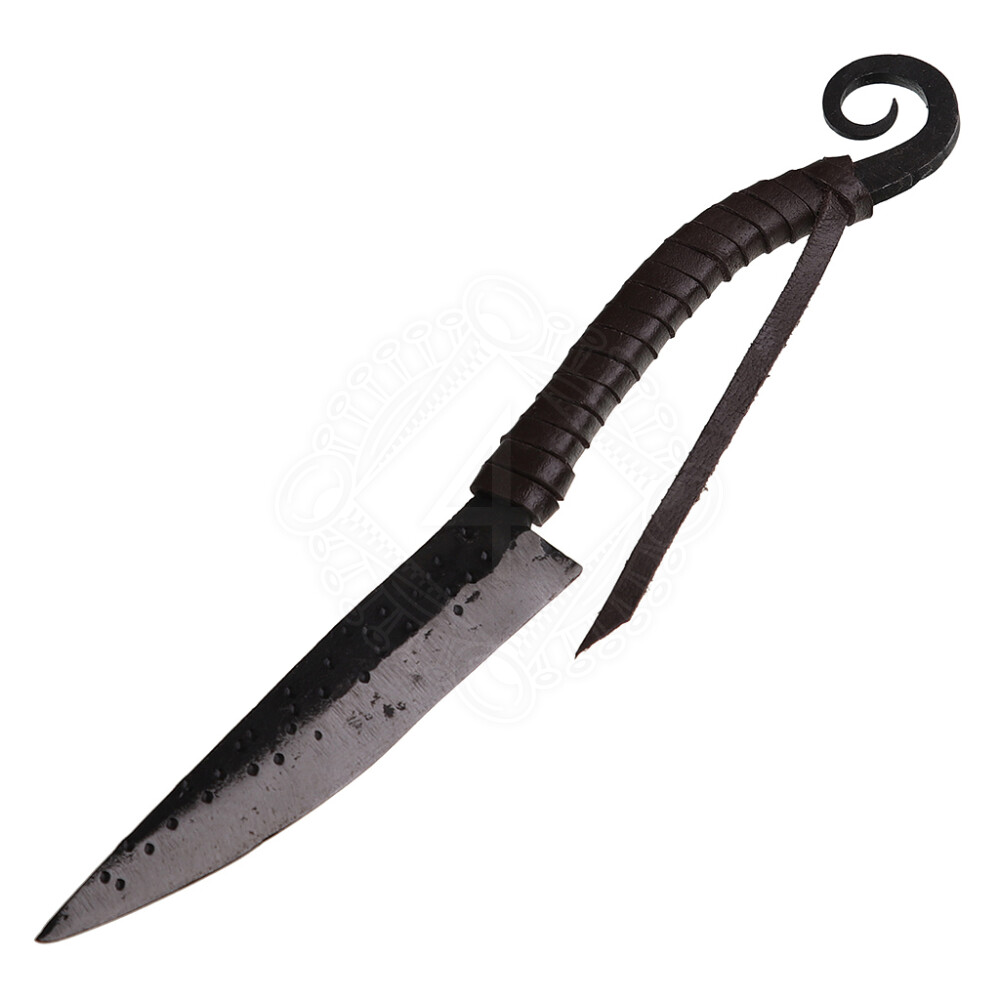
Warrior, this hand-forged Viking knife combines a functional cutting edge with the unmistakable character of traditional smithwork. Its dark forged surface contrasts with a bright polished bevel, while punched decoration and a long curved handle give every piece a rugged appearance. Genuine brown leather provides a more secure and comfortable grip. The handle ends in a striking open iron scroll, making the knife an eye-catching addition to a camp table or collection. We recommend it for historical feasts, light camp tasks, LARP kit, themed dining, theatre, film and display. Further product information ...

Available immediately 13 pcs
Item physically stored in our Warehouse in Kadan
, dispatch on: Tomorrow 14-Sep-2026
Delivery options
15,00 €
12,40 € excl. VAT

Hand-Forged Viking Utility Knife with Leather Grip

Appearance and Construction

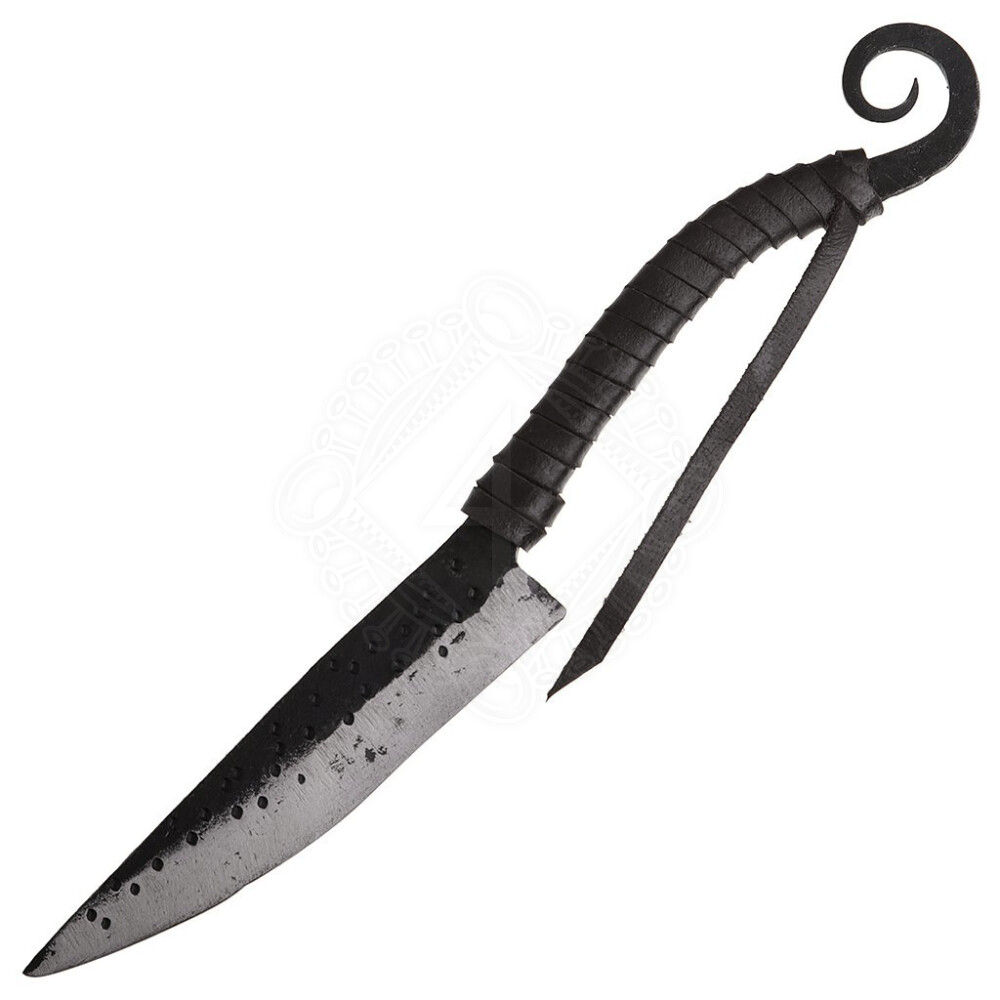
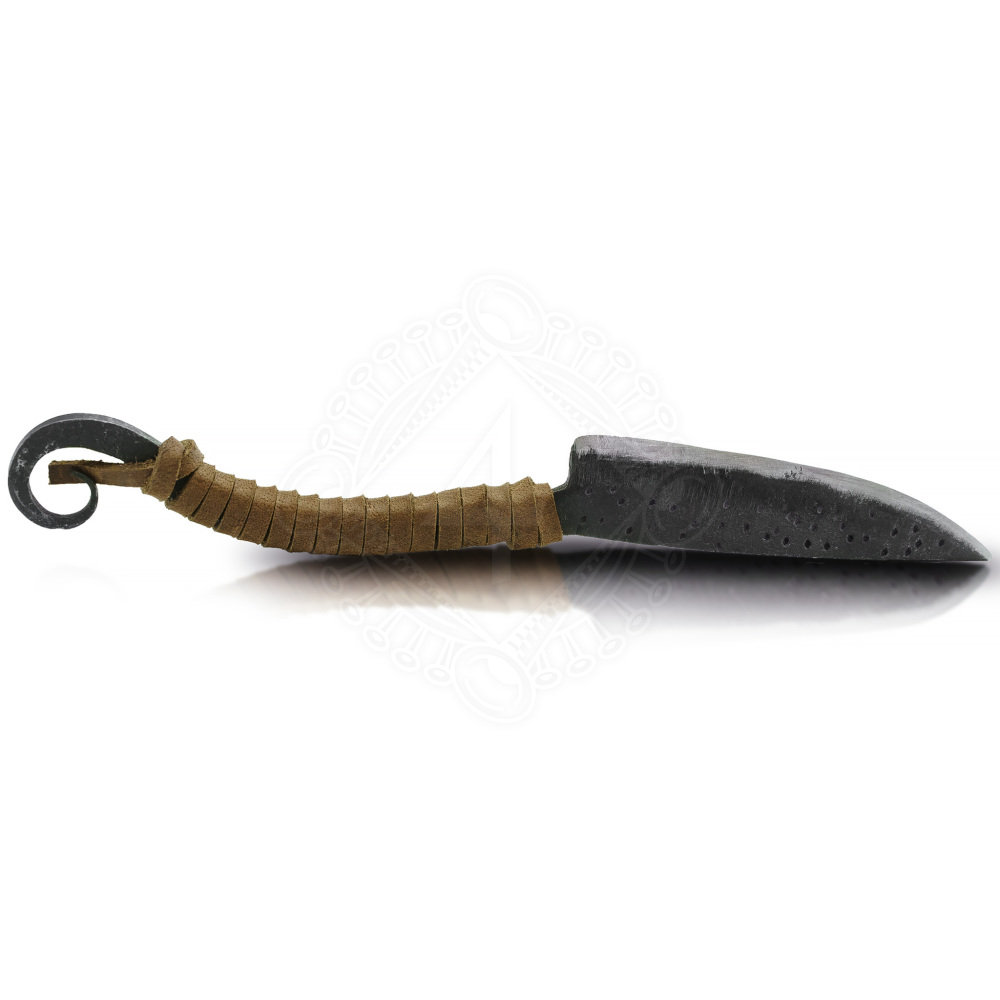
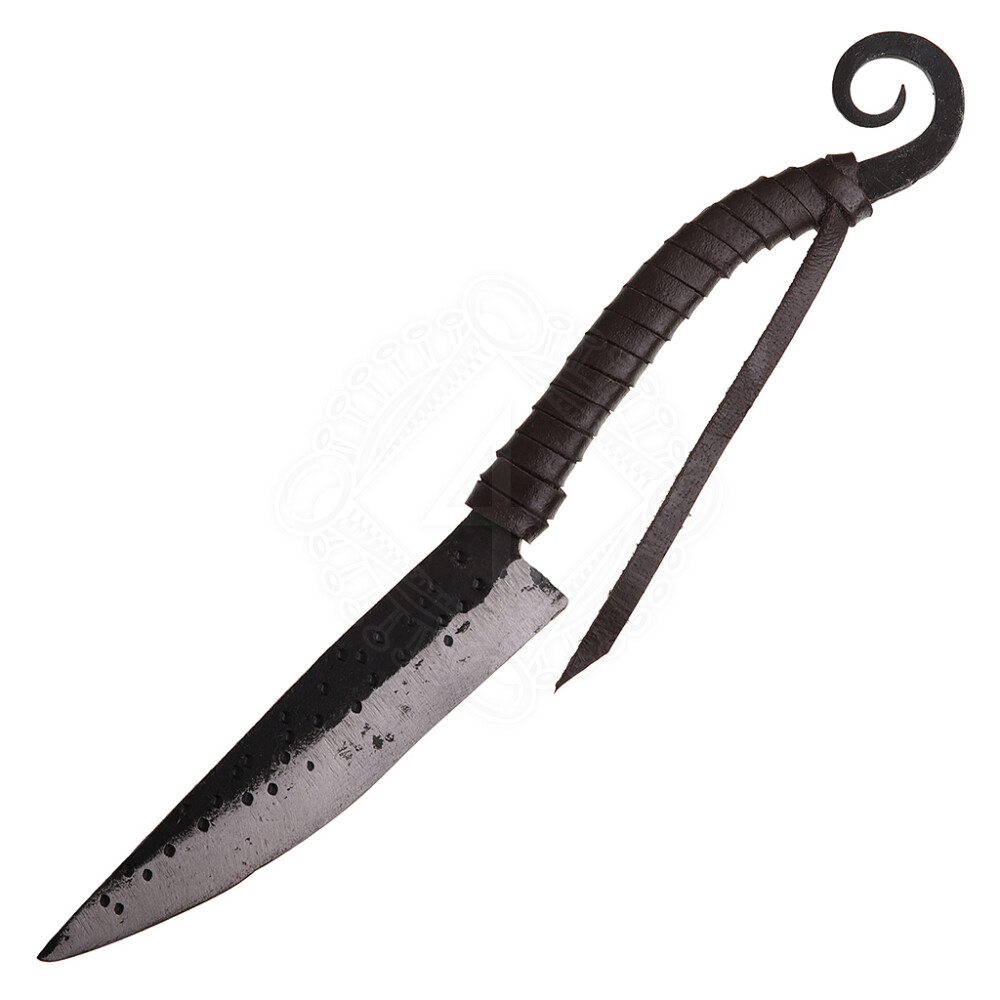
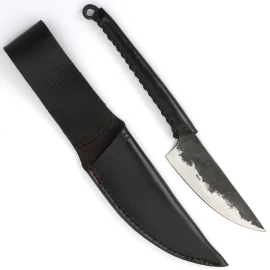
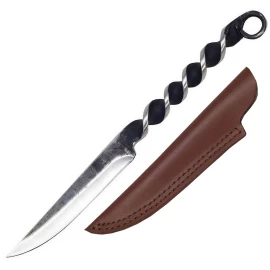
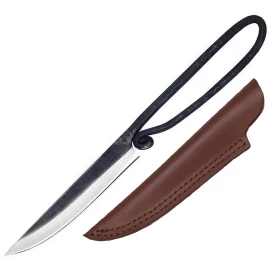
The knife is formed from a continuous piece of hand-forged iron. Its single-edged blade has a gently curved cutting edge, a rising point and a comparatively substantial spine. The upper portion retains a dark and irregular forge finish, enhanced by rows of small punched indentations.

A broad polished bevel creates a bright contrast with the darker body of the blade. The narrow tang continues directly into a long, gently curved handle. Most of the grip is tightly wrapped in genuine brown leather, improving control and reducing the likelihood of the hand slipping during use.

At the end of the handle, the iron forms a large open scroll. This dramatic feature evokes Celtic and fantasy ornament but is not a standard archaeologically documented characteristic of Viking Age utility knives. The product is therefore best understood as a historically inspired Viking knife rather than an exact reproduction of a particular artefact.

Inspired by Viking Age Utility Knives

The design draws inspiration from everyday knives used during the Viking Age, from the late 8th to the 11th century. Such knives were not merely weapons. They were essential personal tools used for preparing food, cutting cord, working leather and wood, and carrying out numerous domestic and camp tasks.

Archaeological groups from Anglo-Scandinavian settlements contain many comparatively small single-edged utility knives. Their blades commonly continued into narrow tangs fitted into handles of wood, bone or antler. The leather wrapping and extended scroll terminal of this model are modern stylistic features intended to provide a secure grip and a distinctive appearance.

With a blade measuring approximately 11.5 cm or 4 1/2 in, this product is closer to a compact working and camp knife than to a long fighting seax. Its curved profile also differs from the characteristic broken-back form associated with some seax types.

Preparing the Knife for First Use

Before use, inspect the blade, leather wrapping and scroll terminal. Check that the leather is secure and that no sharp burrs are present away from the intended cutting edge. Remove any protective oil with a clean cloth.

For food preparation, wash the blade by hand in warm water with a mild washing-up liquid, then dry it immediately and thoroughly. Because every knife is individually forged, the factory sharpness may vary slightly. Test the edge carefully and refine it with a fine whetstone when required.

Hold the knife only by the leather-wrapped section and work on a stable wooden cutting board. Always direct the edge away from your body and supporting hand.

Suitable Uses

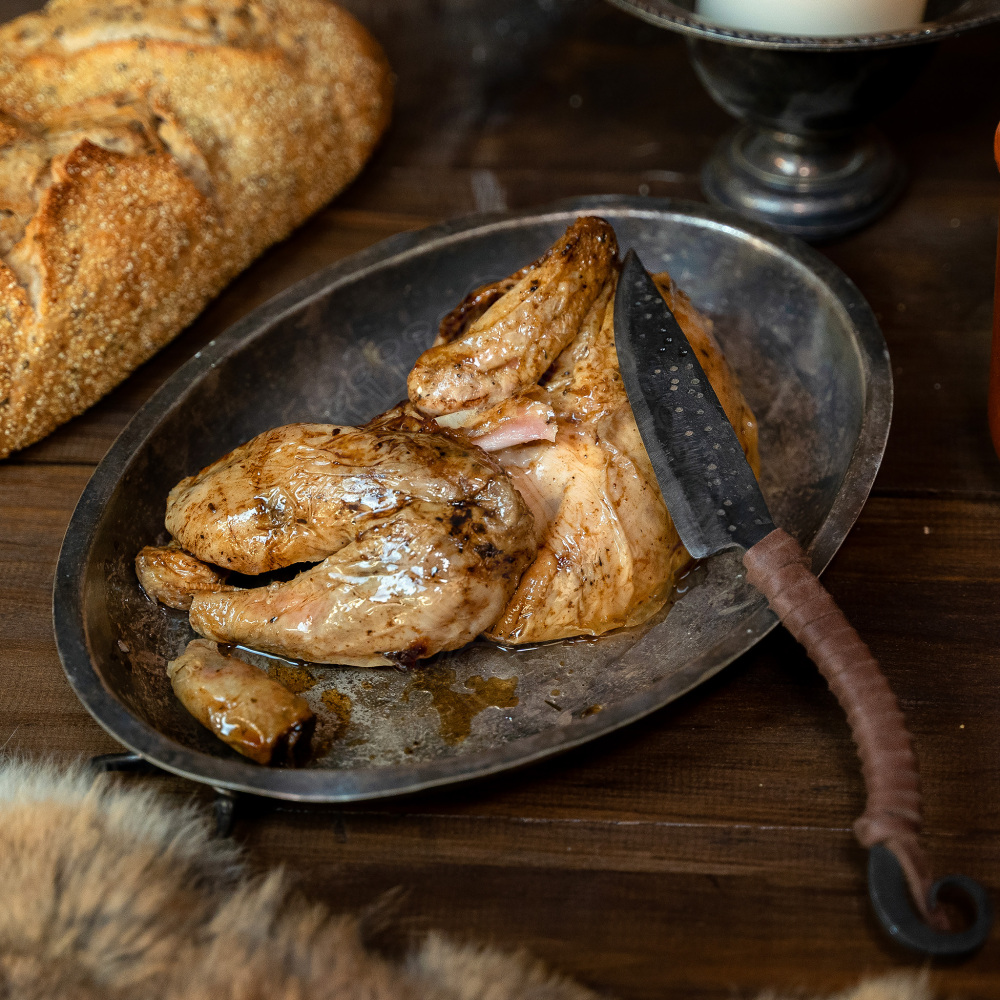
  • cutting bread, meat, fruit and other food at a themed feast,
  • light camp work and cutting cord,
  • food preparation in a historical encampment,
  • LARP, cosplay and Viking- or fantasy-inspired costume,
  • theatre, film and photographic props,
  • display within a collection of hand-forged objects.

At a LARP event, carry the knife only when permitted by the organiser and keep it securely enclosed. A sharp iron knife must never be used in staged, sporting or contact combat.

Technical Specifications

Specification Details
Product type Hand-forged Viking utility and camping knife
Historical inspiration Viking Age, late 8th–11th century
Blade and core material Hand-forged iron
Grip wrapping Genuine leather
Construction Continuous forged construction with an extended tang
Blade type Single-edged and gently curved
Blade finish Dark forge finish with a bright polished bevel
Decoration Punched indentations on the dark blade surface
Handle terminal Open forged scroll
Overall length Approx. 25 cm / 9 7/8 in
Blade length Approx. 11.5 cm / 4 1/2 in
Maximum blade width Approx. 2.8 cm / 1 1/8 in
Blade thickness Approx. 4.5 mm / 3/16 in
Grip length Approx. 12 cm / 4 3/4 in
Grip width Approx. 1.5 cm / 5/8 in
Weight Approx. 110 g / 3.9 oz
Set includes One knife without a sheath
Suitable for Camp dining, light cutting, LARP kit, prop use and display

Handmade Character

Every knife is forged and finished individually. Minor differences in handle curvature, scroll shape, punched decoration, surface texture, metal tone and leather colour are natural. These variations are not defects but characteristic signs of hand production.

Caring for the Iron Blade and Leather Grip

  • Wash the blade by hand after use and dry it immediately and completely.
  • Do not place the knife in a dishwasher or leave it soaking in water.
  • Rinse the blade promptly after cutting acidic fruit, onions or salty foods.
  • Apply a very thin film of protective oil to the clean, dry iron.
  • For a knife used with food, choose food-safe mineral oil intended for kitchen blades.
  • Wipe the leather wrapping with a slightly damp cloth rather than immersing it.
  • Allow the leather to dry naturally away from radiators, flames and strong sunlight.
  • Apply a small amount of suitable leather balm occasionally.
  • Store the knife in a dry place and inspect the iron regularly for corrosion.
  • Do not leave it inside a damp leather sheath for long-term storage.

Safe Use

  • Always treat the knife as a sharp working tool.
  • Cut on a stable surface and direct the blade away from your hands and body.
  • Do not use it as a pry bar, hatchet, chisel, screwdriver or throwing knife.
  • Do not strike the blade against hard materials or hammer the scroll terminal.
  • When passing the knife to another person, offer the handle first.
  • Never carry it loose in a bag; use a correctly fitted protective sheath.
  • Keep the knife beyond the reach of children and untrained users.
  • Observe applicable local rules when carrying or transporting the knife.

Recommended Accessories

For safe carrying, we recommend a custom-fitted leather sheath and belt suspension inspired by equipment of the 8th to 11th centuries. A fine whetstone, food-safe mineral oil and soft cleaning cloth will help you maintain the blade. For a Viking or early medieval feast, combine the knife with a wooden or horn spoon, wooden bowl, chopping board and simple leather pouch.

Similar products (16)