 Čeština
 Deutsch


Tsuba with Golden Cherry Blossoms
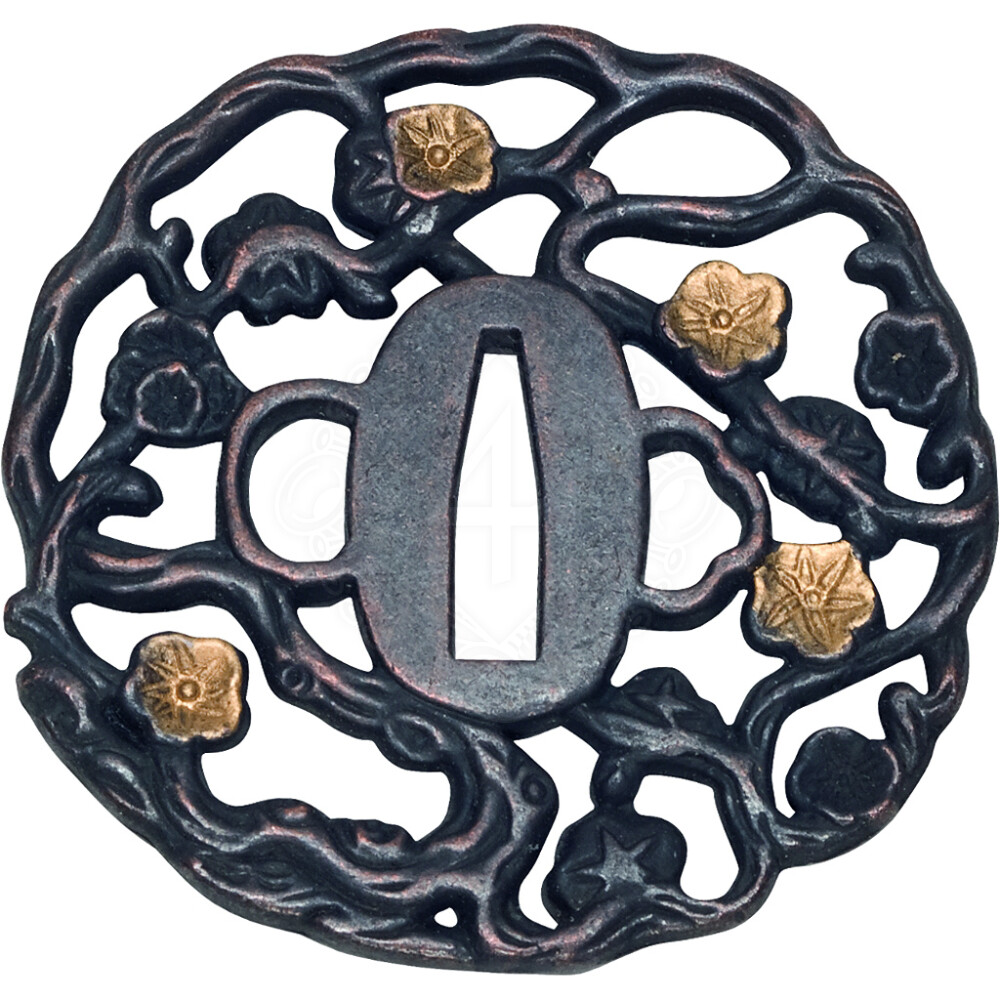


Are you looking for a way to breathe new life into your katana, or are you planning to assemble your own unique sword? This Sakura no Hana Tsuba is a masterpiece that blends functionality with profound Japanese aesthetics. Originally designed for the exclusive John Lee Golden Flower model, it is now available as a standalone component. Its design is based on the striking contrast between a dark patina and gold-plated cherry blossoms, symbolizing the transience and beauty of a samurai's life. This handguard is not just a piece of metal; it is a work of art that will add authenticity and elegance to your sword. Further product information ...

Sakura no Hana Tsuba with Golden Cherry Blossoms
Design and Construction
The guard is crafted in the Sukashi (openwork) style, which provides visual lightness and ensures the optimal balance of the entire sword. The central motif features intertwined cherry branches (Sakura), with selected blossoms highlighted in gold colour, creating beautiful reflections in the light. The core of the tsuba is solid to provide maximum protection for your hand during sword handling.
Technical Specifications
| Parameter | Value |
|---|---|
| Overall Diameter | approx. 70mm (2.75") |
| Blade Hole Size (Nakago-ana) | approx. 26 x 7mm (1.02" x 0.27") |
| Material | Metal alloy with patina |
| Decoration | Gold cherry blossoms (Sakura) |
| Packaging | Wooden collector's box |
Symbolism and History of the Tsuba
In the history of Japanese swordsmithing, the tsuba was more than just a handguard to block an opponent's blade or prevent one's own hand from sliding onto the edge. It became an expression of a samurai's social status and personal taste. The Sakura (cherry blossom) motif was immensely popular among warriors. Sakura blooms all at once and falls just as quickly – a reminder to the samurai of their own fate: to live life to the fullest and be ready to fall in battle with grace at any moment.
Historical Insight
During the Edo period (1603–1868), tsubas became so ornate that they often exceeded the value of the blade itself. Entire schools of masters known as "tsubako" specialized solely in creating these guards, using intricate techniques such as inlaying precious metals.
Maintenance and Care
To ensure this tsuba serves you well for years to come, I recommend following these guidelines:
- Surface Protection: Occasionally wipe it with a soft cloth and a drop of Camellia oil or another mineral-based gun oil to prevent oxidation.
- Mounting: Be careful when fitting it onto your sword. If the hole does not perfectly fit your tang (nakago), it can be gently adjusted with a small file – but do this cautiously to avoid permanent damage.
- Step-By-Step Instructions: How to Disassemble (and Assemble) a Katana?
- What to Avoid: Never use aggressive chemical cleaners or steel wool, as these could damage the patina and the gold decorations.
Note: The wooden box provided is primarily intended for product protection during shipping and is included free of charge.
This tsuba pairs perfectly with other Japanese-style accessories, such as a high-quality Katana cleaning kit or a stylish sword stand to properly display your upgraded katana.
We are here for you!