
 Čeština
 Deutsch


Mercenary Dagger with Flame Blade, Flambard
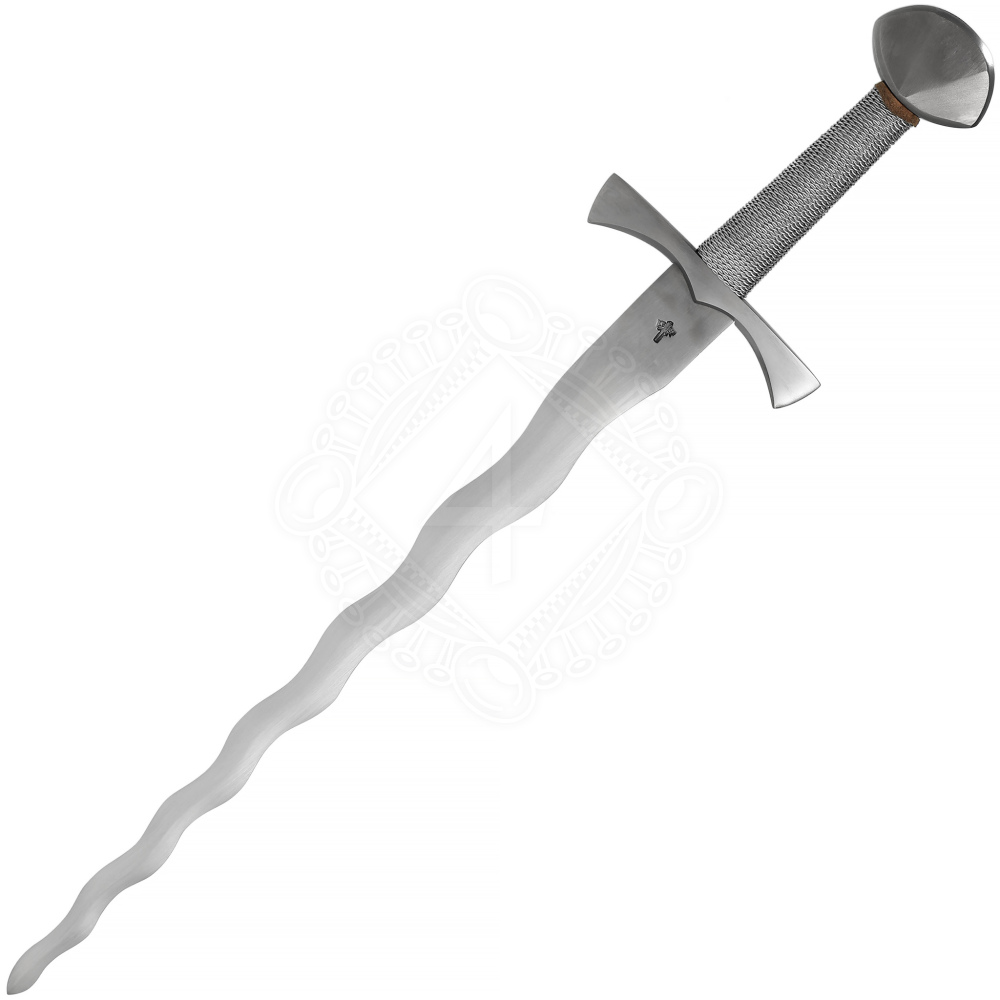
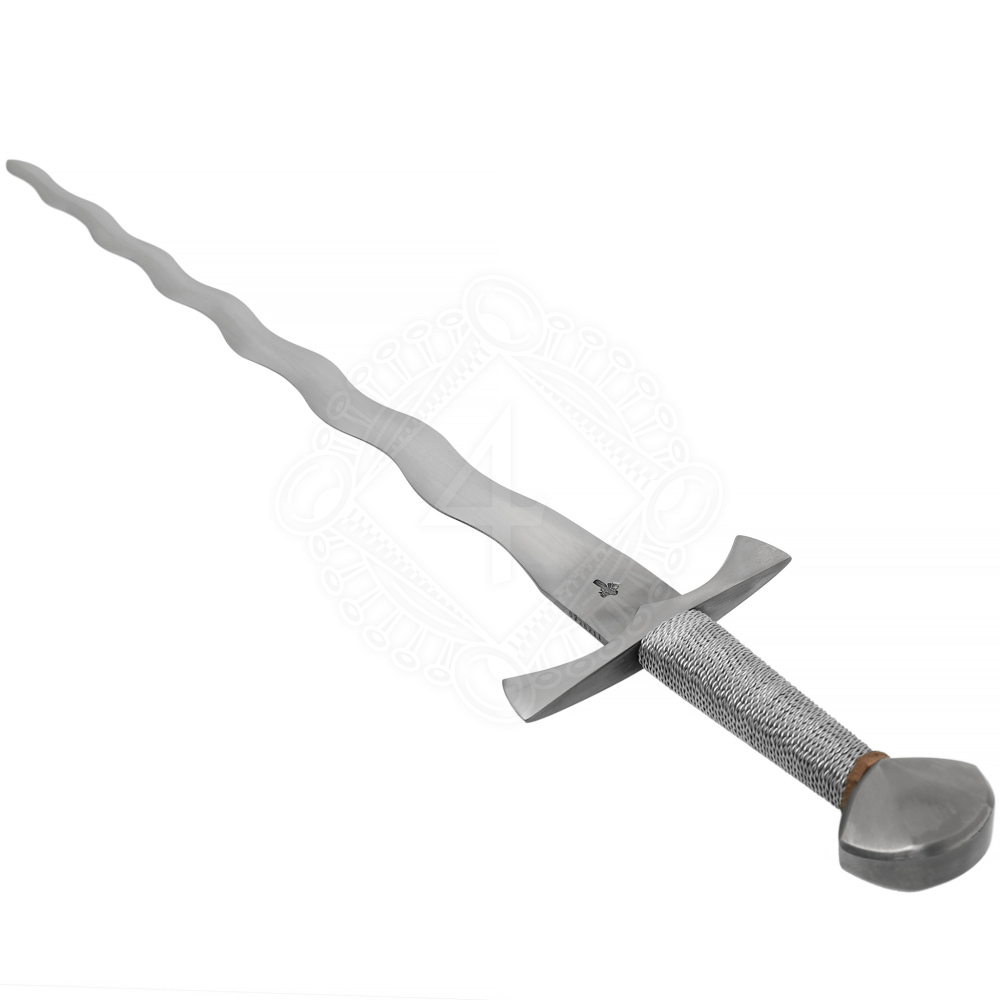

We present a truly unique and visually impressive dagger, whose main feature is the characteristic flame blade, also known as a ‘flambard’. With a total length of approx. 60 cm and a blade of approx. 44 cm, this is a fairly large dagger, approaching the dimensions of a short sword. Further product information ...

 Delivery options
The following variants are currently available:
Mercenary Dagger with Flame Blade, Flambard
Appearance and construction
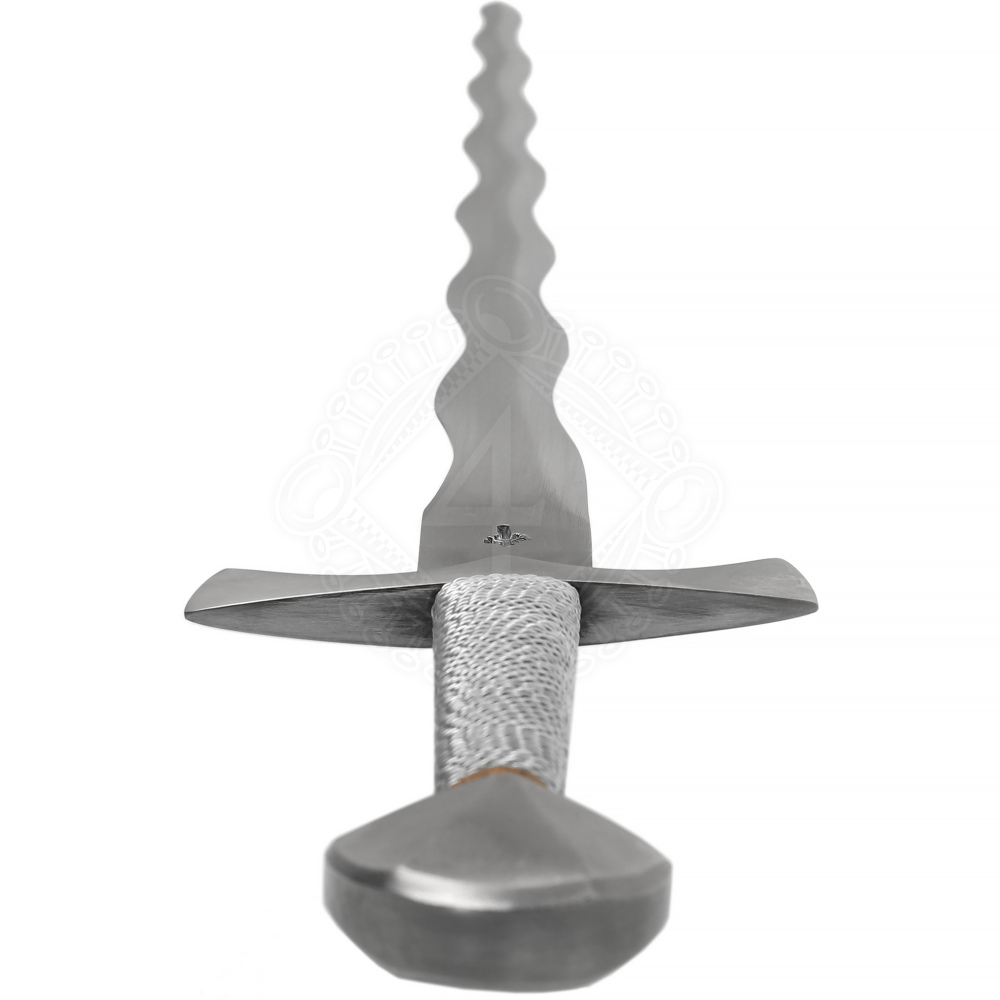
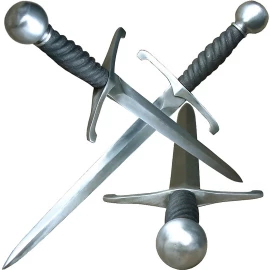
The most distinctive feature of this weapon is its double-edged, wavy blade, which gives it a distinctive look. This flame-like design was particularly popular during the Renaissance. The steel cross guard, about 13 cm long, has shoulders that curve slightly towards the blade and provide simple hand protection. The handle consists of a steel core (the tang) that is lined with wood and then firmly wrapped in a pair of twisted wires, which ensures a very secure grip. The dagger is finished with a simple, functional steel pommel that has a disc-shaped, slightly conical form.
Important note about the variants
For technical reasons, this flambard is ONLY available in a blunt version (2-3 mm edge thickness, rounded tip). The sharp version is not produced.
Historical classification
The flaming dagger (‘flamberge’ or ‘flamme sword’) is typical of the late Middle Ages and especially of the Renaissance (about 15th to 17th century). The best known are the large two-handed swords of the German mercenaries (Landsknechte), but this blade style also occurred in one-handed swords, rapiers and simple daggers. This weapon therefore falls into the category of Renaissance flaming daggers. The exact function of the wavy blade is controversial – apart from the psychological effect and aesthetics, it could theoretically have caused a special vibration when parrying or slightly different cutting properties.
Uses
Since the dagger is only available in a blunt version, it is ideal for:
- Reenactment: A great costume accessory for figures from the Renaissance period, particularly for Landsknechts or other military or civilian roles from that time.
- Stage and theatrical fencing: Its unique appearance adds to the visual appeal of the performance.
- Collecting and decorating: A distinctive and unusual piece for a collection or as an interesting decorative element.
- Training in specific techniques: The dagger can be used to practice Renaissance dagger techniques, although its use in regular HEMA sparring is rather uncommon.
Safety and care
Although the dagger is blunt, it should still be handled with care.
- Use it at your own risk. The manufacturer is not responsible for any damage or injury.
- Keep the dagger out of the reach of children.
- The blade (carbon steel) is not corrosion resistant. Clean, dry and preserve with oil after use.
- Check the condition of the dagger before each use, especially the durability of the cross guard and pommel.
- Even though it is blunt, the cutting edge may still have small bumps - handle with care.
This flamed blade dagger is a unique piece that will catch the eye at first glance. Its historical context and unusual design make it a great choice for re-enactors, theatre-goers and collectors looking for something special.
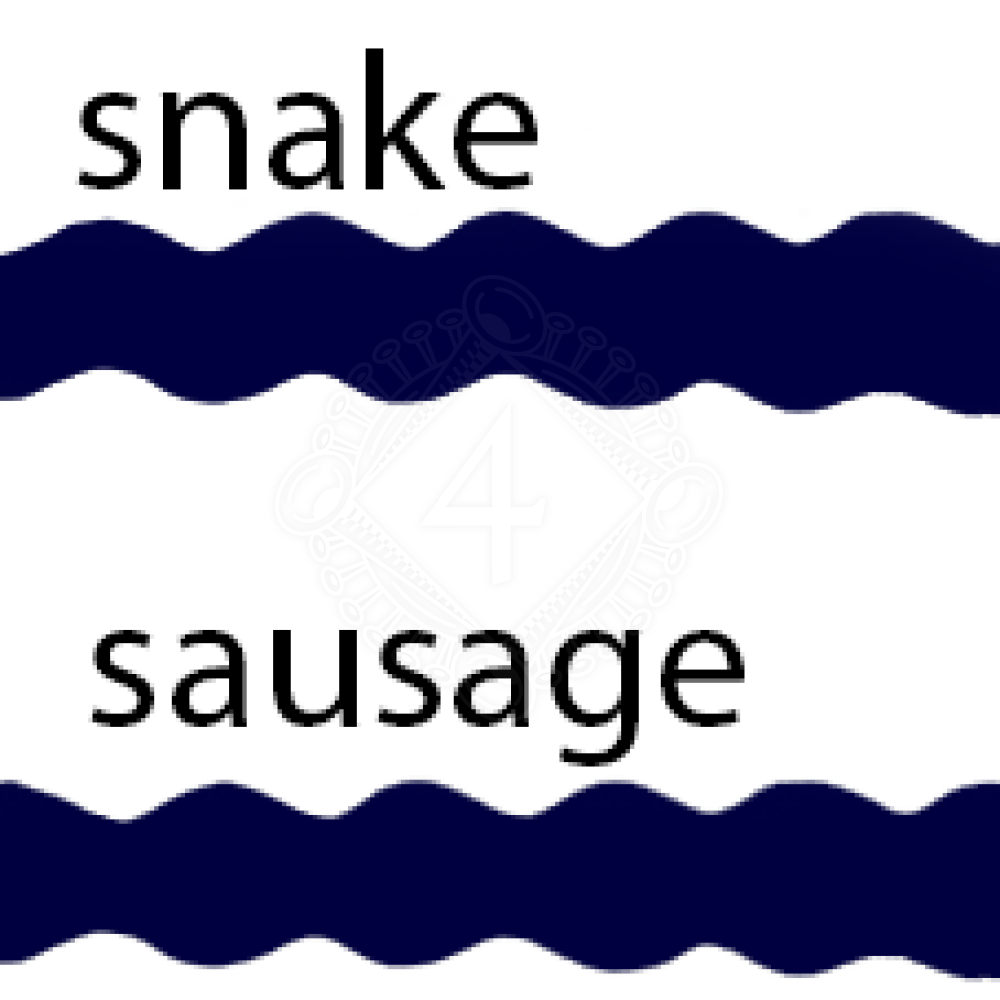
Please note: the flame blade (snake / sausage type) is not possible in the sharp variant.
Please read these Directions for the use of bladed weapons.
Specifications of the photographed specimen
- Total length 60.5 cm
- Blade length 45.5 cm
- Handle length 10 cm
- Length of the cross guard 12.5 cm
- Head width 6.5 cm
- Blade width at the cross guard 34.6 mm
- Blade width 5 cm from tip 15.3 mm
- Thickness of the blade edge 1 mm
- POB lies on guard
- Weight 766 g
-
Pommel: threaded
-
Handle wrap: threaded wire
-
Shape of the flamberg blade: type snake
-
Finish: brushed, matt finish
We are here for you!






.3773623034.1696456237.png.webp)


.3773623034.1696456268.png.webp)
.3773623034.1696456247.png.webp)