
 Čeština
 Deutsch


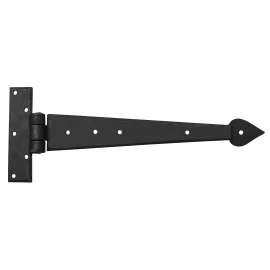
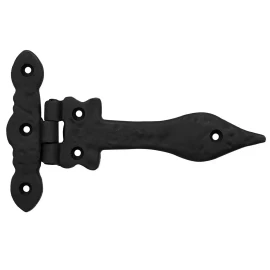
Large Spear Point Tee Hinge, Heavy Duty Black Antique, 9 Inch
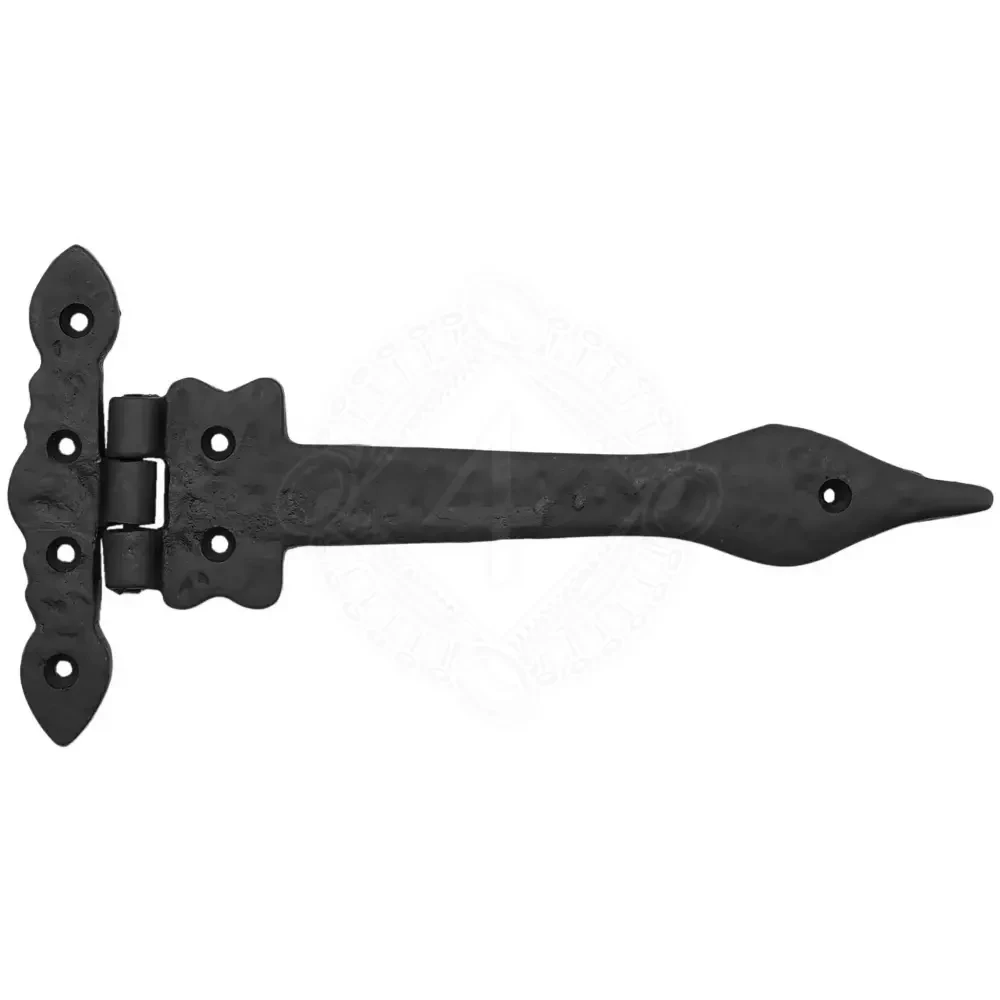
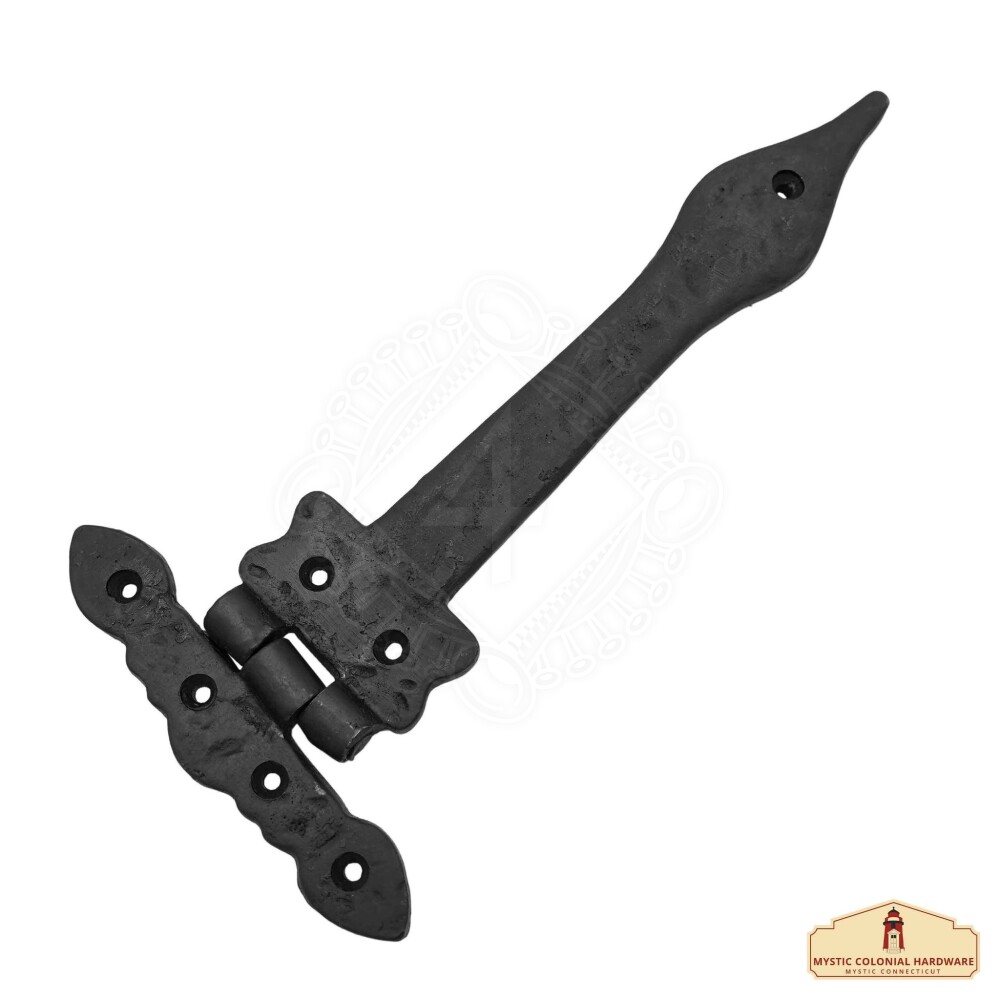
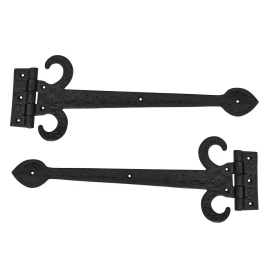
Secure your heavy gates, barn doors, or large chests with this truly massive T-hinge. With a total width of nearly 9 inches (23 cm) and a design in the shape of a spear point, this hinge is not only extremely strong but also a dominant visual element that will instantly give your project historical weight and an uncompromising style. Further product information ...

Would you like to be notified as soon as the item is in stock?
You will receive a short e-mail as soon as we have it back in stock.
Large Spear Point Tee Hinge, Heavy Duty Black Antique, 9 Inch
Robust Design and an Honest Aesthetic
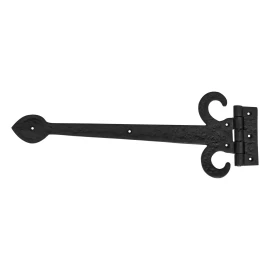
This large T-hinge is designed for heavy loads. It consists of a robust vertical base for mounting on the frame and a long, strong horizontal strap that attaches to the door leaf. The strap is finished with a distinctive spear point. The entire surface has a rough, hammered texture that faithfully mimics the look of hand-forged ironwork. For maximum strength, the hinge is precision-cast from steel and treated with a protective blackened finish.
For Massive Gates and Doors
Thanks to its size and strength, this hinge is destined for truly large-scale projects. It is the ideal choice for barn doors, heavy entrance gates, solid cellar doors, or for the large lids of chests and treasure boxes. Its distinctive look is perfectly suited for buildings in a medieval fortress style, for LARP encampments, or for renovating historic farmsteads.
A Nod to Traditional Construction
Large and massive T-hinges were the cornerstone of any large and heavy door or gate for centuries. Their design, where the long strap reinforced the horizontal ledges of the door, was ingeniously simple and extremely effective. It was precisely this type of hinge that held together barn doors, prevented the sagging of heavy oak castle doors, and ensured that even the most massive constructions would function reliably.
A Fascinating Detail from the Middle Ages
Did you know that on the massive medieval doors held together by hinges just like these, there was often a small, grated window? It was called a "Judas window" or grille and was used to safely identify visitors. Even this small window often had its own miniature hinges, which were frequently small masterpieces in their own right.
Installation and Care
How to Install the Product
First, attach the vertical part of the hinge to the door frame. Then, support the door leaf in the correct position, place the horizontal strap of the hinge against it, and mark your drilling positions. Ensure everything is level. Always use very strong and sufficiently long screws, or even carriage bolts that go through the entire door. Screws are not included.
How to Care for the Product
For smooth and quiet operation, you can occasionally lubricate the hinge pin with a drop of oil. To clean the surface, use only a dry cloth.
What to Note
This hinge is very heavy. Never install it on light interior doors or doors made of hollow materials. Ensure the construction of the door and frame is solid enough to safely support the weight of both the door and these robust hinges.
Technical Specifications
- Package Includes: 1x Hinge
- Hinge Type: T-Hinge / Tee Hinge
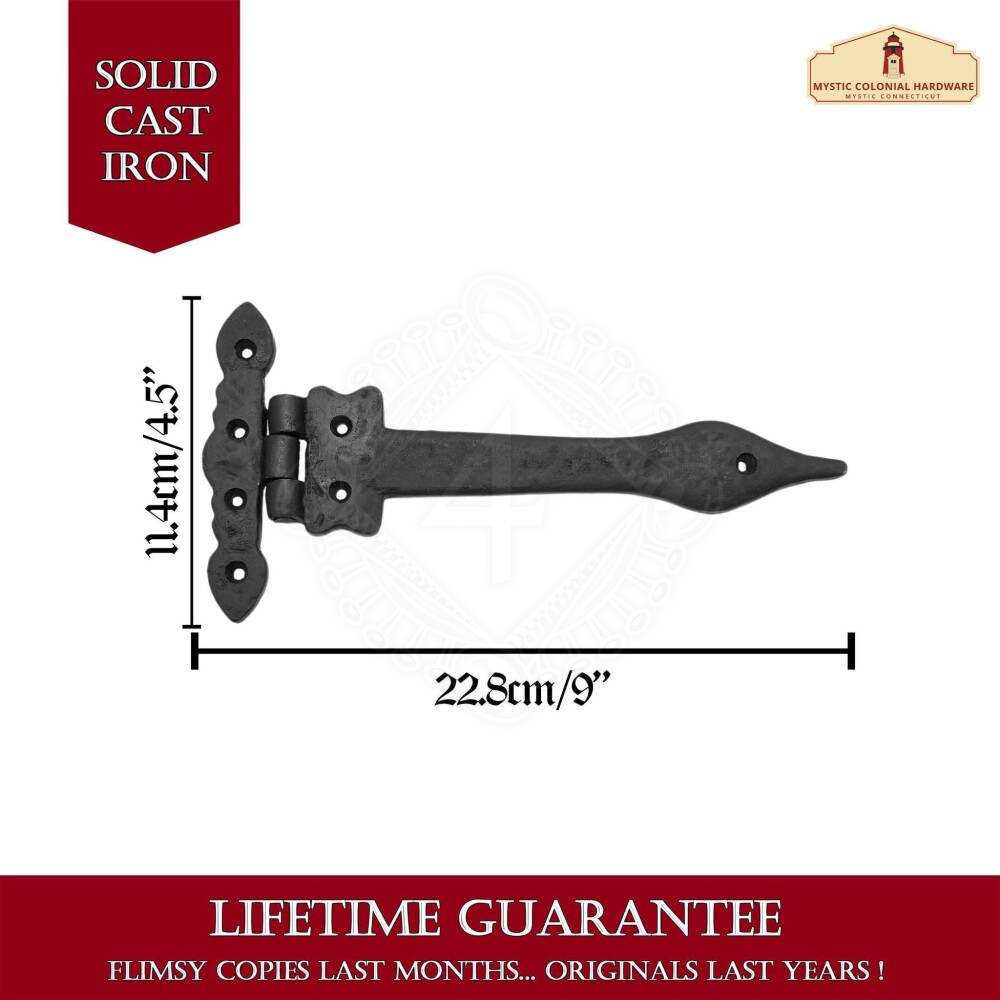
- Overall Width: 22.8 cm (9 inches)
- Overall Height: 11.4 cm (4.5 inches)
- Material: Cast Steel / Cast Iron
- Finish: Blackened, Rustic
- Screws: Not included
We are here for you!





.3773623034.1696456237.png.webp)

.3773623034.1696456268.png.webp)
.3773623034.1696456247.png.webp)