
 Čeština
 Deutsch


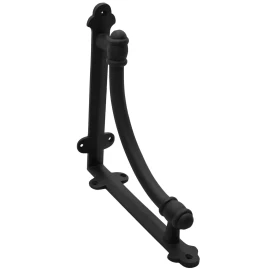
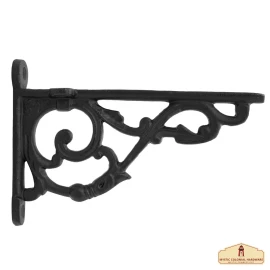
Forged Steel Shelf Bracket with Twisted Brace, 16.5 cm
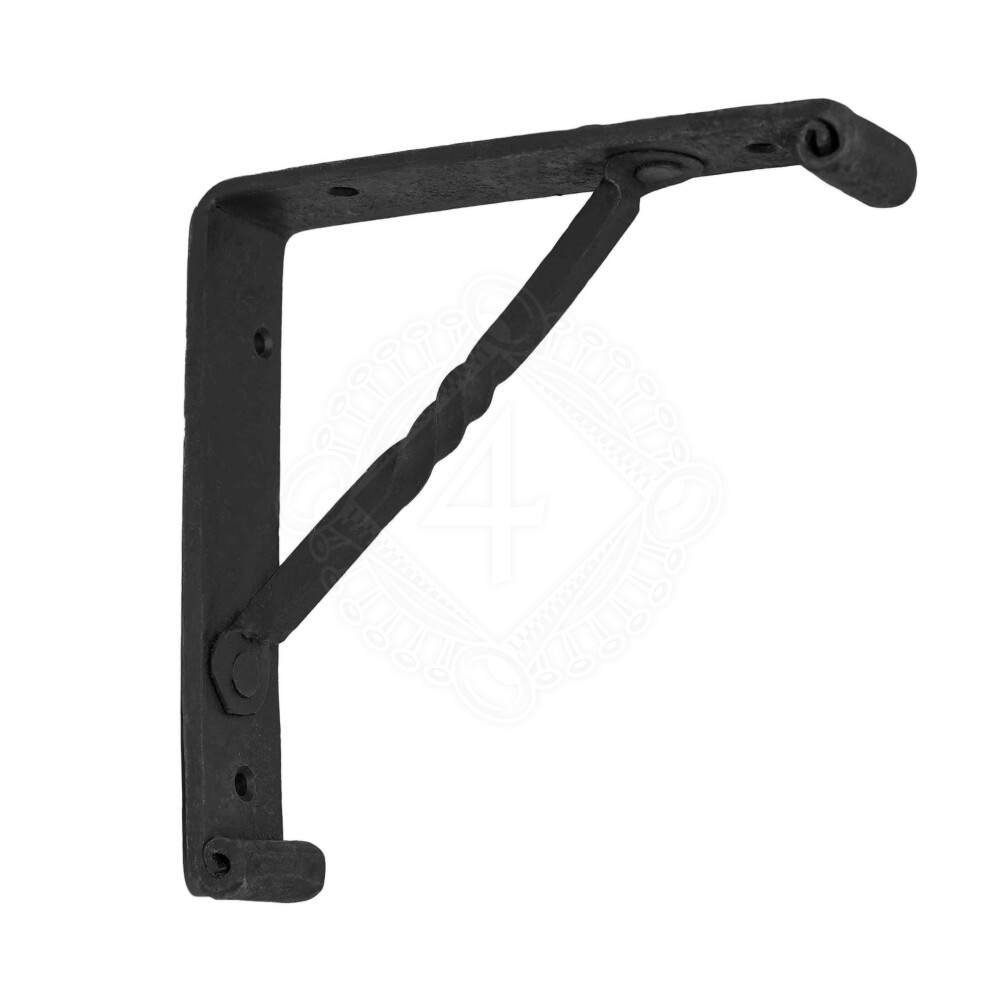
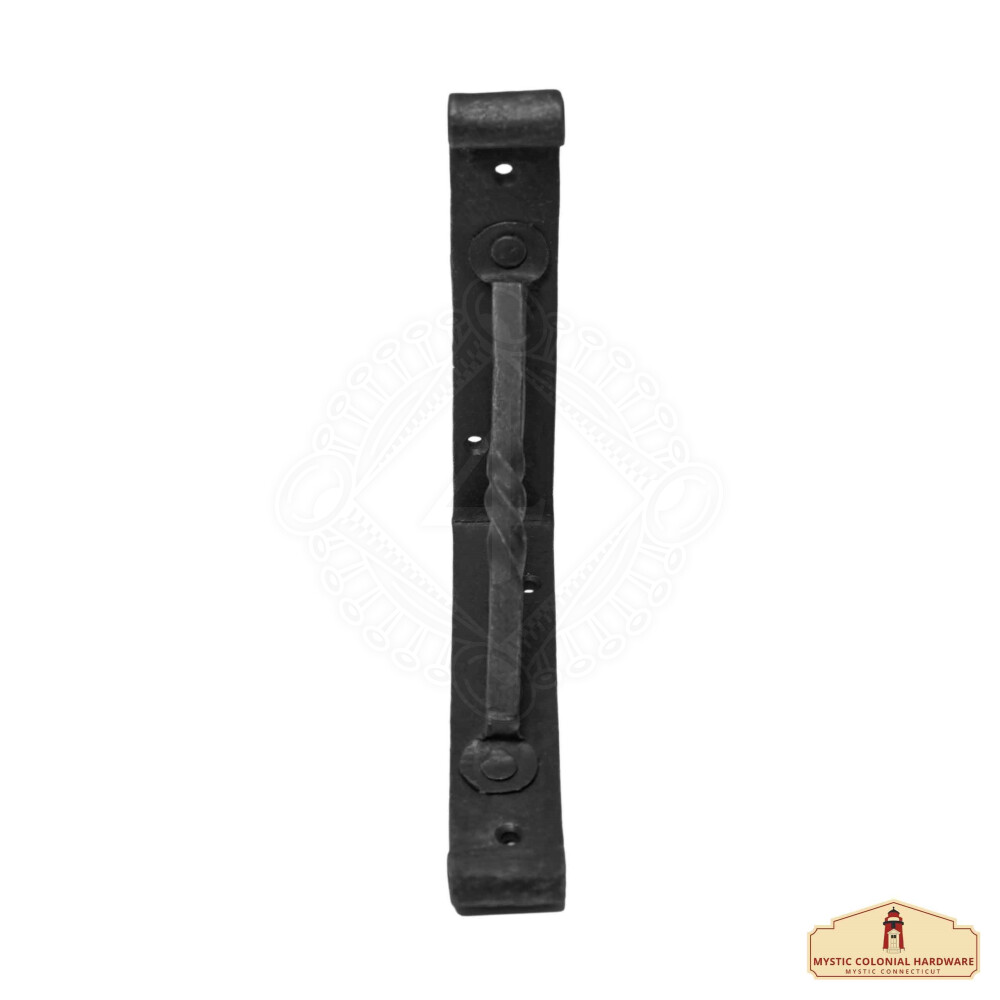
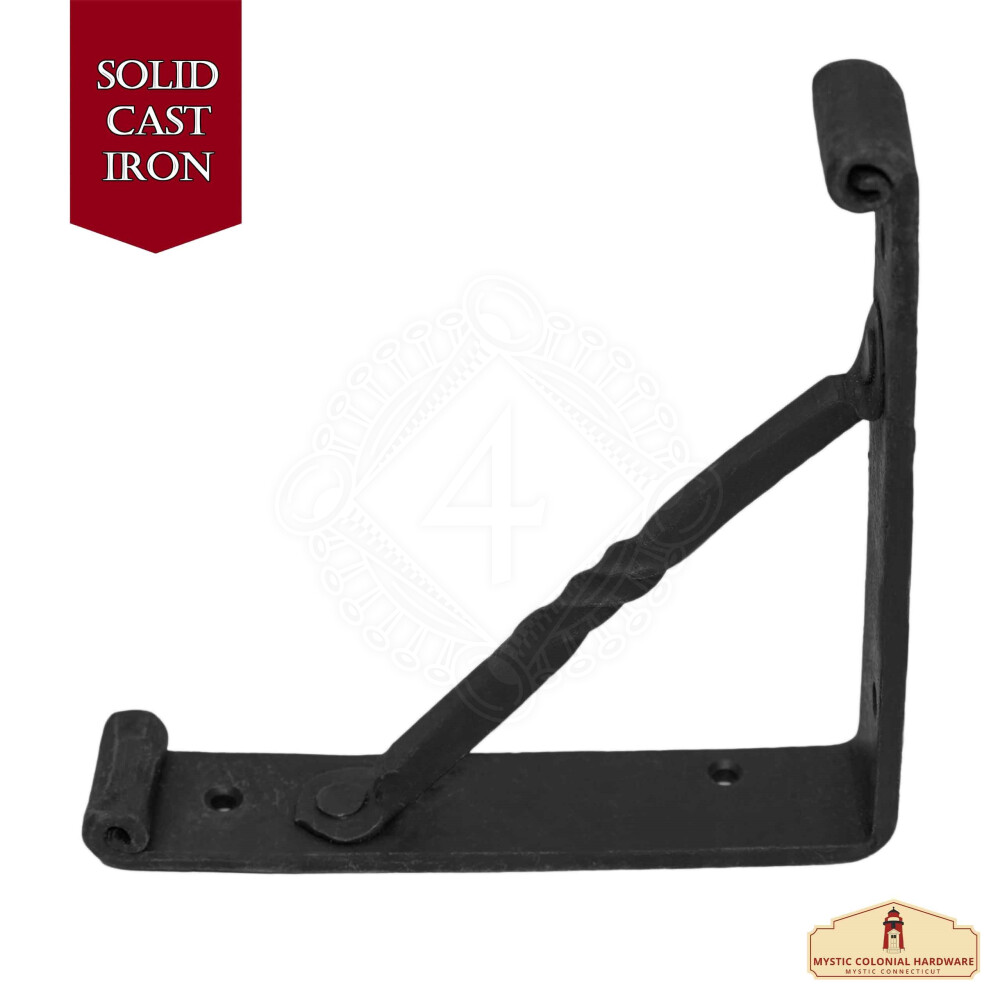
Create a shelf with unmistakable character thanks to this robust, hand-forged bracket. This support is not just an ordinary piece of hardware but an elegant work of craftsmanship. It combines the strength of solid steel, the beauty of a twisted diagonal brace, and decorative details in the form of curled ends. Whether you're planning a library in your study, a spice rack in the kitchen, or a display shelf in the living room, this bracket will give your project a touch of historical authenticity and quality. Further product information ...

Would you like to be notified as soon as the item is in stock?
You will receive a short e-mail as soon as we have it back in stock.
Forged Steel Shelf Bracket with Twisted Brace, 16.5 cm
The Foundation for Your Unique Shelf
This shelf bracket is the ideal foundation for your DIY projects. Use a pair or more to create a custom shelving system tailored exactly to your needs. It combines beautifully with solid wood shelves to create a perfect rustic or industrial look. You can use it to display books, collectibles, plants, or kitchenware. Thanks to its strength and stable construction, it is also suitable for creating a small countertop bar or a utility shelf in a workshop.
From the History of Structural Support
From Stone to Iron
Brackets and corbels are among the fundamental architectural elements that humanity has used for millennia. Originally made of stone or wood, they were used in historic buildings to support balconies, roof trusses, and arches. With the development of blacksmithing, metal brackets became increasingly common. They allowed for the creation of lighter, more open, yet very strong support structures that became an integral part of not only the exteriors but also the interiors of townhouses and manors.
A Point of Interest: The Strength of the Triangle
This bracket is a clever demonstration of one of the strongest geometric shapes—the triangle. The diagonal brace is not just for decoration; it provides essential functional triangulation. This principle distributes the force acting on the horizontal arm, effectively preventing it from sagging and deforming under load. The blacksmith who designed this bracket didn't just join three pieces of steel; they used a millennia-old engineering principle to create a maximally strong and reliable product.
Key Features and Specifications
Design and Material
- Hand-Forged Craftsmanship: Each piece is an original with the unique marks of honest workmanship.
- Elegant & Strong Design: Combines an L-profile with a twisted diagonal brace for maximum load capacity and style.
- Solid Forged Steel: Guarantees high strength and a long lifespan.
- Authentic Finish: An oil-blackened finish gives the bracket a rustic look and protects it from corrosion.
- Ready to Mount: Four pre-drilled holes (two for the wall, two for the shelf) for an easy and stable installation.
Technical Details
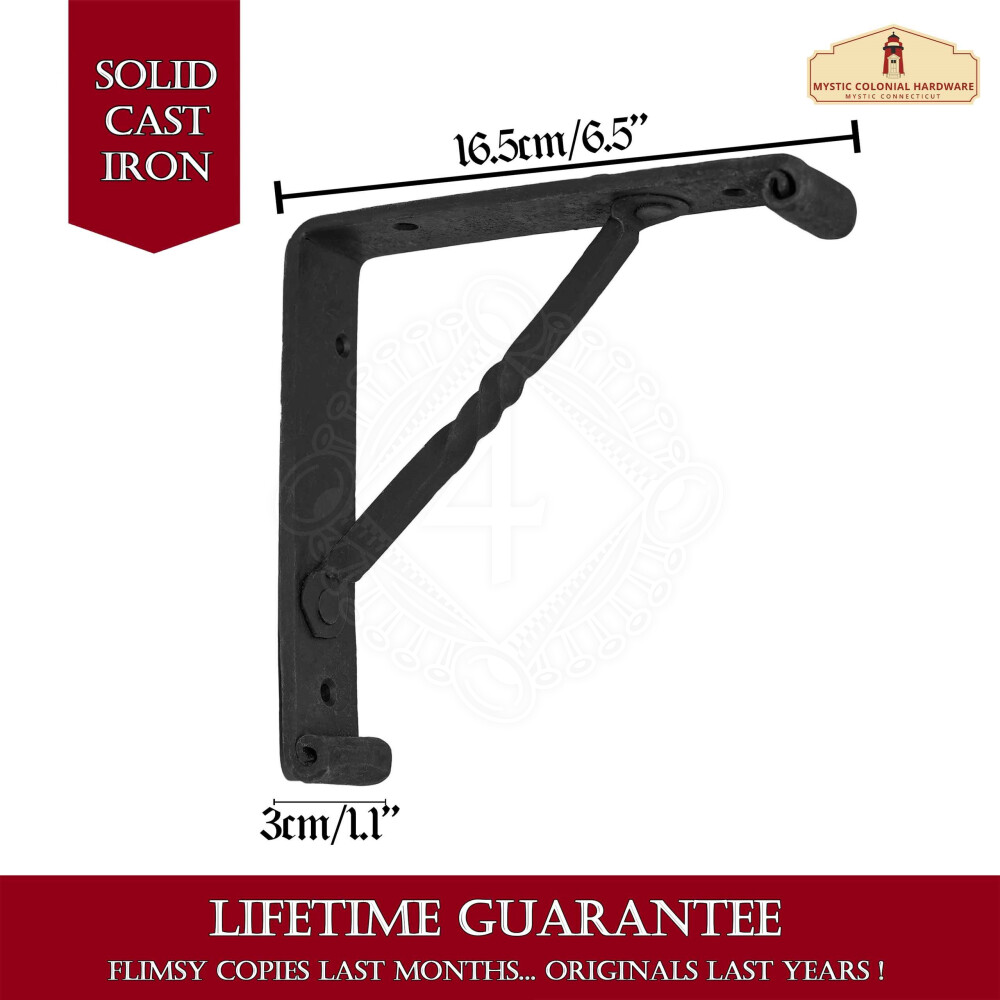
- Shelf Arm Length: approx. 6.5 inches (16.5 cm)
- Wall Arm Height: approx. 6.5 inches (16.5 cm)
- Material Width: approx. 1.1 inches (3 cm)
- Please Note: Mounting screws are not included, allowing you to choose the best hardware for your specific wall and shelf material.
Installation and Care
How to Correctly Mount Your Shelf
First, determine the desired height of your shelf and mark a level line on the wall using a spirit level. Position the first bracket and mark the holes for drilling into the wall. Ensure you are drilling into a solid, load-bearing surface (brick, concrete, or a wooden stud). Use appropriate wall plugs and screws. Then, using the spirit level and your shelf board, determine the exact position of the second (and any subsequent) brackets. Once all brackets are on the wall, place your shelf on top and fasten it to the brackets from below.
Caring for the Forged Surface
The bracket requires no special care. Simply wipe it regularly to remove dust. To revive its appearance and reinforce the protective layer, you can occasionally rub it with a cloth containing a small amount of natural oil or wax.
What to Avoid
Respect the load capacity of the brackets and the structural integrity of the wall they are anchored to. Do not overload the shelf with excessively heavy items. The bracket should never be used as a step, a pull-up bar, or an exercise aid.
We are here for you!





.3773623034.1696456237.png.webp)

.3773623034.1696456268.png.webp)
.3773623034.1696456247.png.webp)