
 Čeština
 Deutsch


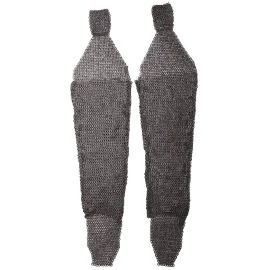
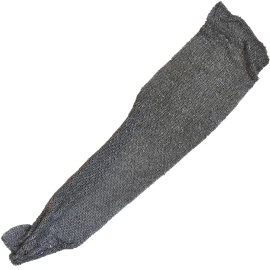
Chainmail Chausses (Leggings), 9 mm Butted Hardened Steel Rings - Outlet
1x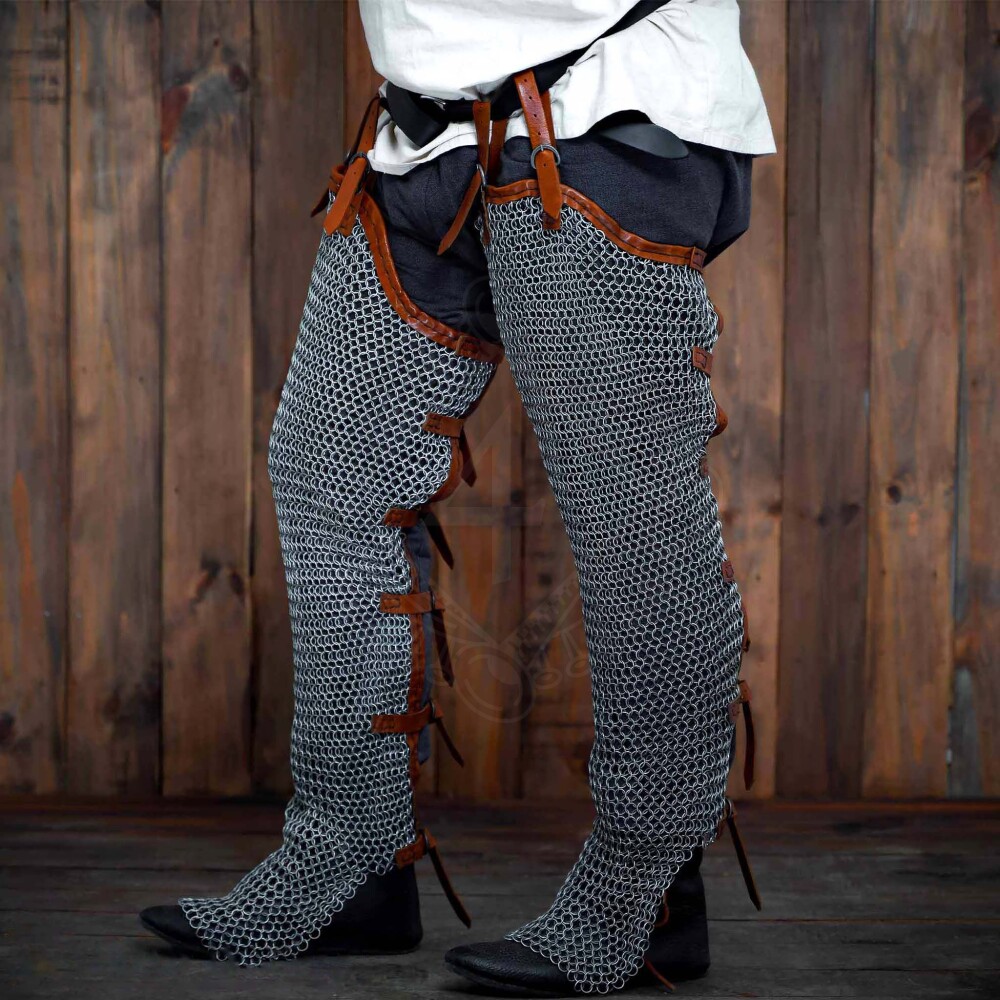
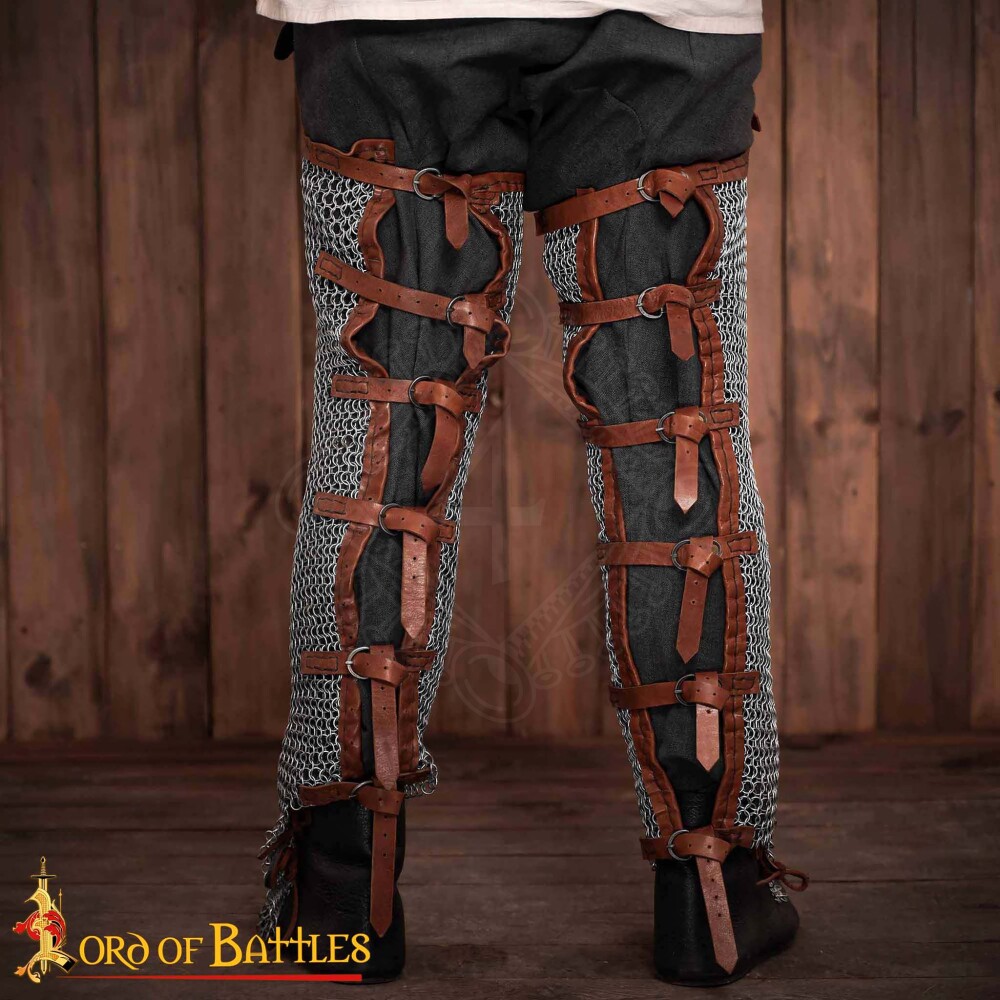

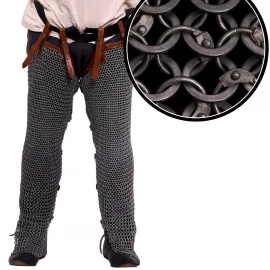
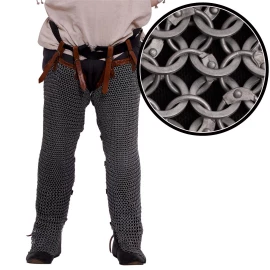
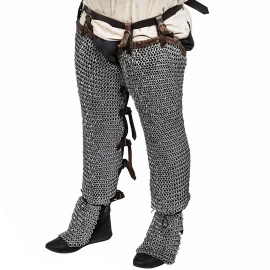
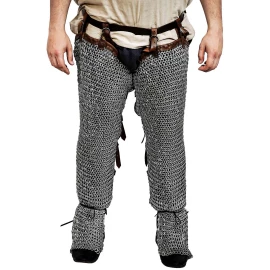
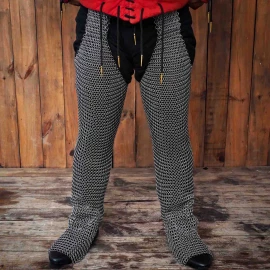
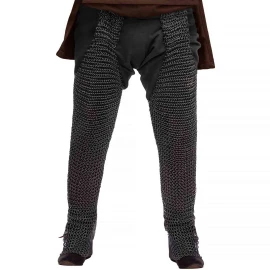
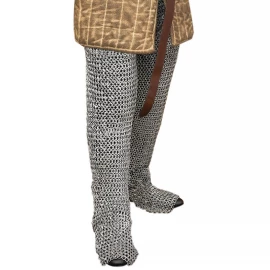
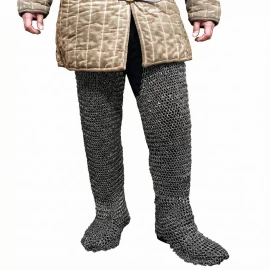
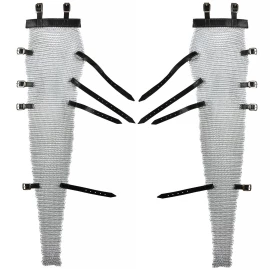
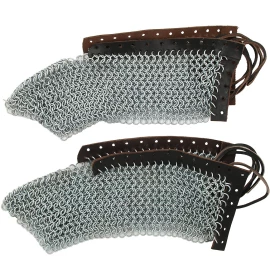
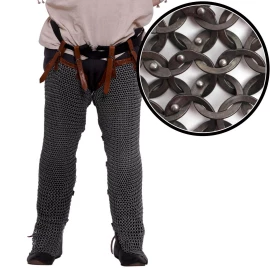
Complete your knightly panoply and protect your legs as the warriors of the High Middle Ages did! These chainmail leggings, known as chausses, provide full protection for the entire leg, from thigh to instep. They are crafted from hardened (spring) steel rings, which gives them significantly greater strength and resilience compared to standard mild steel. Thanks to a sophisticated system of leather straps and buckles down the entire back, you can perfectly adjust them to your build. Further product information ...

 Delivery options
Chainmail Chausses (Leggings), 9 mm Butted Hardened Steel Rings
Leg Protection from the Normans to the High Middle Ages
These chausses are indispensable for anyone creating a costume or suit of armour for a knight from the 11th to 13th centuries. Whether you're heading to a historical battle, a LARP event, or simply adding to your collection, they will provide you with an authentic look and functional protection. The adjustable straps ensure they fit snugly on the leg without restricting movement while walking or fighting. The leather loops at the top are used to suspend the chausses from a belt, ensuring they are worn correctly.
The Strength of Hardened Steel: When Every Ring Matters
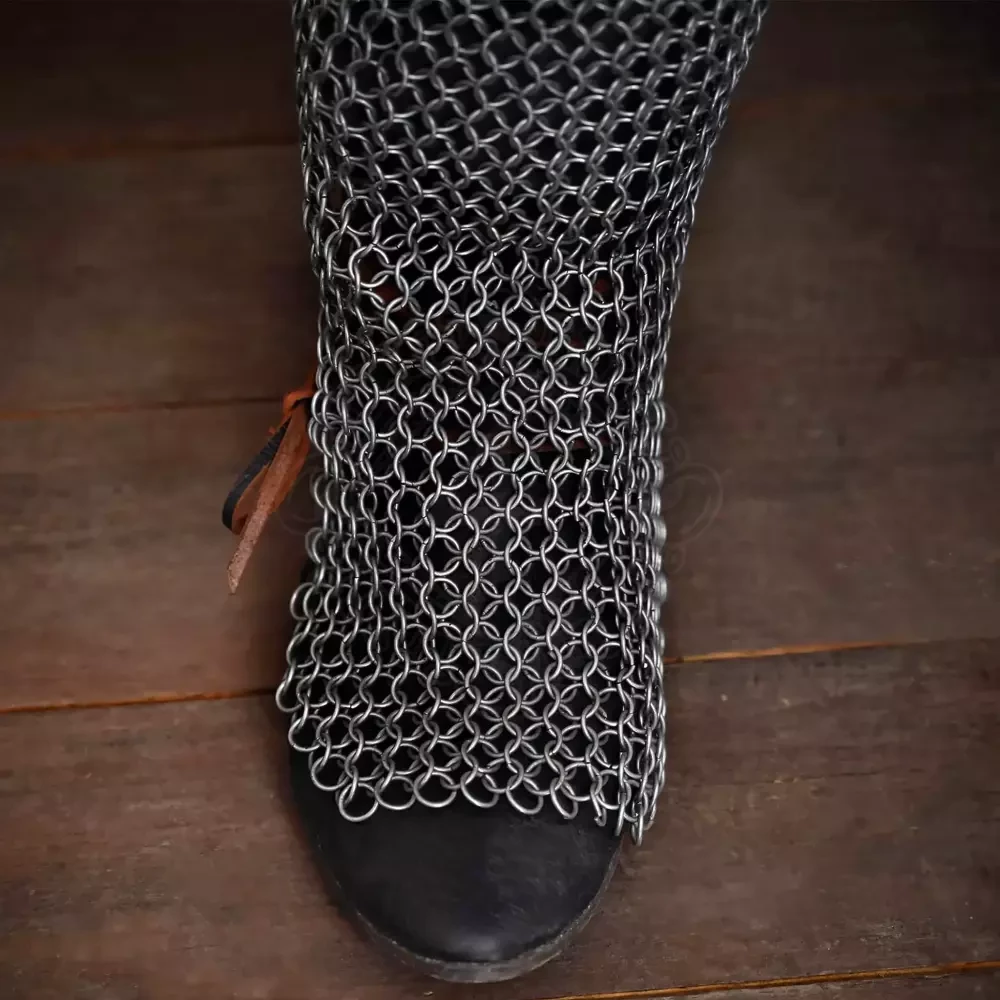
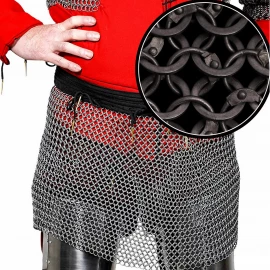
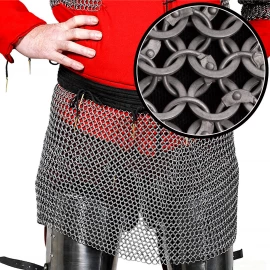
Although this armour is the cost-effective butted (non-riveted) type, its protective qualities are elevated to a higher level by the material used. Hardened spring steel is significantly stronger and tougher than standard mild steel. This means the individual rings are much more resistant to being forced open on impact. You get an excellent compromise between durability, weight, and price, ideal for all forms of reenactment and costume use.
The Birth of Knightly Chausses
The first depiction of chainmail chausses can be found on the famous Bayeux Tapestry, which chronicles the Norman conquest of England in 1066. There, Duke William the Conqueror himself wears them as a symbol of his status and wealth. During the 12th and 13th centuries, they evolved from a luxury item to standard equipment for every knight, complementing the long hauberk to create an almost complete suit of body armour.
A Point of Historical Interest: How Were Chausses Worn?
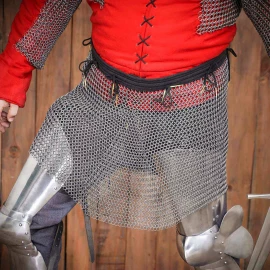
Chainmail chausses were not trousers in the modern sense. They were essentially two separate "stockings" that had to be suspended to keep them from sliding down. In the early medieval period, they were attached to a belt worn under the gambeson. Later, in the 14th and 15th centuries, they were tied with laces (points) to a specialized padded garment (an arming doublet), which allowed for even better distribution of their considerable weight.
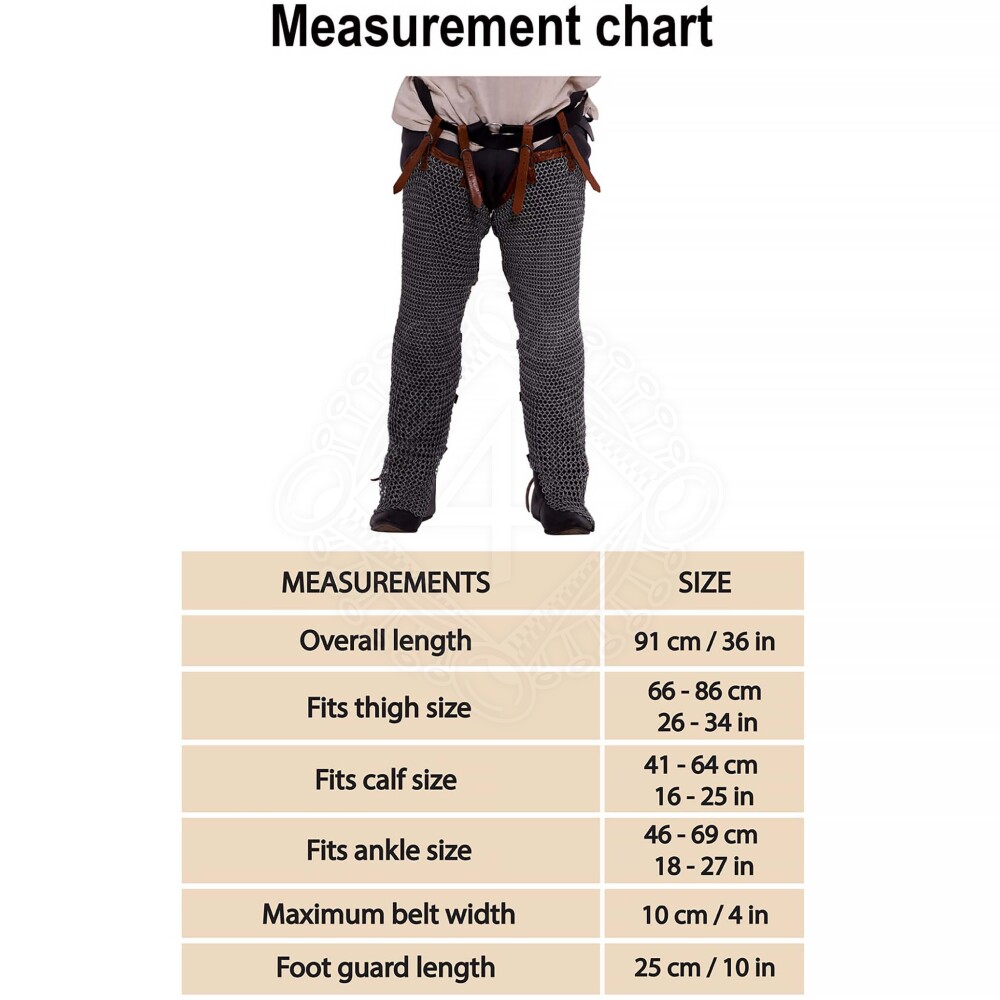
Measurement Chart
This product comes in one universal size with a wide range of adjustment. Please check the dimensions carefully to ensure a perfect fit.
| Overall Length | 36 in (91 cm) |
|---|---|
| Fits Thigh Size | 26 - 34 in (66 - 86 cm) |
| Fits Calf Size | 16 - 25 in (41 - 64 cm) |
| Fits Ankle Size | 18 - 27 in (46 - 69 cm) |
| Maximum Belt Width | 4 in (10 cm) |
| Foot Guard Length | 10 in (25 cm) |
| Weight (Pair) | Approx. 19.5 lbs (8.8 kg) |
Caring for Your New Armour
As this armour is made from hardened steel with a natural, oiled finish, it requires regular maintenance.
- Keep it Dry: After each use, especially in damp conditions, dry the chausses thoroughly.
- Oiling: Periodically apply a light coat of conservation oil (e.g., WD-40) and wipe off any excess with a cloth to avoid staining your undergarments.
- Storage: Store in a dry, ventilated place, ideally hung up.
We are here for you!




.3773623034.1696456237.png.webp)

.3773623034.1696456268.png.webp)
.3773623034.1696456247.png.webp)