
 Čeština
 Deutsch


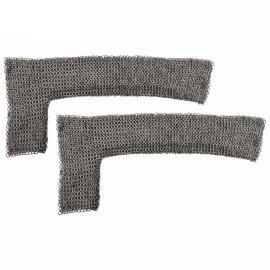
Connected Chainmail Sleeves: Steel Flat Rings Ø9mm (1.14mm), Alternating Riveted & Solid, Natural Finish - Outlet
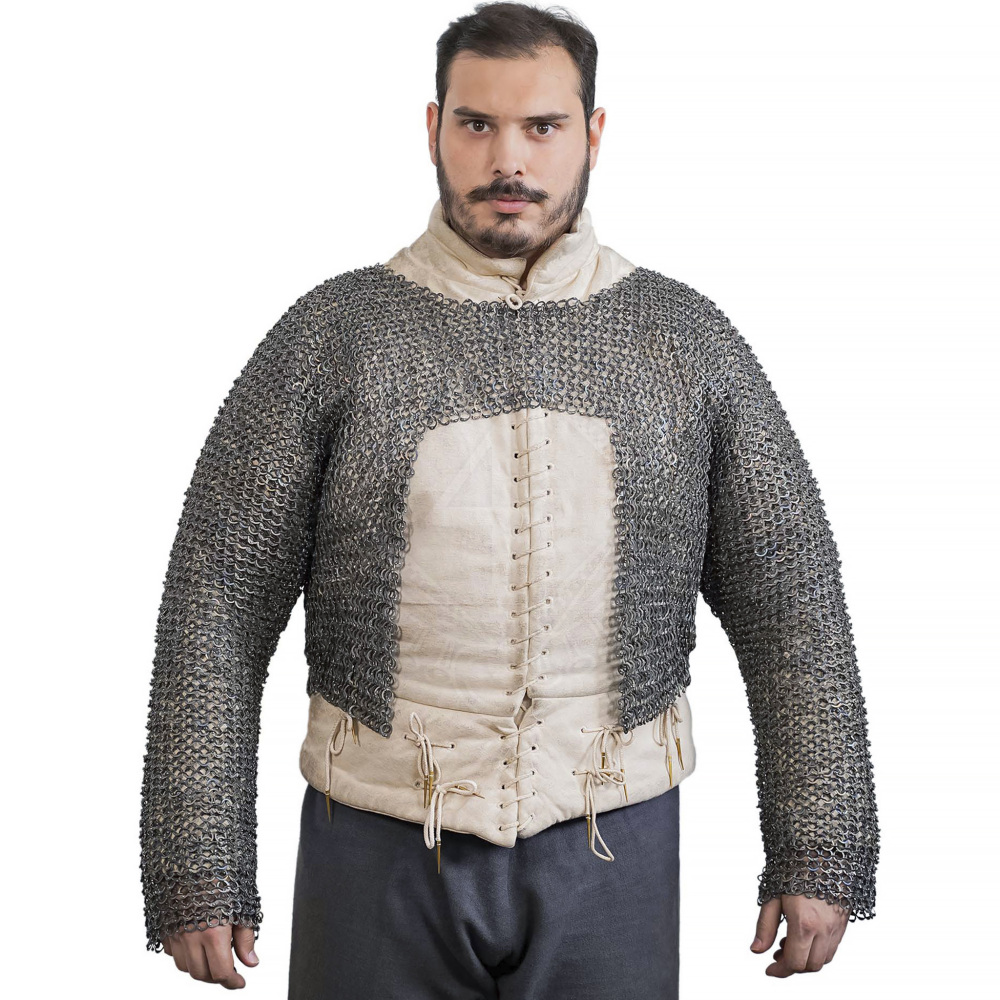

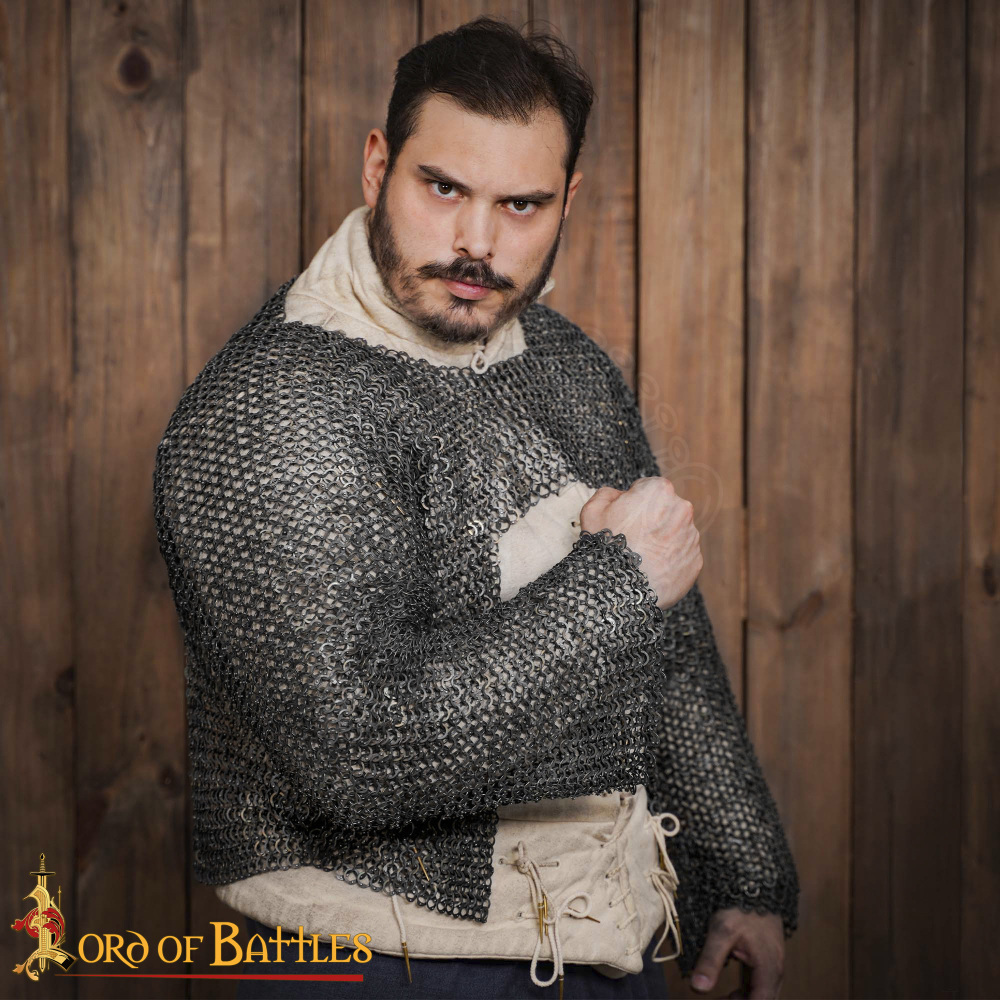

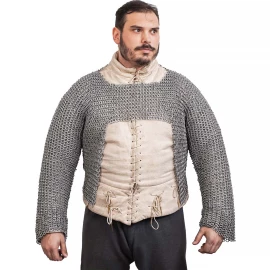
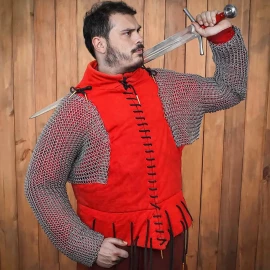
Are you looking for reliable and historically authentic arm protection for your reenactment battles or period costume? These connected chainmail sleeves, crafted from robust 9mm inner diameter flat mild steel rings (1.14mm material thickness) with alternating riveted and solid rings, offer you excellent coverage and flexibility. They are ideal for portraying characters from the 14th and 15th centuries and perfectly complement your gambeson or arming doublet. Further product information ...

 Delivery options
The following variants are currently available:
Connected Chainmail Sleeves: Steel Flat Rings Ø9mm (1.14mm), Alternating Riveted & Solid, Natural Finish
Why Choose These Chainmail Sleeves?
These chainmail sleeves are the ideal choice for a wide range of activities where you'll appreciate their quality and historical appearance:
- Historical Reenactment: Complete your armour for battles, tournaments, and displays. The sleeves provide essential arm protection without significantly restricting your movement, making them especially suitable for the late medieval period.
- LARP (Live Action Role Play): Enhance your character with durable and authentic-looking protection. Whether you're a brave warrior or a nimble adventurer, these sleeves will underscore your persona.
- Theatre and Film: An excellent and credible addition to costumes requiring historical accuracy, lending authenticity to any role.
- Collections and Displays: Expand your collection with a finely crafted piece of medieval protective gear.
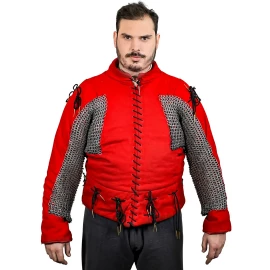
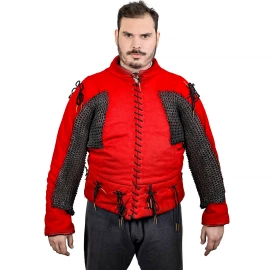
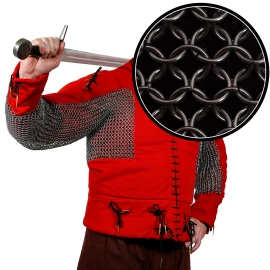
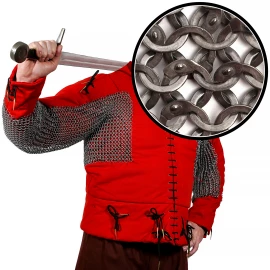
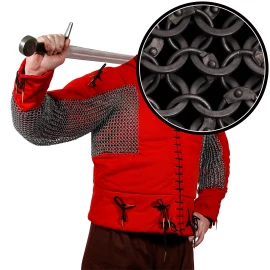
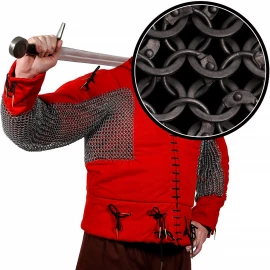
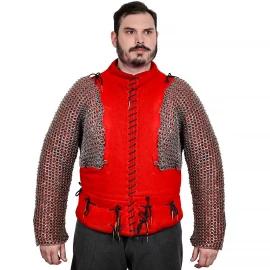
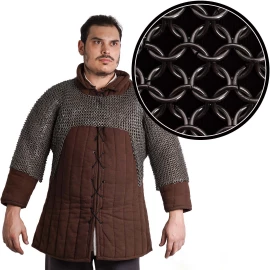
The sleeves are easily worn over your gambeson or other padded undergarment and, thanks to their thoughtful design (as seen in the photo), allow for free arm movement. They can be attached to your arming garment using leather thongs or points (not included, but attachment points are provided on the sleeves, as illustrated in the photo with the gambeson).
Historical Roots and Usage
In the 14th and 15th centuries, as plate armour became increasingly dominant on the battlefield, chainmail was often used to cover vulnerable areas not protected by plates, or as a lighter, more flexible alternative. These "connected sleeves," sometimes referred to as "voiders" or parts of "arming doublets," protected the warrior's arms. They were frequently used by foot soldiers, archers, or less affluent combatants who needed good mobility but could not entirely forgo protection. Typically, they were tied or sewn to a padded jacket (gambeson or aketon) and could be supplemented with other plate armour components like gorgets, pauldrons, or a cuirass. This saved weight and cost compared to wearing a full chainmail hauberk under plate, while still protecting key areas.
Material and Craftsmanship Quality
Flat, Alternating Riveted and Solid Rings
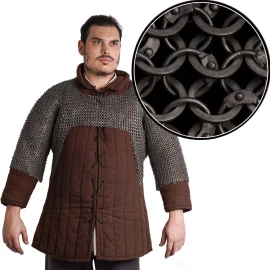
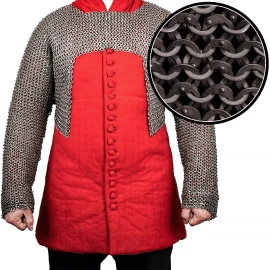
The combination of flat riveted rings with flat solid (punched) rings is a historically documented and very durable construction. Flat rings distribute impact energy more effectively and lie closer together than round wire rings, providing denser and stronger protection. The alternation of riveted rings (each ring individually closed with a round-head rivet) with solid rings (stamped from a single piece of material) significantly increases the overall structure's resistance to tearing and piercing by cutting and thrusting weapons. This "four-in-one" pattern, where each ring links four others, was crucial for effective protection on the medieval battlefield.
Mild Steel
The mild steel used is a modern equivalent of materials available in the Middle Ages, offering an optimal combination of strength, toughness, and resilience. This makes the sleeves robust and ready for demanding use in reenactment or other activities. The natural, lightly oiled finish corresponds to period crafting methods and helps protect the steel from surface corrosion.
An Interesting Historical Fact
Did you know that the development of chainmail armour didn't stop with the widespread adoption of plate armour? On the contrary, chainmail became more specialized and adaptable. In addition to full hauberks and haubergeons, supplementary and modular parts like these sleeves, chausses (leg protection), and gussets (for armpits, elbows, or knees) were created to cover gaps and joints in plate armour. This sophisticated combined armour, merging the advantages of plate and mail, represented the pinnacle of protective technology for the medieval knight and man-at-arms.
Technical Specifications
- Ring Type: Flat rings, alternating solid punched and riveted
- Material: Mild Steel
- Rivet Type: Round head rivets
- Ring Material Thickness: 1.14 mm (equivalent to 17 gauge)
- Ring Inner Diameter: 9 mm
- Finish: Natural, lightly oiled
- Manufacturer: Lord Of Battles®
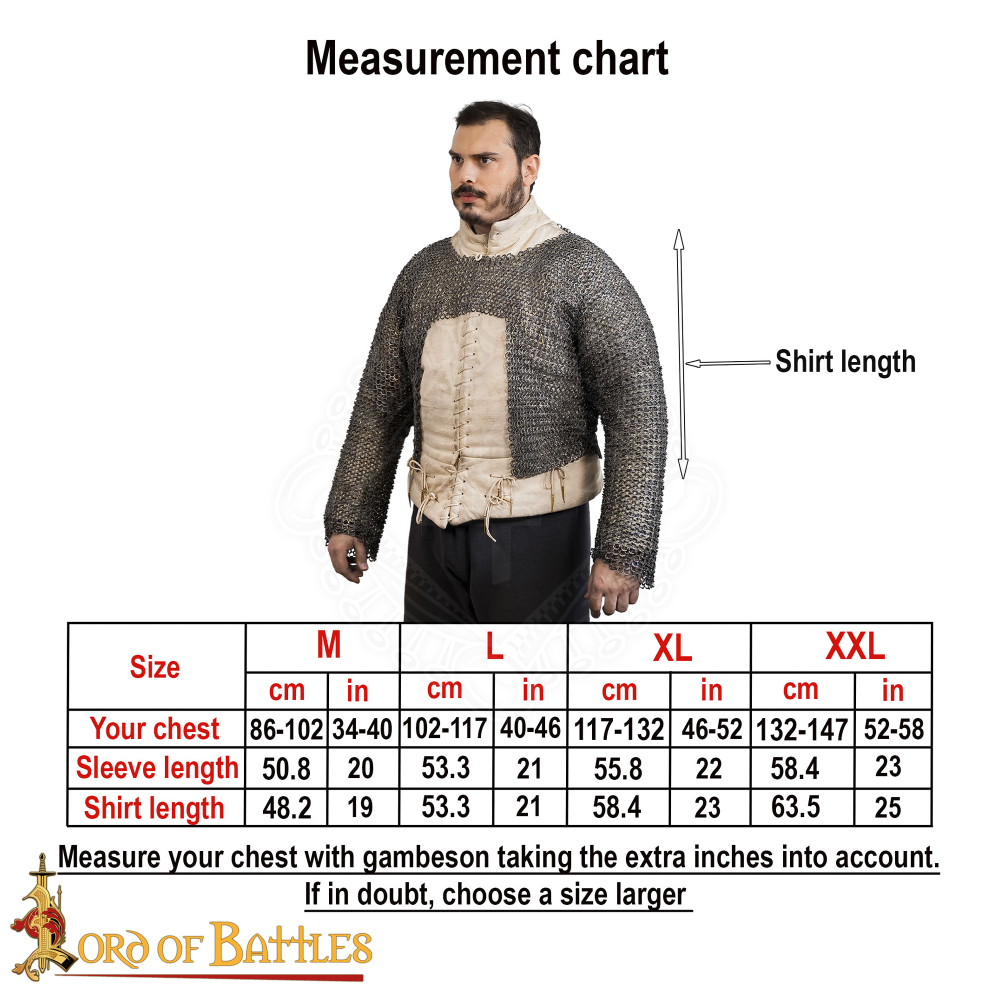
Size Chart
Please carefully select the correct size from the table below to ensure maximum comfort and functionality. Measurements are in centimetres and taken directly from the product. Remember that you will be wearing at least a padded gambeson underneath these sleeves.
|
Size |
M |
L |
XL |
XXL |
|
Chest Circumference (mail) |
118 cm |
124 cm |
140 cm |
146 cm |
|
Sleeve Length from Armpit |
52 cm |
53 cm |
54 cm |
54 cm |
|
Length from Neck to Bottom (back) |
41 cm |
41 cm |
50 cm |
56 cm |
|
Upper Arm Circumference (mail) |
42 cm |
42 cm |
48 cm |
56 cm |
|
Bicep Circumference (mail) |
36 cm |
38 cm |
40 cm |
46 cm |
|
Forearm Circumference (mail) |
30 cm |
34 cm |
36 cm |
42 cm |
How to Care for Your Chainmail Sleeves
To ensure your chainmail sleeves last a long time, look great, and don't stain your clothing or skin, give them a little care:
- Inspect and oil regularly: After each use, especially if they've come into contact with moisture (rain, sweat), dry the sleeves thoroughly. Then, lightly spray or wipe them with a cloth soaked in a preservation oil (e.g., WD-40, Ballistol, or another suitable gun oil/metal care oil). This will prevent corrosion.
- Storage: Store them in a dry, ventilated place. You can hang them freely or wrap them in lightly oiled linen or paper. Avoid long-term storage in a leather sheath or bag, as leather can absorb and retain moisture, potentially leading to rust.
- Removing light rust: If surface rust (flash rust) appears despite care, try removing it with a fine steel brush (a brass brush is even gentler), very fine steel wool (grade 000 or 0000), or the abrasive side of a kitchen sponge along with a little oil. Proceed carefully to avoid damaging the rivets. Specialised chemical rust removers are also available, but use them judiciously.
- Minimising staining: New chainmail can initially cause more staining due to manufacturing oils, production dust, and natural metal abrasion. Before wearing them over light-coloured clothing (like a gambeson) for the first time, wipe them down thoroughly with a dry, clean cloth. You can also "tumble" them in a drum with sand or fine sawdust (an old method for cleaning chainmail), though this is more labour-intensive. Wearing them over a quality underlayer (e.g., a linen shirt and a thick gambeson) will also help catch most residues.
Please note: The gambeson (padded jacket) and other accessories shown in the photo are not included with these chainmail sleeves and are for illustrative purposes of their potential use and attachment only.
A quality product from Lord Of Battles®.
We are here for you!





.3773623034.1696456237.png.webp)

.3773623034.1696456268.png.webp)
.3773623034.1696456247.png.webp)