
Steel Nail with Eight-Petal Rosette 4 in

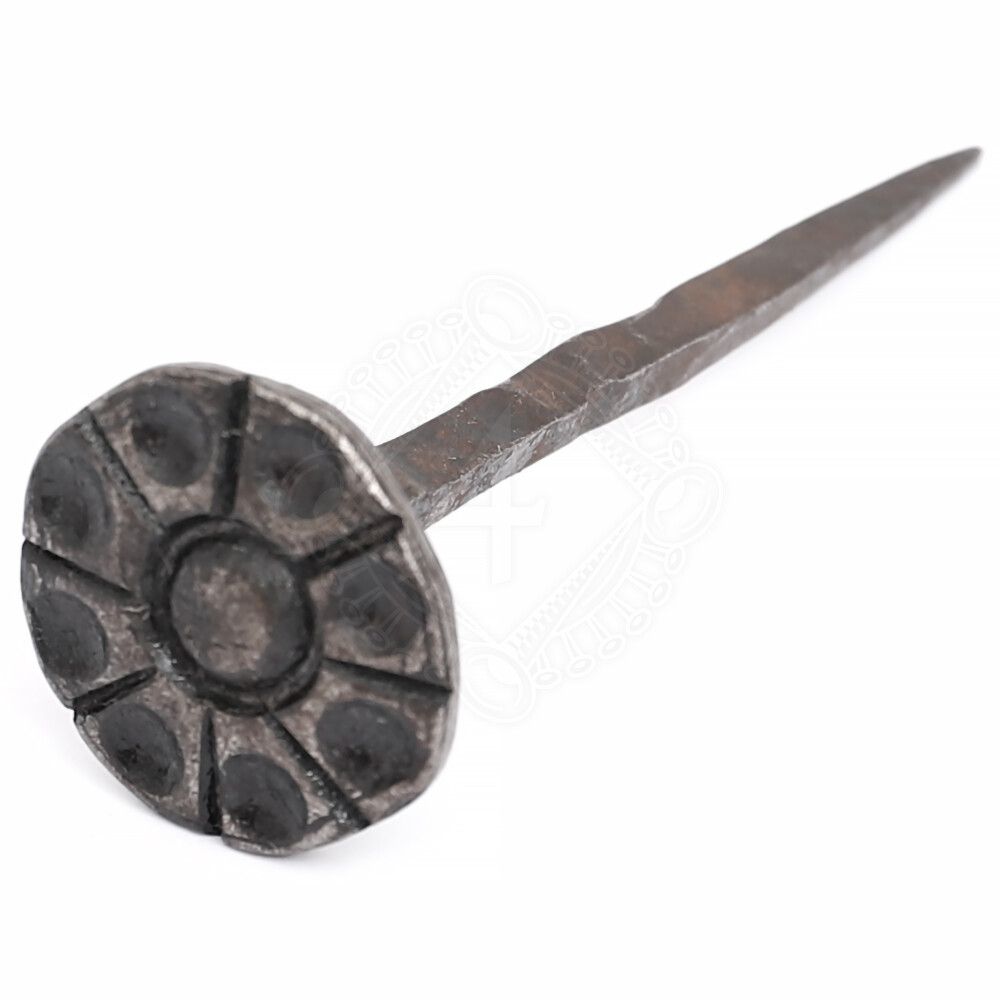
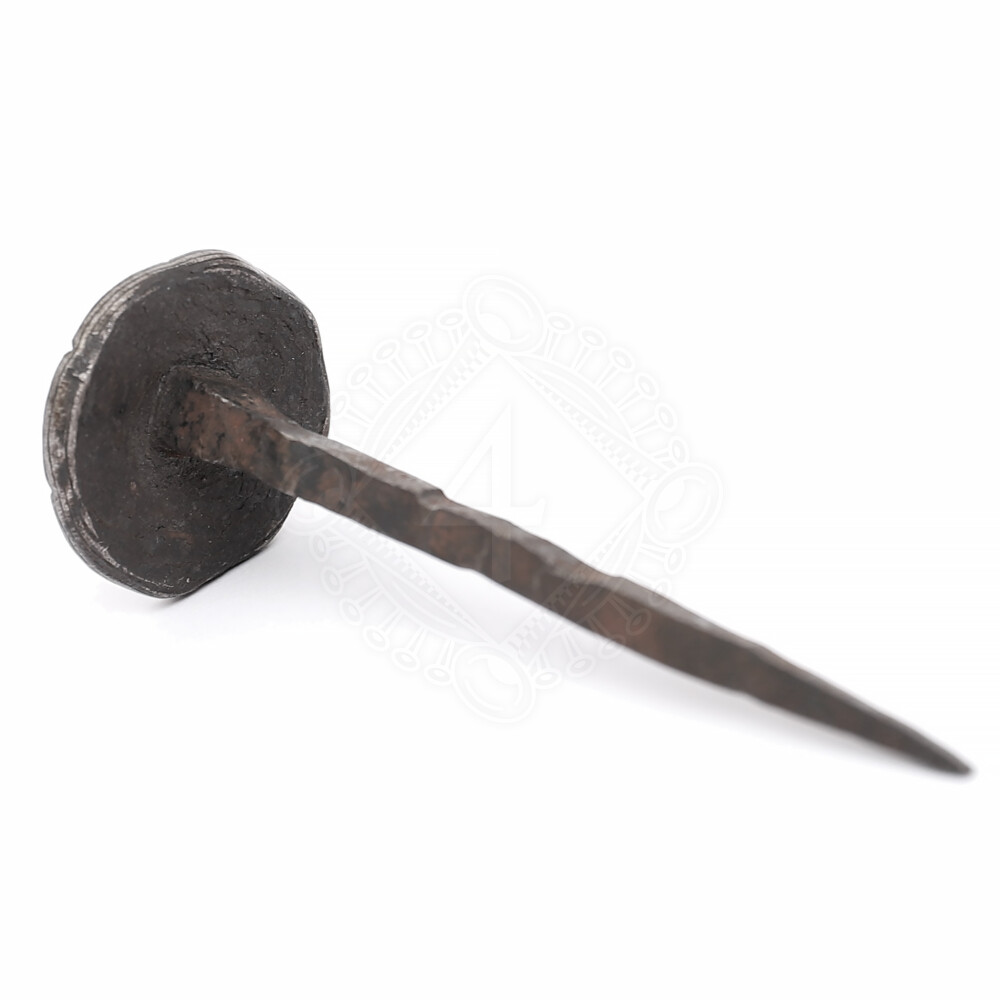
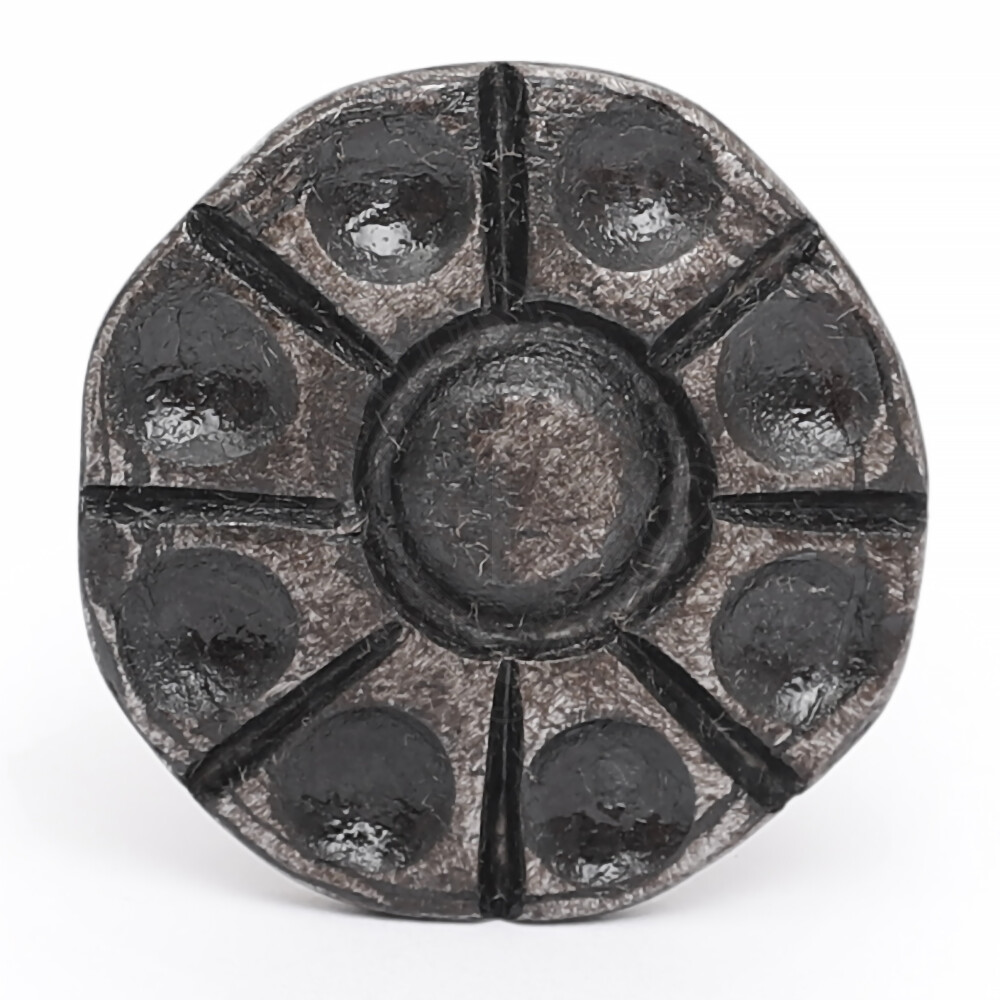
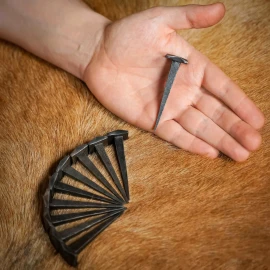
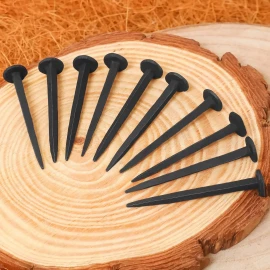
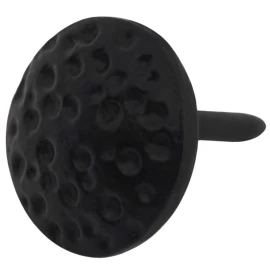
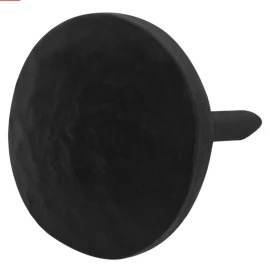
Give a heavy door, gate, chest or piece of rustic furniture a bold historical detail. This hand-finished steel nail has a large circular head shaped as an eight-petal rosette. Its raised centre, radial grooves and irregular surface recall the work of traditional smiths rather than modern machine-made hardware. With an overall length of approximately 10 cm, it is best suited to substantial timber. Each nail has its own surface texture and slight variations, which are natural characteristics of individual hand production rather than manufacturing faults. Further product information ...

Available immediately 20 pcs
Item physically stored in our Warehouse in Kadan
, dispatch on: Today
Delivery options
7,70 €
6,36 € excl. VAT

Steel Nail with Eight-Petal Rosette

A Late Medieval Decorative Nail for Doors and Chests

The design is inspired by late medieval and early Renaissance ironwork of the 14th to 16th centuries. Large decorative nail heads were used upon plank doors, gates, shutters, chests and wooden furnishings. Such nails could join timber, retain metal fittings and decorate the visible face of the finished object at the same time.

The eight-petal rosette is a versatile floral motif found in Gothic, Renaissance and vernacular decoration. Radial grooves divide the circular head into eight sections containing rounded depressions. A raised circular boss forms the centre of the composition. The slightly irregular outline and visible working marks give the nail an authentically rustic appearance.

Suggested Uses

  • Decorative studding for heavy plank doors, gates and shutters.
  • Construction or restoration of medieval and Renaissance-style chests.
  • Ornamental detailing for benches, cupboards, tables and rustic furniture.
  • Historic interiors, tavern settings, museum displays, LARP scenery and film sets.
  • Retaining light strap fittings where a certified structural fastener is not required.
  • Decorating timber beams, gateways, props and exhibition structures.

This nail is intended primarily for substantial timber. It is not a certified structural fastener and should not replace screws, anchors or construction nails specified for load-bearing work.

How to Install the Nail

  • Mark the position carefully and make certain that the timber is thick enough to receive the approximately 10 cm long shank.
  • Always drill a pilot hole in hard, dry or aged timber. Size the hole according to the actual shank of the individual nail and keep it slightly narrower than the metal.
  • Hold the nail square to the surface and begin with light, controlled hammer blows.
  • Do not strike the decorated head directly with a sharp hammer face. We recommend using a wooden block, a soft-faced mallet or another protective layer.
  • Drive the nail evenly until the head rests firmly against the timber. Excessive force may damage the relief or split the wood.
  • When the point passes through the workpiece, secure, cover or professionally clench it upon the reverse so that it cannot cause injury.

An Interesting Historical Detail

Long nails used upon medieval gates and chests were sometimes driven completely through the timber and bent or flattened upon the reverse. This made the fastening considerably more difficult to withdraw. The broad ornamental head concealed the entry point and transformed a practical joint into a visible part of the decorative scheme.

Technical Specifications

Specification Details
Product type Decorative nail for timber
Material Hand-finished steel
Head design Eight-petal rosette with raised central boss
Style Late Gothic, early Renaissance and rustic historicism
Associated period Approximately 14th to 16th century
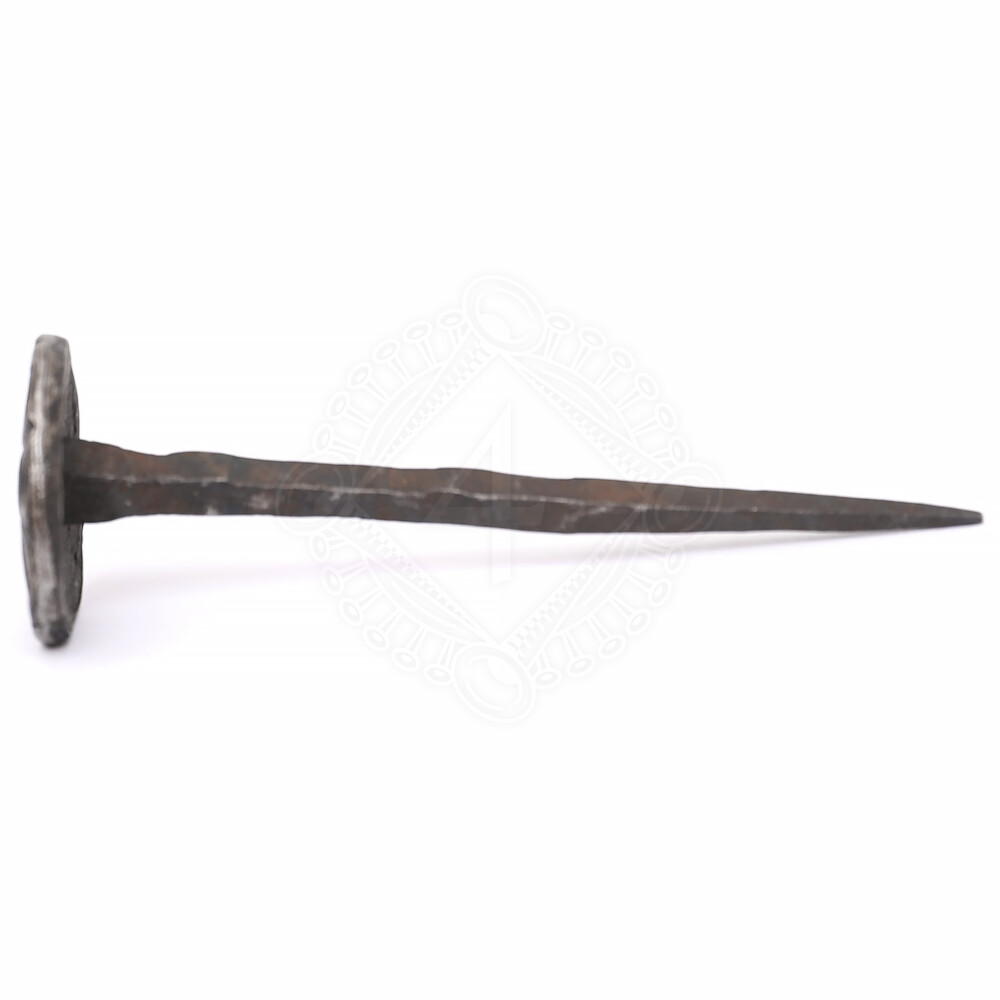
Overall length Approx. 10 cm / 3.94 in
Head diameter Approx. 35 mm / 1.38 in
Head thickness Approx. 4 mm / 0.16 in
Shank section beneath the head Approx. 8 mm / 0.31 in
Shank section 1 cm from the point Approx. 3 mm / 0.12 in
Shank form Square-sectioned and tapering towards the point
Surface Dark and irregular with visible hand-working marks
Weight Approx. 43 g / 1.52 oz
Contents 1 nail
Production tolerance Dimensions, weight, shape and shade may vary slightly

Care and Safety

Wipe the steel surface regularly with a dry cloth. For indoor use, apply a thin layer of conservation oil or metal wax from time to time. When exposed outdoors, the steel may gradually develop a natural rust patina. To limit corrosion, renew the protective coating more frequently and avoid prolonged contact with standing water.

  • Keep the nail away from children because it has a sharp point and considerable weight.
  • Wear safety glasses and strong work gloves during installation.
  • Do not attempt to drive it into masonry, stone, concrete or metal.
  • Do not use it upon thin boards that may split or allow the point to pass through completely.
  • Do not bend the shank backwards and forwards repeatedly, as this may cause fatigue cracking.
  • Never leave the sharp point exposed upon an accessible surface.

Recommended Accessories

For a door, gate or chest inspired by the 14th to 16th centuries, we recommend combining this nail with period-style strap hinges, a ring knocker, a hasp, a sliding bolt and additional decorative nails of a similar finish. A suitable wood drill bit, wooden striking block, soft-faced mallet and protective metal oil or wax will also make installation and maintenance easier.

Similar products (16)