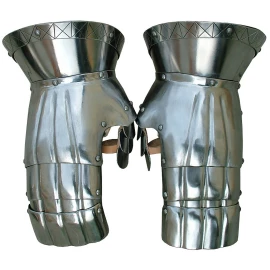

Milanese Avant Mitten Gauntlets, 16-Gauge Steel
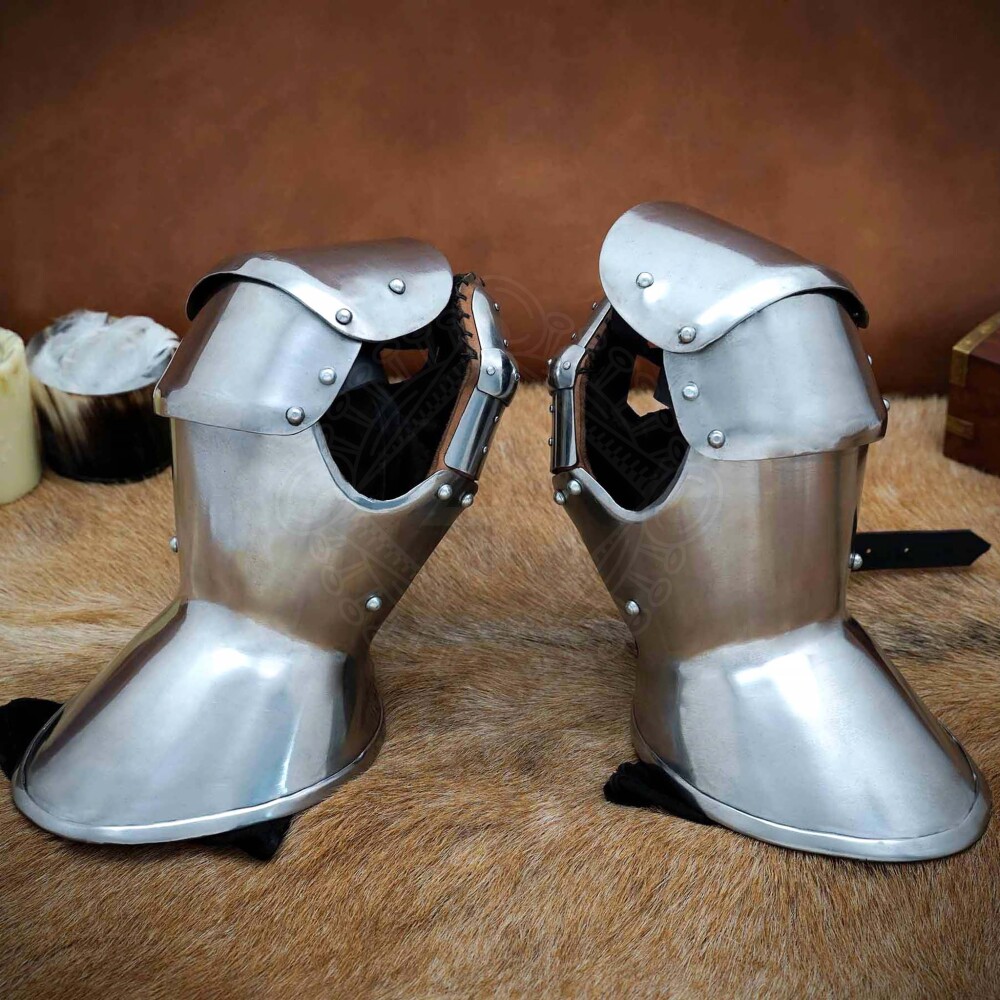
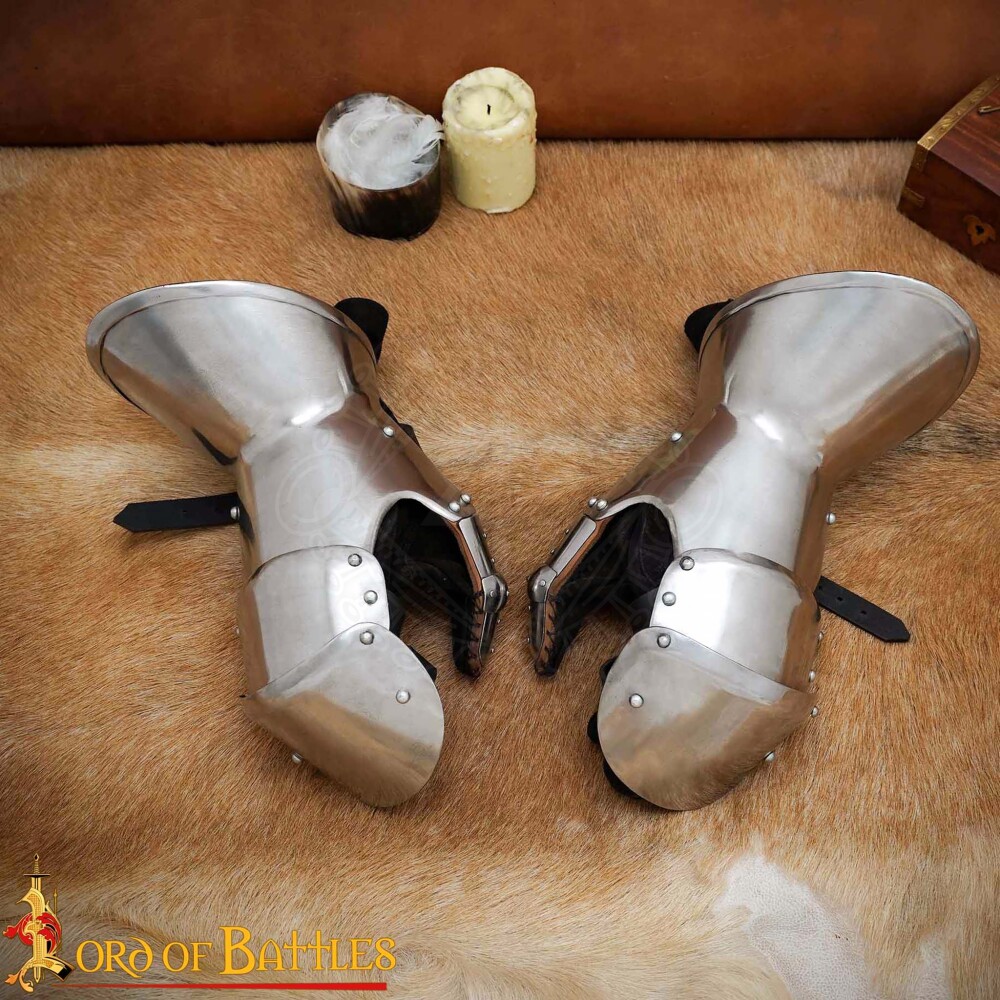
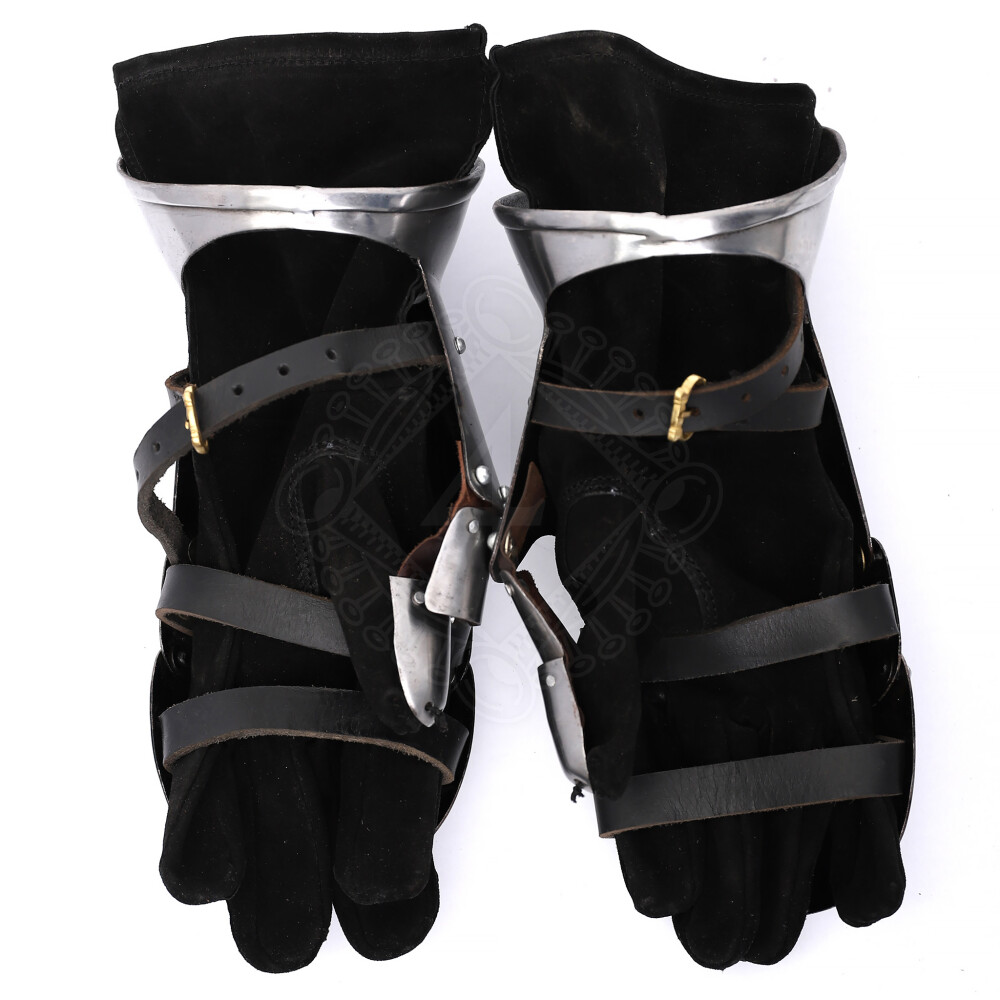
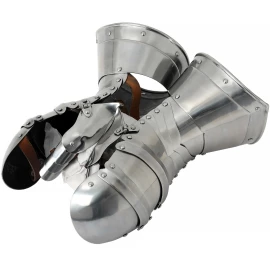
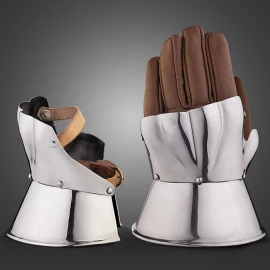
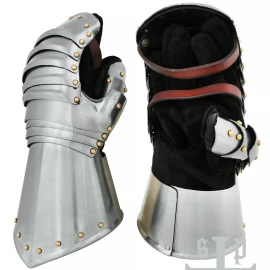
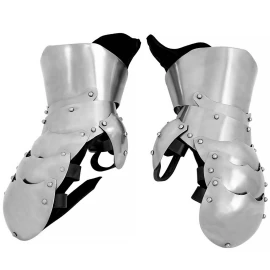
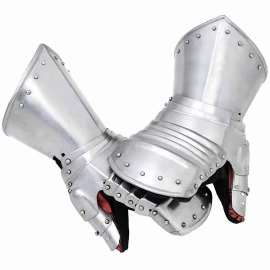
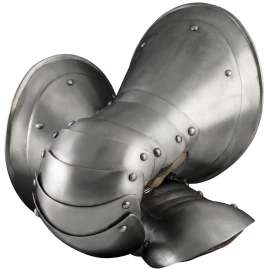
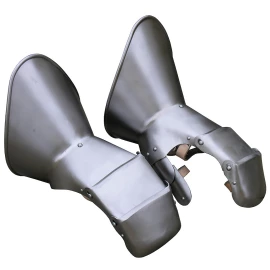
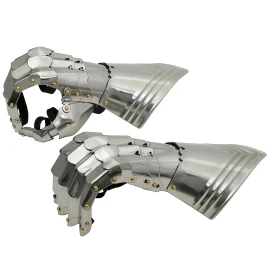
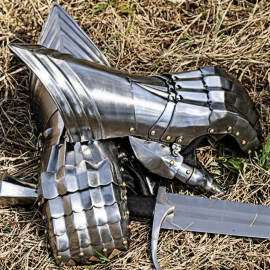
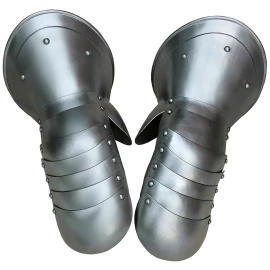
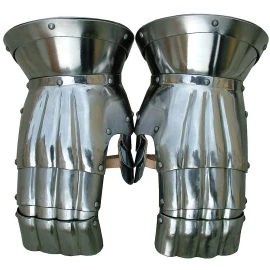
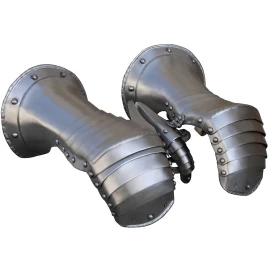
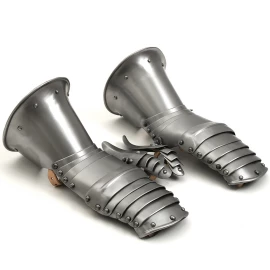
Complete a mid-15th-century northern Italian harness with a pair of imposing medieval plate gauntlets inspired by the celebrated Avant armour. These Milanese-style mitten gauntlets combine broad flared cuffs, overlapping steel plates and an independently articulated thumb with integrated split-suede leather gloves. The approximately 1.6 mm / 16-gauge steel gives them a substantial, historically convincing appearance, while the articulated construction allows the hand to close around a weapon or prop. We recommend them for historical reenactment, LARP, theatre, film productions, medieval costume and as a striking addition to an armour collection. Further product information ...

Corio Milanese Avant Mitten Gauntlets, 16-Gauge Steel
Milanese Plate Gauntlets Inspired By The Avant Armour
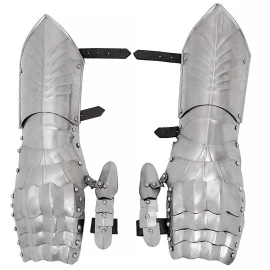
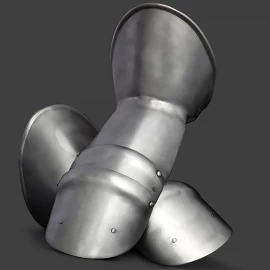
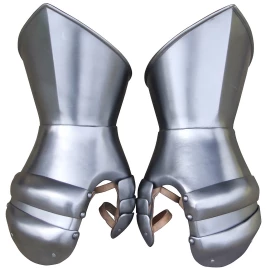
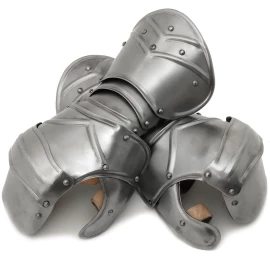
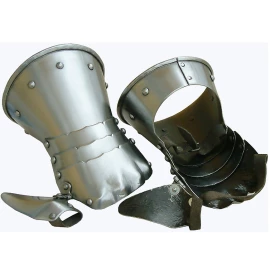
The form of these knight gauntlets and plate gauntlets follows the design language of northern Italian armour around the middle of the 15th century, particularly the famous harness known as the Avant armour. Each gauntlet has a long, strongly flared cuff covering the wrist and part of the forearm. Its shaped lower edge stiffens the structure and creates the characteristic flowing transition between hand protection and the rest of a Milanese arm harness.
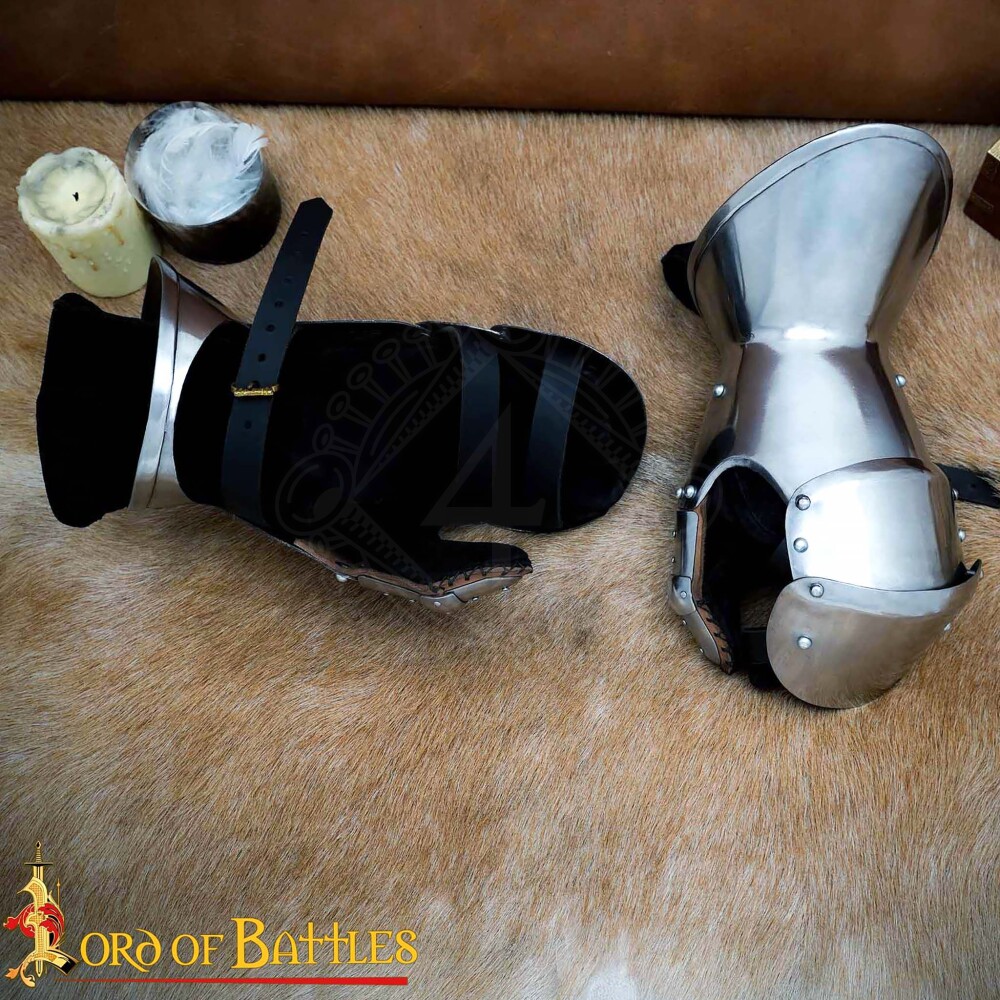
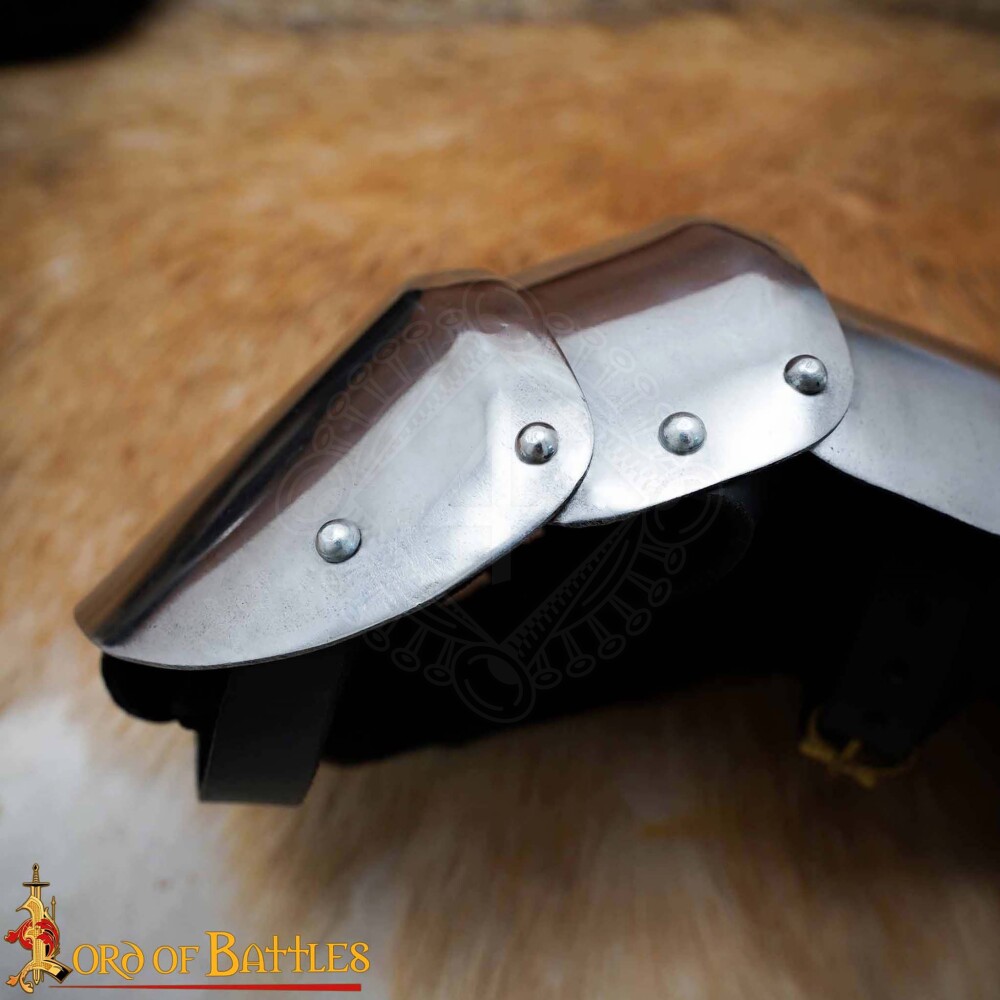
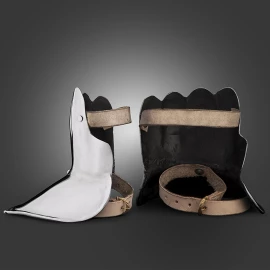
The back of the hand and knuckles are covered by several smooth overlapping steel plates joined with rivets. As you close your hand, the individual sections can slide over one another. The thumb has its own articulated series of smaller plates mounted on a leather foundation. Inside is a black split-suede leather glove. The thumb section is connected to the plate assembly, while the remainder of the glove is held beneath internal leather straps. A leather wrist strap with a metal buckle helps keep the gauntlet securely positioned.
A Milanese Original From Around 1440
The Avant harness is one of the best-known surviving examples of 15th-century Milanese armour. It is generally dated to approximately 1440–1445 and was made in Milan for a member of the Matsch family associated with Churburg Castle in the South Tyrol. Marks belonging to several specialist armourers survive on different parts of the harness. The Milanese armourer Giovanni Corio is associated with major components of the armour, while elements of the leg harness are attributed to Giovanni da Garavalle.
The name Avant comes from an inscription repeated on the original breastplate. The word can be understood as “forward” and was probably used as a personal motto. The armour later passed from the Churburg collection into the R. L. Scott collection in Glasgow. The ensemble displayed today is not entirely original in every detail: the present right gauntlet is a genuine period piece but was not originally part of the harness, while the left gauntlet is a later reconstruction. We therefore describe this pair as a historically inspired reproduction based on the style and construction principles of the Avant armour, rather than an exact copy of a completely surviving original pair.
A Tribute To Armourer Giovanni Corio
The creative name of this model honours Giovanni Corio, one of the Milanese armourers associated with the manufacture of the Avant harness. During the 15th century, Milan became one of Europe's foremost centres for professional armour production, and Milanese harness was exported far beyond Lombardy. These gauntlets are named in Corio's honour as a reminder of the highly specialised craft tradition in which the distinctive Milanese armour style developed.
How To Put The Gauntlets On Correctly
Before putting them on, inspect the rivets, leather straps and inner gloves. Slide your hand fully into the leather glove, seat your thumb correctly inside the articulated thumb section and open and close your hand several times. Each plate should move freely over the adjacent section without catching. Adjust the wrist strap until the gauntlet remains securely in position without restricting circulation or normal wrist movement.
When combining the gauntlets with a complete harness, check that the broad cuff overlaps your vambrace or other forearm protection without binding. For comfortable wear we recommend an appropriate 15th-century arming doublet, light gambeson or other padded underlayer, particularly where separate components of the plate harness meet. Always test the complete armour assembly without combat loading before using it at an event.
Technical Specifications
| Specification | Details |
|---|---|
| Type | Plate gauntlets, mitten gauntlets |
| Historical inspiration | Avant armour, northern Italy |
| Style | Milanese plate armour |
| Date of historical inspiration | Approx. 1440–1445, 15th century |
| Plate material | Mild steel |
| Steel thickness | Approx. 1.6 mm / 16 gauge |
| Finish | Smooth-ground and polished steel |
| Construction | Riveted overlapping steel plates |
| Finger construction | Mitten design with shared articulated finger protection |
| Thumb | Separately articulated plates mounted on a leather foundation |
| Cuff | Long and strongly flared |
| Inner gloves | Split-suede leather |
| Wrist fastening | Leather strap with metal buckle |
| Overall length | Approx. 34–34.5 cm / 13.4–13.6 in |
| Weight per pair | Approx. 2.1 kg / 4.6 lb |
| Supplied as | Pair of plate gauntlets with leather inner gloves |
| Manufacturer | Lord Of Battles® |
| Manufacture | Hand-made; minor variations in finish, riveting and leatherwork are normal |
Steel And Leather Care
After every use, wipe all steel surfaces with a soft dry cloth to remove perspiration, fingerprints and moisture. Apply a very thin and even coat of suitable armour preservation oil afterwards. Pay particular attention to the rivets and areas beneath overlapping plates, where moisture can remain hidden and encourage surface corrosion.
Allow the suede leather gloves to air-dry naturally at room temperature. Never place them on a radiator, beside an open fire or in strong direct sunlight. An occasional light application of a suitable pH-balanced leather conditioner will help keep the leather supple. Store the gauntlets in a dry, ventilated location, preferably in a breathable cloth bag rather than sealed plastic. During long-term storage, inspect them periodically for early signs of tarnishing or rust and renew the protective oil when necessary.
Safe Use
These gauntlets are not certified personal protective equipment and are not intended for full-contact armoured combat. We do not recommend them for buhurt, HMB, Battle of the Nations or comparable high-impact disciplines unless their use is explicitly accepted by the organiser's rules and the responsible armour inspection team.
- Inspect all rivets, straps, leather components and steel plates before every use.
- Stop using the gauntlets if a rivet is missing, a plate has cracked or a sharp edge has developed.
- Do not forcibly bend, reshape or hammer the plates without suitable tools and armour-working experience.
- For historical fencing or controlled combat use, follow the rules and permitted intensity of the specific event and always wear complete compatible protective equipment.
- Never store damp gauntlets inside a sealed plastic bag.
Recommended Accessories
- A 15th-century arming doublet or light gambeson as a comfortable foundation beneath a plate harness.
- 15th-century Milanese vambraces and couters to create an appropriate overlap with the broad gauntlet cuffs.
- A mid-15th-century Milanese breastplate and pauldrons for a visually coherent northern Italian harness.
- A 15th-century Italian armet or barbute to complete the characteristic silhouette of a late-medieval man-at-arms.
- For modern maintenance, we also recommend armour preservation oil, suitable leather conditioner and a breathable storage bag.
We are here for you!