
 Čeština
 Deutsch


Explorer's Professional Folding Map Compass with Sighting Mirror and Lens
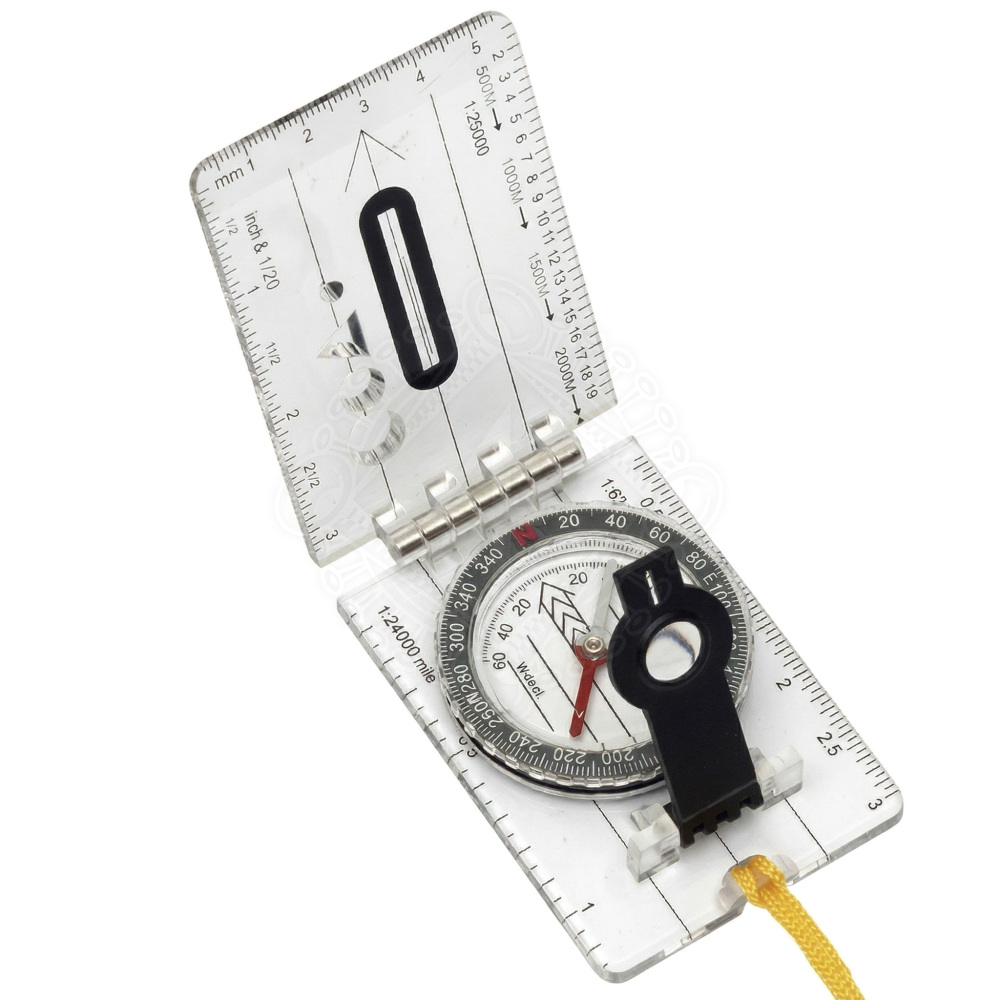
Are you looking for a reliable tool that won't let you down in the densest forest or during a demanding orienteering race? This folding map compass is designed for all adventurers, LARPers, and outdoor enthusiasts who prefer classic navigation over digital devices. Thanks to its transparent base plate, you can easily place it directly onto a map, while the fold-out sighting mirror allows for precise aiming at targets in the field. The ergonomic design and integrated magnifying lens for reading fine map details make this piece an essential part of your gear. Whether you are heading out for a historical re-enactment or a modern expedition, you will always maintain the right direction with this compass. Further product information ...

 Delivery options
Explorer's Professional Folding Map Compass with Sighting Mirror and Lens
Usage and Technical Features
The compass is equipped with a rotating bezel with degree markings, allowing for the setting of azimuths. When working with a map, you will appreciate the rulers in millimetres and inches, as well as the 1:25,000 and 1:50,000 scales printed directly onto the plastic body. The mirror on the inside of the lid serves to simultaneously monitor the needle and the sighted object, minimizing errors when determining direction. The compass also features a yellow lanyard to keep it close at hand. Before use, ensure that there are no metal objects or magnets nearby that could interfere with the needle's magnetic field.
Technical Specifications
| Product Type | Folding map compass with mirror |
| Dimensions (Open) | 160 x 55 mm (approx. 6.3 x 2.16 inches) |
| Dimensions (Closed) | 80 x 55 mm (approx. 3.15 x 2.16 inches) |
| Material | Transparent acrylic, metal needle |
| Scales and Graduation | mm, inch, 1:25,000, 1:24,000 mile, 1:62,500 |
| Features | Sighting mirror, magnifier, neck lanyard, luminous markings |
| EAN | 4050346813570 |
Navigation Through the Centuries
While the first magnetic needles were used by Chinese mariners as early as ancient times, the modern map compass with a transparent base plate, as we know it today, was developed only at the beginning of the 20th century. A key milestone was the introduction of the liquid-filled capsule, which stabilizes the needle and allows for faster reading of values. This type of compass became the standard for military scouts and later for sporting orienteers. In the context of re-enactment or LARP, this item can serve as a practical modern aid hidden in a pouch, or as a base for conversion into a historicized navigation device for a scout from the World War era.
Maintenance and Safety Recommendations
This compass is made of durable plastic, yet it requires careful handling. For cleaning, use only a soft, dry, or slightly damp cloth to avoid scratching the transparent surface or the mirror. Never store the compass near strong magnets, speakers, mobile phones, or electrical devices, as this could lead to a permanent reversal of the needle's polarity. Do not expose the product to extreme temperatures (e.g., behind a car window in direct sunlight), as this could cause bubbles to form in the liquid or the housing to crack. When navigating in the field, always rely on a combination of map, compass, and your own judgment.
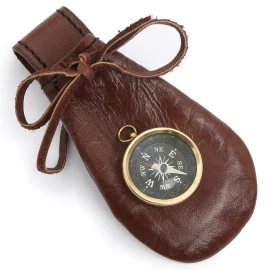
We recommend that you also purchase a durable leather belt pouch and a high-quality waterproof map case to protect your map even in adverse weather.
We are here for you!




.3773623034.1696456237.png.webp)

.3773623034.1696456268.png.webp)
.3773623034.1696456247.png.webp)