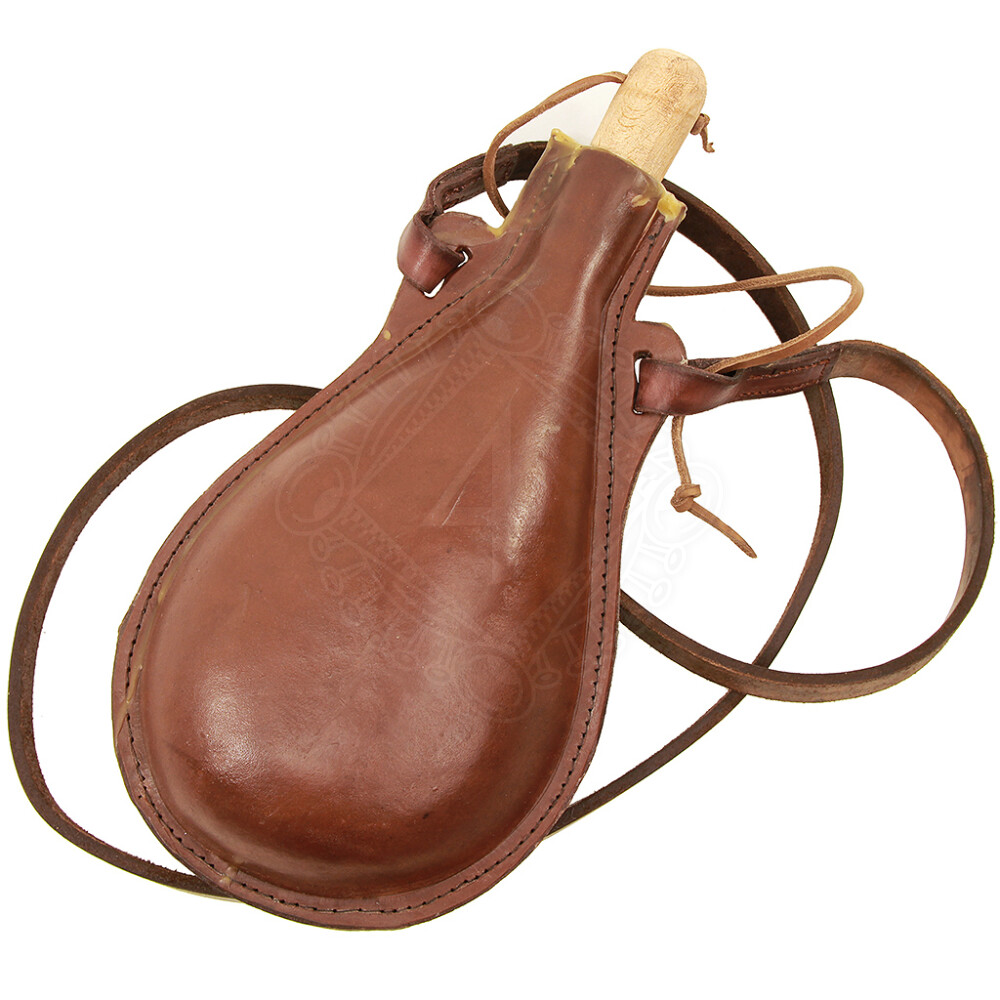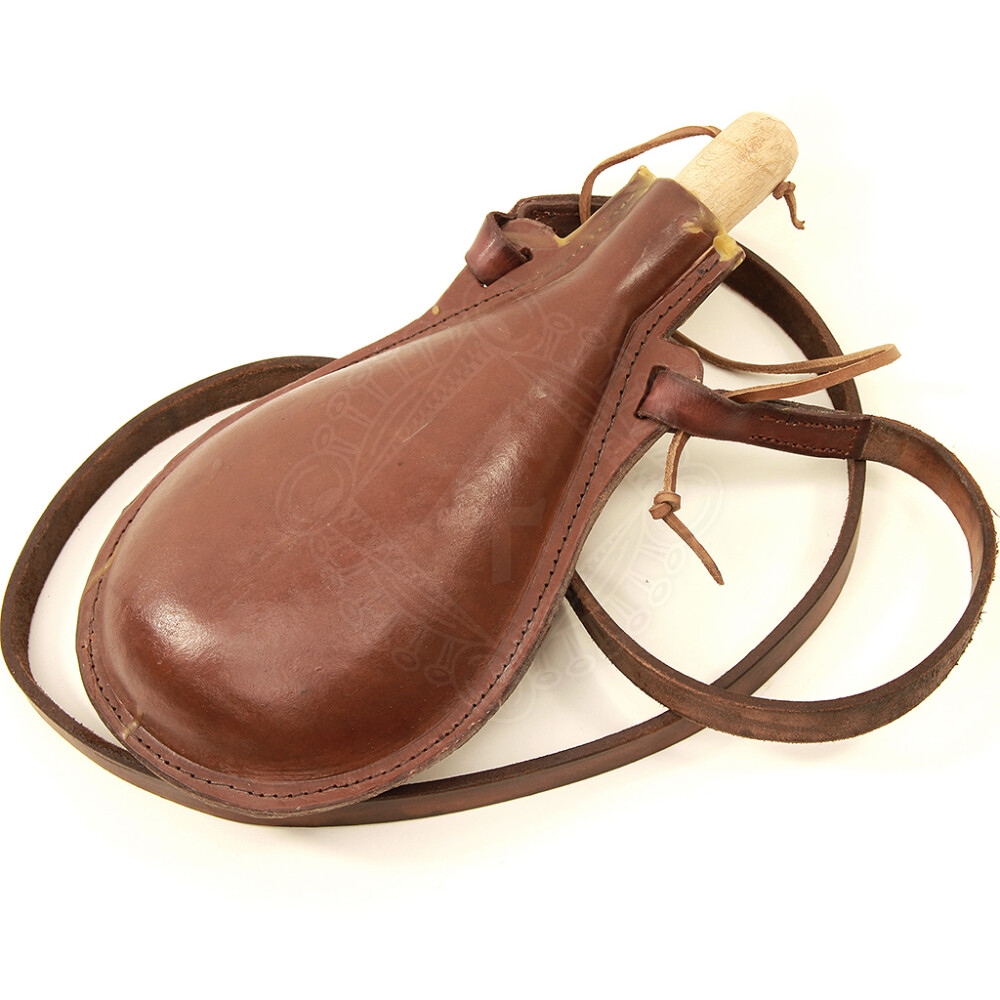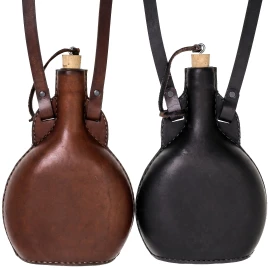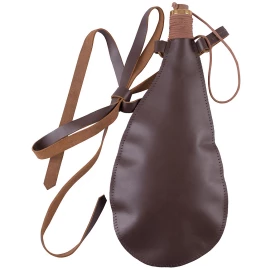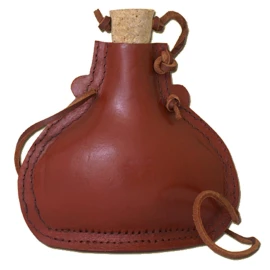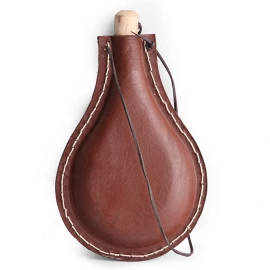

Historical Leather Water Canteen 0.7 L
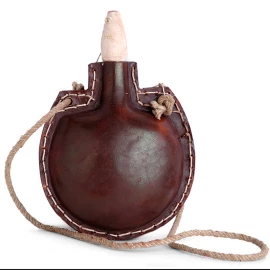
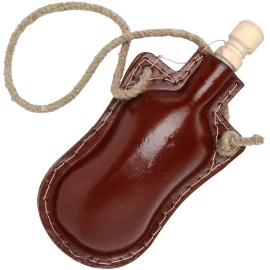
Are you looking for a reliable and thoroughly authentic water vessel to complete your historical kit for encampments, marches, or the battlefield? This masterfully crafted teardrop leather canteen is the ultimate choice for any warrior, wandering mercenary, merchant, or pilgrim. Crafted from thick, high-quality cowhide, the interior is sealed with a lining of pure beeswax—a traditional and proven historical method for waterproofing. Thanks to the integrated leather shoulder strap, you can carry it comfortably across your body, keeping refreshment close at hand. The volume of approximately 0.7 litres (approx. 1.2 pints / 24 fl oz) provides a sufficient supply of water for medium-length marches without weighing you down at the belt. Further product information ...
Historical Leather Water Canteen 0.7 L with Beeswax Lining
Historical Context and the Evolution of the Canteen
Leather water flasks, costrels, and canteens were standard issue for travellers and armies from the early Middle Ages through to the early modern period. Compared to contemporary clay or glass vessels, they possessed one distinct advantage: they were virtually indestructible. If dropped from a horse or struck in the chaos of battle, a leather costrel would not shatter. Furthermore, the wax-treated leather exhibited excellent thermal insulation, keeping water cooler for longer during sweltering summers. Historically, interior sealing was accomplished not only with beeswax but occasionally with pitch or tree resin to prevent seepage and stop the water from absorbing tannins from the leather.
Usage for Modern Re-enactment and LARP
Thanks to its versatile and timeless design, this model is suitable for a vast array of historical eras—ranging from the early Middle Ages (Vikings, Saxons), through the High Middle Ages and the Thirty Years' War, right up to 18th and 19th-century frontiersmen and trappers. It also serves perfectly within fantasy LARP settings. The traditional saddlery and stitching techniques ensure the canteen looks exceptionally authentic, preserving the visual integrity of your carefully assembled historical costume.
Technical Parameters and Material Composition
The canteen is hand-stitched from robust cowhide and fitted with a bespoke turned wooden stopper that seals the neck tightly.
| Parameter | Specification |
|---|---|
| Body material | Hardened vegetable-tanned cowhide, approx. 2.5 mm thick |
| Tanning method | Natural vegetable tanning (plant extracts), chrome-free |
| Internal lining | 100% natural pure beeswax |
| Stopper | Turned solid wood peg |
| Carrying system | Integrated leather shoulder strap |
| Approximate capacity | approx. 0.7 litres (1.2 imp pints / 23.6 US fl oz) |
Important Consumer Notice: This product is a fully functional artisan replica of a historical vessel, crafted in small batches using traditional methods. For legal compliance, please note that the item has not undergone official food safety certification testing. Consequently, it is formally sold as a decorative item that is not certified for direct contact with food or beverages.
Canteen Care and Safe Maintenance Guidelines
The internal beeswax lining is sensitive to heat and mechanical stress, requiring specific care. After each use, rinse the flask thoroughly with clean, lukewarm water, turn it upside down, and leave it to drain and dry completely. Always store it unstoppered in a well-ventilated, dry environment. Never fill the canteen with hot beverages (tea, coffee, mulled wine), alcoholic drinks exceeding 20% ABV, or acidic liquids (fruit juices, fizzy sodas). Heat and strong alcohol will instantly dissolve the beeswax, permanently ruining the item. Strictly avoid placing the canteen in a dishwasher or microwave oven.
How to Repair a Damaged Beeswax Lining
If the flask suffers a heavy impact or gets crushed, the internal wax shell may crack and cause leaks. Fortunately, repairing it is straightforward and historically accurate. Melt pure beeswax (free from paraffin additives) in a water bath on the hob—never over an open flame. Carefully pour the hot, liquid wax into the dry canteen, insert the stopper, and rotate the flask briskly to spread the wax evenly across the inner walls, sealing any fractures. Pour out the excess wax. Performing this maintenance routine as a preventative measure before the start of each new re-enactment season is highly recommended.
Recommended Accessories for Your Field Gear
To fully equip your historical camp setup, combining this canteen with complementary period items is highly recommended. A hand-forged eating knife in a leather sheath alongside a traditional wooden spoon forms the quintessential personal mess kit for any soldier. The complete historical field appearance is wonderfully finished with a sturdy leather belt featuring a brass buckle and a practical linen haversack carried over the shoulder for dry rations.
We are here for you!