
 Čeština
 Deutsch


Long Medieval Leather Ring Belt, Red
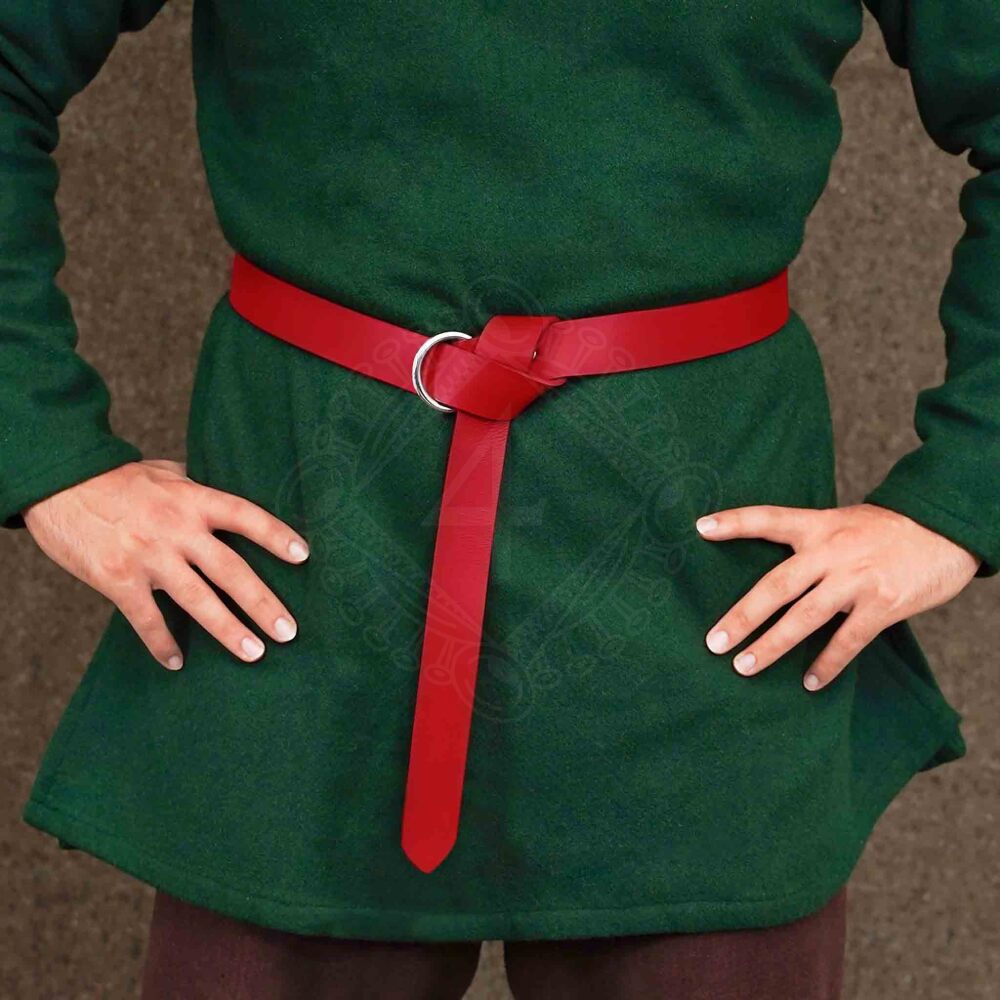
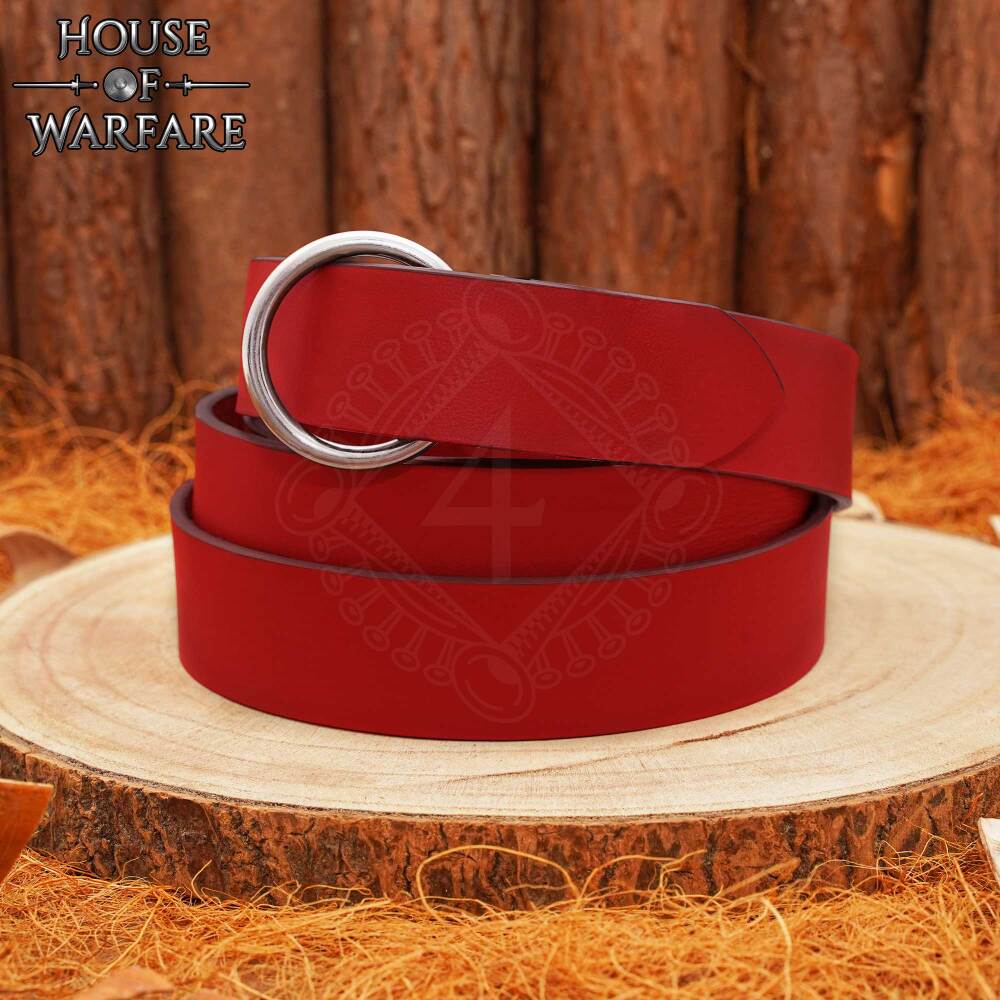
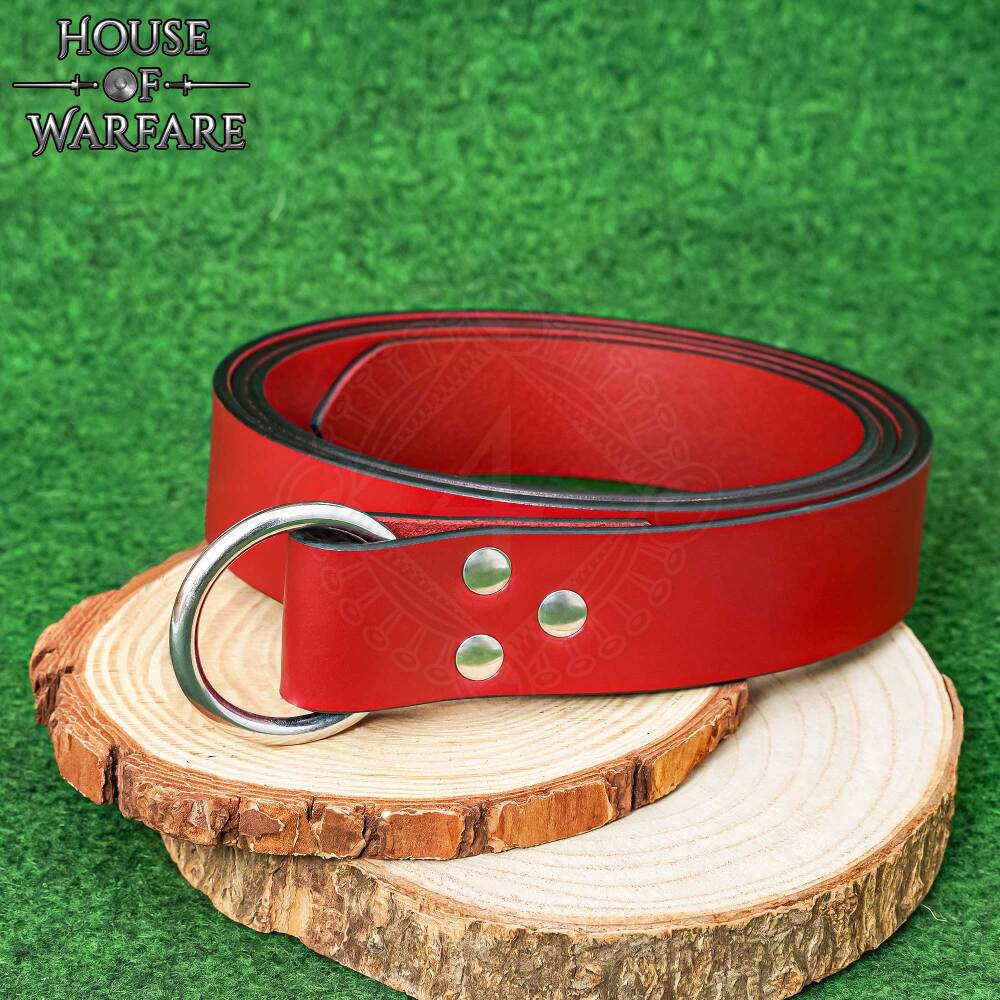

Complete your historical costume with this simple yet stylish medieval belt crafted from genuine leather. Its O-ring design and striking red colour will make you a standout figure at any LARP, historical re-enactment, or fantasy event. It is ideal for cinching a tunic, gambeson, aketon, or medieval dress. Thanks to its generous length, it allows for an authentic tie with an elegantly hanging end. Further product information ...

 Delivery options
The following variants are currently available:
Long Medieval Leather Ring Belt, Red
Appearance and Construction
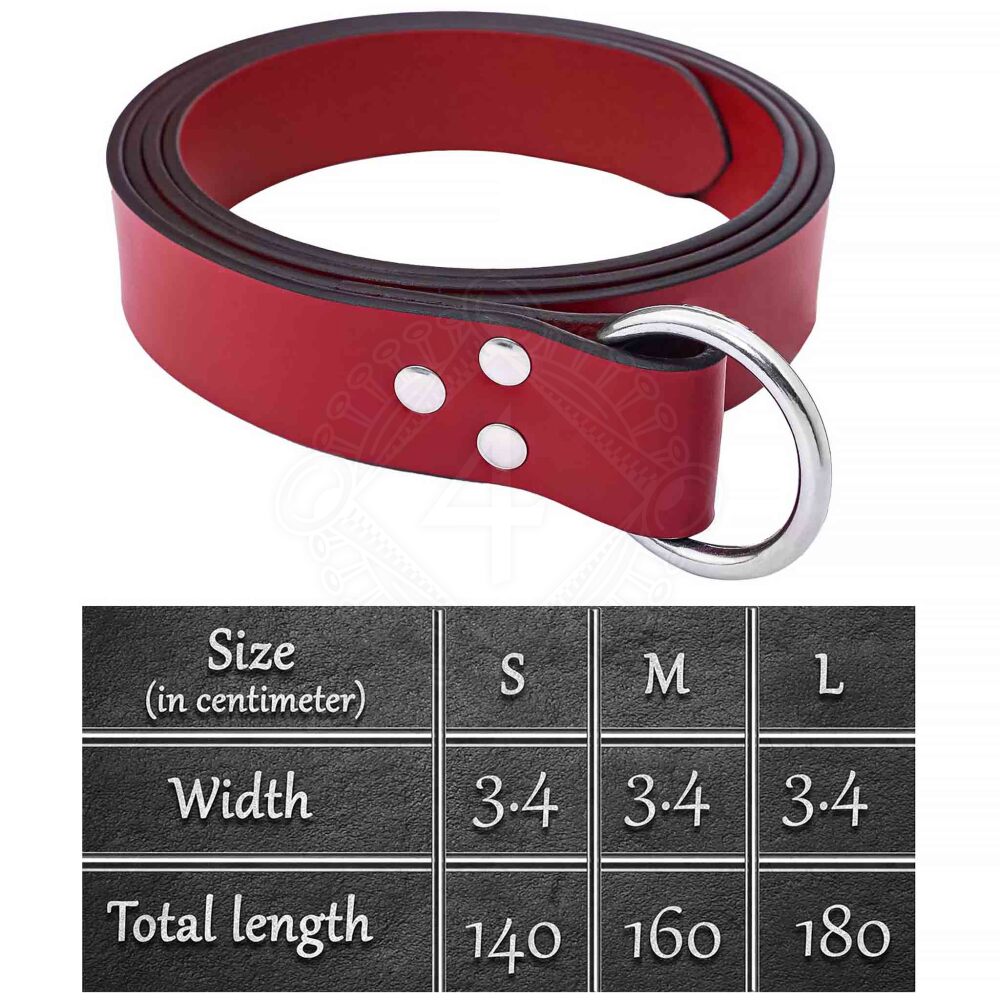
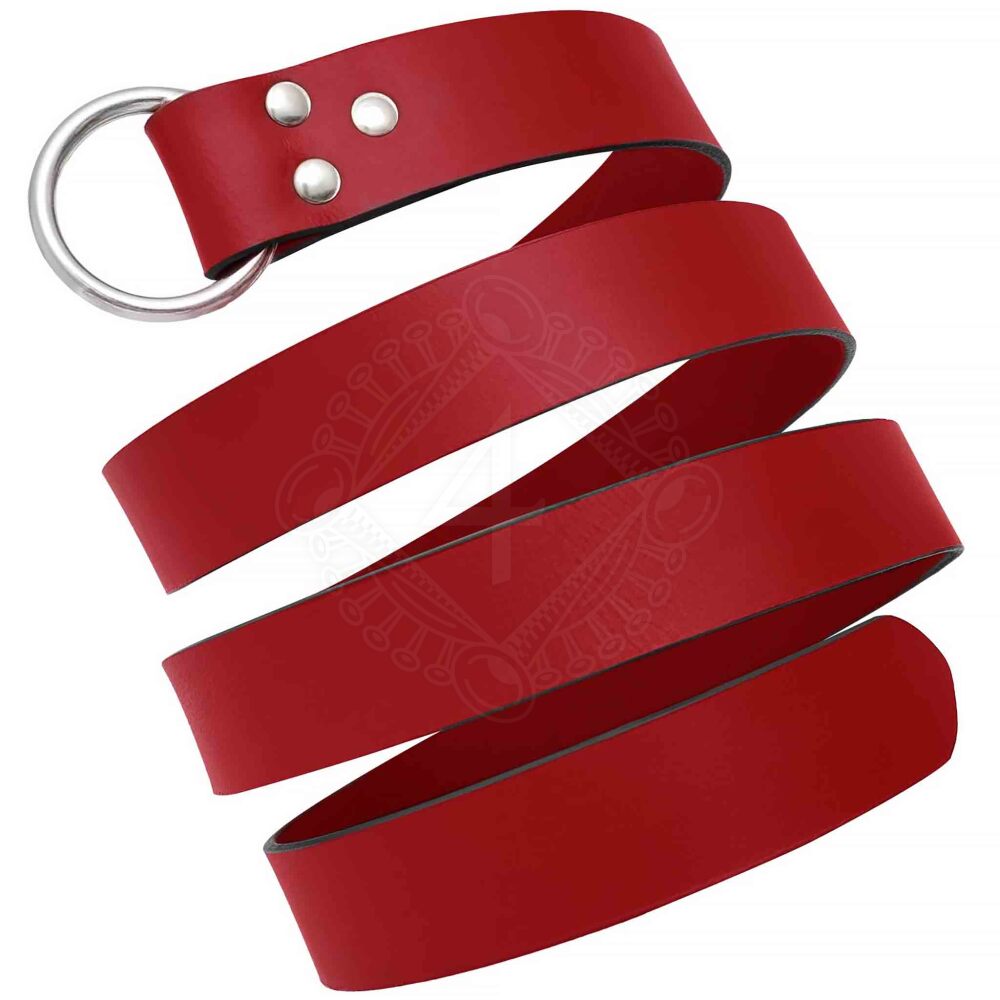
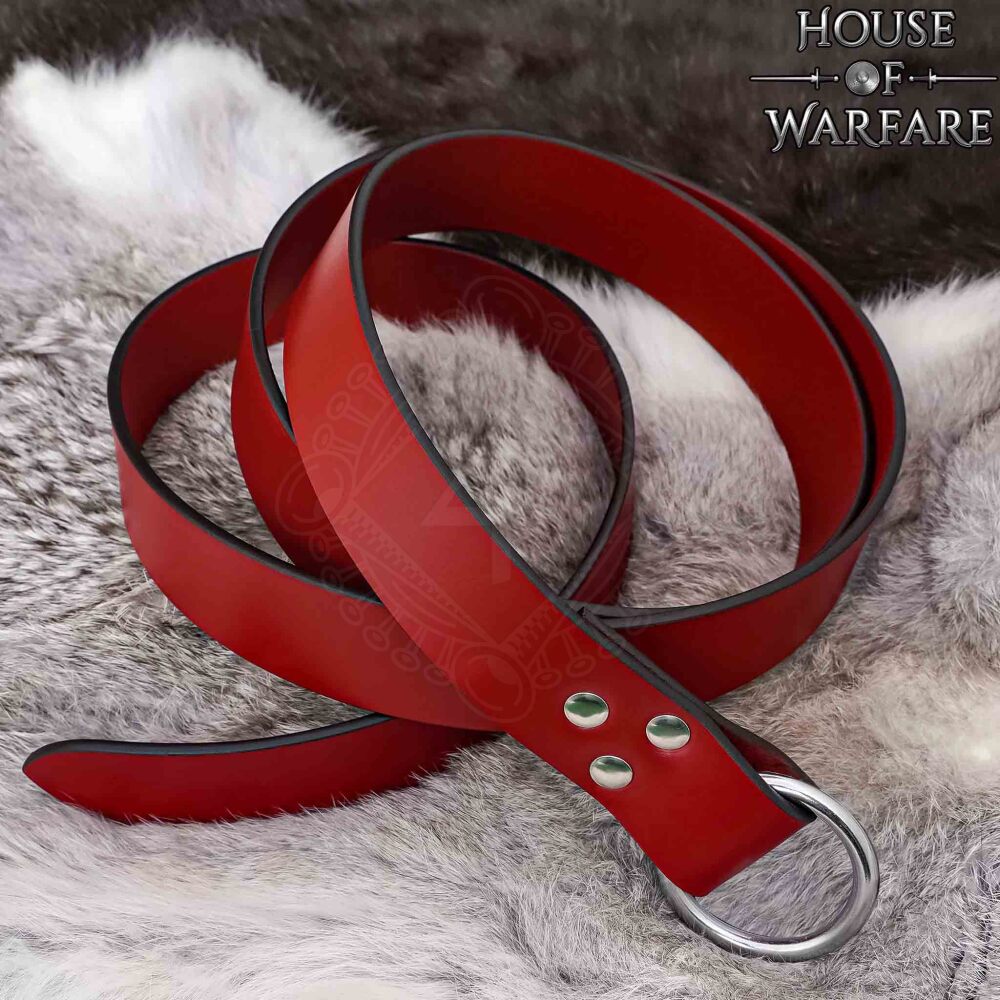
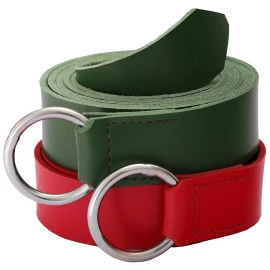
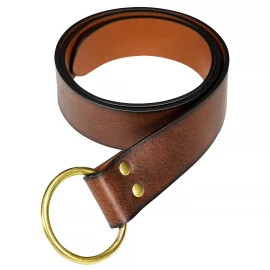
This belt is fashioned from a single long strap of high-quality, sturdy genuine leather in a deep red hue. Its edges are carefully finished and darkened, creating a subtle contrast that enhances the overall look. Instead of a conventional buckle, the belt features a solid metal O-ring with a polished silver finish. The leather is folded around the ring and securely fastened with three durable rivets, ensuring a long-lasting and robust construction. The other end of the belt is cut to a point for easy threading.
How to Tie Your Belt Correctly
Wearing this belt is historically accurate and very straightforward. It has no pre-punched holes, allowing it to adjust perfectly to your waist.
- Wrap the belt around your waist over your tunic or garment.
- Pass the loose end of the belt up through the ring from behind.
- Loop the end over the top of the ring and then pass it back down through the loop you've just created.
- Pull to tighten as desired. Let the end of the belt hang freely along your leg. This creates a simple yet secure and period-appropriate knot.
The Belt Through History
Function and Symbolism in the Middle Ages
Belts with rings, known as "ring belts" or "girdles", were immensely popular throughout the High and Late Middle Ages (roughly 12th–15th centuries). Their purpose was primarily practical—they were used to cinch loose garments like tunics and robes, allowing for greater freedom of movement. People would hang all their necessities from their belts: a pouch for coins, a knife, a dagger, keys, or small tools. The length of the belt was also a powerful symbol of social status. The longer the free-hanging end, the wealthier and more important the owner, as it signified they could afford more of the expensive material.
A Piece of History
In medieval Europe, many regions had "sumptuary laws" which regulated the clothing and accessories people of different social classes were allowed to wear. These laws could dictate the materials, colours, and even the length of belts. A long, ornate belt was often a privilege reserved for the nobility, while commoners wore shorter, plainer versions.
Care and Maintenance
To ensure your belt lasts as long as possible and retains its handsome appearance, follow these simple guidelines:
- Store it in a cool, dry place, ideally hung up or loosely coiled. Do not expose it to direct sunlight.
- If it gets dirty, wipe it clean with a slightly damp cloth only. Never soak it in water.
- To maintain the leather's suppleness and shine, occasionally treat it with a quality leather balm or conditioner.
- Important: Avoid using harsh chemical cleaners. Do not fold the belt sharply, as this can cause the leather to crack over time.
Available Sizes
| Size | Width | Total Length |
|---|---|---|
| S | 3.4 cm | 140 cm |
| M | 3.4 cm | 160 cm |
| L | 3.4 cm | 180 cm |
Specifications
| Material | Genuine Leather, Metal |
| Colour | Red with black edges, silver-tone ring |
| Fastening | O-ring tie knot |
| Historical Period | Circa 12th–15th century |
We are here for you!




.3773623034.1696456237.png.webp)

.3773623034.1696456268.png.webp)
.3773623034.1696456247.png.webp)