
 Čeština
 Deutsch


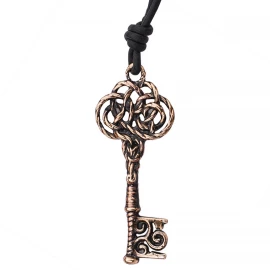
Viking Key Pendant in Bronze with Norse Knotwork
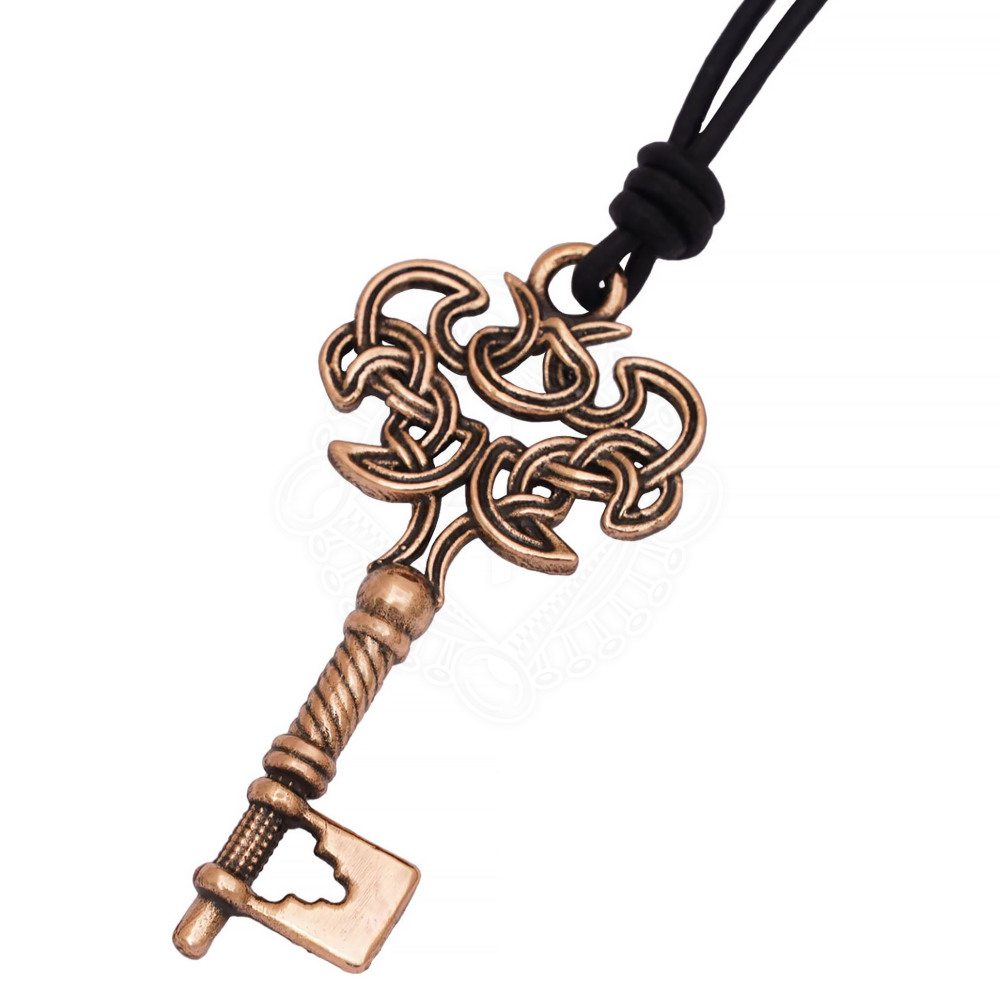
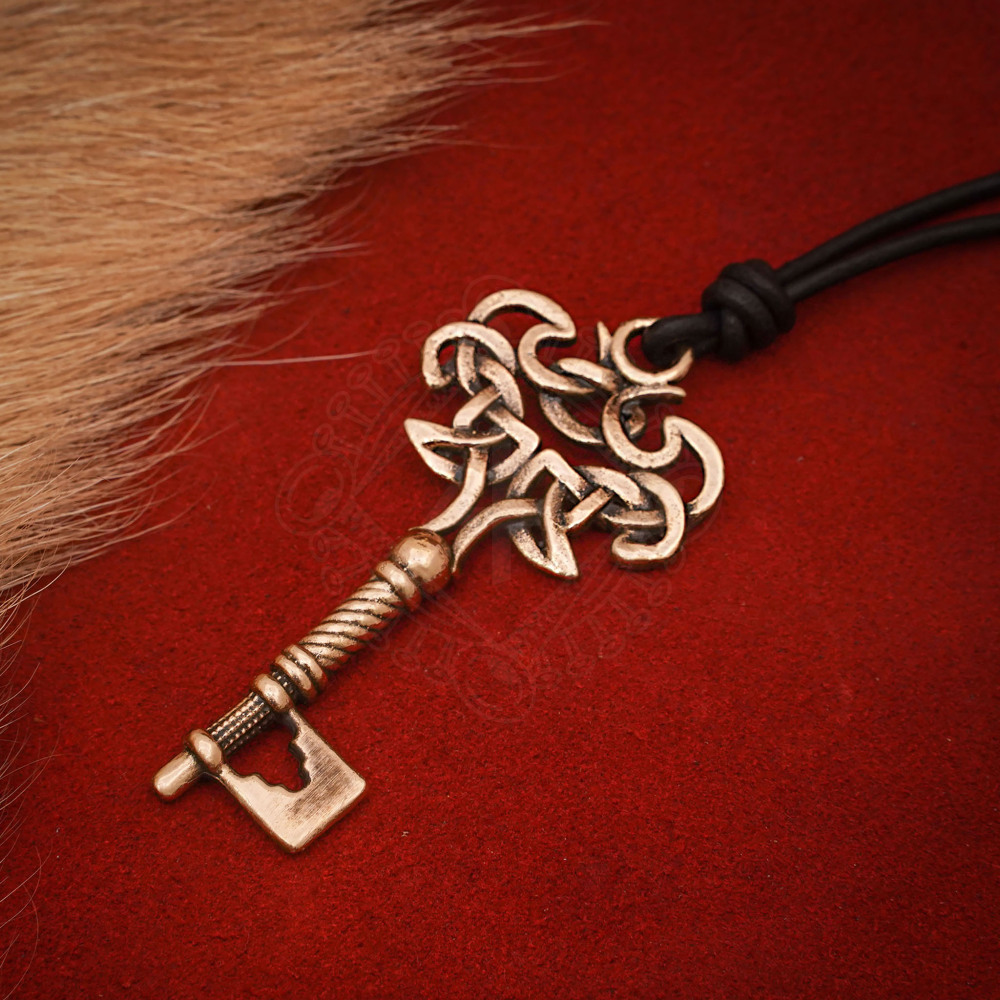
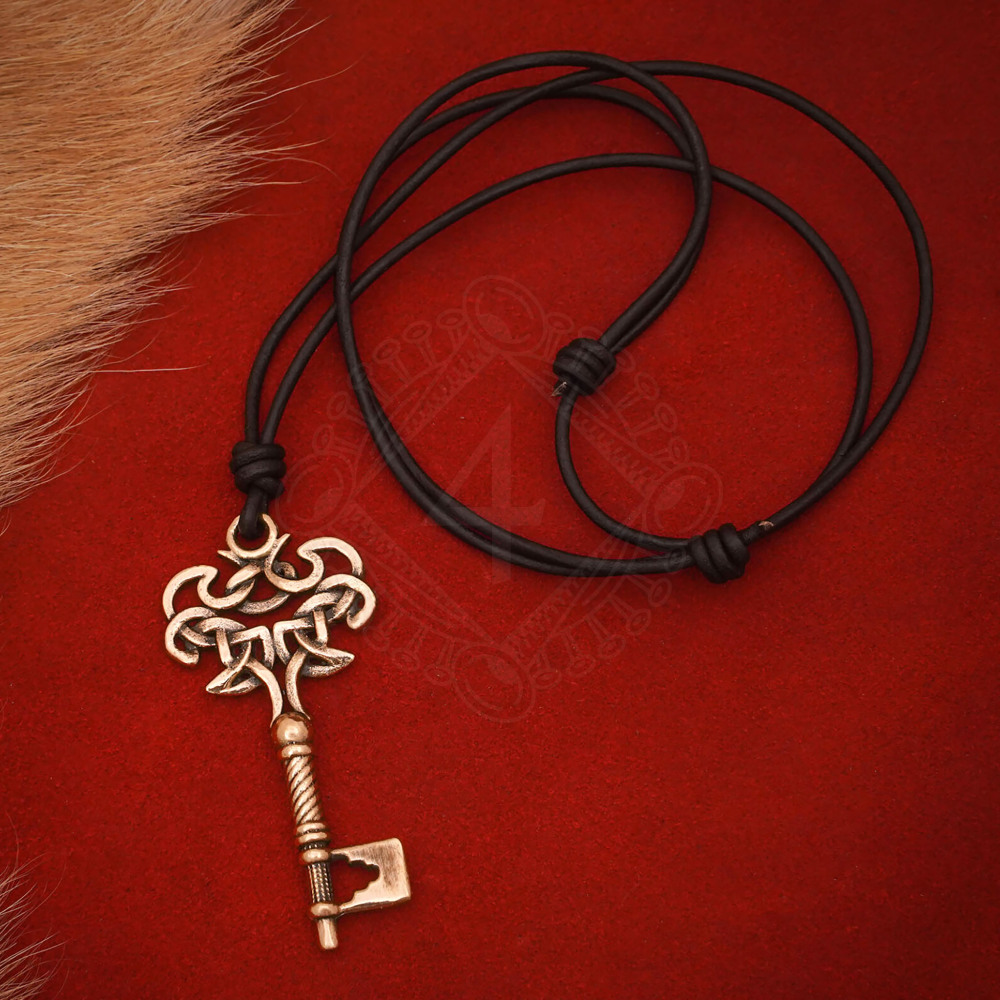
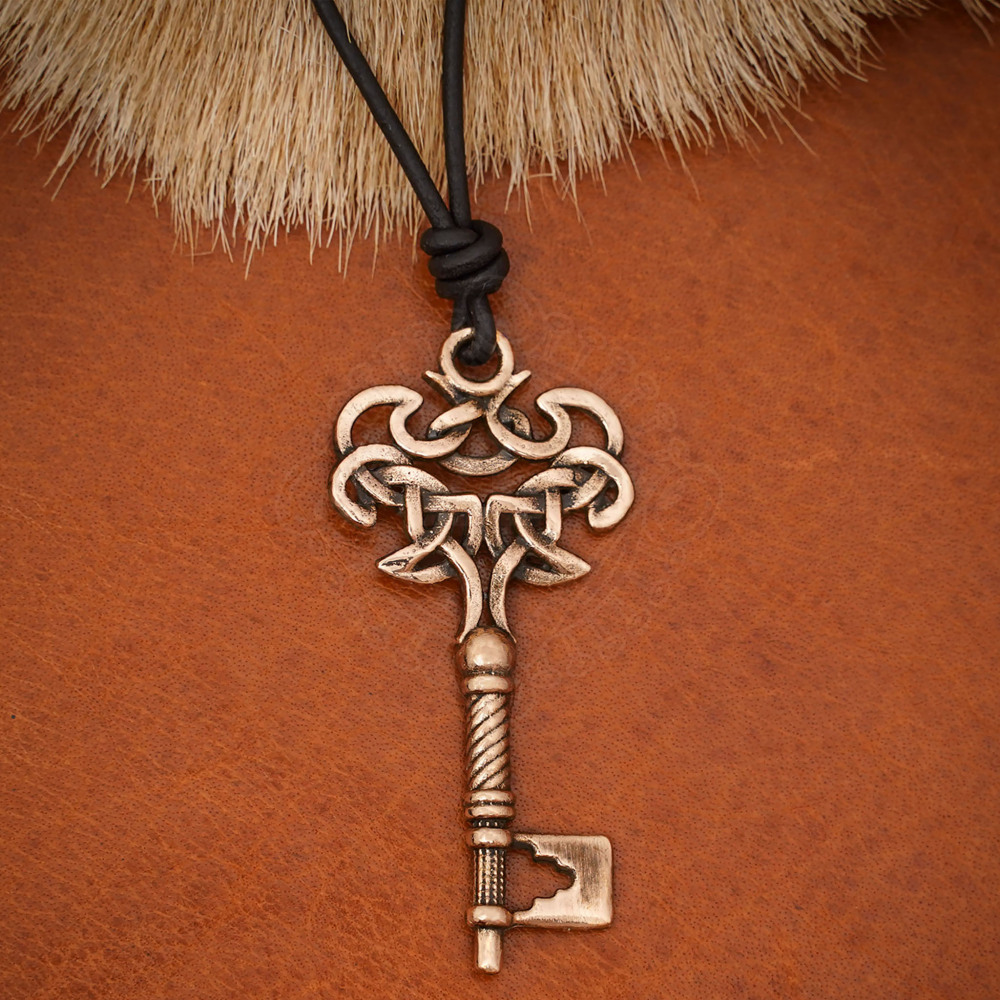
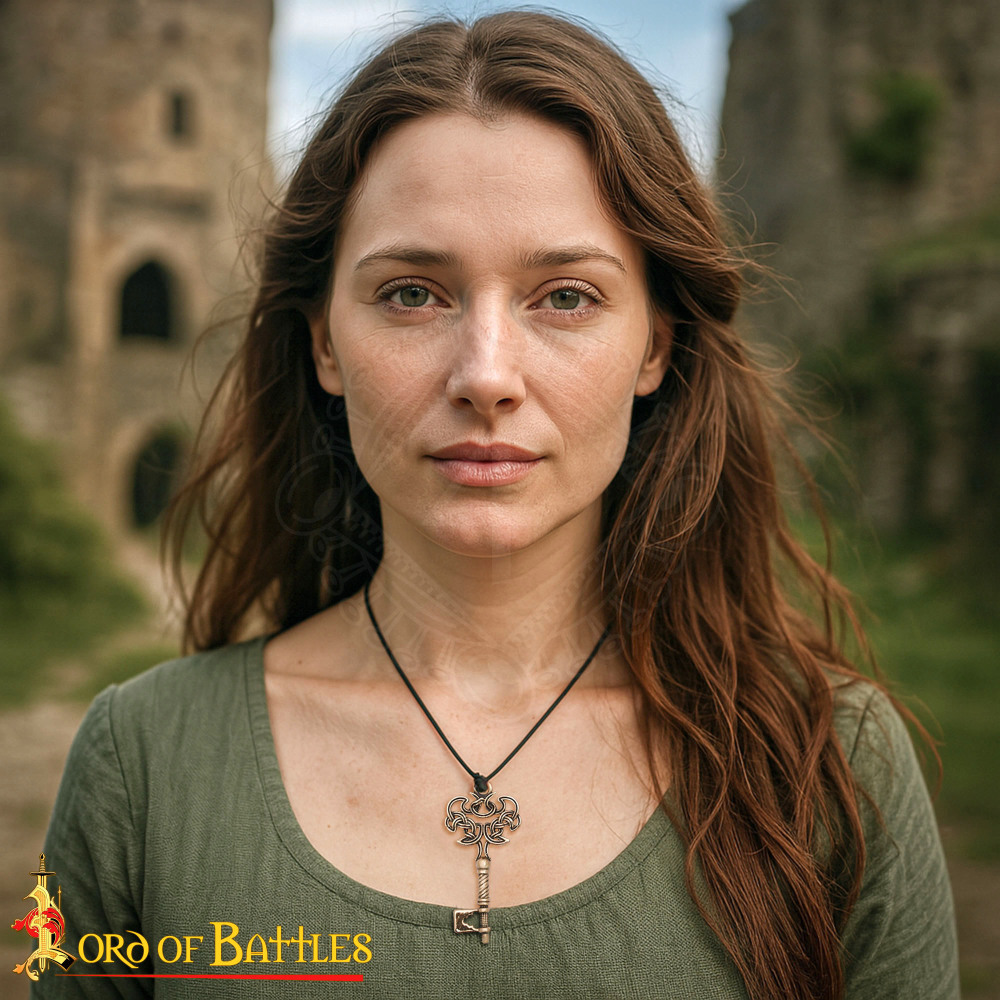

Unlock a gateway to the past with this intricately detailed pendant shaped like a Viking key. In early medieval Scandinavia, a key was not merely a tool but a powerful symbol of status, authority, and trust. It was worn primarily by women—the lady of the house (*húsfreyja*)—as a visible sign of her command over the household, its provisions, and the family's wealth. This piece of jewellery is inspired by archaeological finds from the 9th and 10th centuries and is crafted using the traditional lost-wax casting method. Further product information ...

 Delivery options
Viking Key Pendant in Bronze with Norse Knotwork
Design and Craftsmanship of the Viking Key
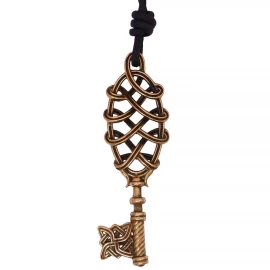
Cast in solid bronze with an authentic antique patina, the pendant is a work of art rich in symbolism. It consists of three main parts:
- The Key Bow: The top is formed from an elaborate and airy Norse knotwork pattern, symbolising interconnectedness, protection, and eternity.
- The Shank: The shaft features an elegant spiral twist design, typical of decorative Viking-age artefacts.
- The Bit: The bottom part is stylised into the form of a historical key bit.
The entire amulet hangs on a quality black leather cord, the length of which can be easily adjusted with sliding knots.
How to Wear Your Pendant
Thanks to the adjustable leather cord, you can customise the necklace's length to your exact preference. Wear it as a short pendant close to the neck or let it hang freely on a longer cord. Simply slide the knots to adjust it for any outfit, whether historical or modern.
The Key in a Viking Woman's Hands: A Symbol of Power
In the patriarchal society of the Vikings, women held a surprisingly powerful position, especially within the domestic sphere. The key, worn suspended from their belt or as a necklace, was an outward sign of their authority. It signified that the woman was the guardian of the family's wealth, with control over the food stores, chests of valuables, and textiles. She was the one who "locked and unlocked" the prosperity of the home. Keys are among the most common finds in female graves from the Viking Age, for instance, at famous sites like Birka in Sweden.
A Historical Tidbit
Keys were so closely linked to the status of a married woman that they became part of wedding rituals. When a girl married, her mother-in-law would ceremoniously hand over the keys to her new home. This act symbolically transferred all responsibility and authority over the household to her.
Caring for Your Historical Jewellery
To keep your bronze key looking its best for years to come, just follow a few simple tips:
- Protect from moisture: Remove the pendant before bathing or showering. Water and humidity can damage the leather cord.
- Avoid chemicals: Prevent contact with perfumes, creams, and cleaning agents.
- Gentle cleaning: To restore its lustre, simply polish it with a soft, dry cloth.
- Store it in a dry place: When not in use, store your jewellery in a dry place, such as a jewellery box or a fabric pouch.
Product Specifications
| Material: | Solid Bronze, Genuine Leather |
| Era: | Viking Age (9th–10th Century) |
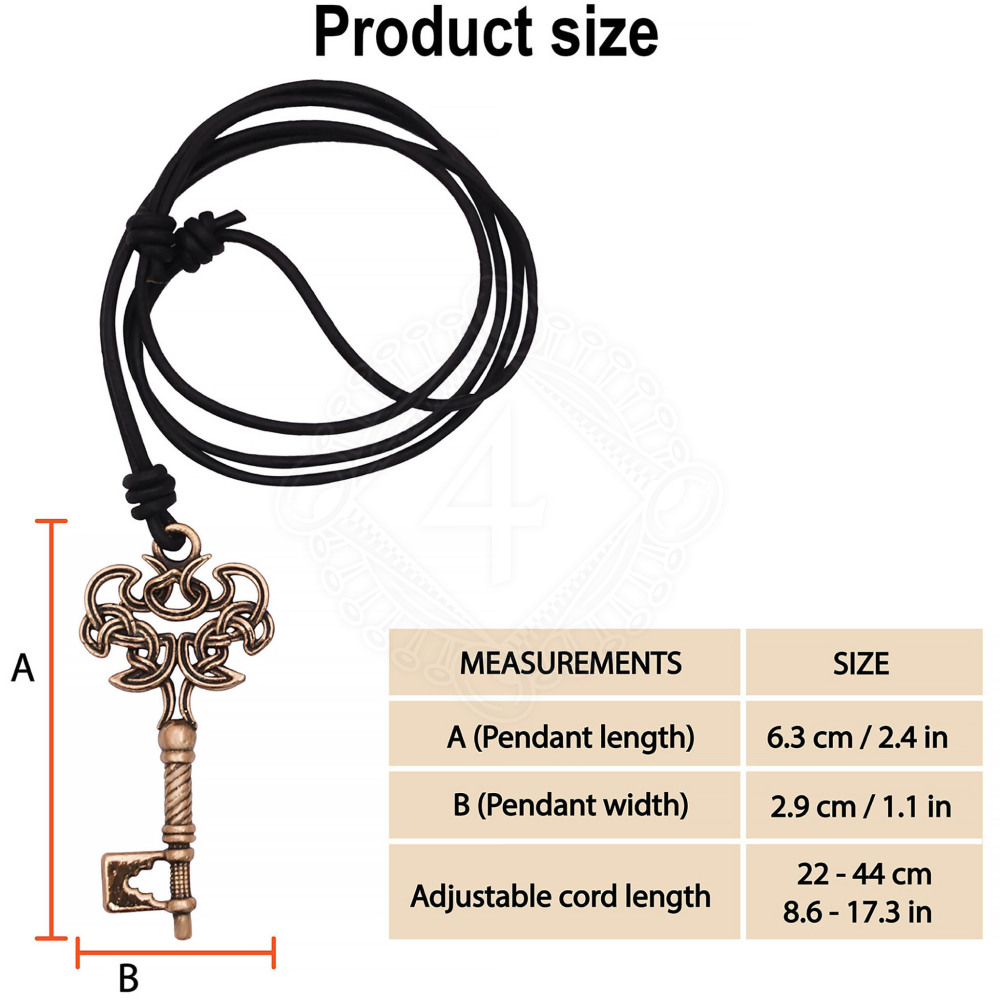
| Total Pendant Length: | Approx. 6.3 cm (2.4 in) |
| Bow Width: | Approx. 2.9 cm (1.1 in) |
| Adjustable Cord Length: | Approx. 22 – 44 cm (8.6 – 17.3 in) |
| Casting Method: | Lost-Wax Casting |
We are here for you!







.3773623034.1696456237.png.webp)

.3773623034.1696456268.png.webp)
.3773623034.1696456247.png.webp)