
 Čeština
 Deutsch


12th Century Engraved Bronze Ritual Cup, Seljuk Style (30 ml)

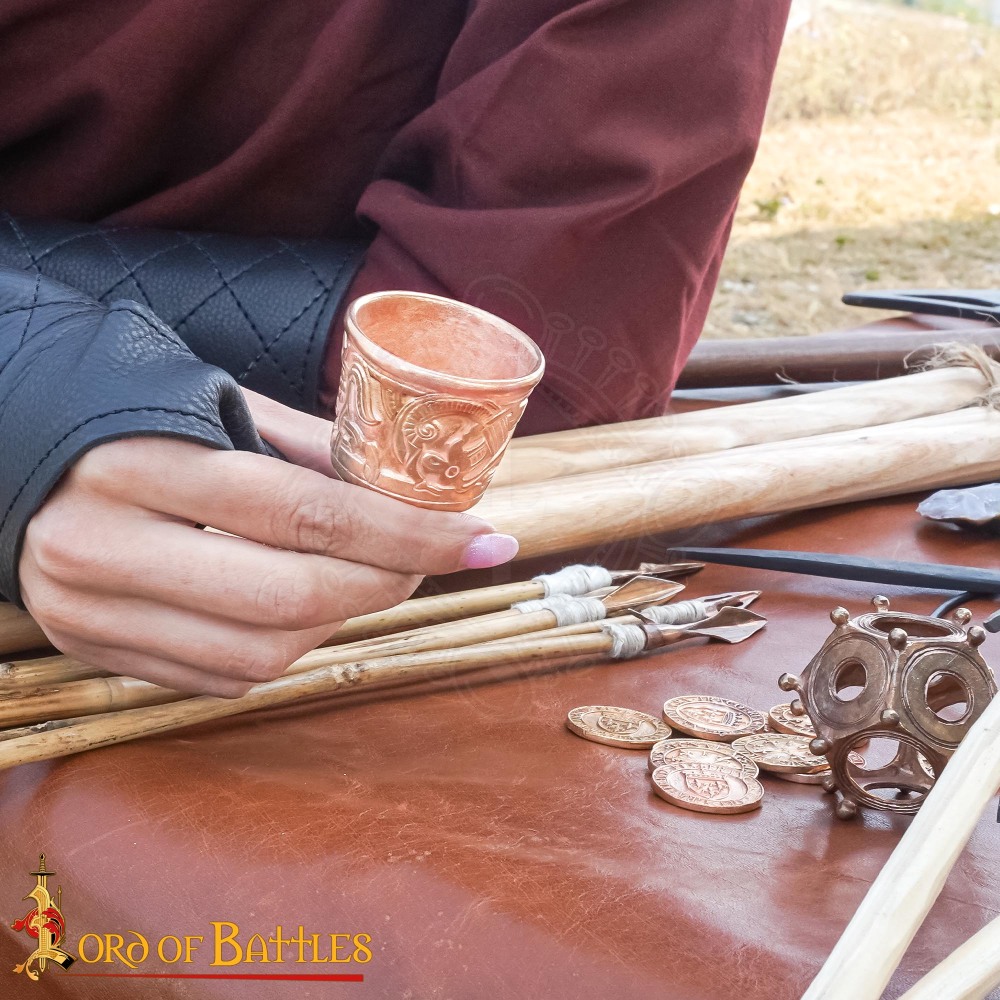

Travel back in time to the era of the Seljuk Empire with this hand-cast bronze cup. This is more than just a drinking vessel; it is a meticulous replica of a historical artefact, crafted with the utmost attention to detail and authenticity. Each piece is a unique masterpiece, cast using the ancient lost-wax method (cire perdue), ensuring that you hold a truly one-of-a-kind item. It is perfect for historical reenactment, LARP, as an altar piece, or as an exceptional collector's item. Further product information ...

12th Century Engraved Bronze Ritual Cup, Seljuk Style (30 ml)
A Design Inspired by History
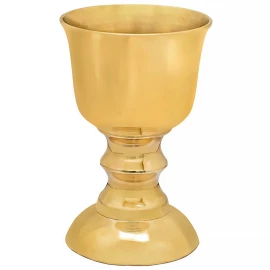
This small yet sturdy cup immediately captures the eye with its sophisticated design. Its shape is typical of ceremonial vessels from the High Middle Ages:
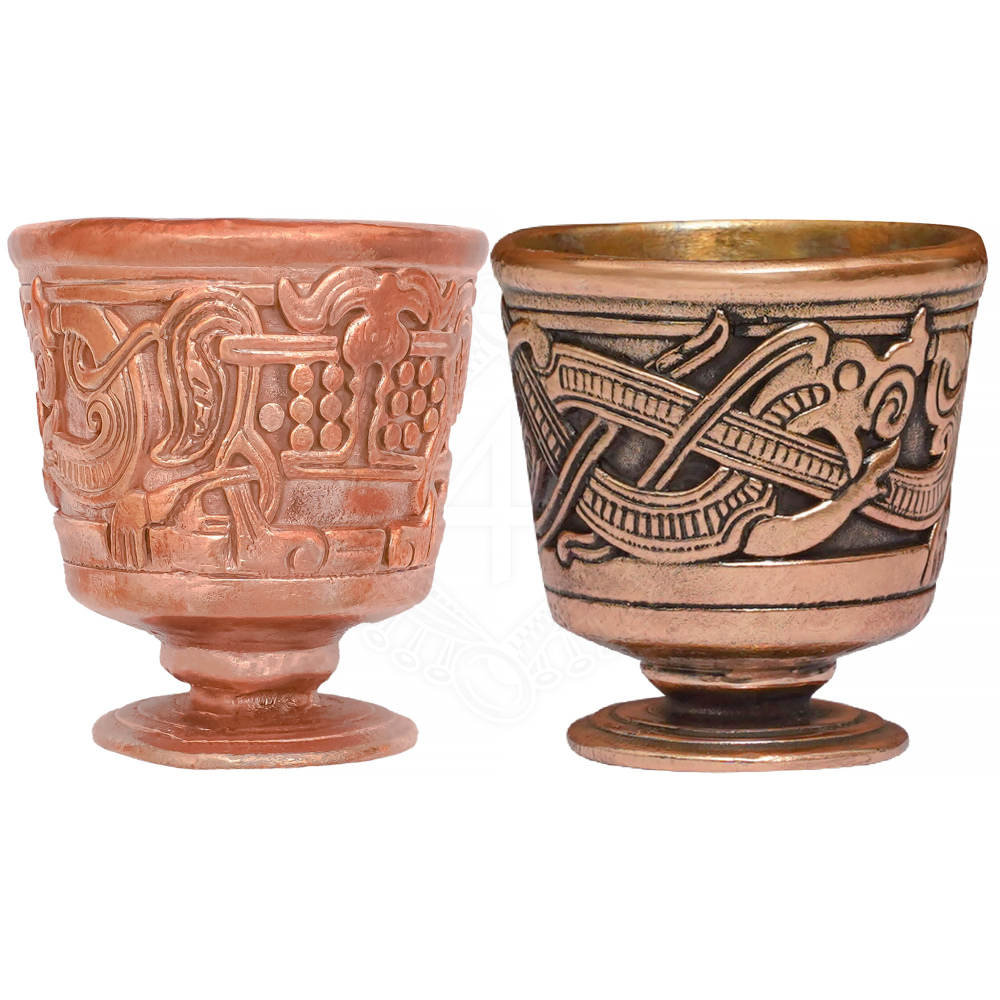
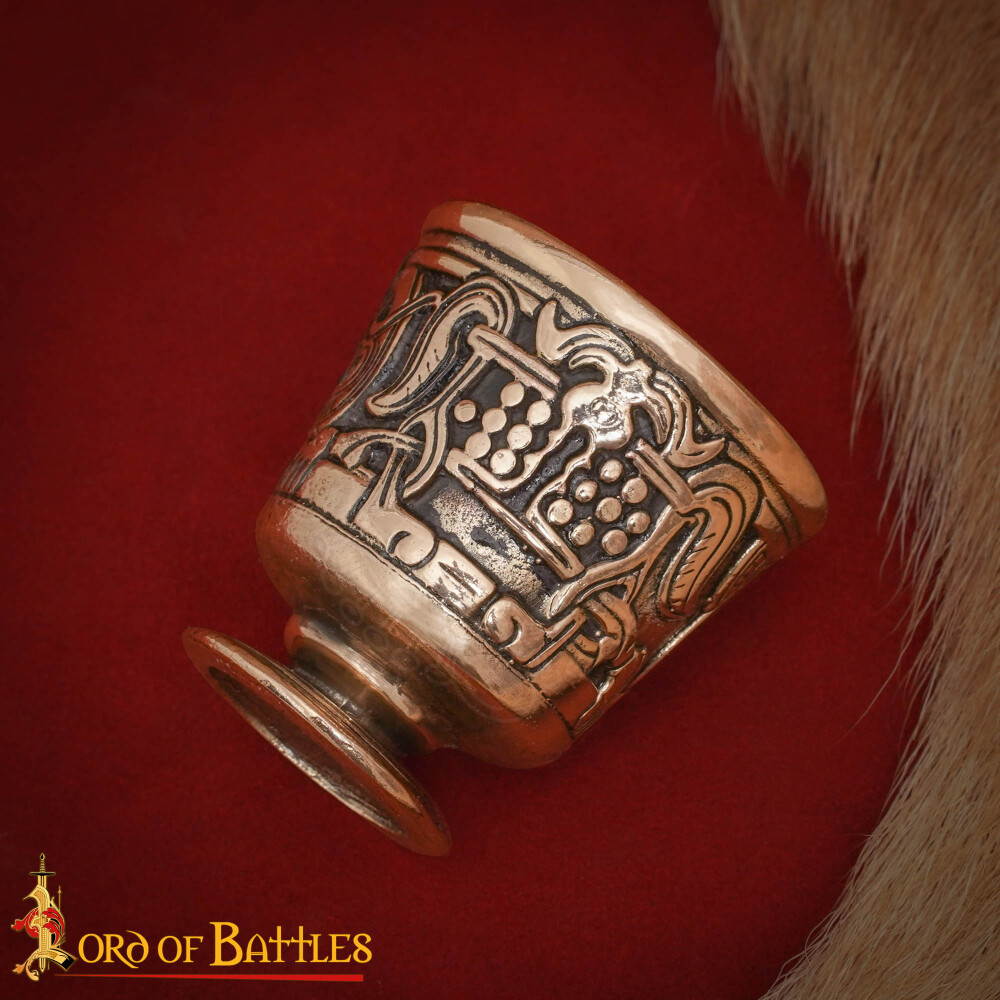
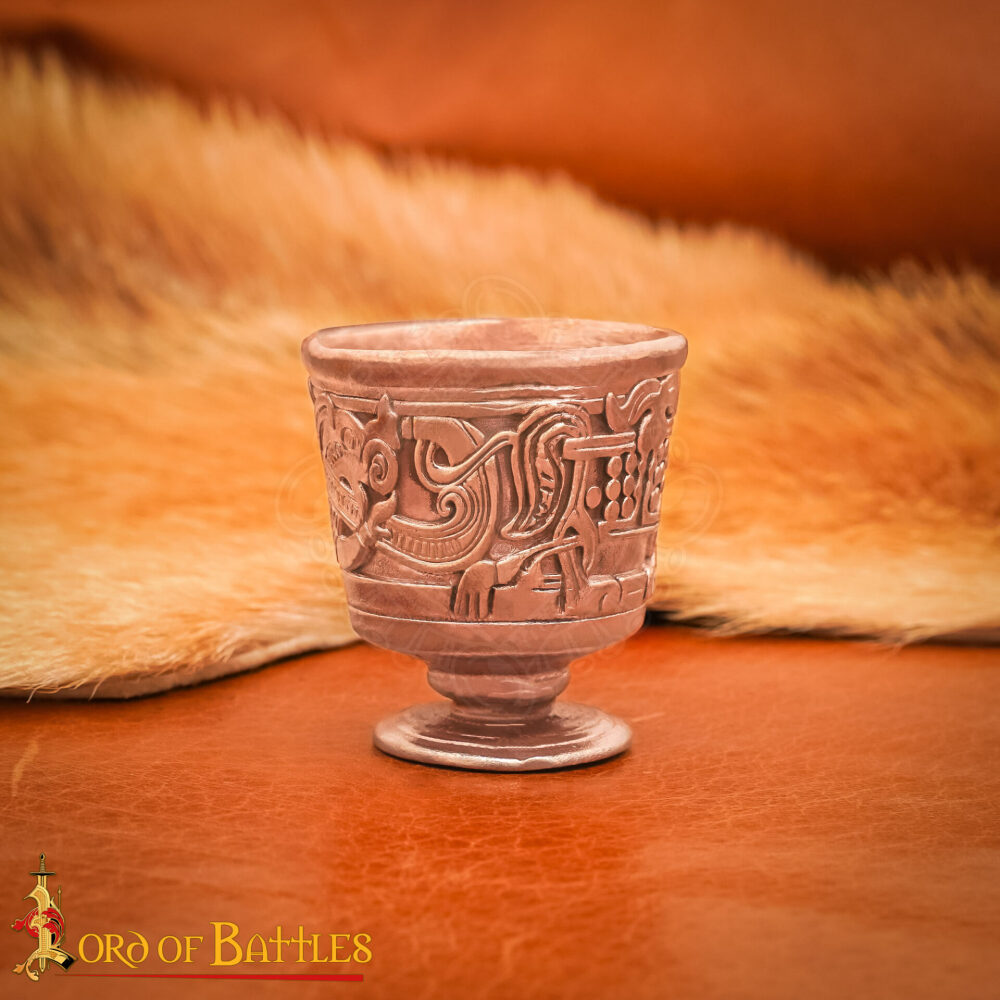
- Body of the Cup: The conical body flares slightly towards the rim, making it comfortable to drink from. The exterior walls are adorned with a high-relief decoration featuring intertwined grapevine motifs and stylized zoomorphic (animal-like) creatures, characteristic of the intricate art of the Seljuks.
- Stem and Base: A short, turned stem transitions into a solid, circular pedestal base, which provides excellent stability on any surface.
- Finish: You can choose between two versions – either polished bronze with a warm, golden lustre, or an antiqued bronze with a darker, aged appearance that evokes the impression of a centuries-old artefact.
Usage and Rituals
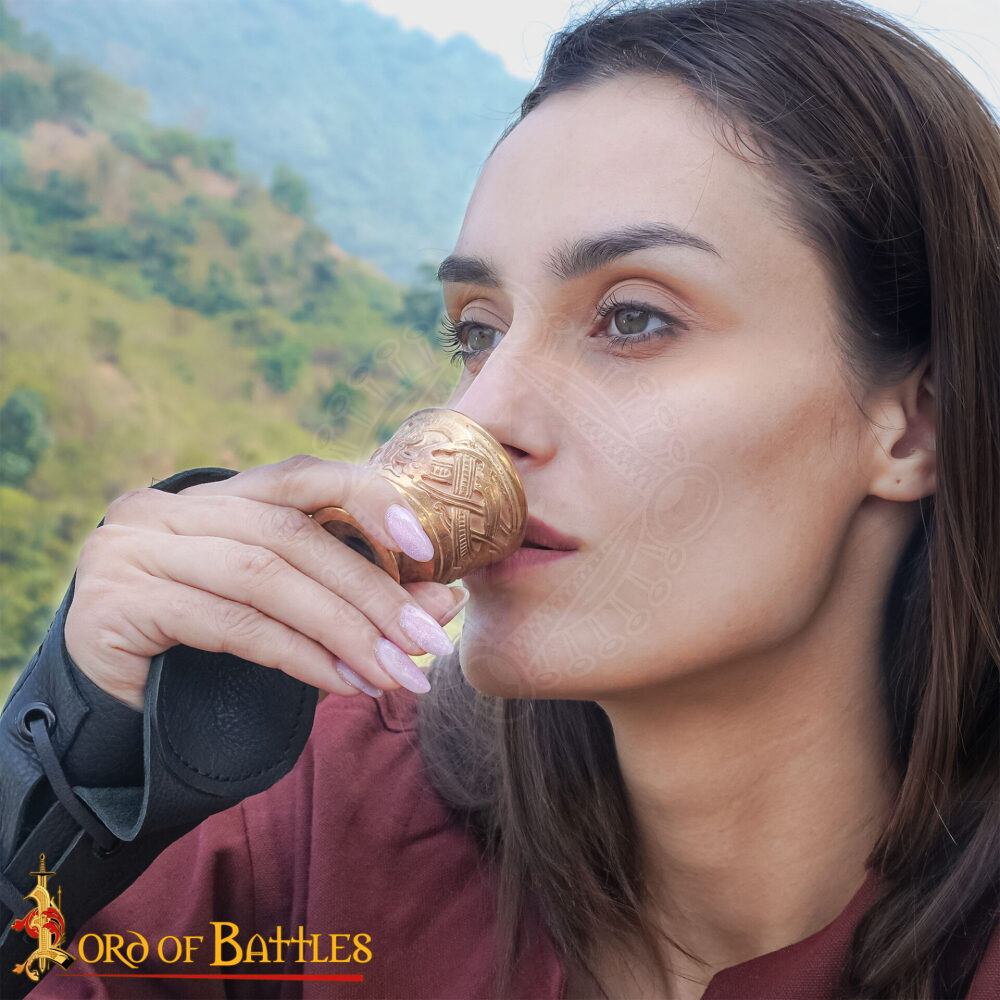
With its small capacity of approximately 30 ml, the cup is less suited for regular drinking and more for symbolic toasts, tasting mead or wine at feasts, or for use in rituals. Historically, similar vessels were used for libations to the gods, serving medicinal or magical potions, or for holding precious oils and fragrant essences.
Before first use with beverages, wash the cup thoroughly with warm water and mild soap, and dry it carefully. After each use, wash and dry it immediately to prevent the formation of unwanted patina (verdigris).
A Touch of History: The Art of the Seljuks
Who were the Seljuks?
In the 12th century, the Seljuk Turks ruled a vast territory stretching from Central Asia to Anatolia. Their culture was a fascinating fusion of Persian, Islamic, and Turkic influences, which was beautifully expressed in their art. Seljuk craftsmen were masters of metalwork, and their creations, like this cup, were prized for their complex patterns and precise execution. The grapevine motif often symbolized paradise, abundance, and life in Islamic art.
A Historical Curiosity
The lost-wax casting method is over 5,000 years old. Its magic lies in the fact that the wax model of the future object is destroyed during the casting process. This means that every cast is an original, and no two pieces are ever exactly identical. This same technology was used to cast not only small objects but also enormous bronze statues.
How to Care for Your Cup
To keep your bronze cup beautiful for years to come, follow these simple rules:
- ✔️ Hand-wash only, using warm water and a drop of mild soap.
- ✔️ Dry it immediately and thoroughly with a soft cloth after washing.
- ✔️ To restore its shine, you can occasionally polish it with a metal polishing cloth or apply a thin layer of natural wax.
- ❌ Never put it in a dishwasher or microwave.
- ❌ Do not use scouring pads, abrasive pastes, or harsh chemical cleaners.
Product Specifications
| Material | Solid Bronze, hand-cast |
| Casting Technique | Lost-wax casting (cire perdue) |
| Capacity | Approx. 30 ml |
| Overall Height | Approx. 5 cm |
| Inner Diameter | Approx. 4.1 cm |
| Cup Depth | Approx. 3.75 cm |
We are here for you!





.3773623034.1696456237.png.webp)

.3773623034.1696456268.png.webp)
.3773623034.1696456247.png.webp)