
Historical Folding Tripod Stool Wood and Leather
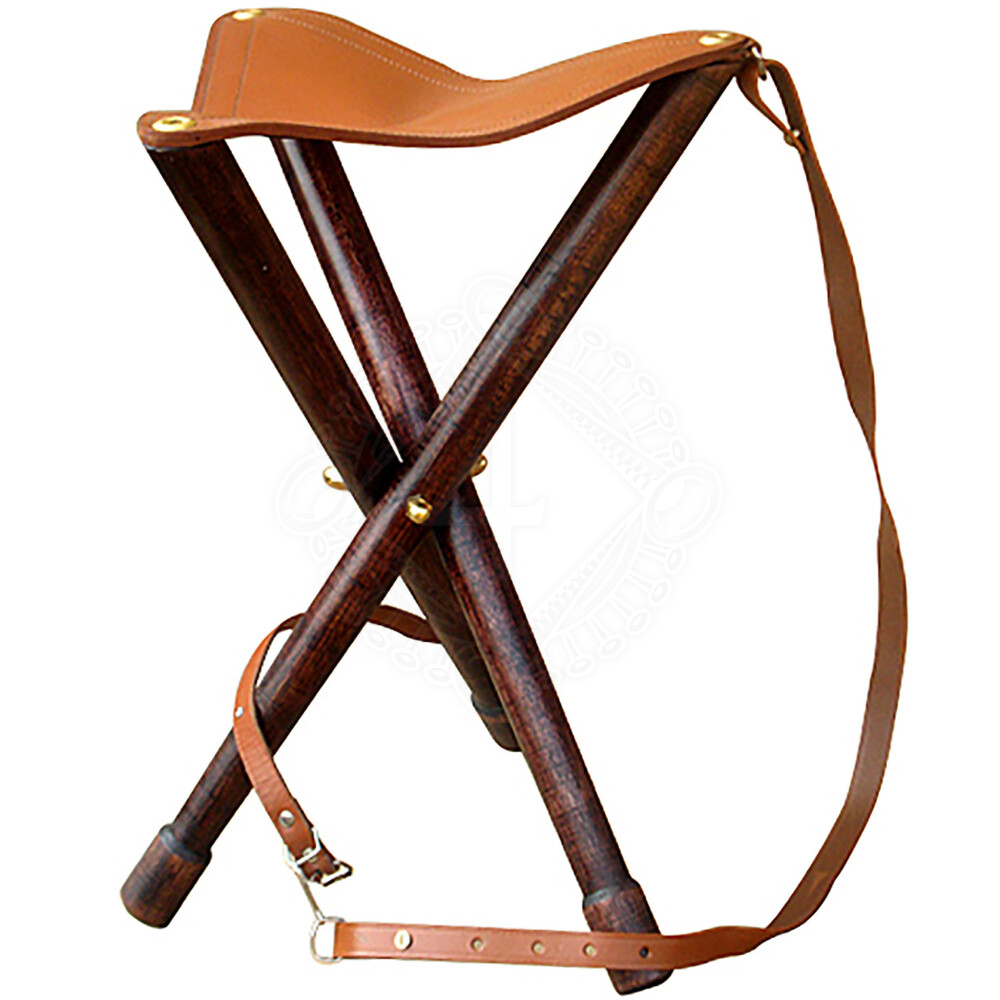
Give your weary legs a well-deserved rest after a long march or an intense battle, traveler! This folding leather tripod stool offers the ultimate combination of historical authenticity, exceptional comfort, and field practicality. The sturdy seat, crafted from vegetable-tanned cowhide leather, is securely fastened to dark hardwood legs using solid brass screws. Featuring an adjustable leather shoulder strap with a metal buckle, this folding stool easily slings over your shoulder or back for effortless transport. We highly recommend this portable camp stool for medieval encampments, LARP events, historical reenactments, and traditional outdoor camping! Further product information ...
Would you like to be notified as soon as the item is in stock?
You will receive a short e-mail as soon as we have it back in stock.
Historical Folding Tripod Stool Wood and Leather
Tripod Stools in History and Practical Purpose
Three-legged folding stools are among the oldest and most effective forms of mobile seating in human history. The structural principle was well known to ancient Egyptians, Greeks, and Romans, but enjoyed widespread popularity throughout the Middle Ages (11th to 15th centuries) and the Early Modern period. They were essential gear for military commanders in field camps, traveling merchants, craftsmen at fairs, and monks or scribes on pilgrimage. The three-point leg design provides a crucial advantage: it never wobbles, even on uneven terrain such as forest soil, grass, or cobblestones.
The stool's mechanism relies on crossed wooden legs connected by a central pivot pin. When unfolded, the leather seat pulls taut, distributing the sitter's weight evenly. Historically, this design allowed rapid folding into a compact profile that was easy to strap onto horseback or field packs.
Materials and Craftsmanship
The isosceles triangular seat, with side lengths of approx. 32 cm / 12.6 in, is crafted from thick vegetable-tanned cowhide leather prized for its tensile strength, durability, and rich natural patina that develops over time. For maximum load-bearing safety, the leather seat is bolted directly into the wooden legs using heavy-duty brass screws. The legs are turned from solid hardwood, stained dark, and lacquered for moisture resistance. An integrated leather carrying strap features a metal buckle for easy length adjustment across the chest or shoulder.
Technical Specifications
| Seat Material | Genuine cowhide leather (vegetable-tanned) |
|---|---|
| Frame Material | Solid hardwood, stained and lacquered |
| Hardware | Brass screws, steel pivot pins, metal buckle |
| Seat Shape | Isosceles triangle (side length approx. 32 cm / 12.6 in) |
| Carrying Method | Adjustable leather shoulder strap with buckle |
Size Chart
| Size | Seat Height | Weight |
|---|---|---|
| M | approx. 65 cm / 25.6 in | approx. 1800 g / 3.97 lbs |
| L | approx. 75 cm / 29.5 in | approx. 2000 g / 4.41 lbs |
Care Instructions and Safety Guidelines
To ensure structural stability and maintain the handsome appearance of your stool, please follow these guidelines:
- Leather and Wood Care: Periodically treat the leather seat with natural leather balm or beeswax to keep it supple and prevent cracking. Wipe wooden legs dry after exposure to damp weather and allow the stool to dry naturally at room temperature.
- Proper Usage: Always unfold the stool on stable ground, ensuring all three legs make solid contact. Sit centered on the seat to distribute weight properly.
- Safety Warning: Never stand on the stool, use it as a step ladder, or lean on one or two legs. Rocking or overloading may cause the wooden legs to crack, leading to falls and injury.
Recommended Accessories
To complete your 11th to 16th-century historic camp setup, we recommend pairing this folding stool with a wool cloak for chilly evenings around the campfire, a leather belt pouch, and a clay or wooden tankard for mead.
We are here for you!