
 Čeština
 Deutsch


Shield of Laconia: Authentic Spartan Hoplite Aspis for Warriors
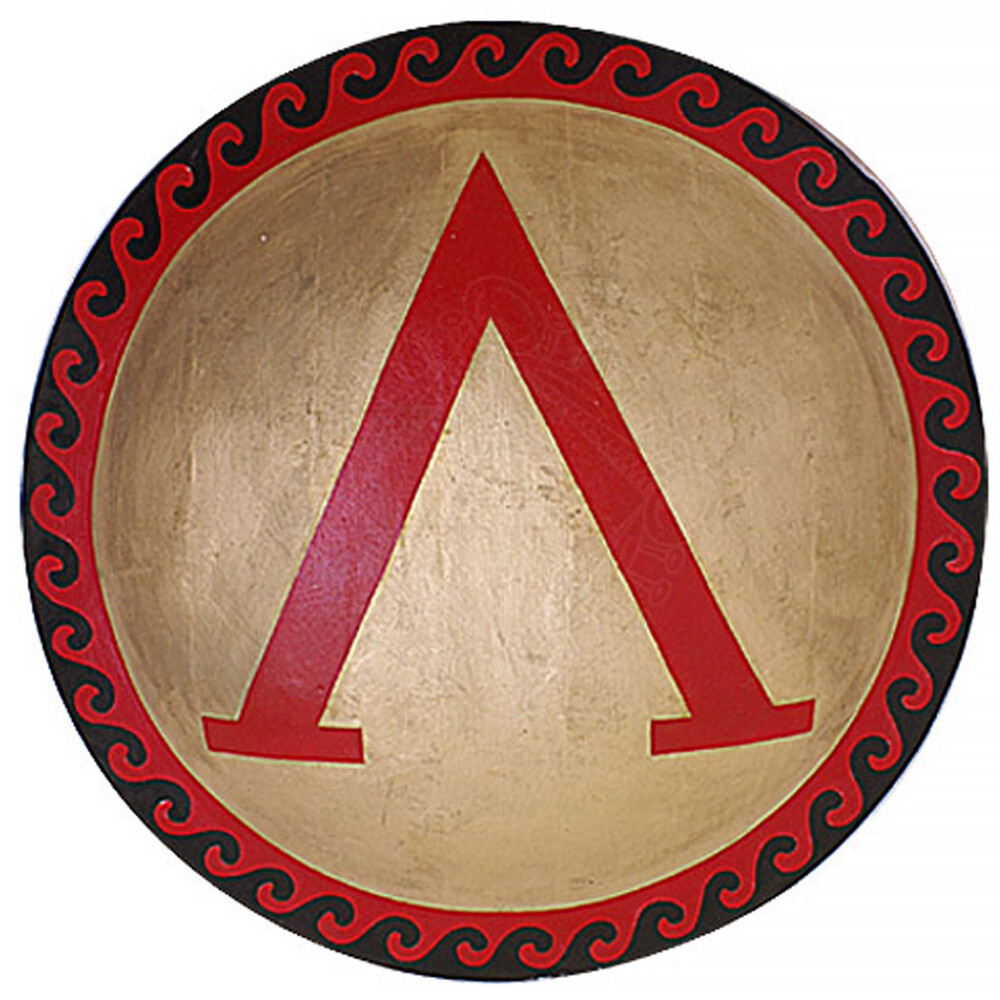
Imagine, warrior, standing in an impenetrable phalanx alongside your brothers-in-arms while clouds of Persian arrows rain down upon your shield. This monumental Greek shield, known as the aspis or hoplon, transports you directly to the heart of Ancient Greece, to the era of the valiant King Leonidas. Crafted with a focus on historical accuracy and visual impact, its front is adorned with the iconic red Lambda, the symbol of proud Sparta, surrounded by a classic meander motif. Whether you are a dedicated re-enactor, a lover of ancient history, or seeking a dominant piece for your collection, this shield provides the indomitable presence of an ancient hero. We recommend it for historical reconstructions, LARP, or as a striking decorative piece. Further product information ...

Would you like to be notified as soon as the item is in stock?
You will receive a short e-mail as soon as we have it back in stock.
Shield of Laconia: Authentic Spartan Hoplite Aspis for Warriors
Construction and Practical Use
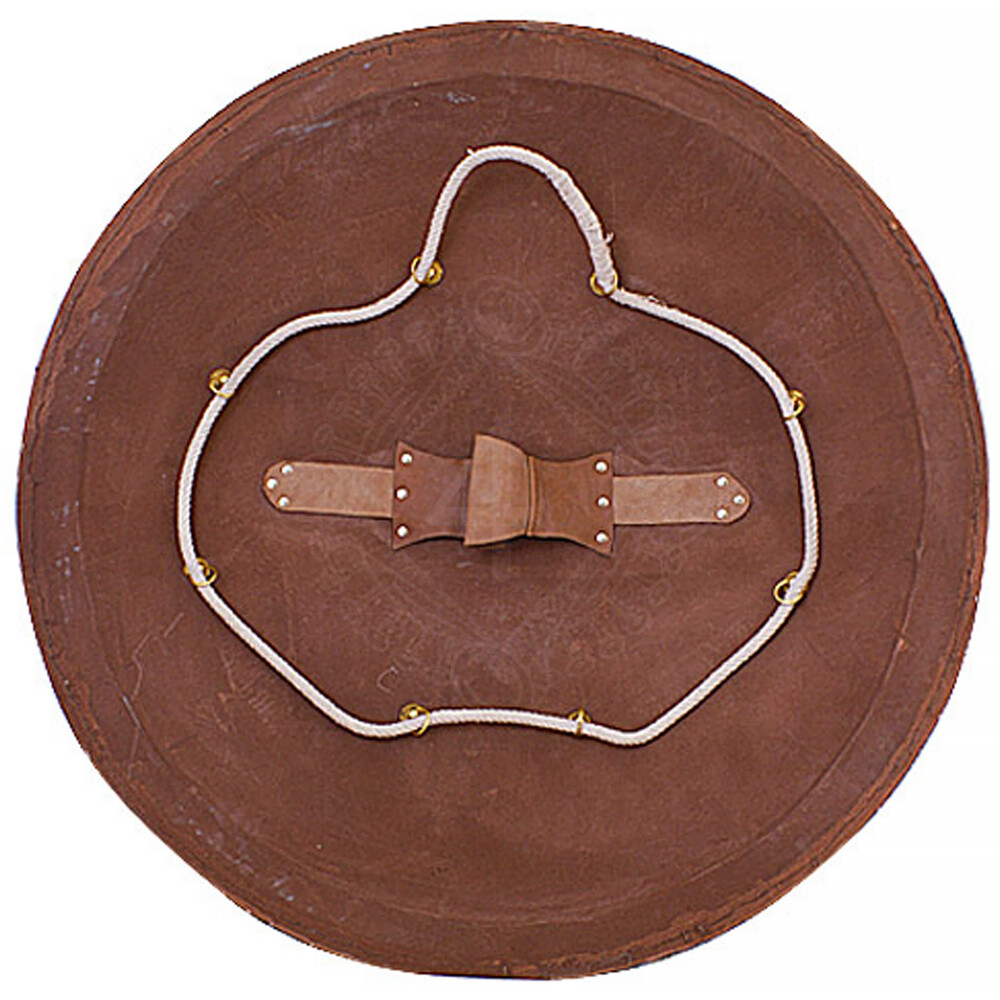
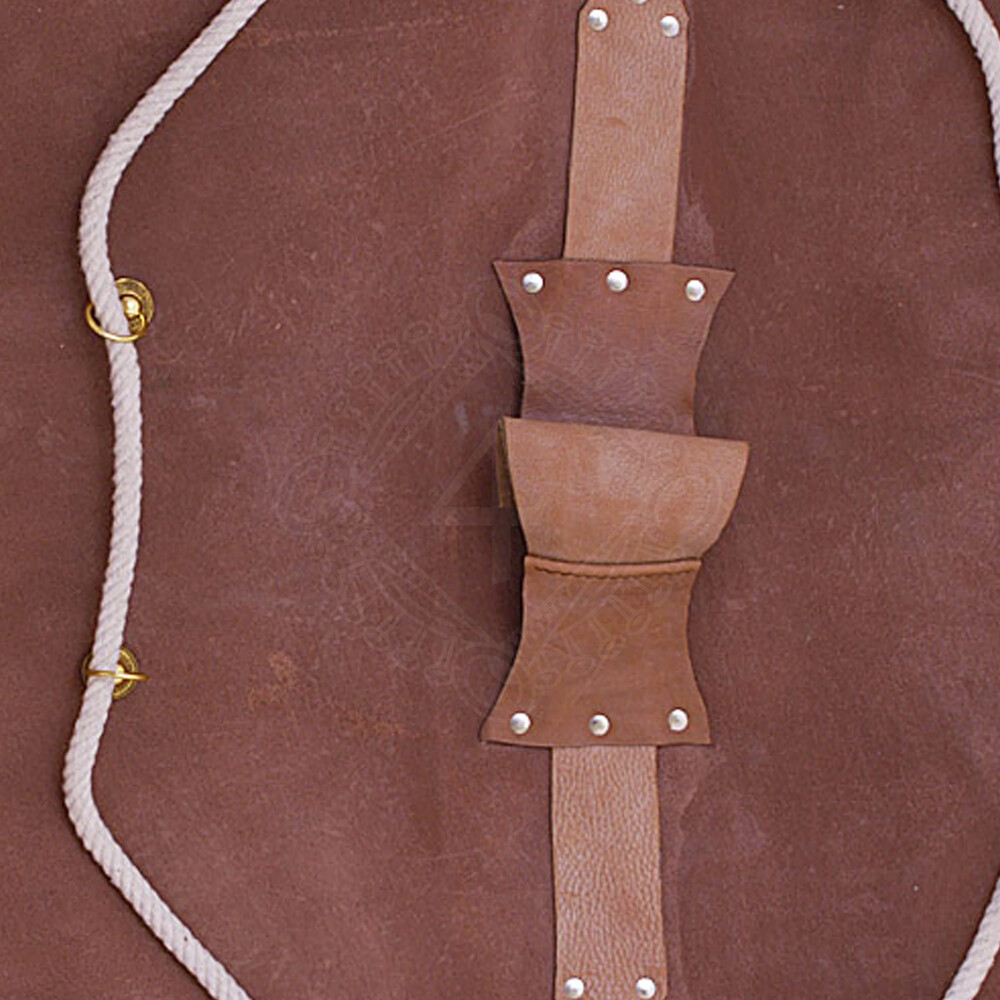
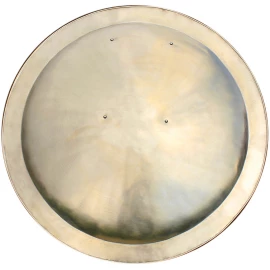
This hoplite shield is constructed from curved plywood (the wooden equivalent of reliable mild steel structures), providing necessary strength while maintaining a functional weight for handling. The surface is covered with durable canvas and hand-painted. The back of the shield features a sophisticated gripping system that faithfully replicates historical originals:
- Porpax: A central leather sleeve with decorative rivets through which you pass your forearm.
- Antilabe: A perimeter rope used for a firm hand grip at the edge of the shield.
This combination allows you to effectively carry the shield's weight across the entire shoulder, which was crucial for maintaining formation in the phalanx. The shield arrives ready for use; simply slide your arm through the porpax and grip the antilabe.
Technical Specifications
| Parameter | Value |
|---|---|
| Shield Type | Greek Aspis (Hoplon) |
| Core Material | Curved Plywood |
| Surface Finish | Canvas, hand-painted |
| Diameter | approx. 92 cm / 36.2" |
| Curvature Depth | approx. 11 cm / 4.3" |
| Material Thickness | approx. 11 mm / 0.43" |
| Weight | approx. 6000 g / 13.2 lbs |
| Symbolism | Lambda ($\Lambda$) – Lacedaemon (Sparta) |
Historical Context: "With it or on it"
Did you know that the term hoplite is derived directly from the name of this shield – the hoplon? For a Greek citizen-soldier, the shield was the most vital piece of equipment. While a soldier might discard a helmet or breastplate in battle to flee, dropping the shield was considered the ultimate act of cowardice. This was because the shield protected not only you but also the left side of the comrade standing next to you. The Lambda ($\Lambda$) symbol began appearing on shields in the 5th century BC, representing Lacedaemon, the official name of the city-state we know today as Sparta.
Care and Safety Instructions
To ensure this piece of history serves you for a long time, provide it with basic care. Store the shield in a dry environment to prevent wood warping. If the canvas becomes wet, let it dry naturally at room temperature. We recommend treating the leather parts (porpax) occasionally with a beeswax-based leather balm to keep them supple. Please note that this shield is a decorative replica. It is not designed for high-impact full-contact combat (HEMA), Buhurt-style battles, or sharp weapon cutting tests. Heavy strikes can damage the paint, canvas, and wooden core. Never use the shield for protection against real projectiles or for any other dangerous activities that could cause injury to yourself or others. We recommend completing your kit with a Corinthian helmet, a bronze muscle cuirass, and a dory spear to achieve the authentic look of an ancient warrior.
We are here for you!



.3773623034.1696456237.png.webp)

.3773623034.1696456247.png.webp)