Čeština
 Deutsch


Chainmail Aventail 9mm - Riveted/Solid Rings 9mm 18g (Alternating)

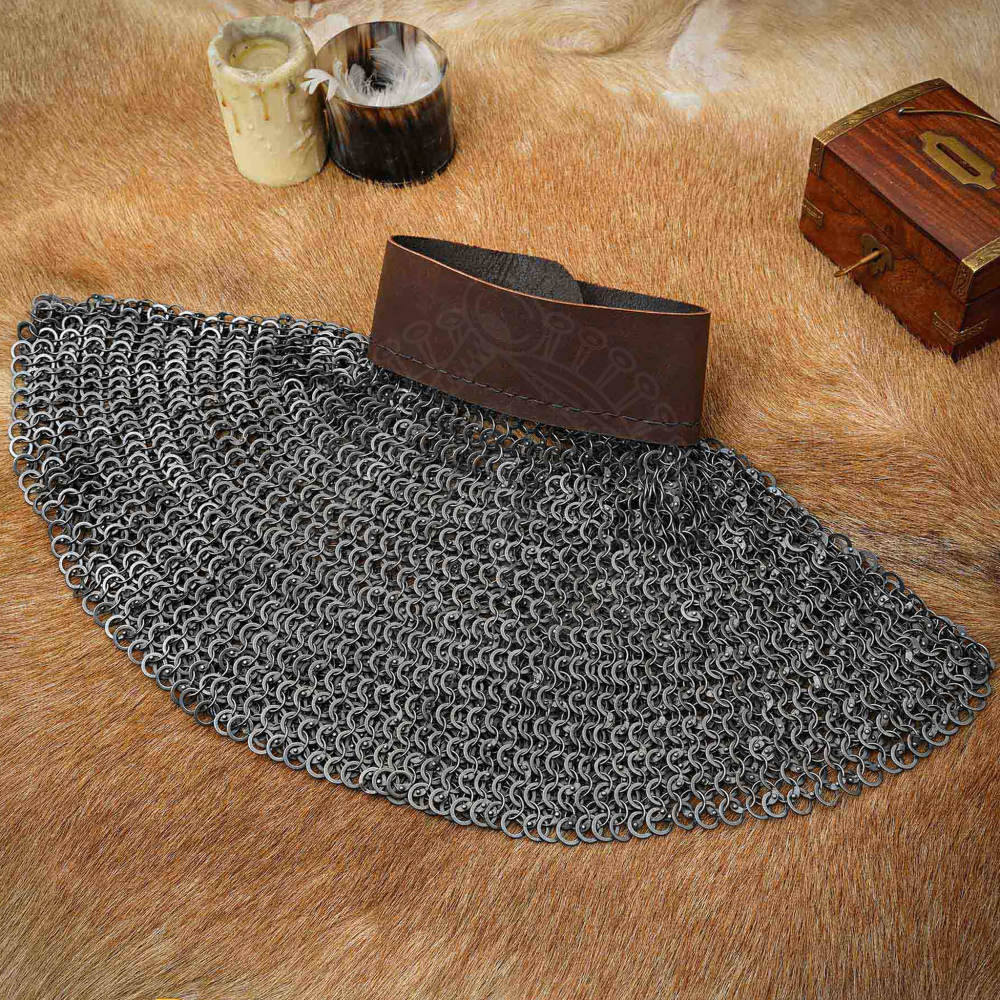
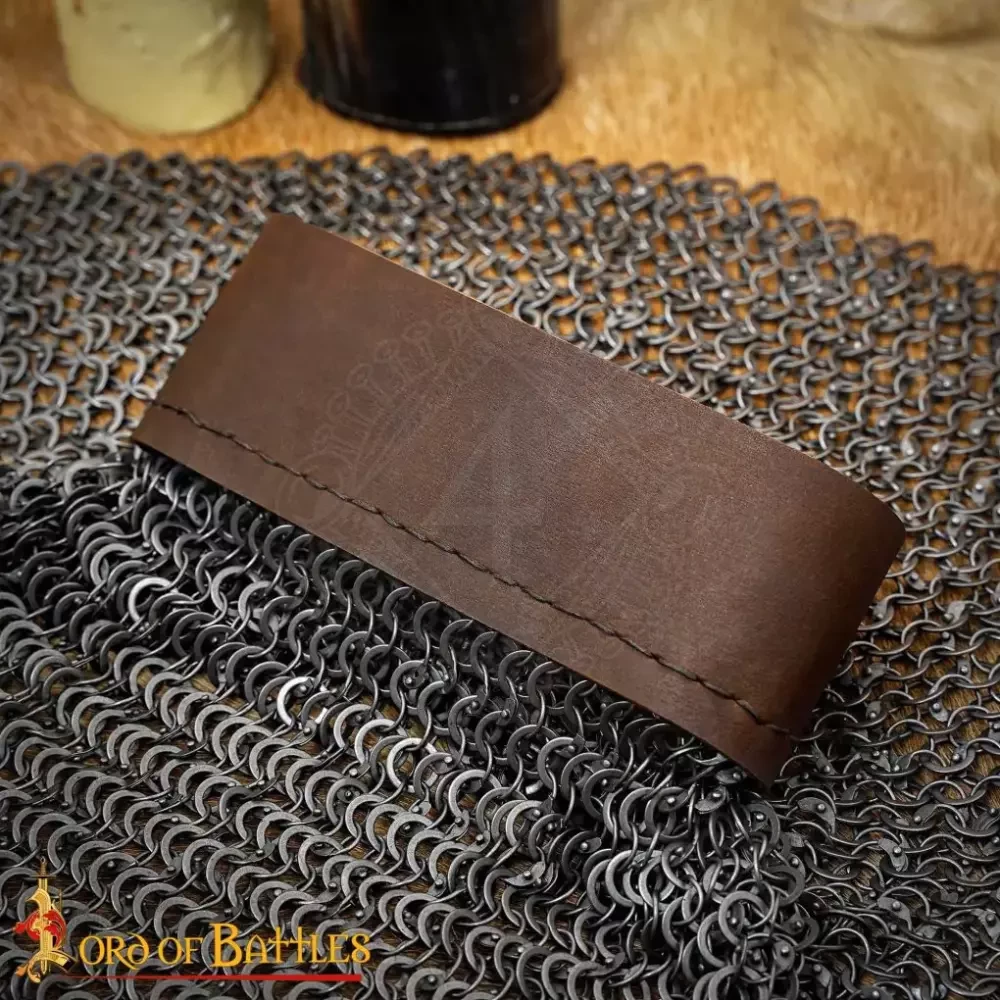

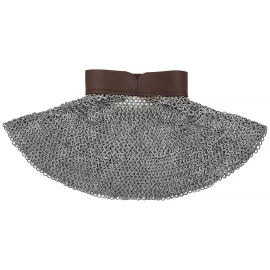
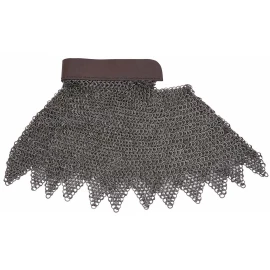
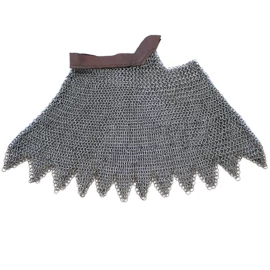
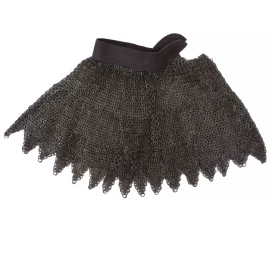
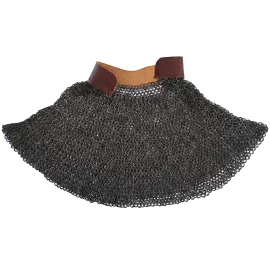
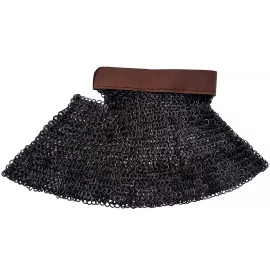
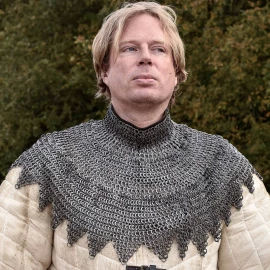
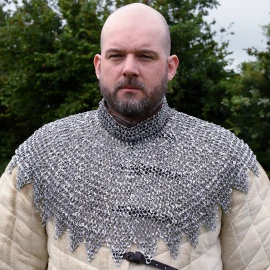
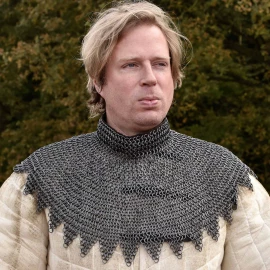
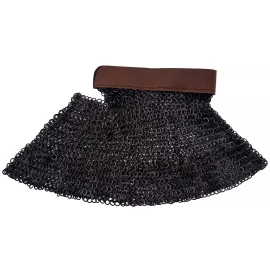
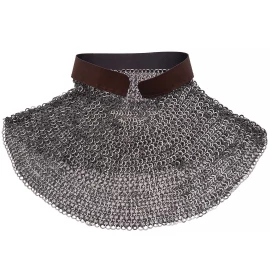
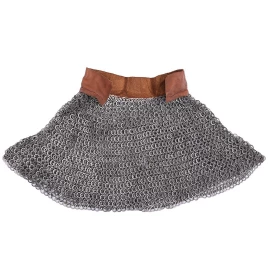
Looking to complete your medieval helmet with historically convincing protection for your neck and shoulders? The Poitiers chainmail aventail, also known as a camail or mail helmet curtain, is inspired by the equipment of European knights during the 14th century. Its flexible mesh is made from 9 mm steel rings, combining traditional riveted connections with solid punched rings. A brown leather band along the upper edge provides a foundation for attaching the mail to a suitable helmet. Once fitted, the chainmail drapes naturally around the neck and across the shoulders. It makes an impressive addition to a medieval armour collection, historical reenactment equipment or a carefully assembled knight's costume. Further product information ...

Would you like to be notified as soon as the item is in stock?
You will receive a short e-mail as soon as we have it back in stock.
Poitiers Chainmail Aventail, 9mm Riveted Steel Rings for Helmets
Chainmail Helmet Curtain with Leather Attachment Band
The Poitiers aventail is a separate mail curtain designed to be attached to the lower edge of a suitable historical helmet. Historically, its purpose was to cover the neck, nape, sides of the head and shoulders, protecting areas not fully enclosed by the helmet's rigid skull.
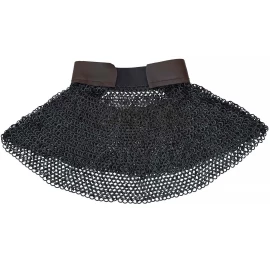
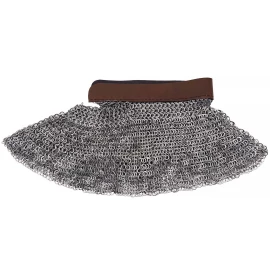
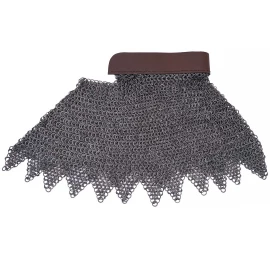
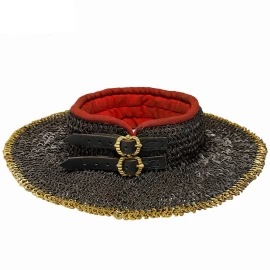
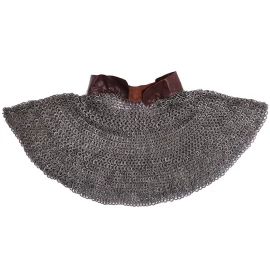
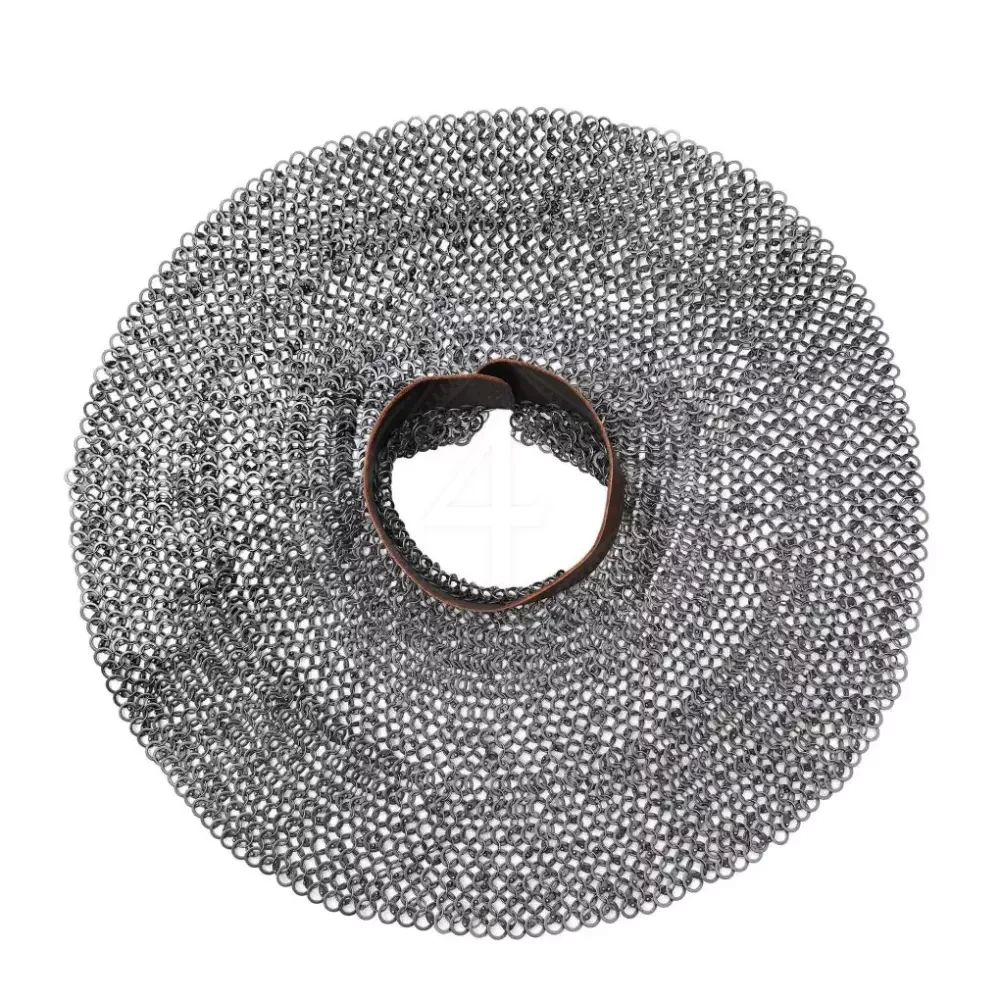
The aventail has a broad, approximately circular shape. Its mail gradually widens from the inner attachment edge towards the outer perimeter, allowing the mesh to drape downwards when fitted. The flexibility of the interlinked rings helps accommodate natural head and shoulder movements.
The upper edge features a brown leather attachment band with visible stitching. Its simple construction provides a suitable foundation for fastening the aventail to a compatible historical helmet without introducing unnecessary decorative fittings.
The metal mesh has a natural dark silvery-grey appearance. Its regularly interlinked rings create the characteristic texture of traditional medieval chainmail armour.
Construction with Riveted Round Rings and Flat Solid Rings
The aventail is made from mild steel and combines two types of rings:
- Riveted round rings: Manufactured from steel wire, with overlapping ends secured by rivets featuring rounded, dome-shaped heads.
- Flat solid punched rings: Manufactured as complete, closed metal rings without a cut joint or rivet.
These ring types alternate throughout the traditional European 4-in-1 weave, in which each ring links through four neighbouring rings. This produces a continuous, flexible metal mesh that follows the contours of the shoulders and moves with the wearer.
The rings have an internal diameter of approximately 9 mm (0.35 inches). The manufacturer describes the wire as 18 gauge, approximately 1.2 mm (0.047 inches) in the supplied specifications. As gauge conversions vary according to the measuring system used, the metric figure should be treated as approximate.
The combination of riveted and solid rings is a historically documented method of mail construction. Compared with simple butted chainmail, riveted connections are less likely to open when subjected to mechanical stress. Solid rings have no joint that could separate.
Each aventail is assembled by hand from numerous individual rings. Minor variations in the positioning or tightness of individual rivets may therefore be present as natural characteristics of traditional craftsmanship. However, damaged or excessively loose connections should always be repaired before use.
Advantages and Limitations of Mild Steel
Mild steel offers a useful balance between mechanical durability, traditional appearance and affordability. Compared with aluminium mail, it is heavier and more closely resembles the character of historical iron armour.
However, mild steel is more susceptible to corrosion than stainless steel. Since no special protective surface coating is specified, we recommend regular drying and applying a thin layer of suitable preservation oil.
Compared with galvanised steel, its natural darker metallic appearance can look more appropriate for certain historical impressions, although it requires more careful protection against moisture. The alternating riveted and solid-ring construction also offers greater historical authenticity than simple unriveted costume mail.
The History of Aventails in the 14th Century
The chainmail aventail, also referred to as a camail, became a significant component of European protective equipment particularly during the 14th and early 15th centuries.
Its development was closely associated with the increasing popularity of the bascinet helmet. During the 14th century, bascinets developed into several distinctive forms, including versions fitted with movable visors.
While the rigid helmet skull protected the head, the flexible mail aventail covered the nape, neck and upper shoulders. Historically, such protection could reduce the effects of certain cutting attacks. Nevertheless, the mail alone could not reliably prevent powerful penetrating thrusts or adequately absorb the energy of heavy blunt impacts.
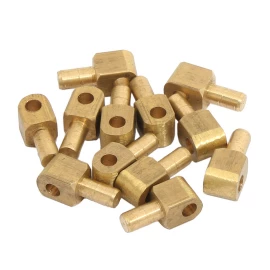
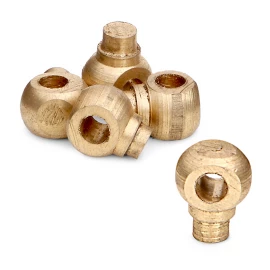
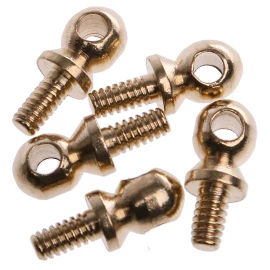
Historical aventails were often attached to the helmet using vervelles, small metal loops or attachment points arranged around its lower edge. A leather thong or strong cord was threaded through these fittings to secure the leather band of the aventail in position.
Did you know? Mail aventails continued to be used even as European knights increasingly adopted plate armour. Their flexibility was particularly valuable around the neck, where rigid plates could restrict head movement. As more sophisticated plate gorgets developed during the 15th century, the importance of traditional mail aventails gradually declined.
Why Is This Aventail Called Poitiers?
The name Poitiers commemorates the famous battle fought on 19 September 1356 in France during the Hundred Years' War. English forces commanded by Edward of Woodstock, better known as the Black Prince, defeated the French army under King John II of France, who was captured during the battle.
The middle of the 14th century was a period when bascinet helmets with mail aventails were important elements of European military equipment. Poitiers is therefore a fitting historical name for this type of armour. This product is not, however, presented as an exact reproduction of a particular archaeological find from the battlefield.
Technical Specifications
| Specification | Details |
|---|---|
| Product type | Chainmail helmet aventail, camail |
| Model name | Poitiers |
| Brand | Lord of Battles® |
| Mail material | Mild steel |
| Mail construction | Alternating riveted round rings and flat solid punched rings |
| Rivet type | Round, dome-headed rivets |
| Weave pattern | European 4-in-1 |
| Internal ring diameter | Approx. 9 mm (0.35 inches) |
| Wire gauge | 18 gauge, approximately 1.2 mm (0.047 inches) |
| Mail colour | Natural steel grey |
| Attachment band material | Brown leather |
| Attachment band construction | Stitched leather strip |
| Historical period | Primarily 14th to early 15th century |
| Intended use | Historical helmets, reenactment, costumes and display pieces |
| Sizes shown in dimensional specifications | M and L |
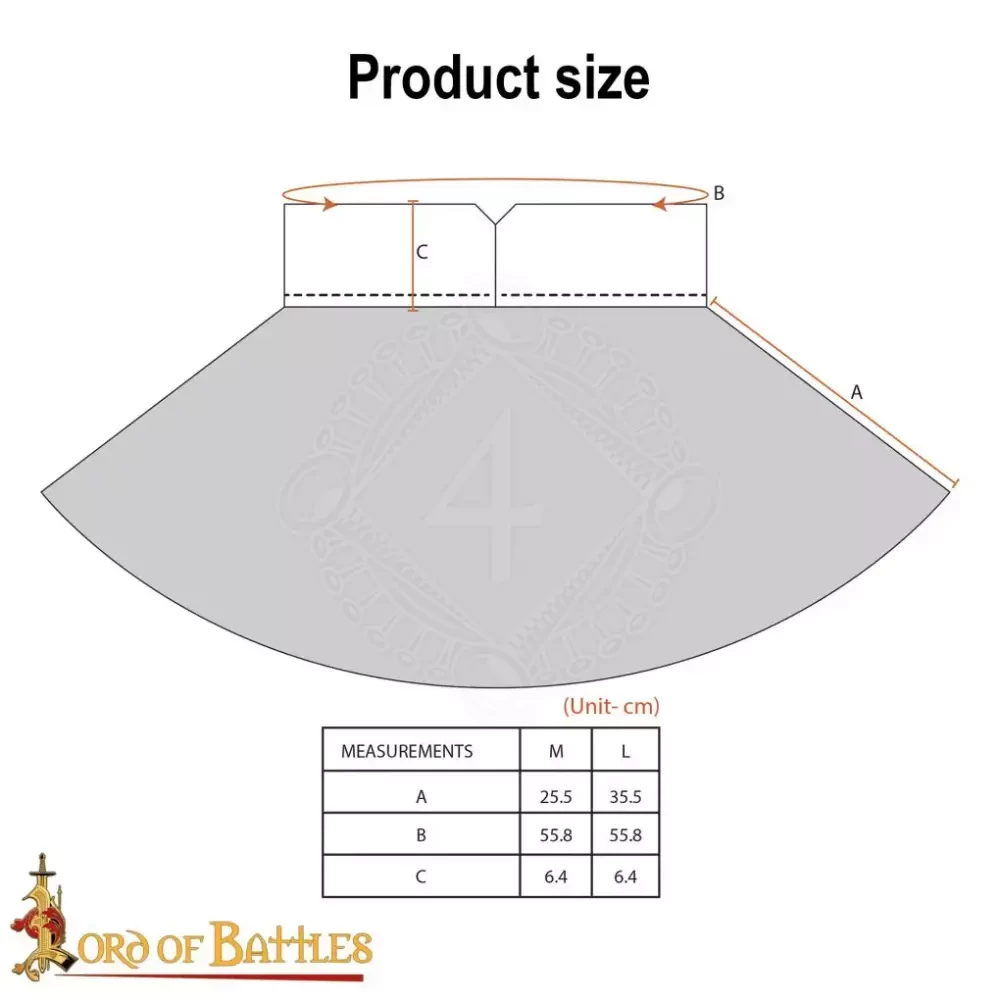
Size Chart
| Measurement | M | L |
|---|---|---|
| A – Mail length from leather band to outer edge | Approx. 25.5 cm (10 inches) | Approx. 35.5 cm (14 inches) |
| B – Upper attachment band circumference | Approx. 55.8 cm (22 inches) | Approx. 55.8 cm (22 inches) |
| C – Leather attachment band height | Approx. 6.4 cm (2.5 inches) | Approx. 6.4 cm (2.5 inches) |
How to Choose the Correct Size: According to the dimensional diagram, both versions have the same upper attachment circumference and leather band height. They differ in the length of the mail itself. Size M provides a shorter curtain, while size L extends further down across the shoulders and upper torso.
Before purchasing, check that the leather band's circumference is suitable for your helmet's attachment system. These measurements do not guarantee compatibility with every type of historical helmet.
How to Attach the Aventail to a Bascinet
The appropriate attachment method depends on the design of your helmet. Historical bascinets commonly used vervelles to secure the aventail.
- Check compatibility: Compare the circumference and dimensions of the leather band with the arrangement of attachment fittings on your helmet.
- Prepare the leather band: Depending on the mounting system, suitable holes may need to be made in the leather. Their positioning should correspond to your helmet's fittings. Do not drill or modify the helmet without sufficient knowledge of its construction.
- Attach the aventail: With a vervelle-based system, position the leather band over the fittings and secure it using an appropriate leather thong or strong cord threaded through the attachment points.
- Arrange the mail: Allow the curtain to hang evenly, checking that the mesh does not bunch up or restrict movement.
- Inspect the attachment: Before wearing the helmet, ensure that the aventail cannot accidentally detach and that your field of vision remains clear.
If you are uncertain about the correct fitting procedure, we recommend having the aventail installed by an experienced historical armourer.
Important Safety Information
The manufacturer does not specify safety certification or explicit approval for full-contact combat. Do not regard this aventail as certified standalone head or neck protection for buhurt, HMB, Battle of the Nations or intensive contact HEMA.
- Chainmail alone cannot adequately absorb powerful blunt impacts and does not guarantee protection against penetrating thrusts.
- For contact combat, always use protective equipment that meets the requirements of the relevant discipline and event organiser.
- Do not wear the aventail if the leather attachment band is torn, the mounting is loose or individual rings and rivets are damaged.
- Regularly check that the mesh does not restrict head movement or catch on other components of your equipment.
- Take care to avoid trapping fingers, hair or facial hair between the metal rings when fitting or removing the aventail.
Care and Maintenance
Steel mail without a specified protective finish requires regular maintenance to prevent corrosion. We recommend the following care:
- Dry the aventail thoroughly after every use, particularly following exposure to rain or perspiration.
- Protect the steel rings with a thin layer of suitable preservation oil.
- Wipe away excess oil and avoid unnecessary contact between the oil and the leather band.
- Clean the leather with a dry or slightly damp cloth and treat it occasionally with an appropriate leather-care product.
- Avoid aggressive chemical cleaners and abrasive products that may damage the steel, rivets or leather.
- Replace damaged riveted and solid rings with correctly matching components.
- For long-term storage, keep the aventail in a dry, well-ventilated location and avoid permanently distorting the leather attachment band.
Recommended Accessories
- Bascinet Helmet with Aventail Attachments: Particularly suitable for portraying a European man-at-arms of the 14th century.
- Padded Arming Cap: An important underlayer beneath a helmet, appropriate for equipment of the 13th–15th centuries.
- Padded Gambeson: A suitable addition to European protective equipment of the 13th–15th centuries.
- Plate Cuirass or Brigandine: Appropriate for assembling the equipment of a European warrior of the 14th–15th centuries.
- Leather Thong and Suitable Vervelles: For historically inspired attachment to a 14th-century helmet, provided the helmet supports this mounting system.
- Chainmail Repair Kit: Matching riveted and solid replacement rings, appropriate rivets and suitable pliers.
Only the chainmail aventail with its leather attachment band is included. The helmet, attachment thongs, vervelles, clothing and other accessories are not supplied.
We recommend the Poitiers chainmail aventail to enthusiasts of late medieval military history who want to complete their helmet with traditionally constructed riveted mail and an authentic-looking leather attachment band.
We are here for you!