 Čeština
 Deutsch


Powder Apostle, 17th Century
1x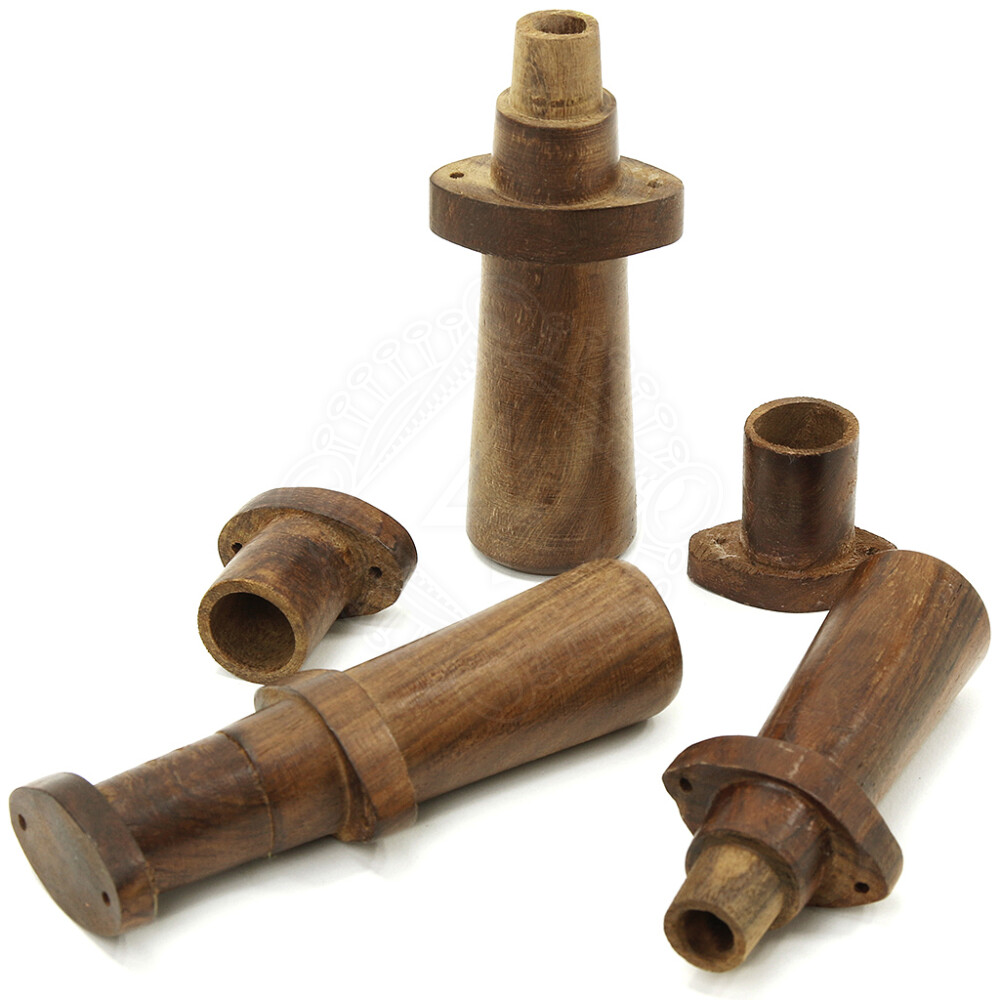

Step back into the age of the Thirty Years' War and complete your musketeer's equipment with one of its most recognisable accessories! This wooden powder apostle represents the historical container used by musketeers to carry individual pre-measured charges of gunpowder for their firearms. Crafted from beautifully grained Sheesham rosewood, it features a turned wooden body and a practical two-piece construction. The small attachment holes allow you to suspend it from a period-style bandolier, creating a convincing impression of 16th- or 17th-century military equipment. Perfect for historical reenactment, museum displays, LARP and collectors, it adds an authentic-looking finishing touch to your musketeer's kit. Further product information ...

 Delivery options
Wooden Musketeer's Powder Apostle, 17th Century
Construction, Appearance and Materials
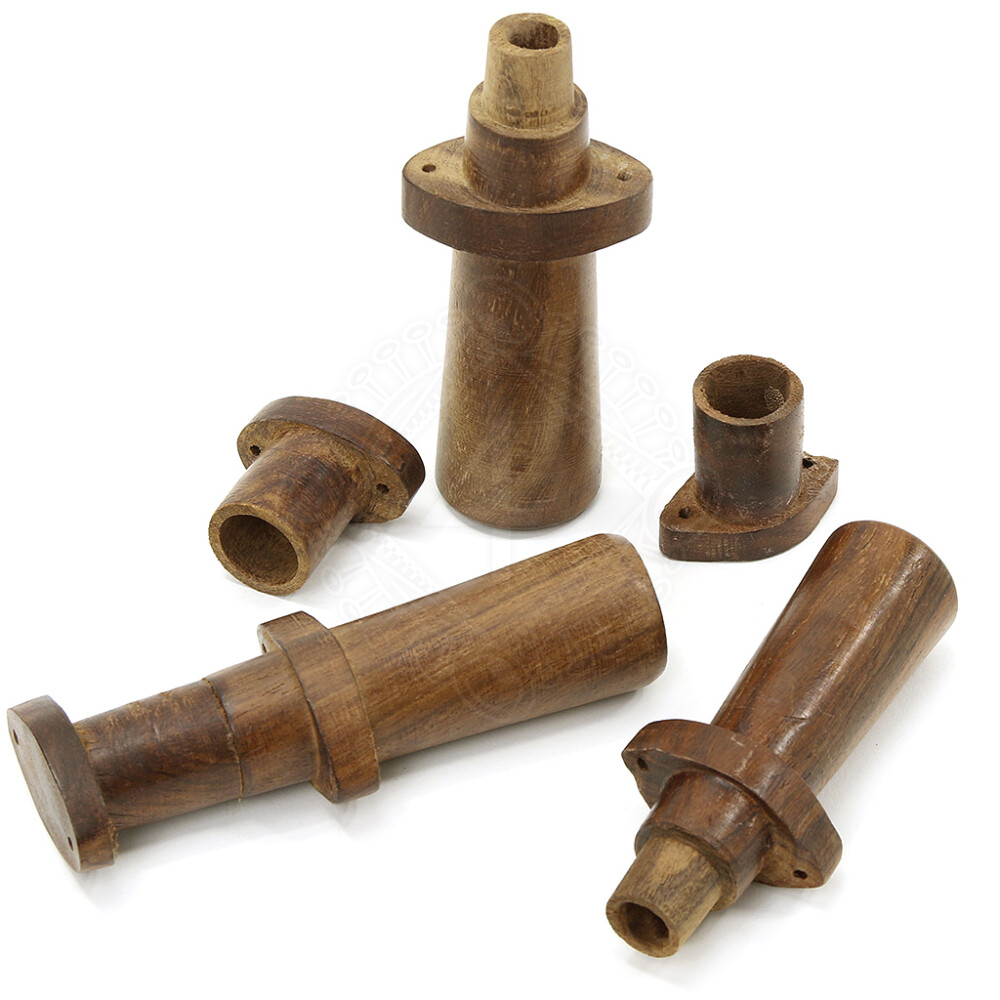
The powder apostle consists of two fitted wooden components: an elongated hollow container and a removable cap. The main body has a slightly tapered shape, wider towards the bottom and narrower at the neck. The cap features a hollow cylindrical section with an enlarged, flat rim that makes it easier to grip.
Both components have small holes for attaching suspension cords. These allow the container to be hung from a bandolier while securing the cap against accidental loss. Similar arrangements were common on historical powder measures.
The item is made from Sheesham rosewood (Dalbergia sissoo), a dense hardwood with attractive natural grain. Its brown colouring ranges from lighter honey tones to darker streaks. Each piece may therefore vary slightly in colour and wood grain.
The photographs show different views of assembled and disassembled powder apostles. One complete powder apostle is supplied.
Historical Background: Powder Apostles and Musketeers
During the 16th and particularly the 17th centuries, wooden powder measures known as apostles became characteristic components of European musketeers' equipment. Their purpose was to hold individual pre-measured charges of black powder, allowing soldiers to avoid measuring each charge directly from a larger powder flask whenever they loaded their muskets.
The apostles were typically suspended from a broad leather shoulder strap known as a bandolier, worn diagonally across the chest. Musketeers could also carry a larger powder flask, a pouch containing lead musket balls and other accessories needed for their firearms.
These containers were particularly widespread during the Thirty Years' War (1618–1648), when muskets played a major role in European armies. During the later 17th century, individual wooden powder measures gradually gave way to more convenient forms of ammunition packaging, especially paper cartridges.
Why Were They Called the Twelve Apostles?
The traditional expression "the twelve apostles" refers to the resemblance between a set of twelve wooden powder containers suspended from a bandolier and the twelve apostles of the Bible. The term remains familiar in historical literature and among reenactors today.
However, musketeers did not invariably carry exactly twelve containers. The number could vary according to period, region, equipment arrangements and military requirements. Twelve was therefore not a universal regulation for European armies.
Interestingly, surviving historical examples and period depictions show powder apostles in different shapes and with various methods of closure. Their construction reflected the practical requirements of military life, particularly the need to keep individual powder charges readily accessible.
Using the Apostle for Historical Reenactment
We recommend this item primarily as a costume and display accessory for recreating historical musketeer equipment.
- Thread suitable strong cords through the attachment holes in the body and cap.
- Secure the cap with its own cord to prevent it from falling off or becoming lost.
- Suspend the apostle from a leather bandolier alongside other period-style equipment.
- For a convincing historical impression, arrange several apostles along the shoulder strap.
- After an event, clean the item and store it in a dry place.
Important: Although the historical originals were used to carry black powder, this particular product has not been verified as suitable for safely storing or handling gunpowder. We therefore recommend using it only when empty, as part of a historical costume or exhibition. Do not use it to contain actual gunpowder.
Technical Specifications
| Feature | Specification |
|---|---|
| Product type | Historical wooden powder measure – powder apostle |
| Material | Sheesham rosewood (Dalbergia sissoo) |
| Internal capacity | Approx. 5 cm³ (0.31 cu in) |
| Cap height | Approx. 33 mm (1.30 inches) |
| Cap width | Approx. 40 mm (1.57 inches) |
| Lower body height | Approx. 100 mm (3.94 inches) |
| Lower body width | Approx. 32 mm (1.26 inches) |
| Internal cavity depth | Approx. 80 mm (3.15 inches) |
| Internal cavity diameter | Approx. 9 mm (0.35 inches) |
| Weight per apostle | Approx. 47 g (1.66 oz) |
| Construction | Two-piece wooden container with removable cap |
| Attachment | Holes for suspension cords |
| Historical period | 16th–17th century, particularly the Thirty Years' War |
| Quantity supplied | 1 complete powder apostle |
| Manufacturer | Marshal Historical |
All dimensions and weight figures are approximate. As wood is a natural material, individual pieces may vary slightly in colour and grain pattern. The stated price is for one piece.
Care and Safe Handling
We recommend wiping the Sheesham wood regularly with a soft, dry cloth. Remove any dirt using a slightly damp cloth and dry the item thoroughly afterwards. If necessary, use a suitable care product intended for decorative wooden objects to help maintain its natural appearance.
Avoid prolonged exposure to moisture, direct sunlight and high temperatures. Wood may dry out, crack or warp if stored under unsuitable conditions. Do not immerse the item in water or place it in a dishwasher.
This product is not a certified container for storing explosive or flammable substances. Do not use it to store gunpowder, pyrotechnic mixtures or other hazardous materials. Keep it away from naked flames and do not use it during live firing. When wearing it as part of a costume, check that the suspension cords are secure and the cap is properly fitted to prevent any parts from falling or becoming lost.
Recommended Accessories
To create a convincing historical musketeer impression, pair this wooden apostle with a 17th-century leather bandolier, additional wooden powder apostles, a decorative powder flask and a leather pouch inspired by equipment from the Thirty Years' War. A period-style musketeer hat, a leather belt with a brass buckle and clothing reflecting European military fashion of the first half of the 17th century will complete the overall appearance.
We are here for you!